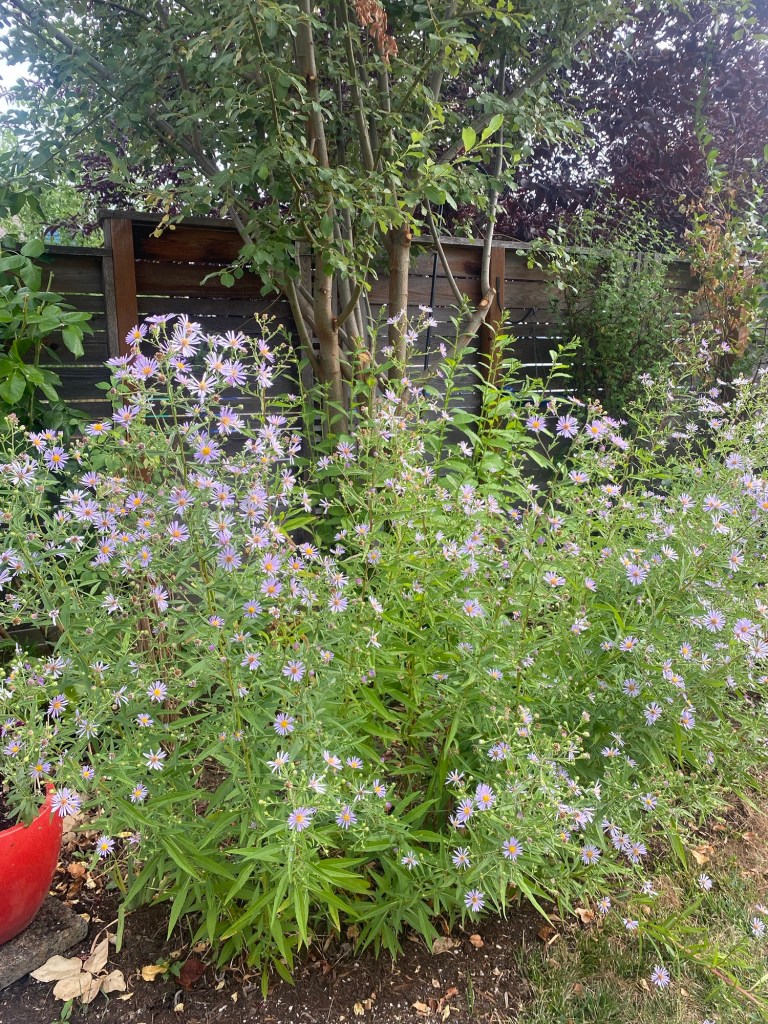
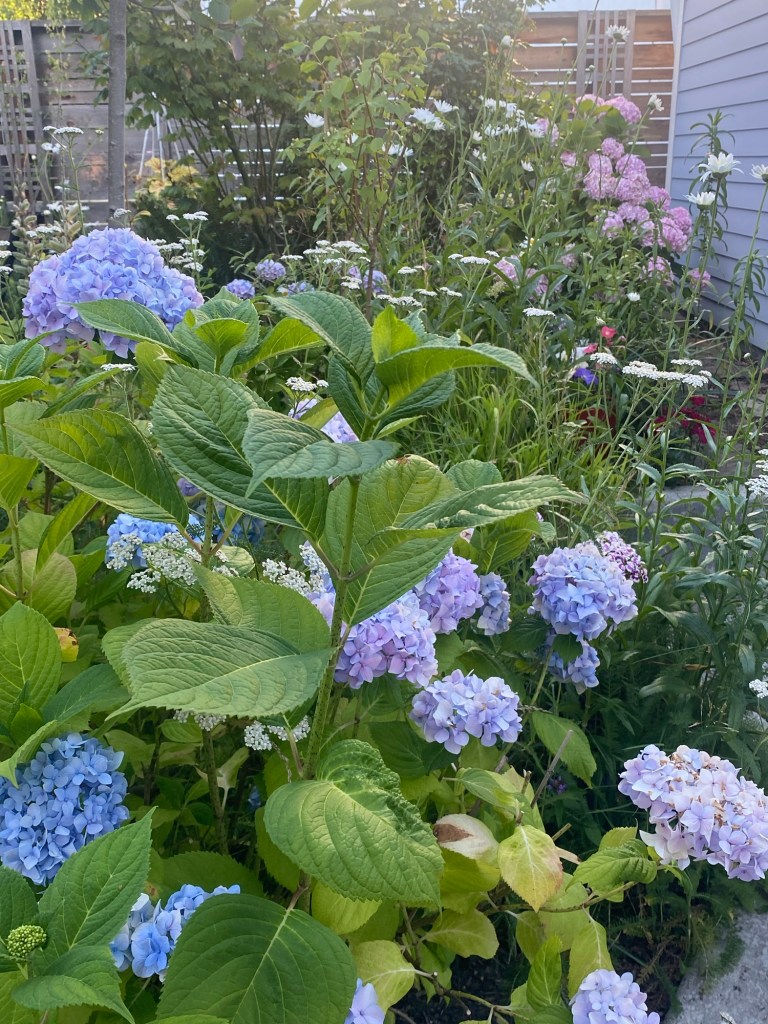
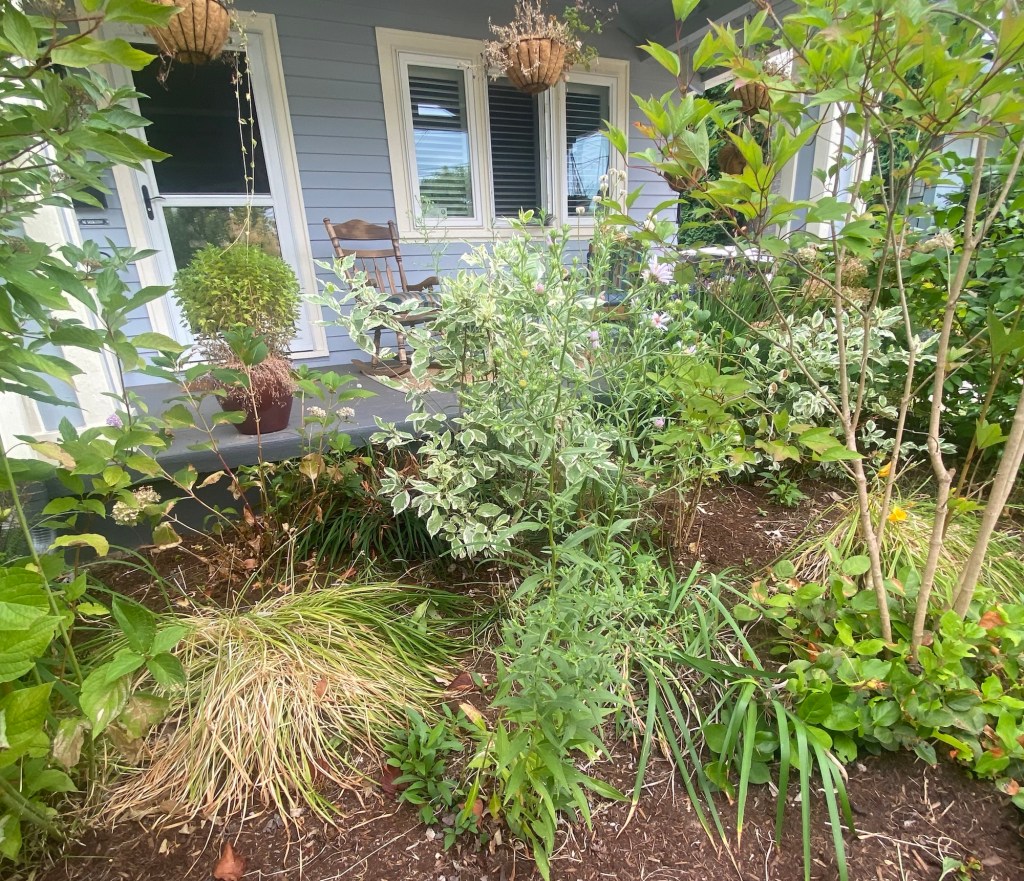
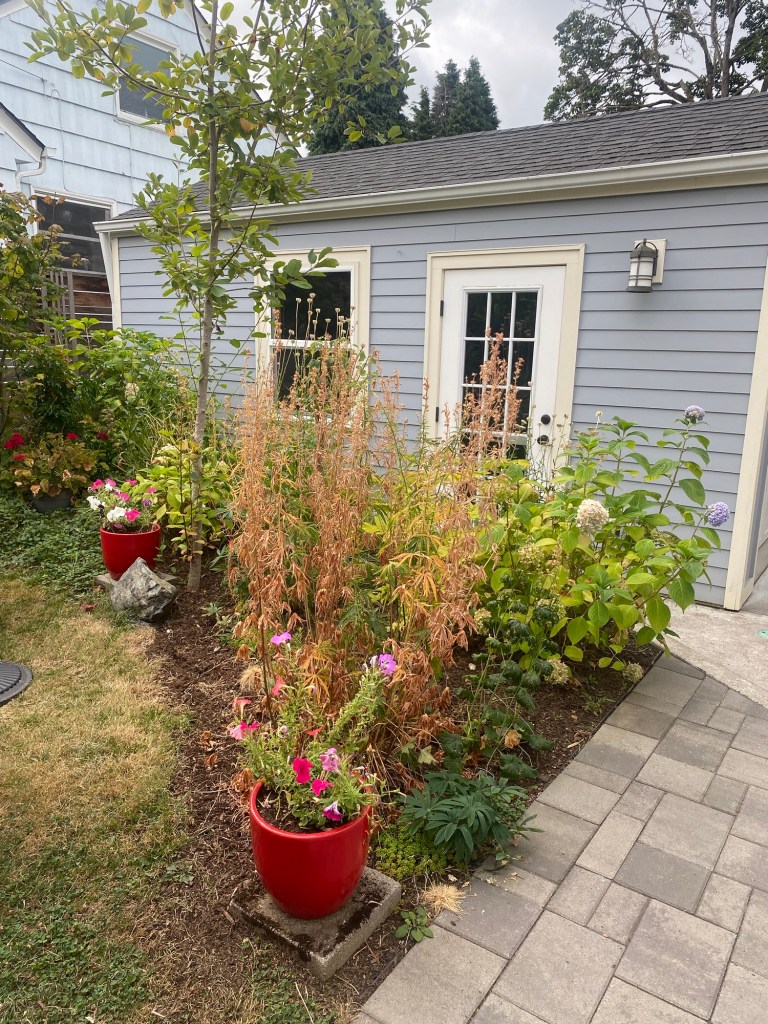
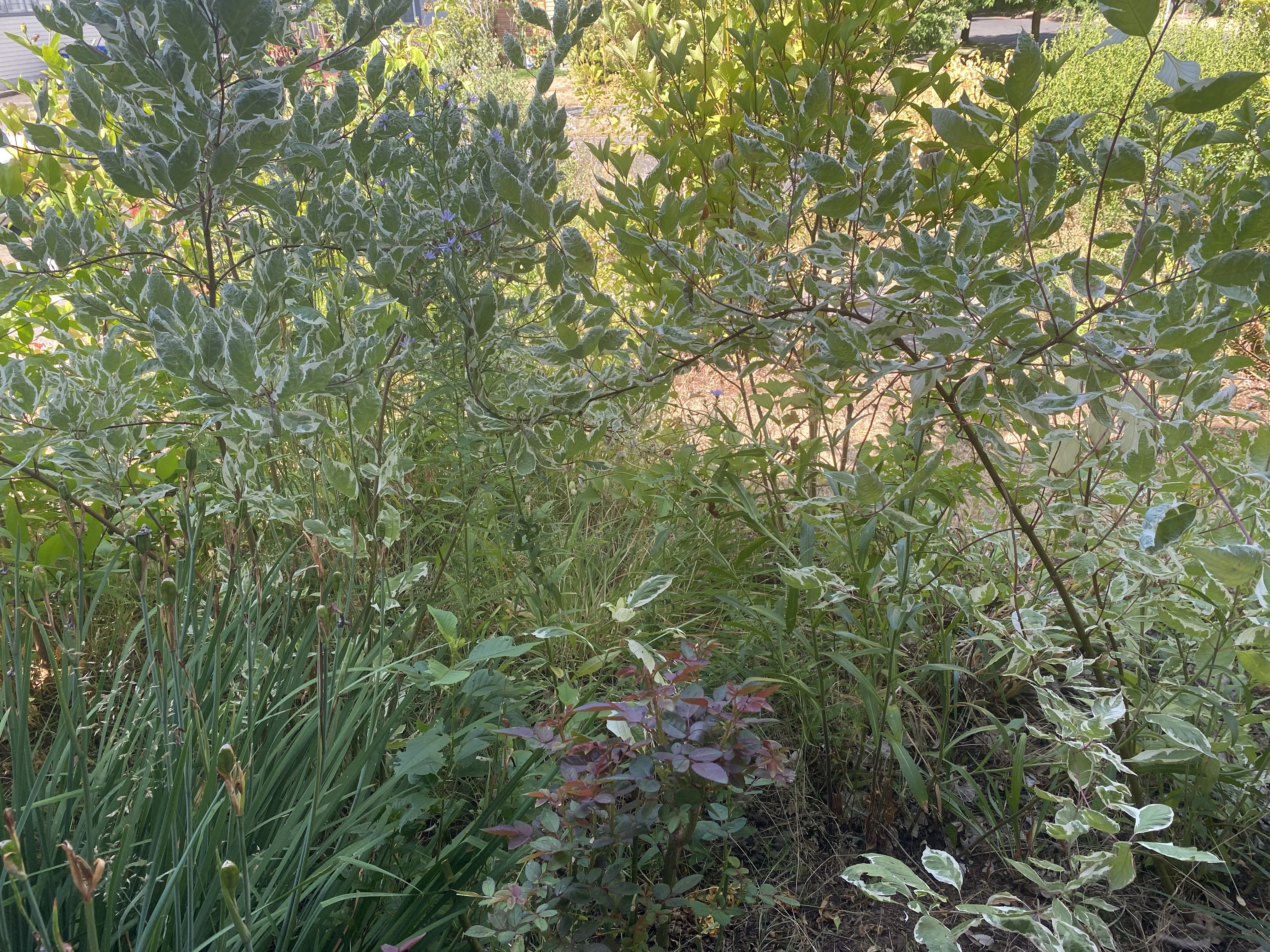
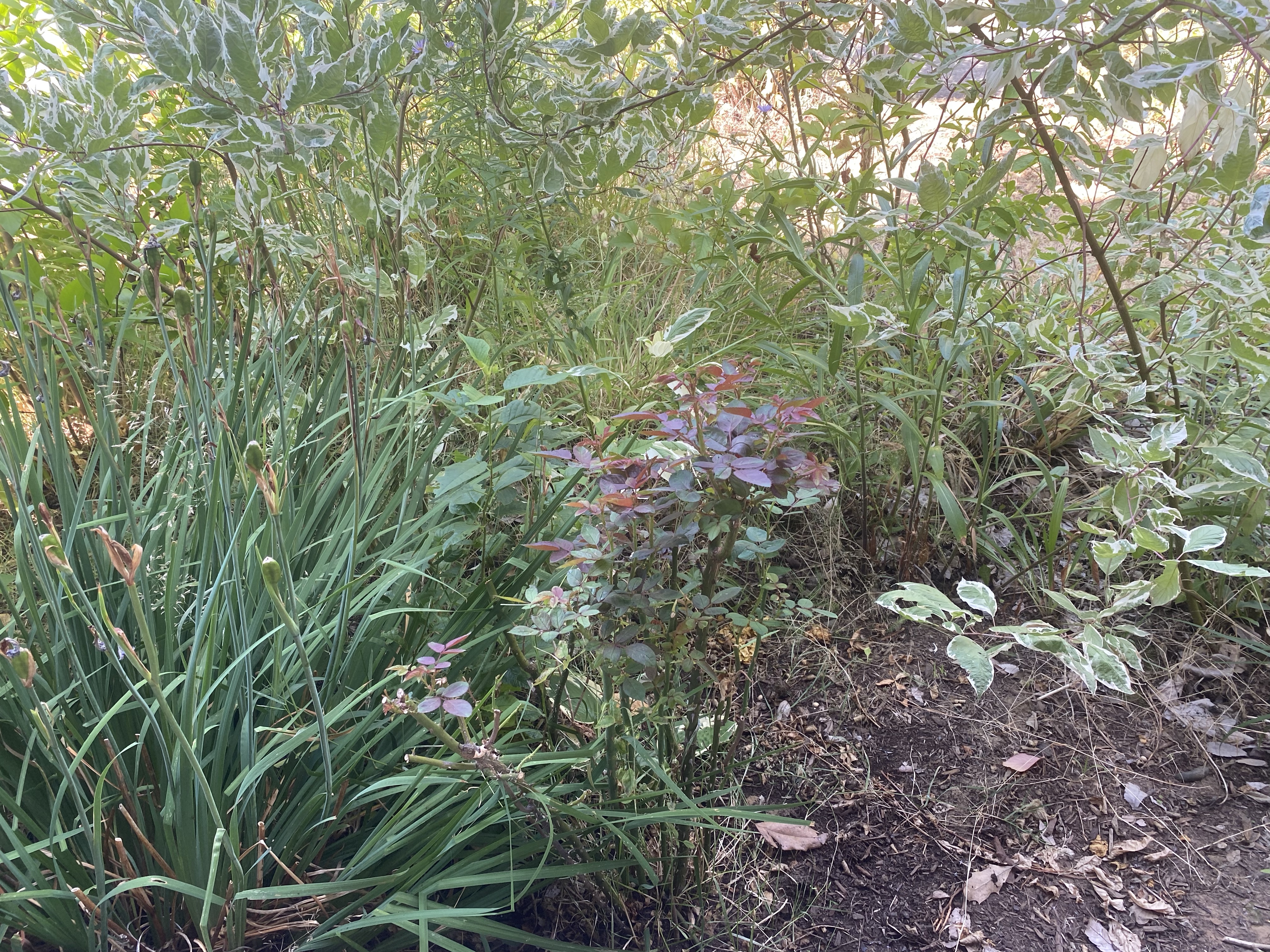
There has been little rain since June, and our native plants have withstood the onslaught of sun and dryness with aplomb. The taller native plants also have shaded our non-native hydrangeas and geraniums from the oppressive sun and heat.
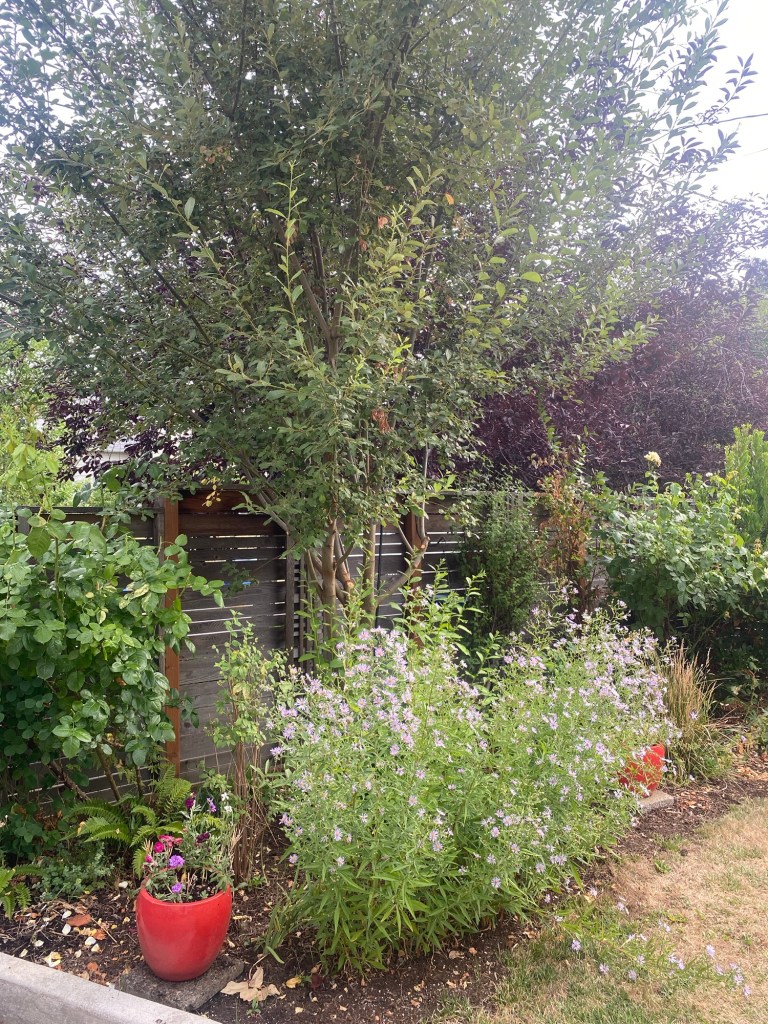
The Douglas Asters stand tall and proud while sheltering ferns and other shade plants behind them. All are sheltered by the native willow bush above them.
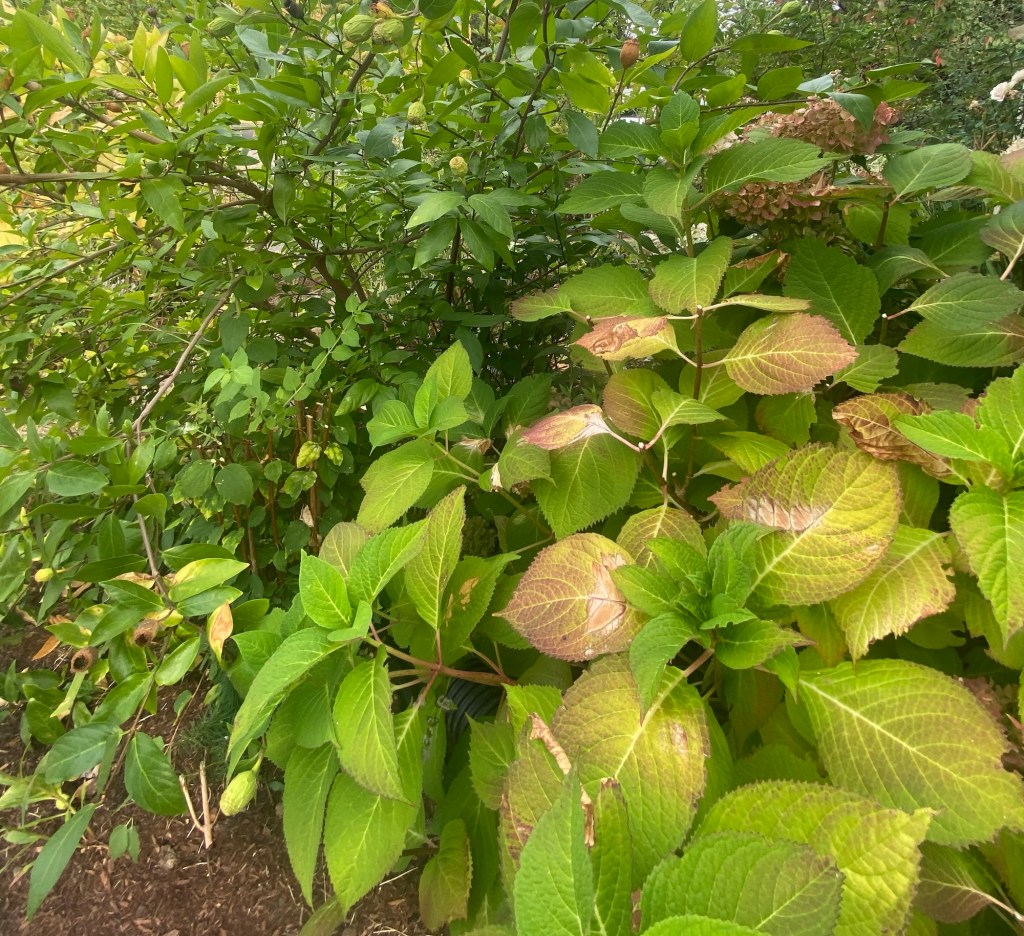
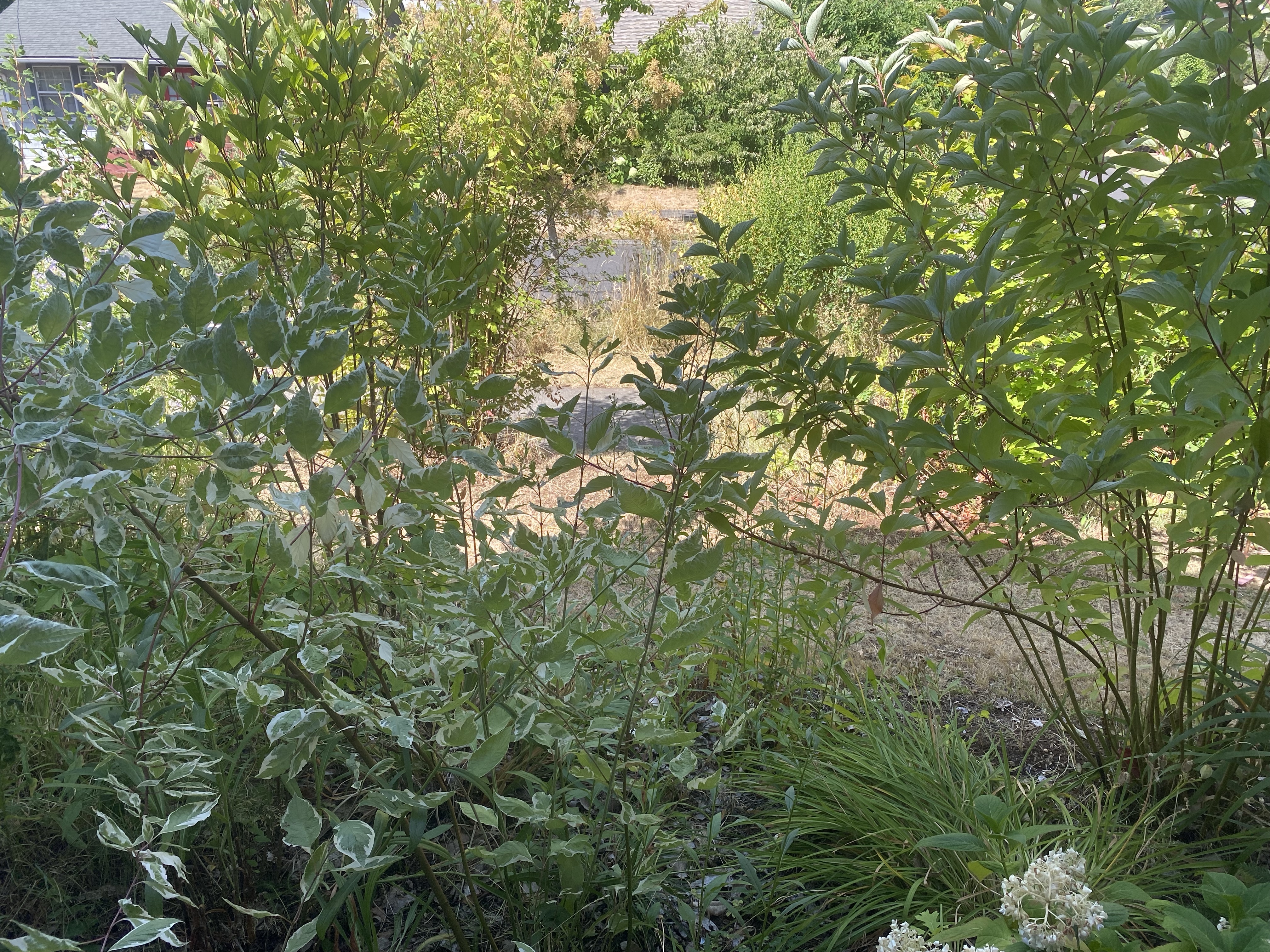
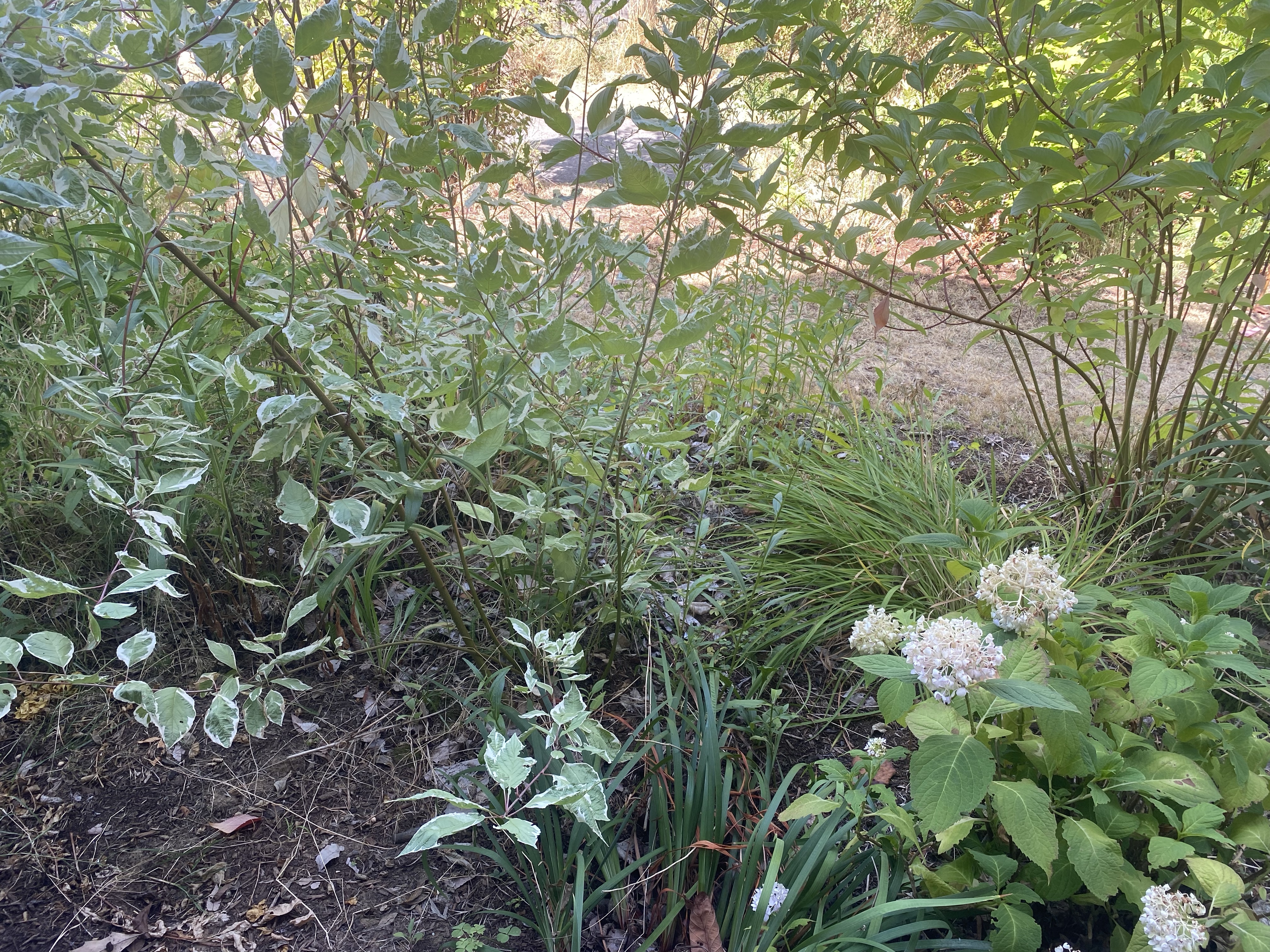
The hydrangeas peek out from under the Spicebush and show their big leaves.
Under the Western Spice Bush in the front yardUnder the Cascara Tree and the Vine Maple Tree in the backyard
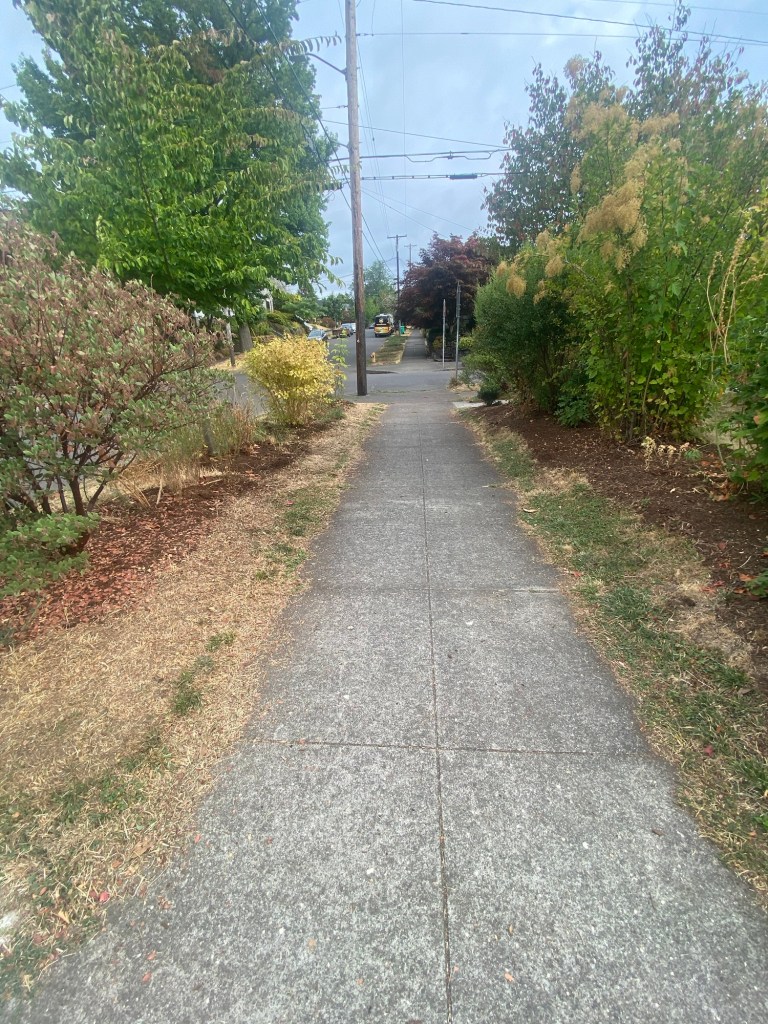
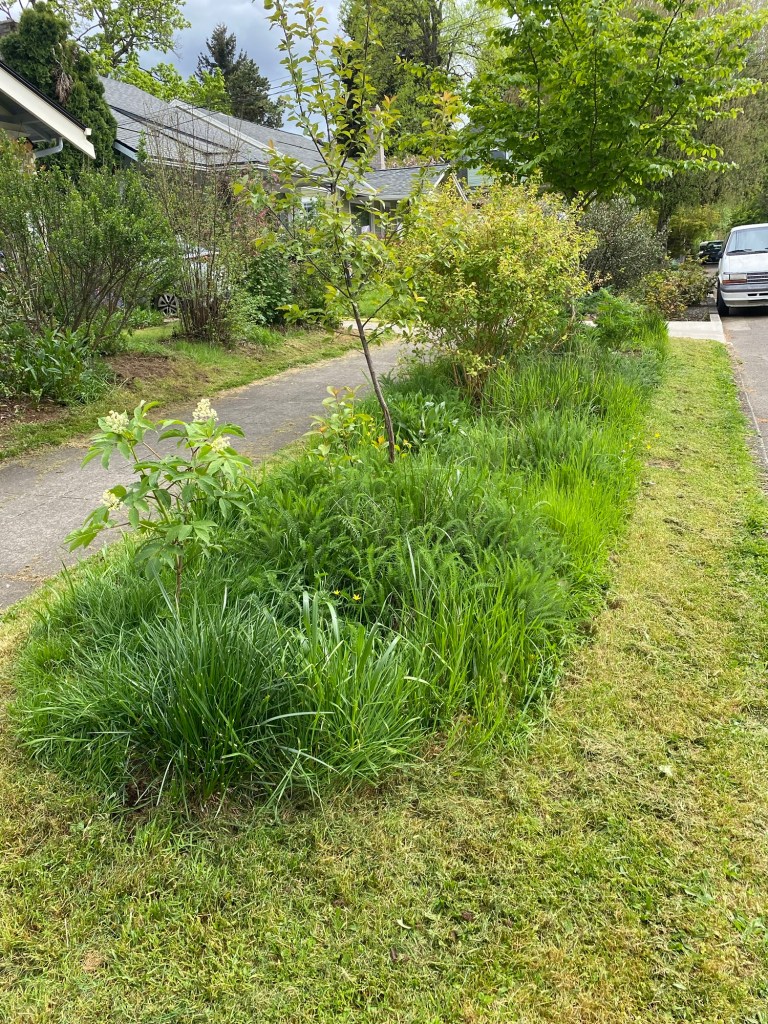
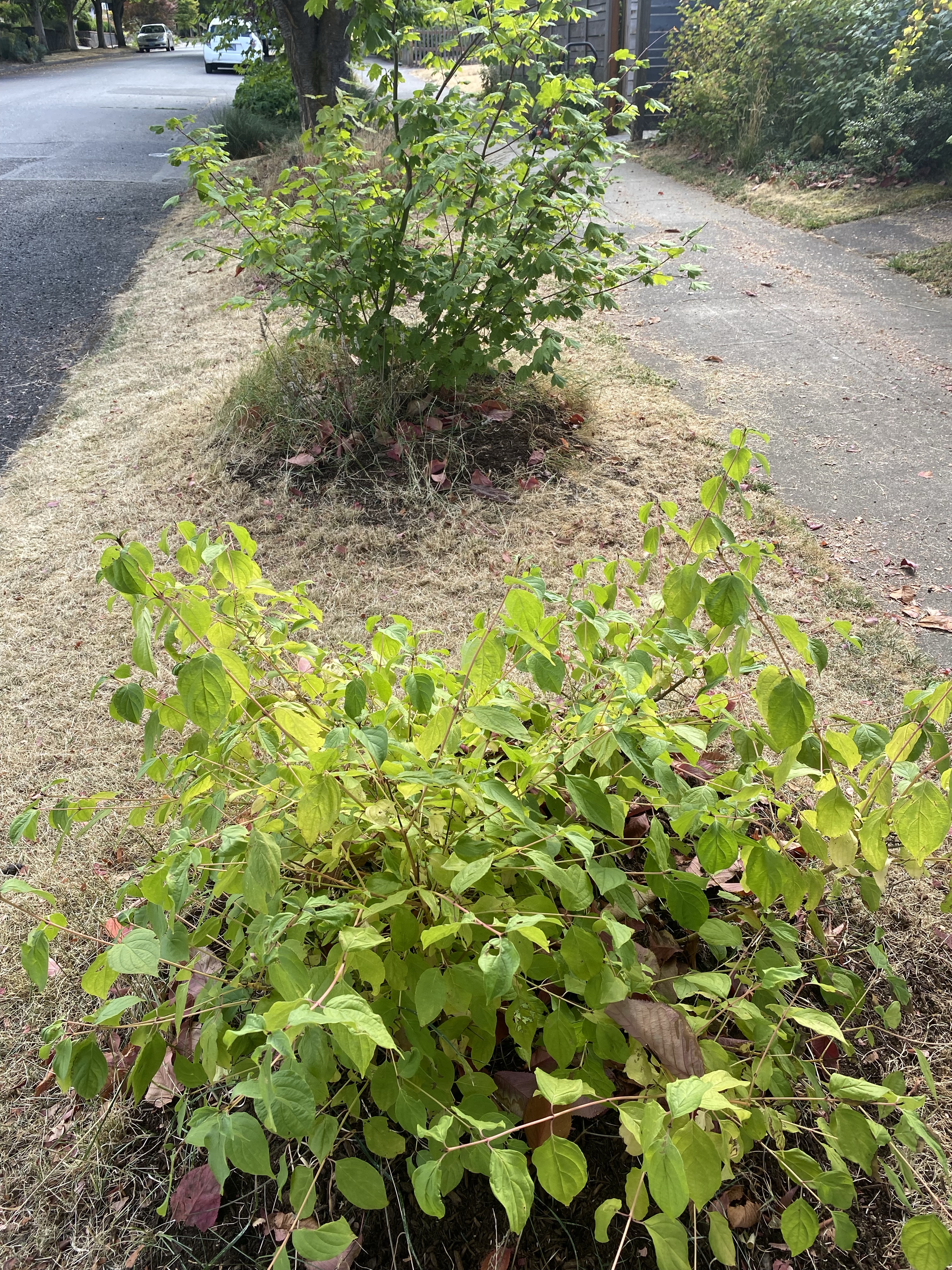
We maintain the centers of defined areas next to the street with native plants while mowing the edges to give them some semblance of organization.
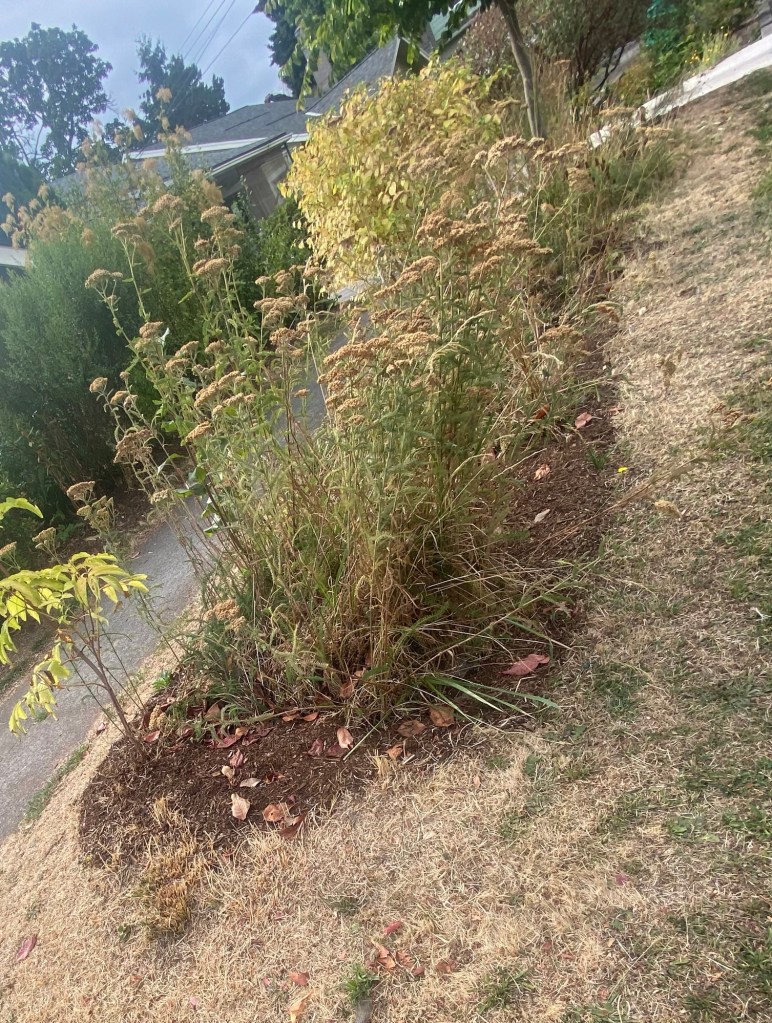
We leave the grass unwatered so that the entire color of the yard, this time of year, is a melange of yellows, greens and soft browns.
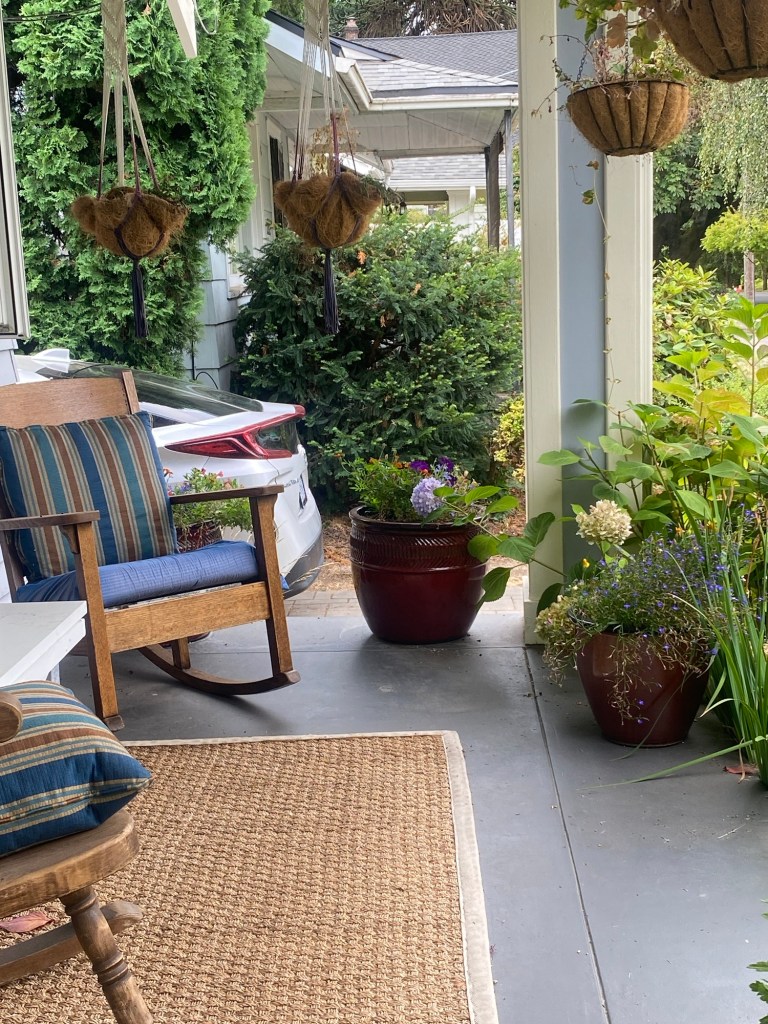
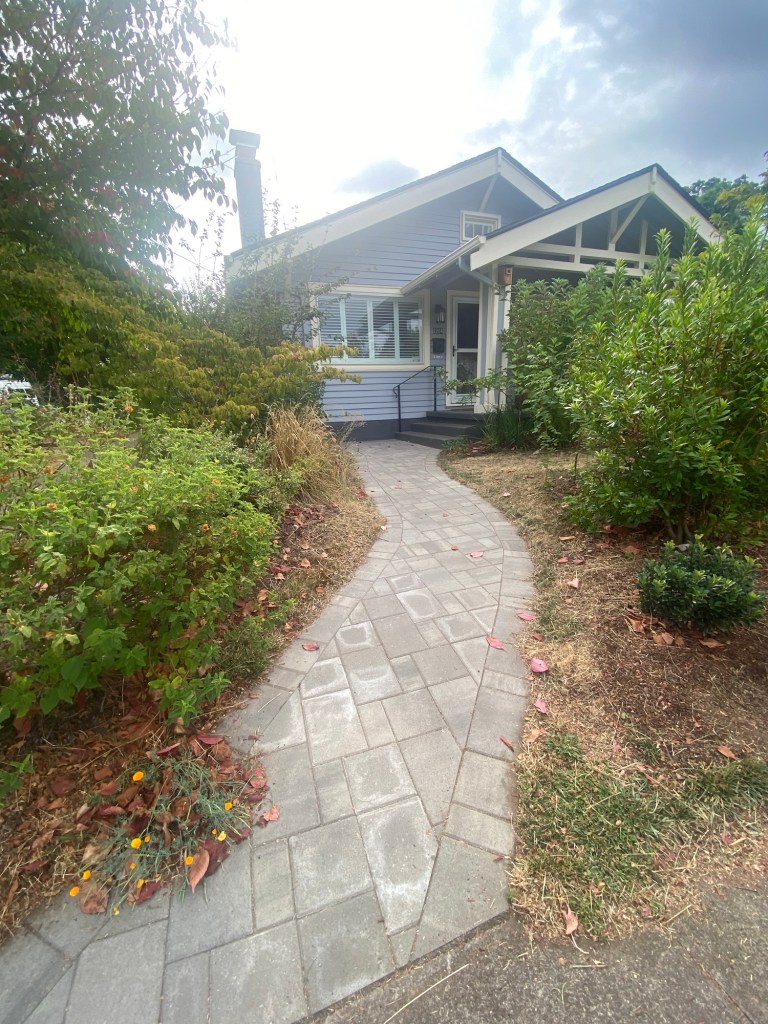
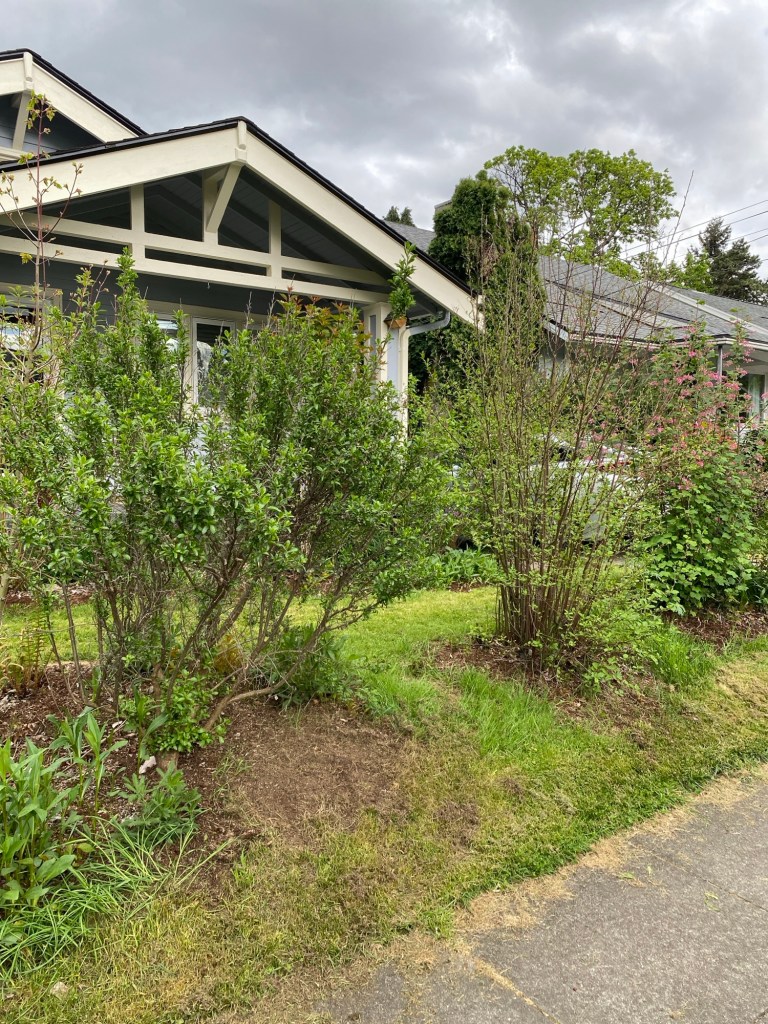
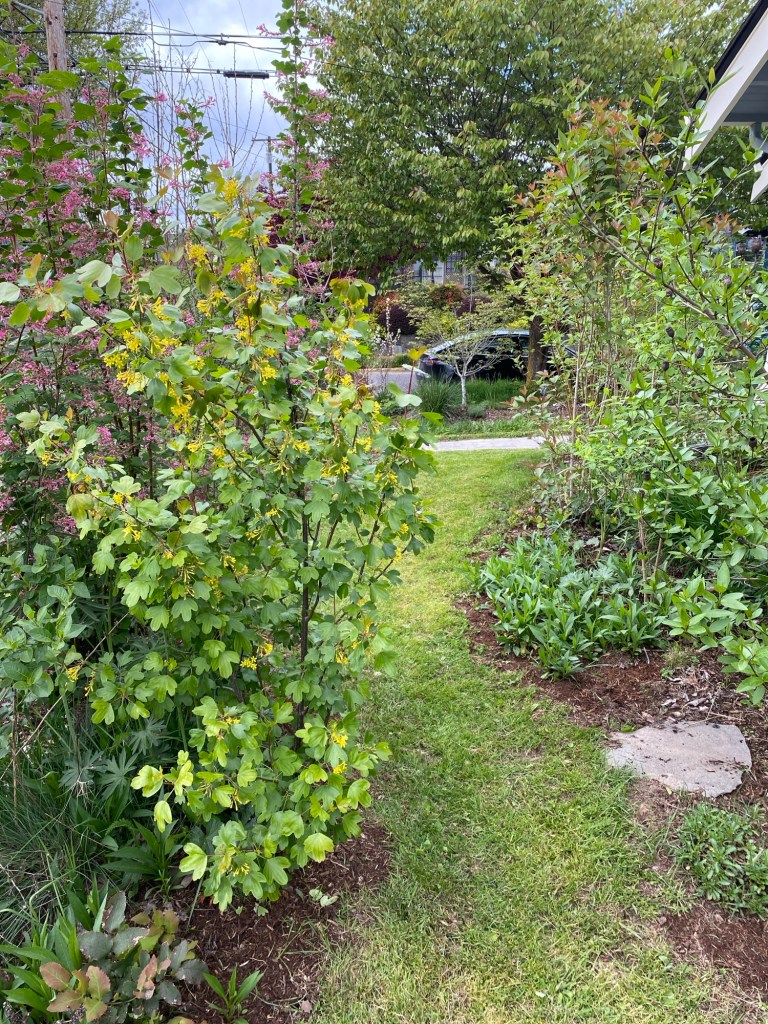
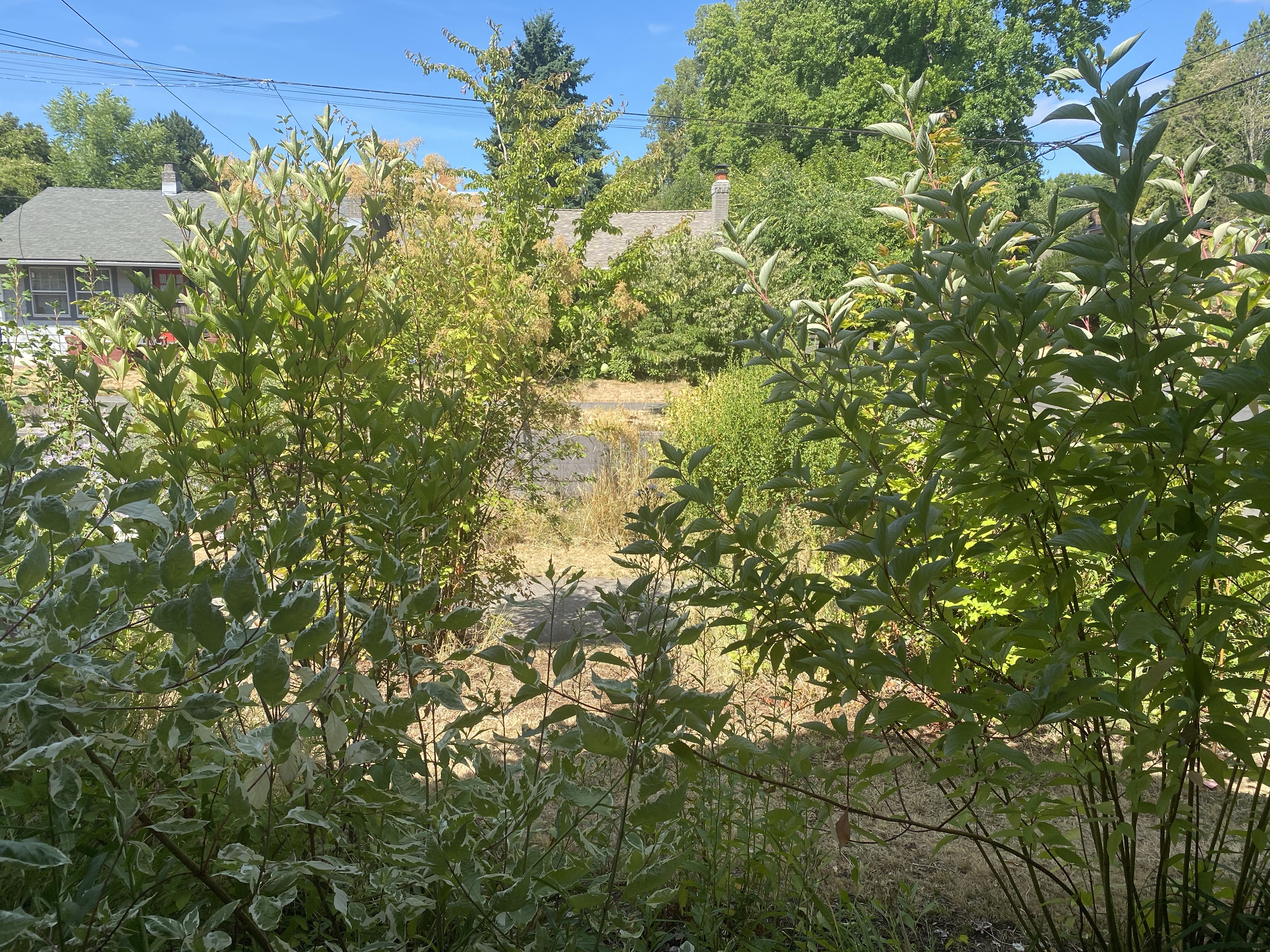
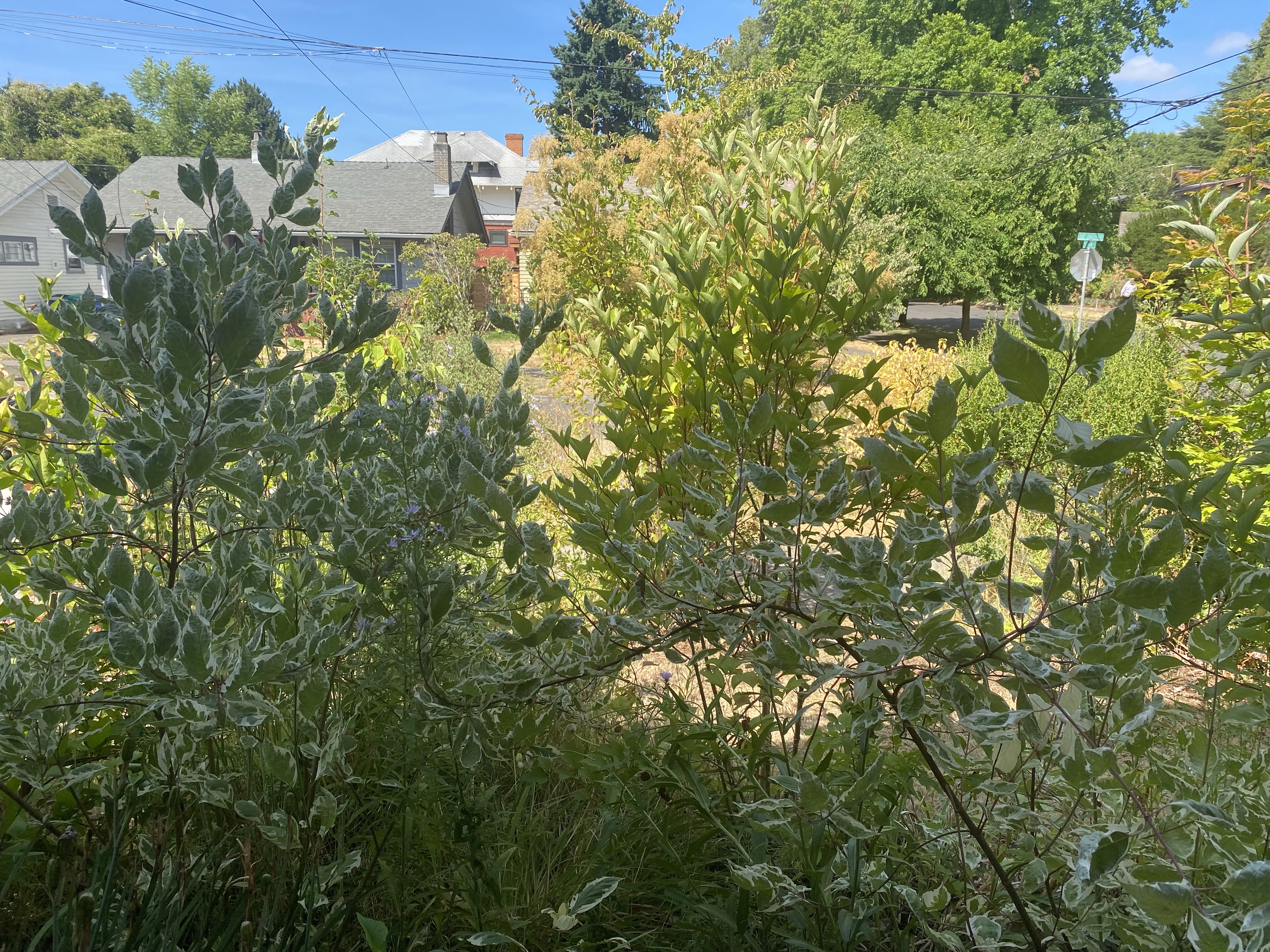
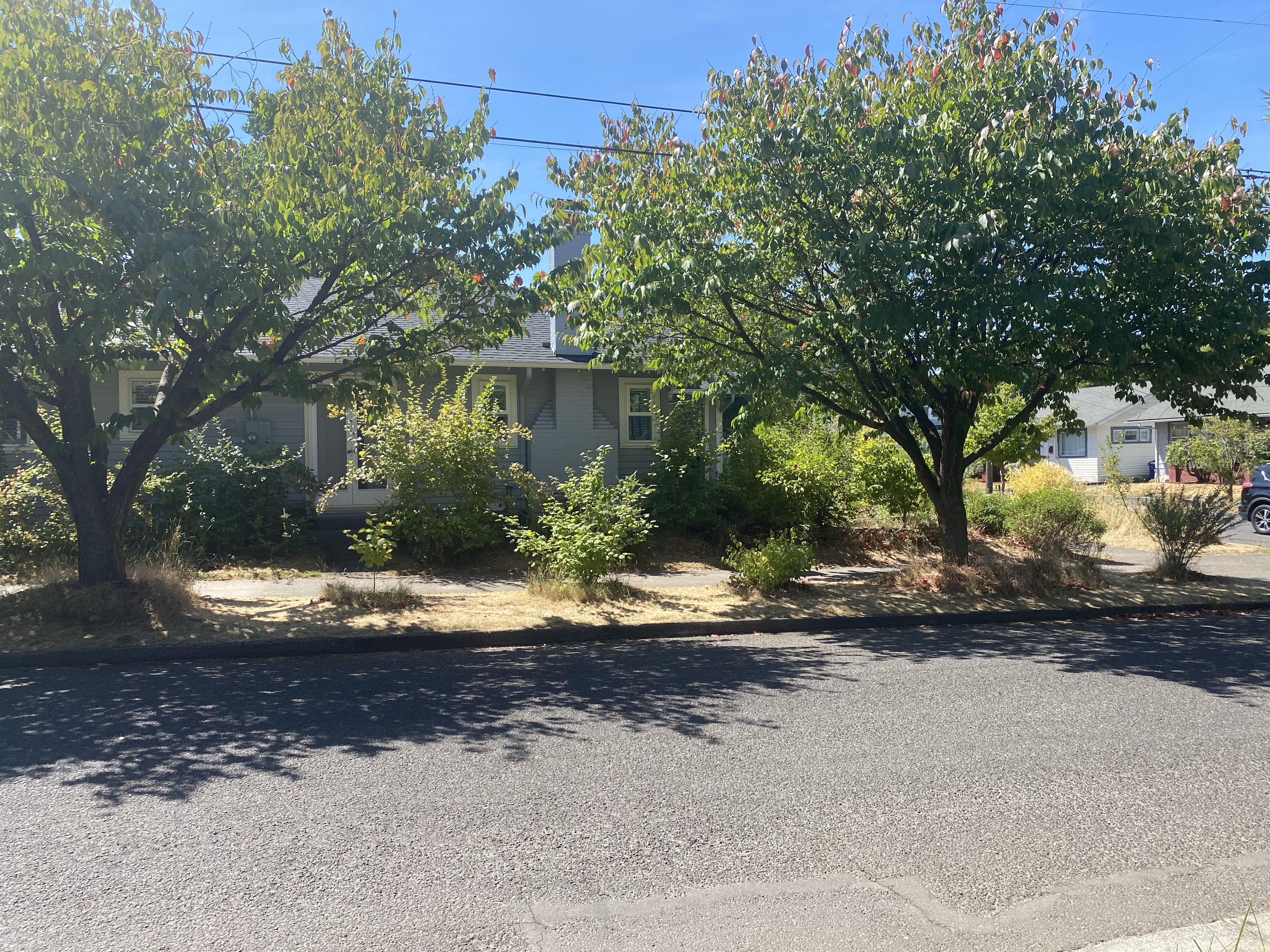
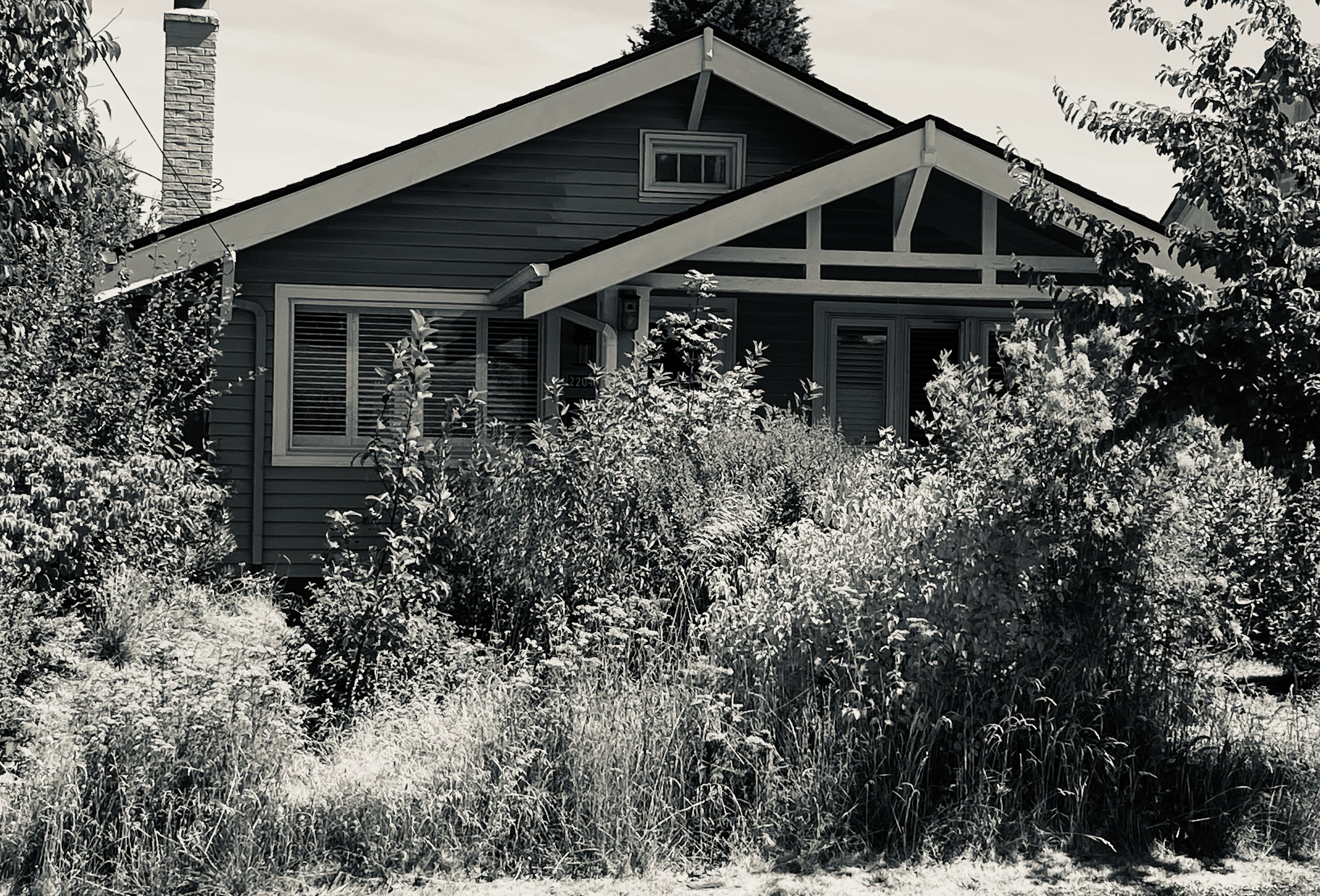
The front porch is seen from the street and yet the landscaping gives it a sense of natural privacy.
Our neighbor also shares greenery with us which is very nice to look at from the porch. All in all, we have lots of nature and yet still feel a part of our local urban spaces.
Looking to the front porchLooking from the front porch to the street
We live in a tiny bungalow in the City of Portland, next to restaurants and other city features. However, our native plants habitat brings us birds and natural micro habitat settings to explore and enjoy.
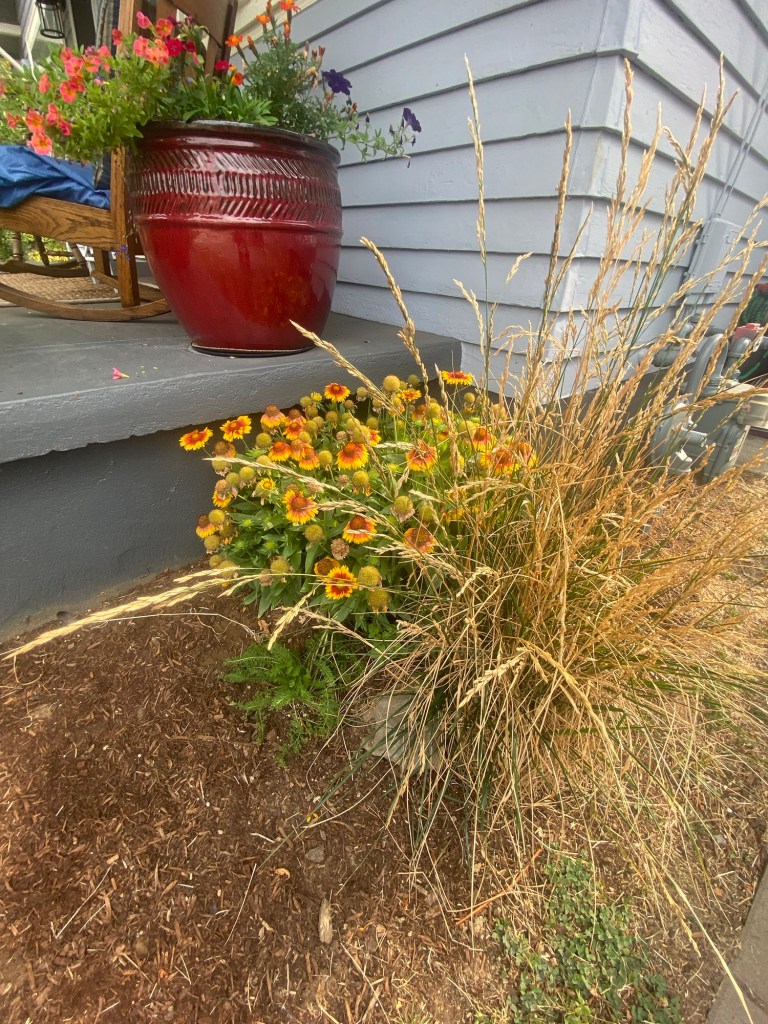
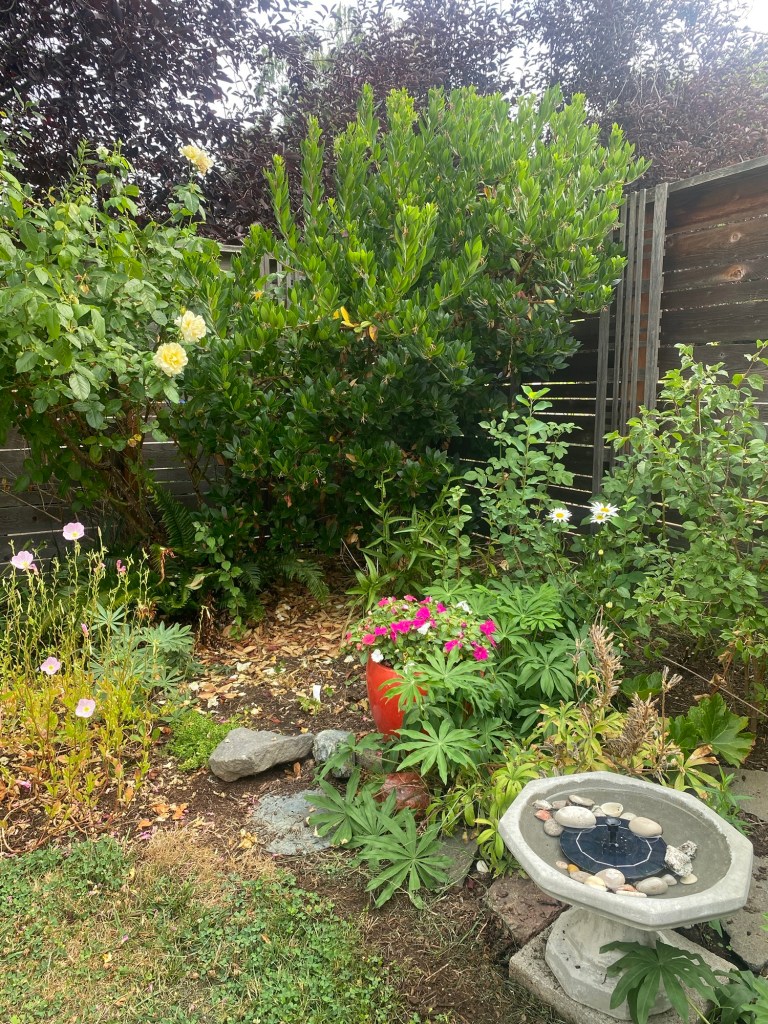
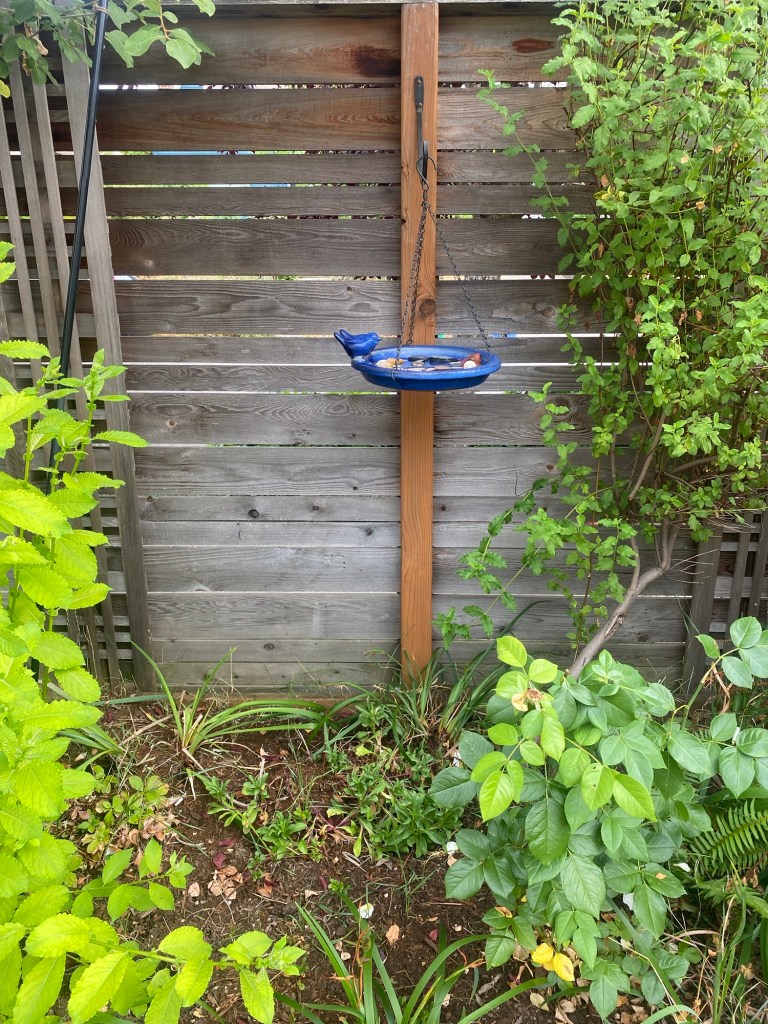
Oregon Sunshine flowers and natural grasses. Backyard with water stations for birdsOur baby Madrone Tree is starting to take shape in the corner.
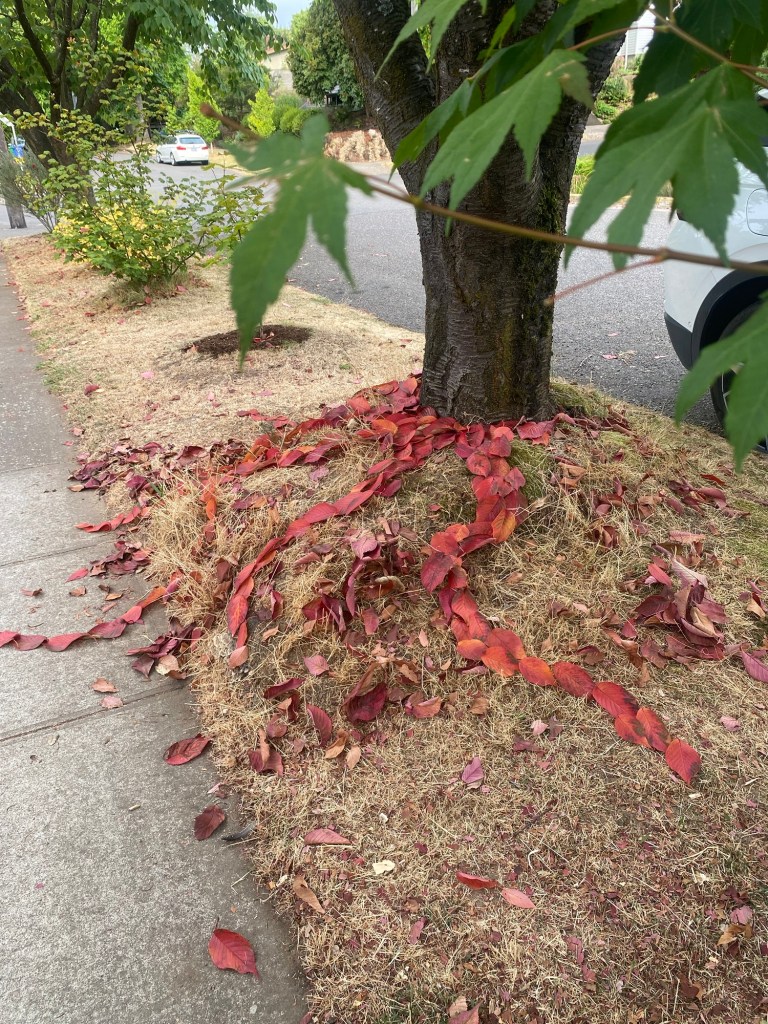
Today is a special day for us as it is our wedding anniversary. Much to our amusement, we watched a passerby this morning as they stopped to enjoy our yard and made a pretty design with leaves from our tree. It was a special anniversary gift from an unknown artist. Thank you!
A Presentation of Art provided by a passerby Front entryway
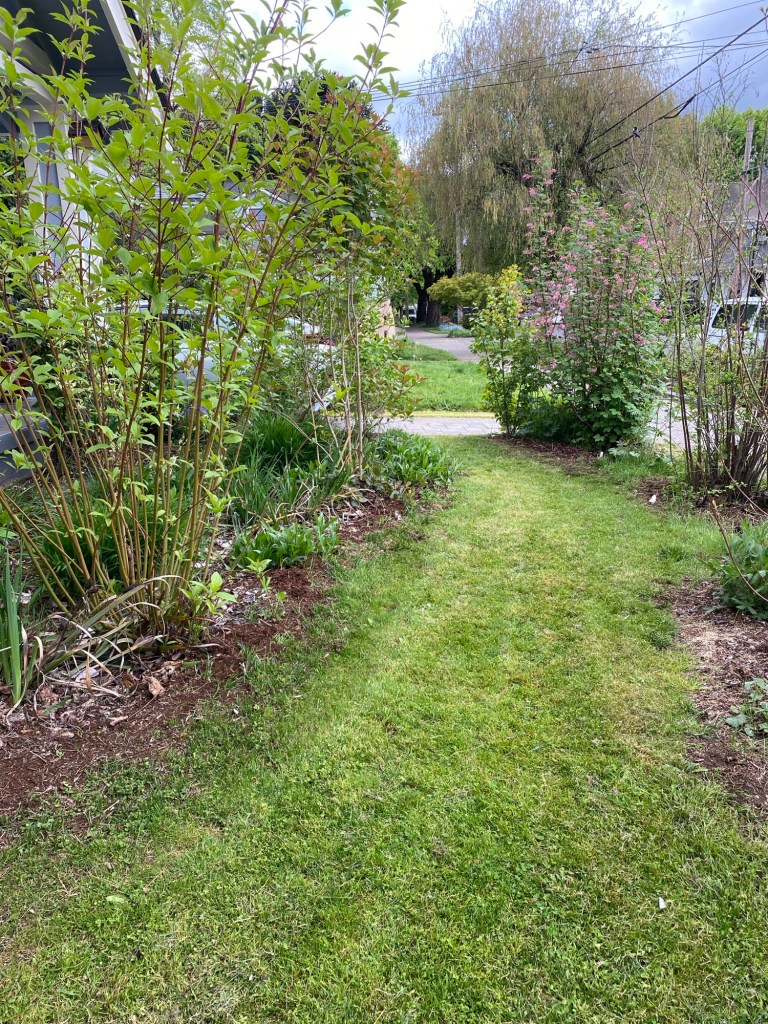
The goal of our small yard is to create a feeling of naturalness, but with some more deliberate landscaping using a small amount of mowed grass to give it a bit of shape.
I have tried to blend the plants between mowed grasses and naturalized areas to make softer transitions. The idea is to move softly between greenness and texture.
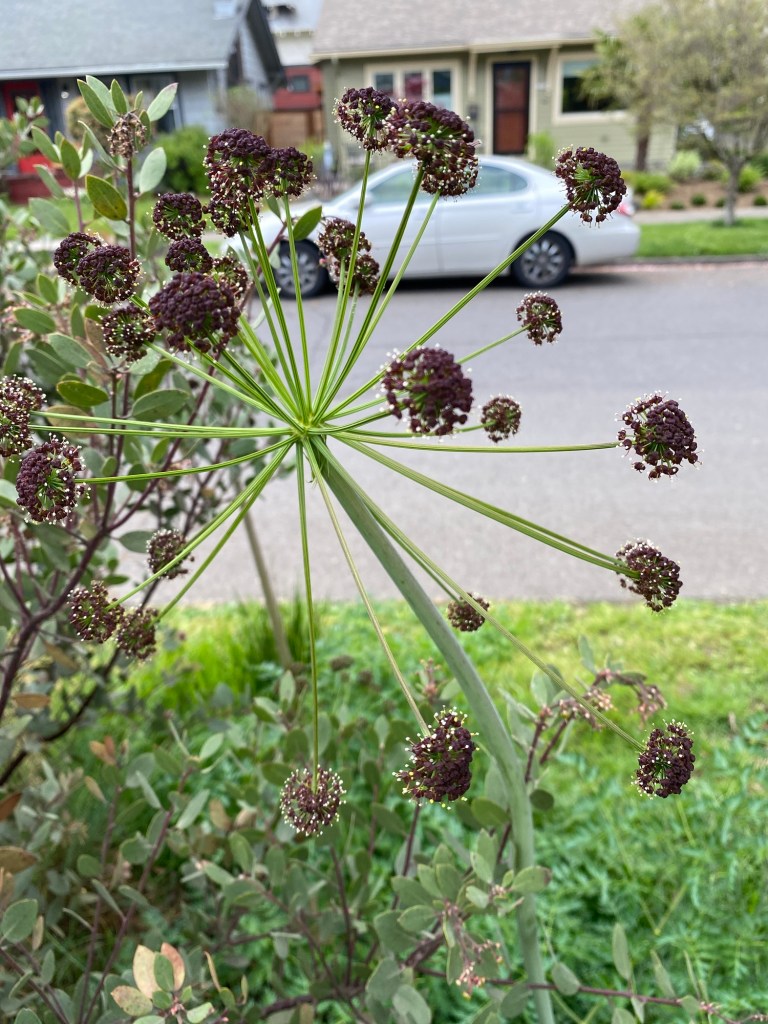
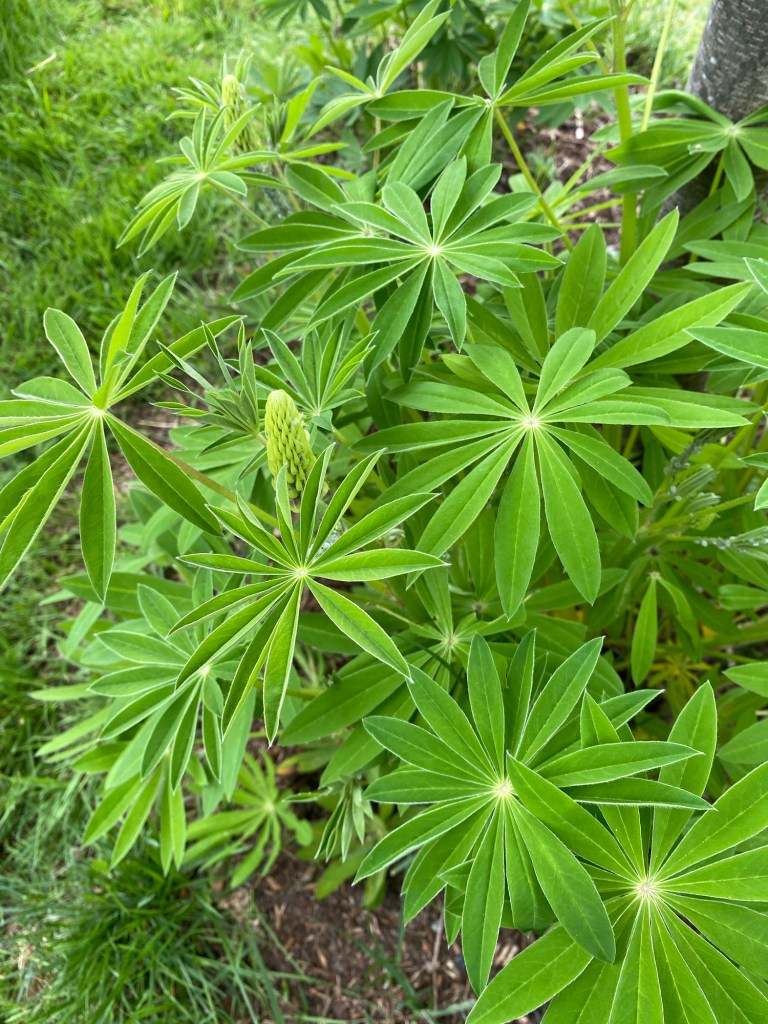
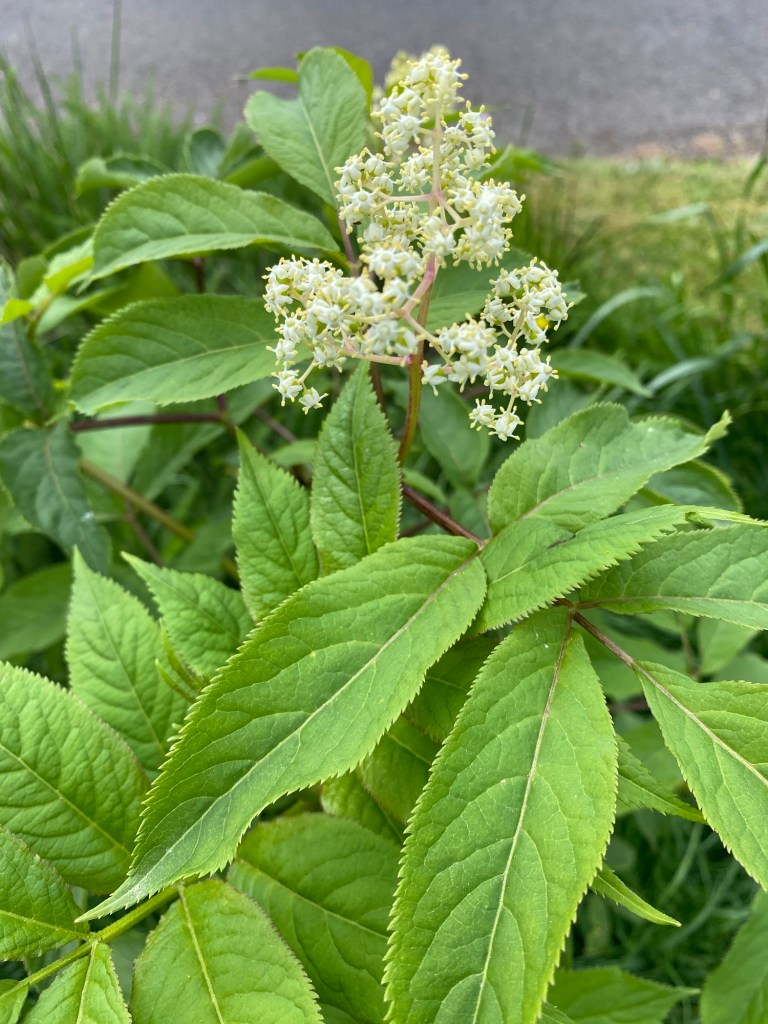
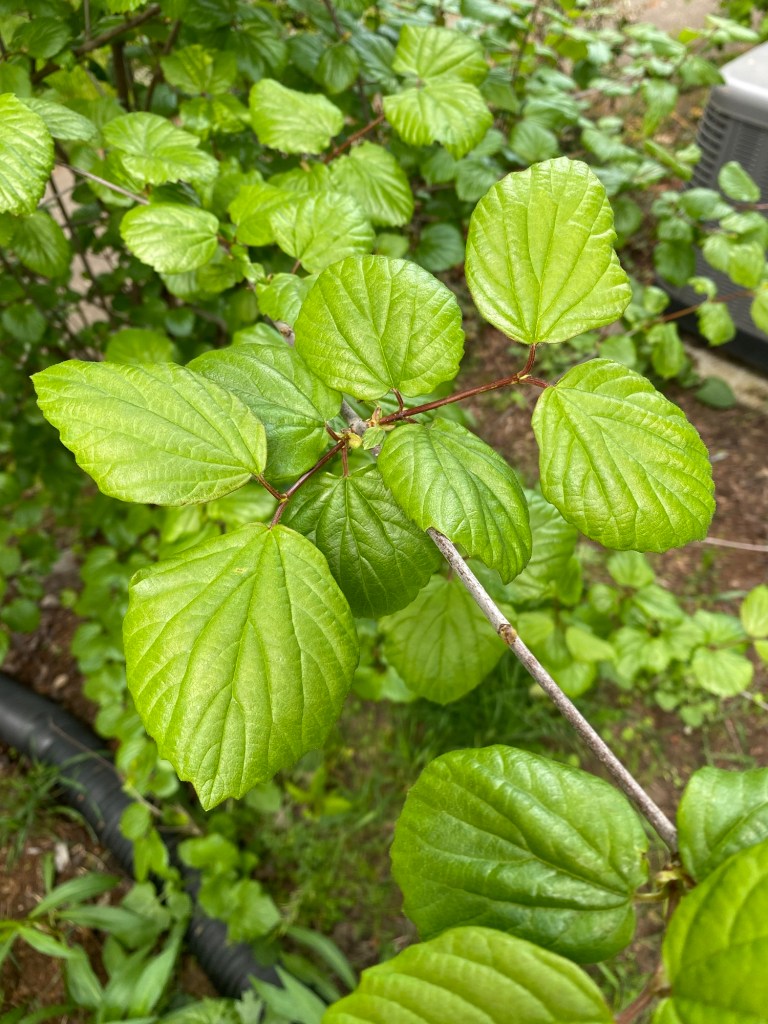
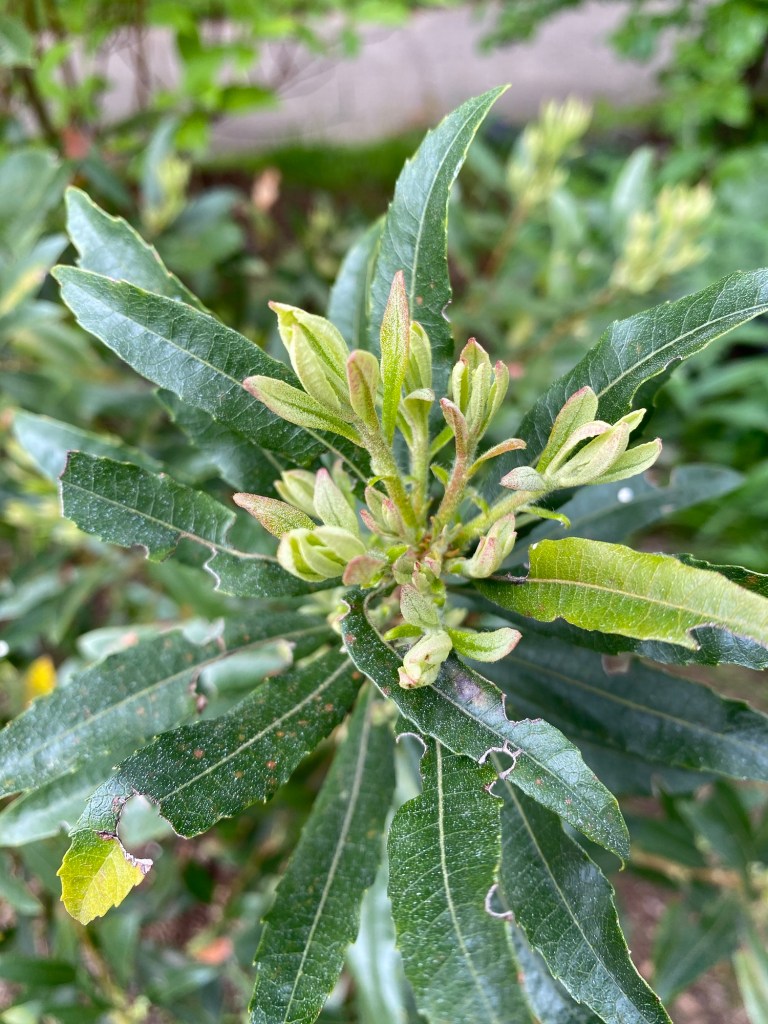
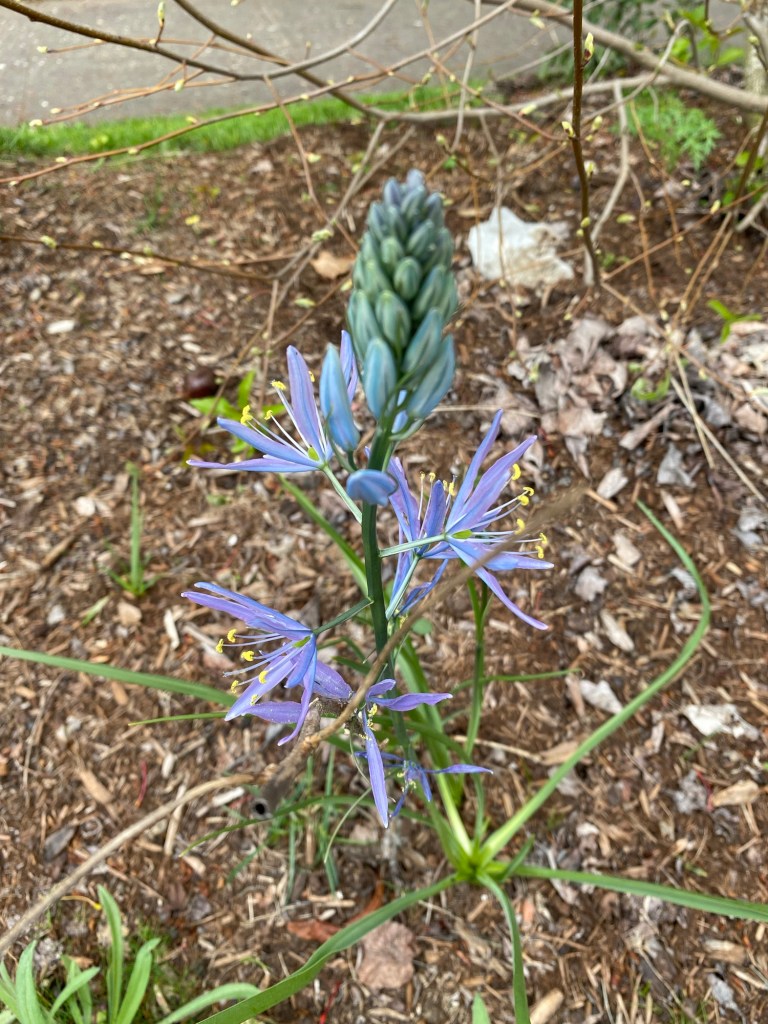
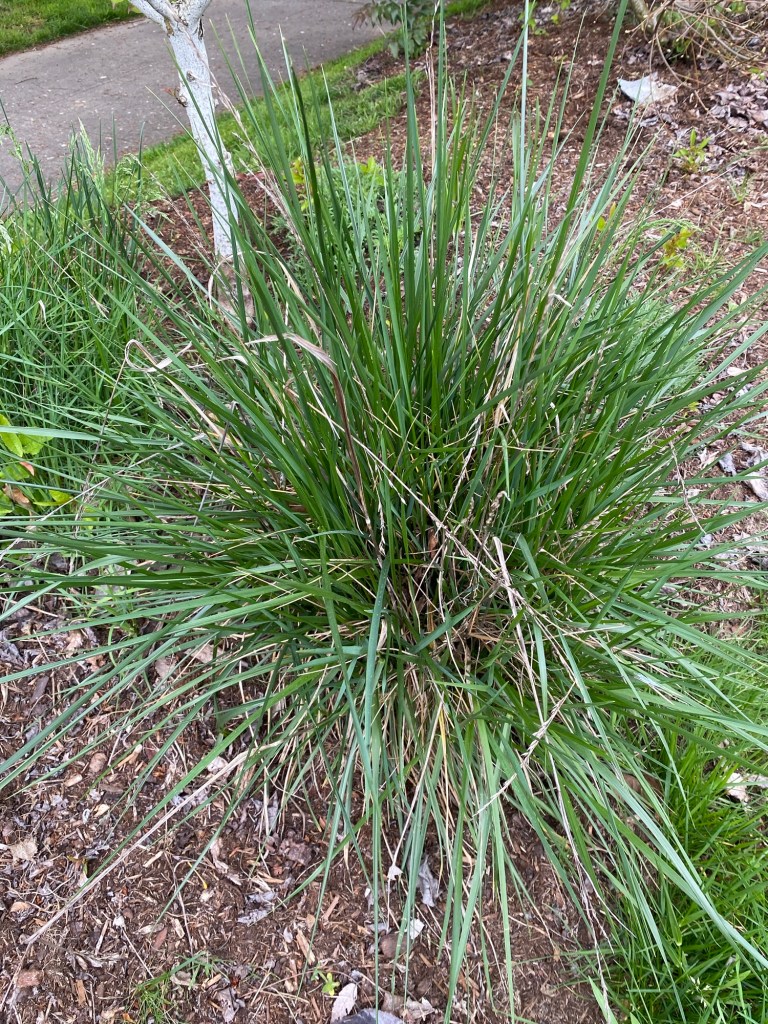
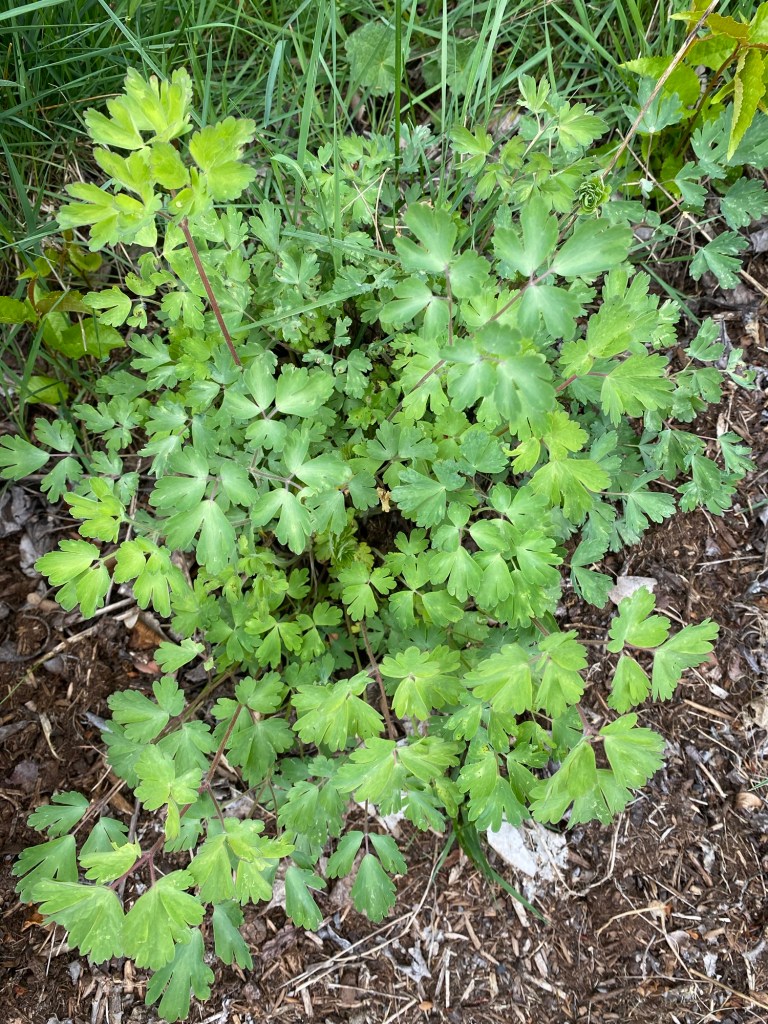
A number of readers asked for some specifics regarding the plants that I had put in. Plant names are located in the photo captions.
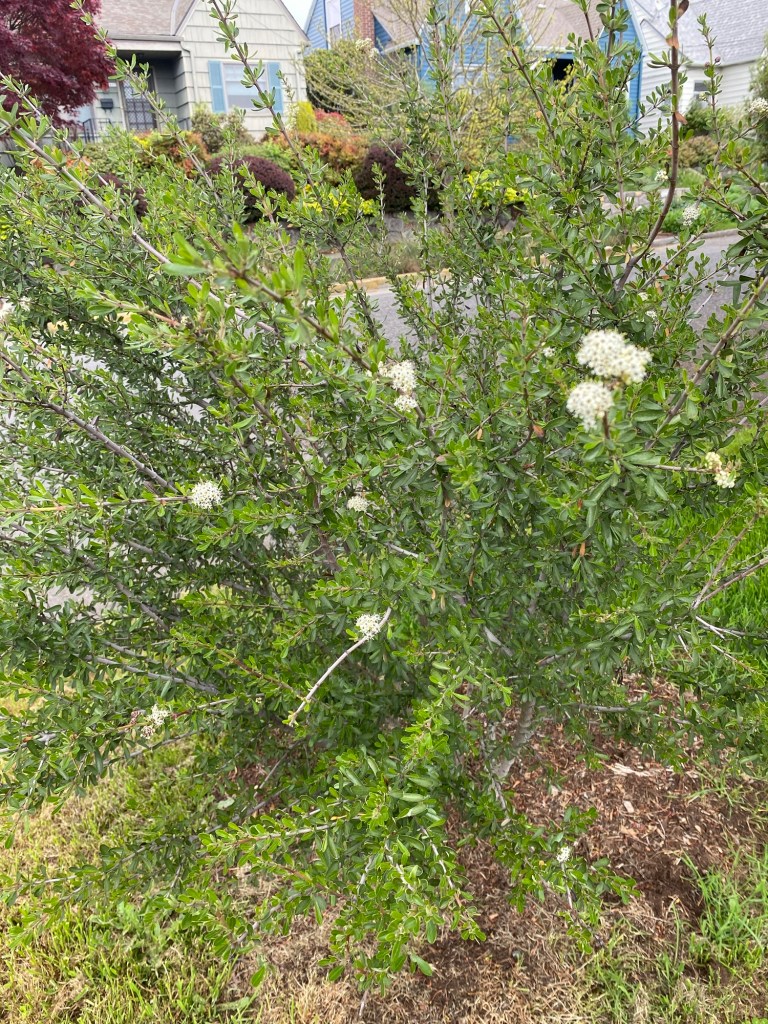
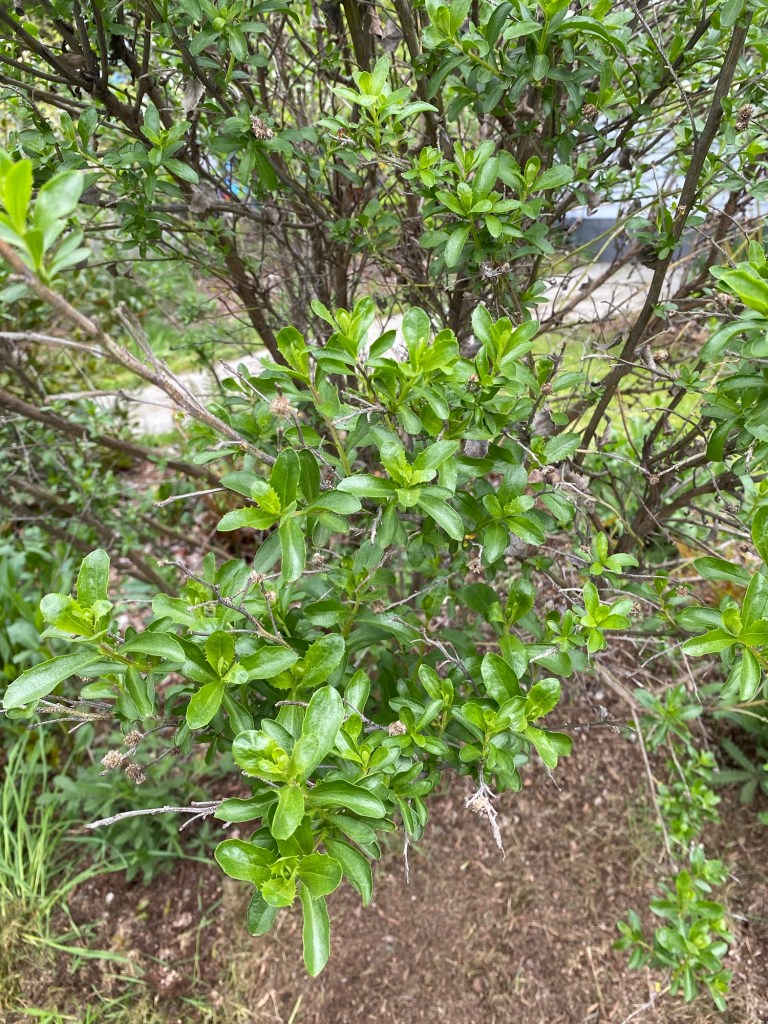
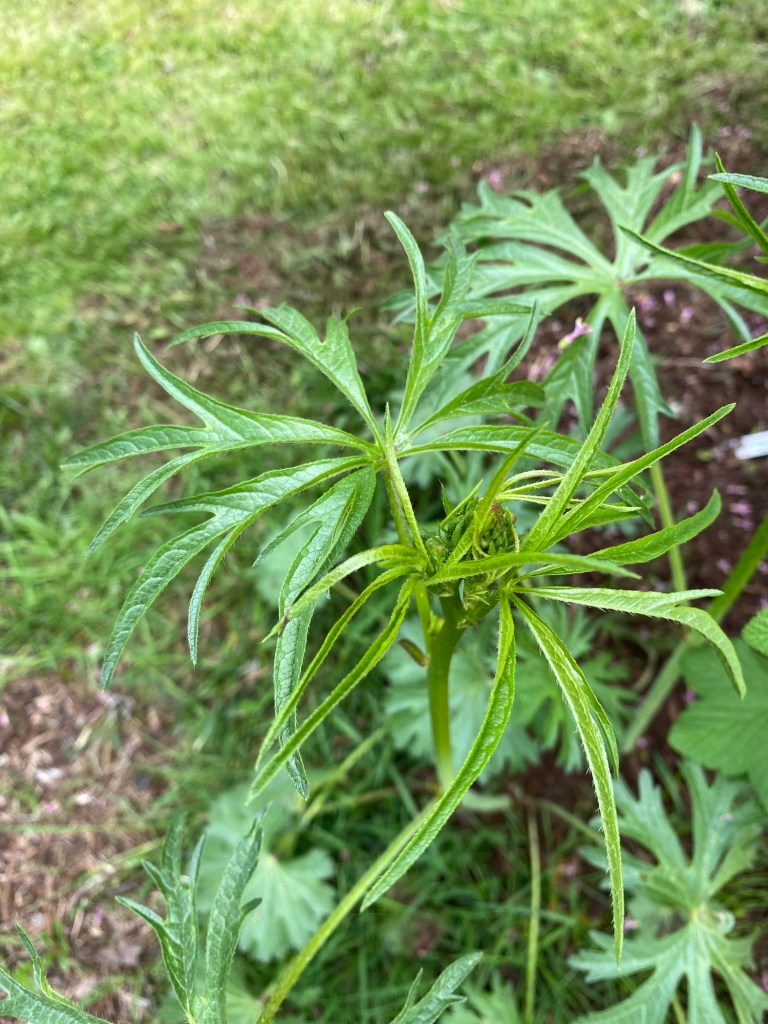
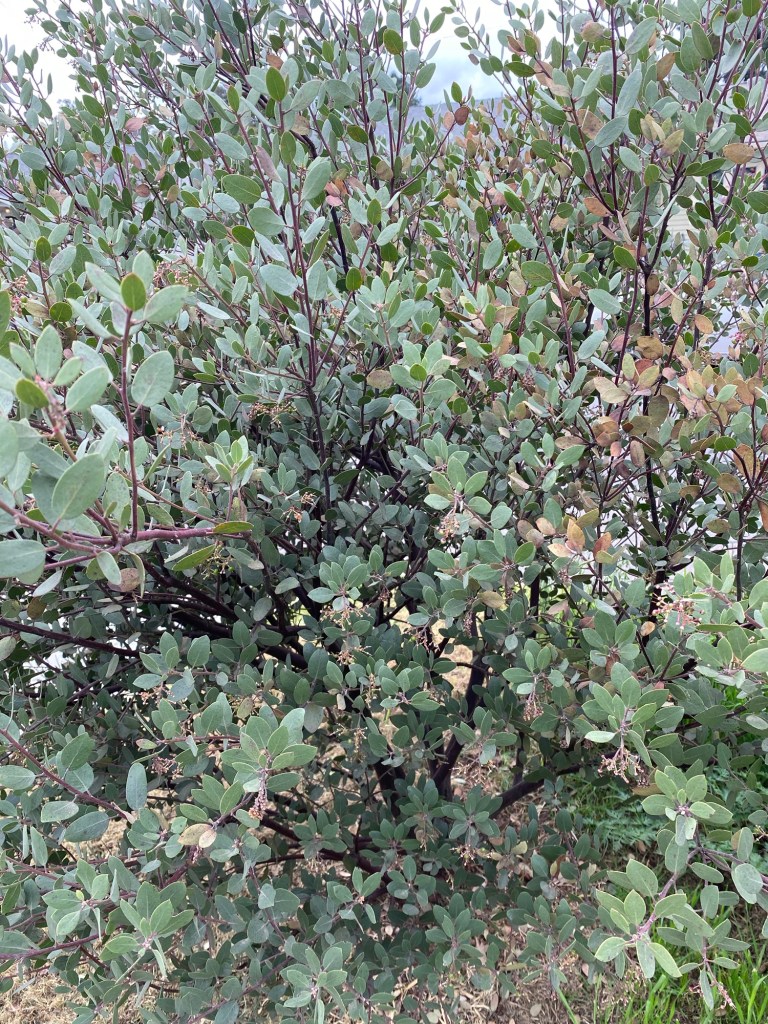
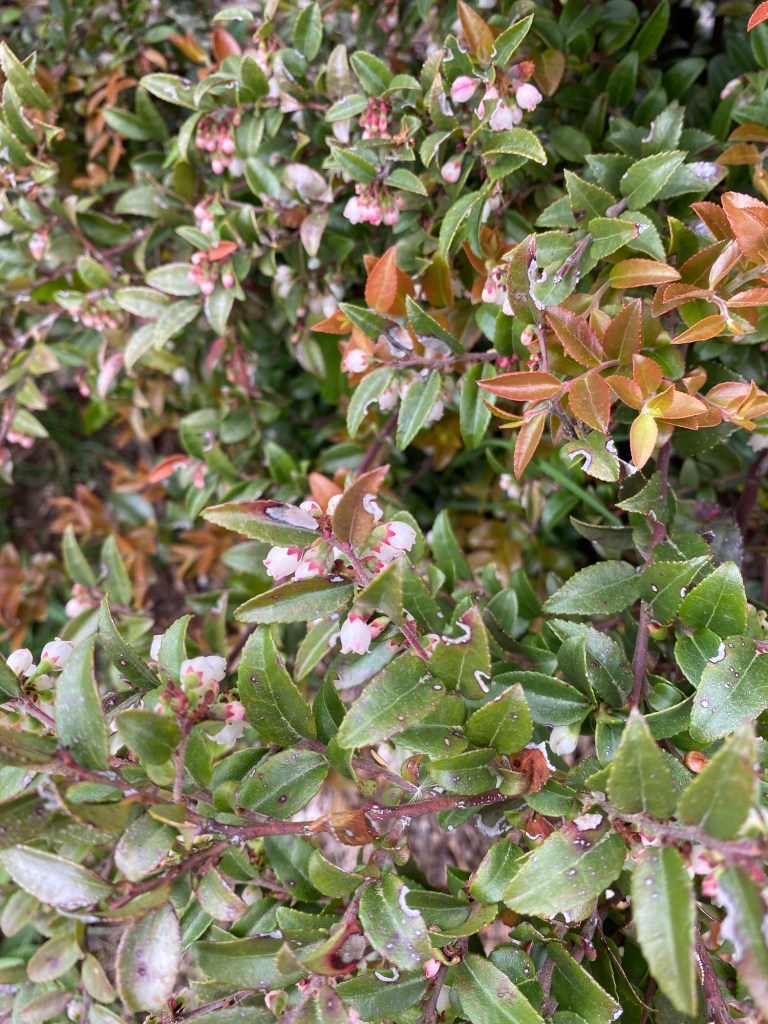
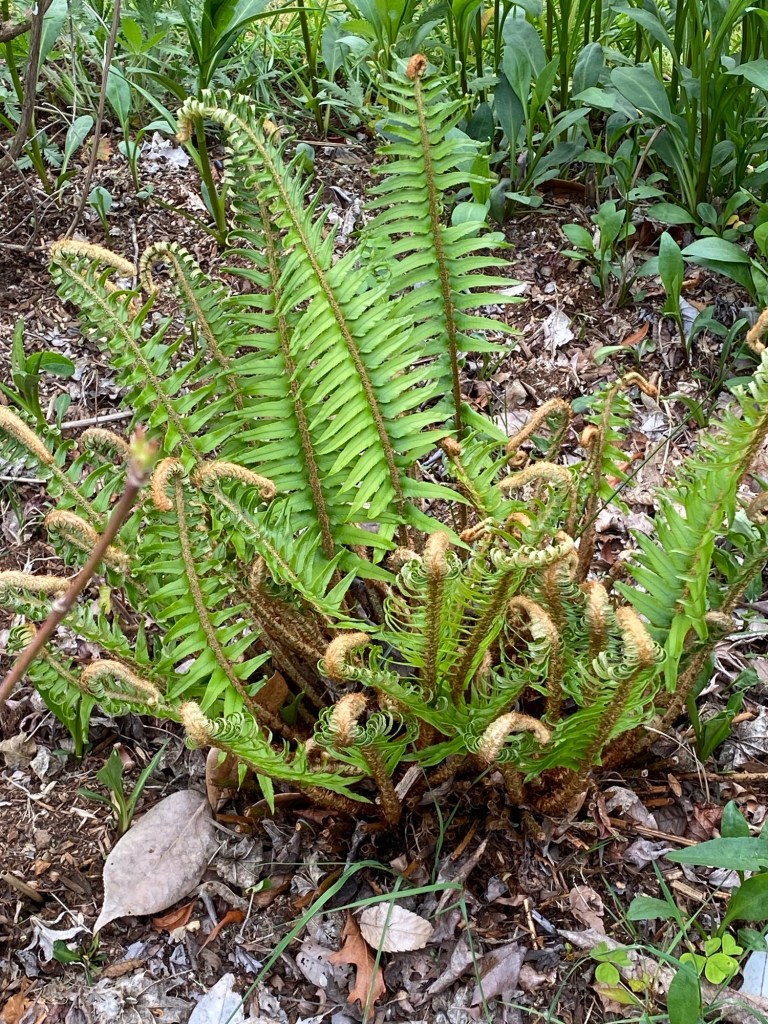
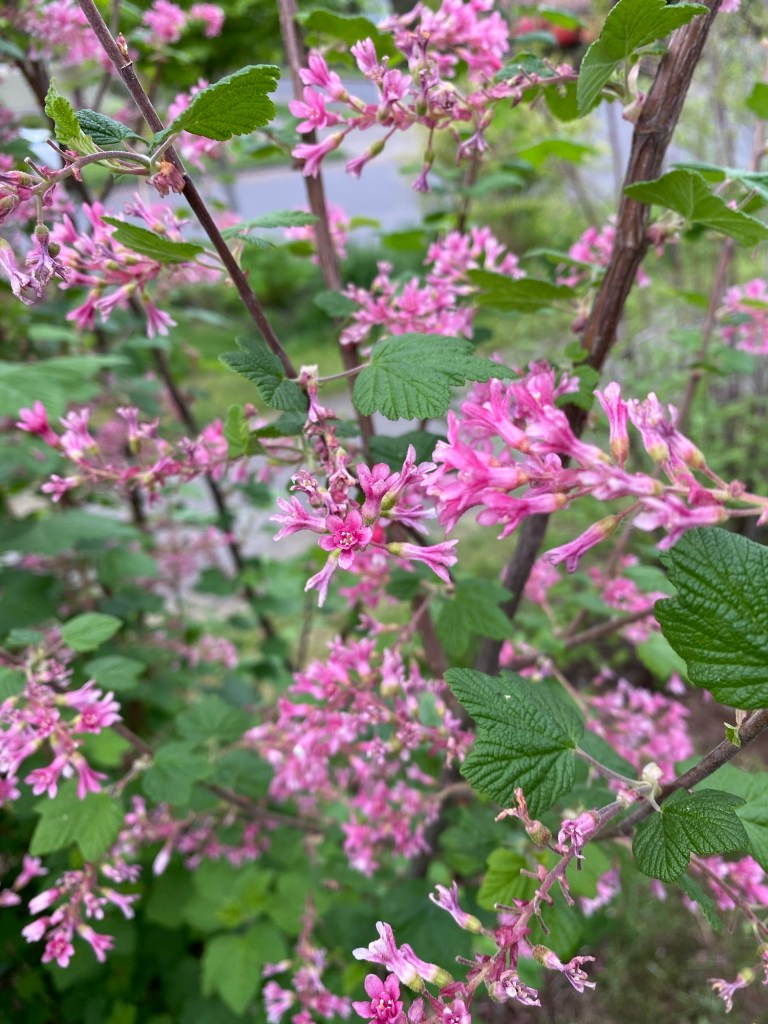
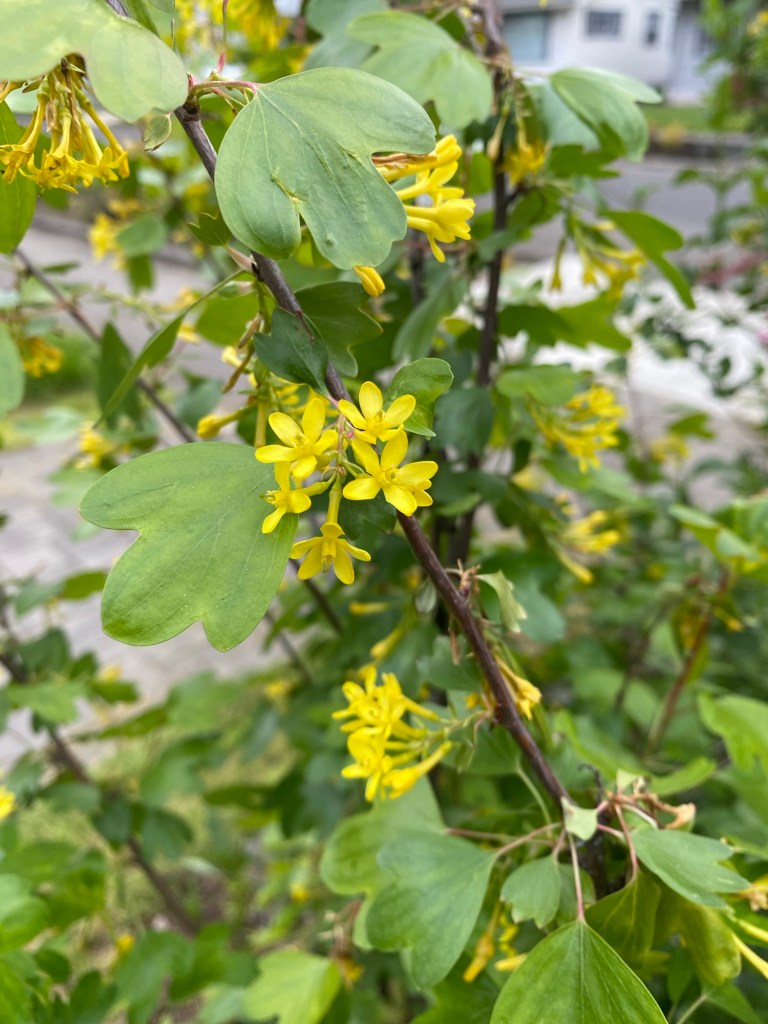
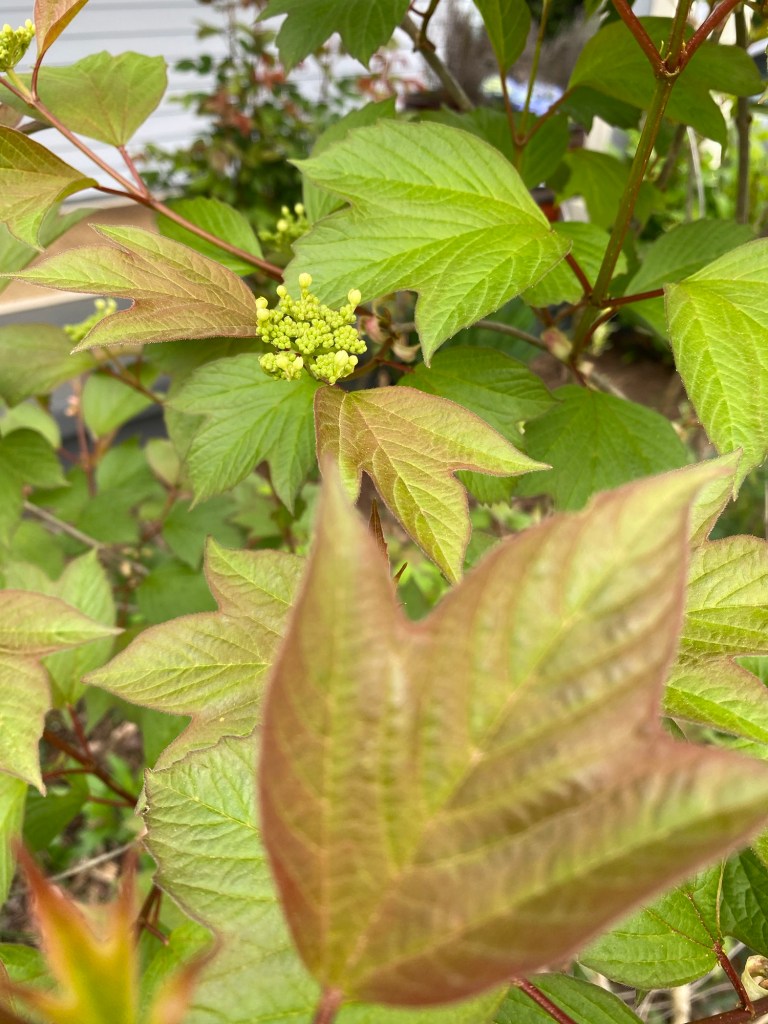
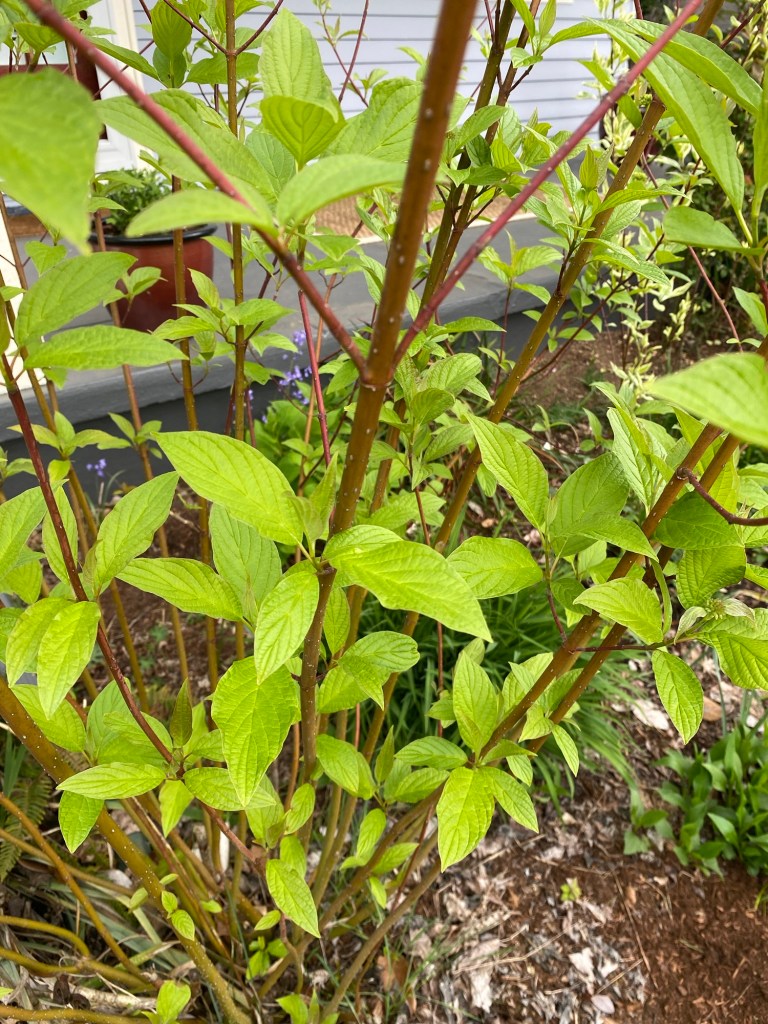
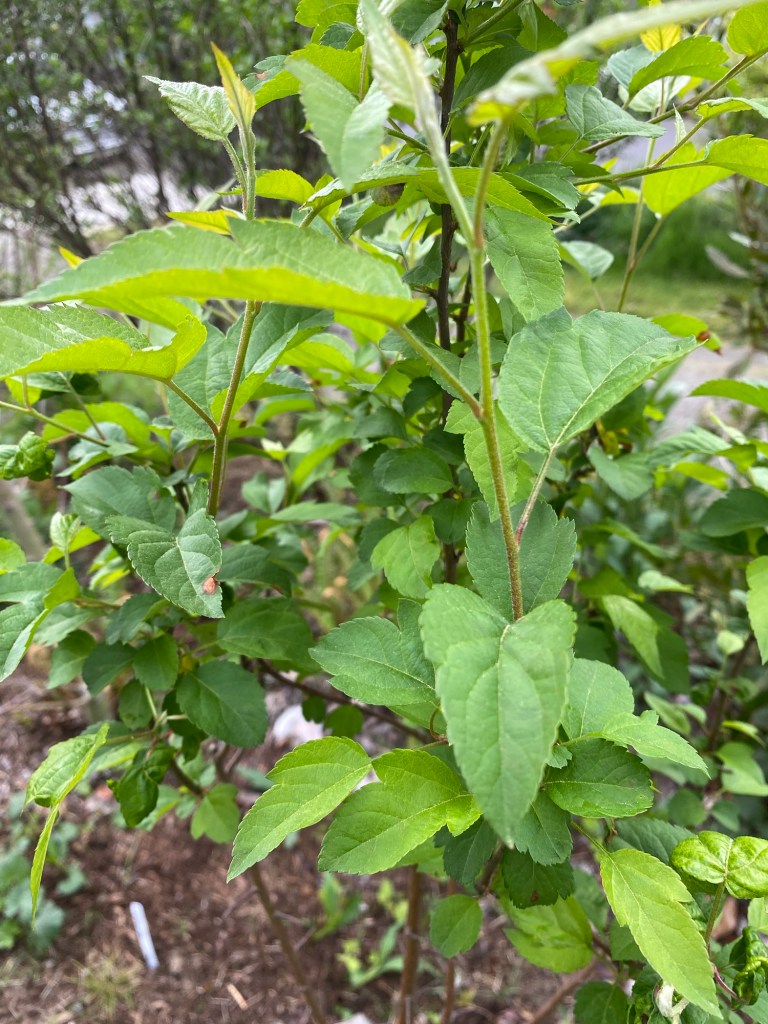
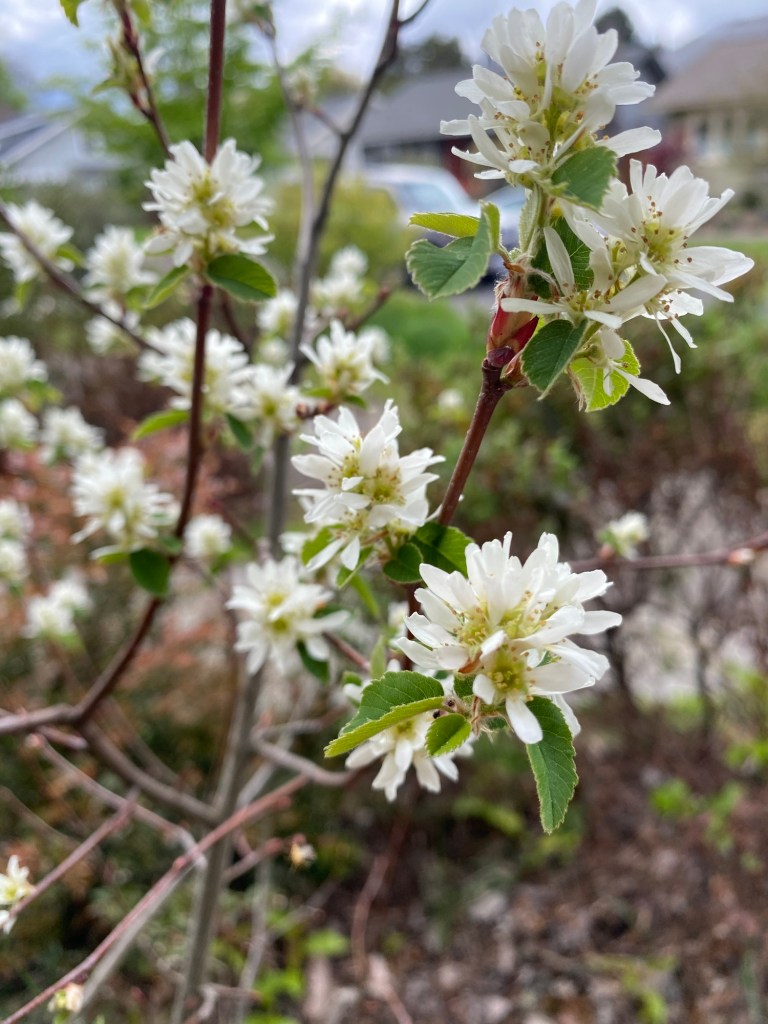
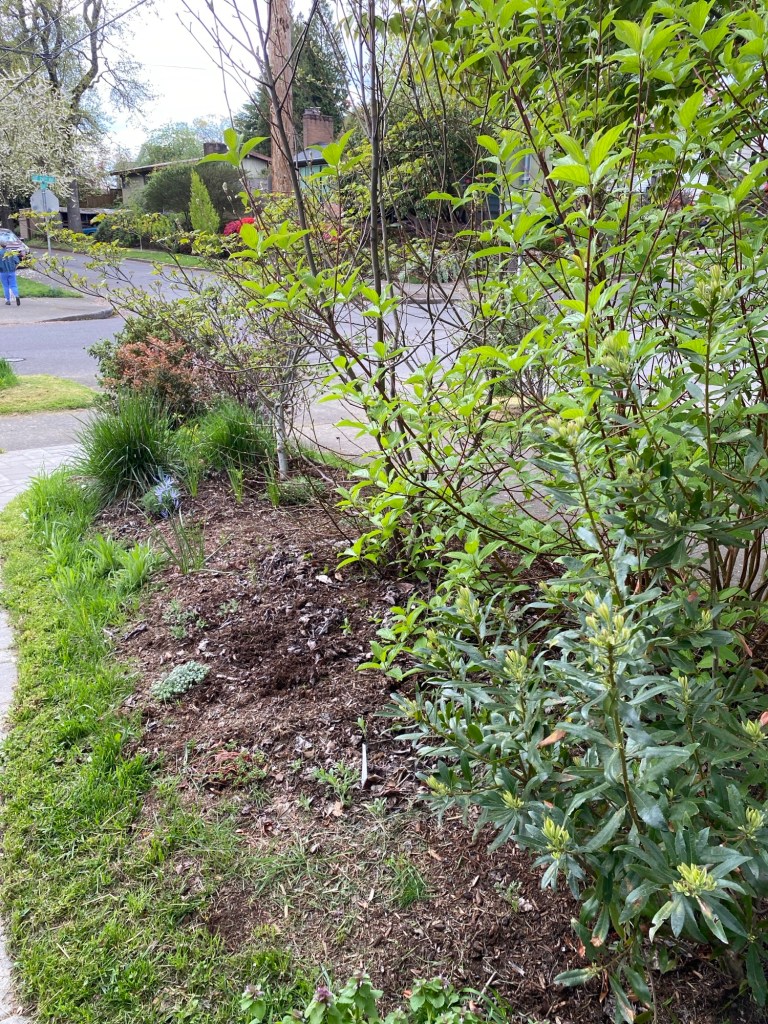
Buck Brush or Ceanothus cuneatusCoyote brush or Baccharis pilularisAconite or AconitumManzanita or ArctostaphylosFernleaf biscuitroot or Lomatium dissectum Lupin or lupineCornish sanguinea (nonnative)Red elderberry or Sambusa racemosaVibernumCalifornia bayberryGreat camas or Camassia leichtliniiGreater tussock sedge or Carey paniculataColumbine or AquilegiaEvergreen huckleberry or Vaccinium ovatumWestern Swordfern or Polystichum munitumRed Flowering Currant or Ribes sanguineumGolden currant or Ribes aureumVibernum Red-osier dogwood or Cornus sericea SpiresWestern serviceberry or Amelanchier alnifolia
We have a small yard, less than a quarter acre in total. The plants photographed for this blog are front yard plants only.
The overall effect looks like this in early spring.
I will continue to photograph the yard as the seasons go by to show how it changes over the seasons.
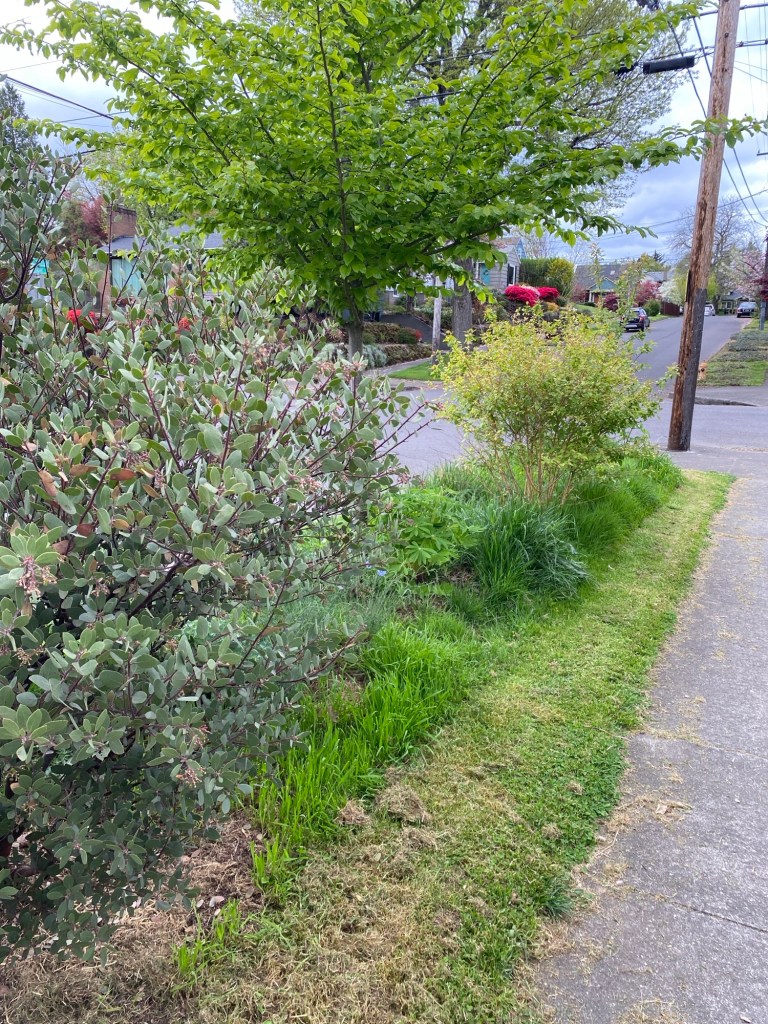
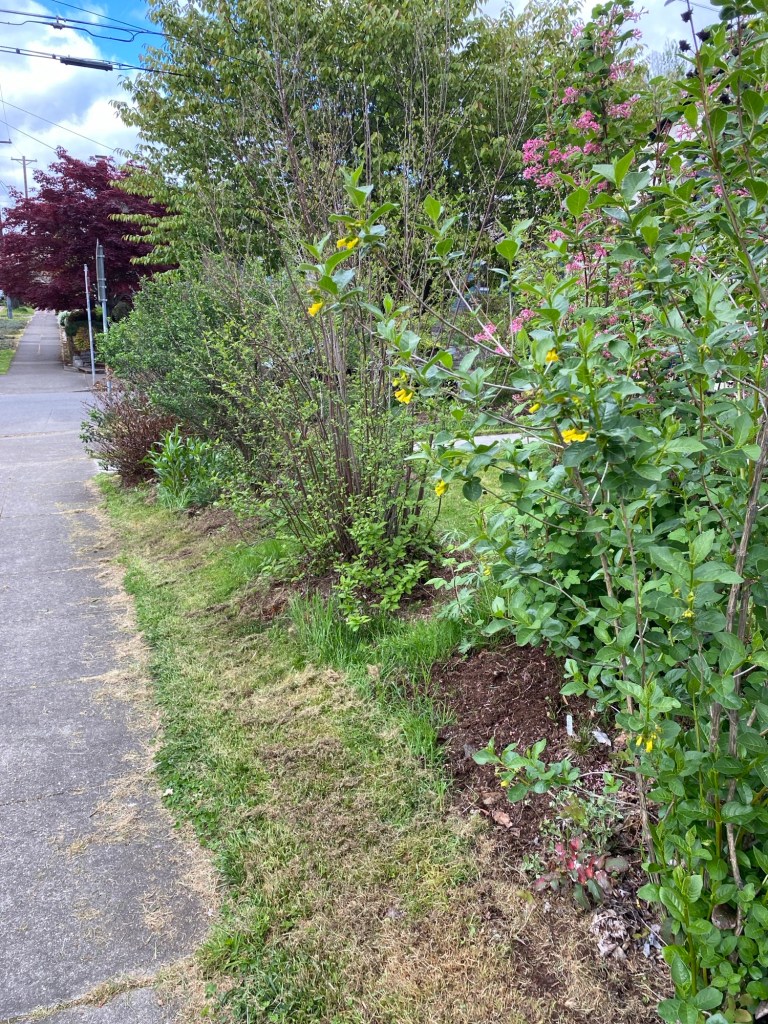
Small front yardSpace between sidewalk and street. In the middle is the tree called Persian Ironwood or Parrotia Persia, a city approved tree. Front yard next to sidewalk
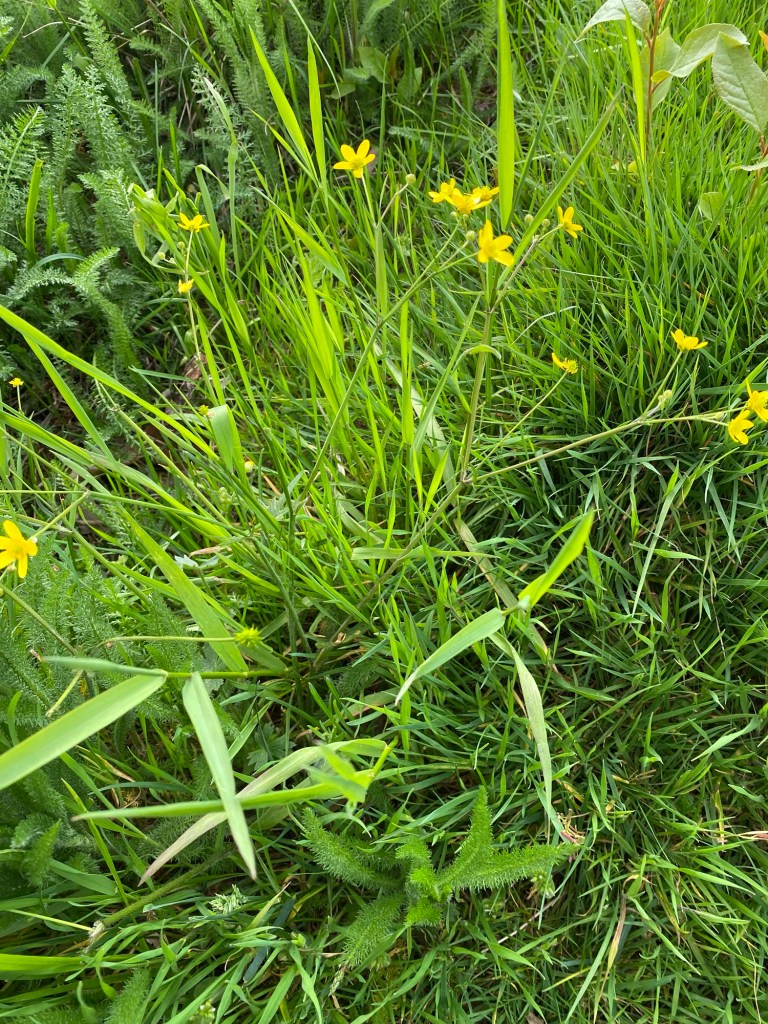
A tiny little yellow ranunculus already peeks through the grasses.
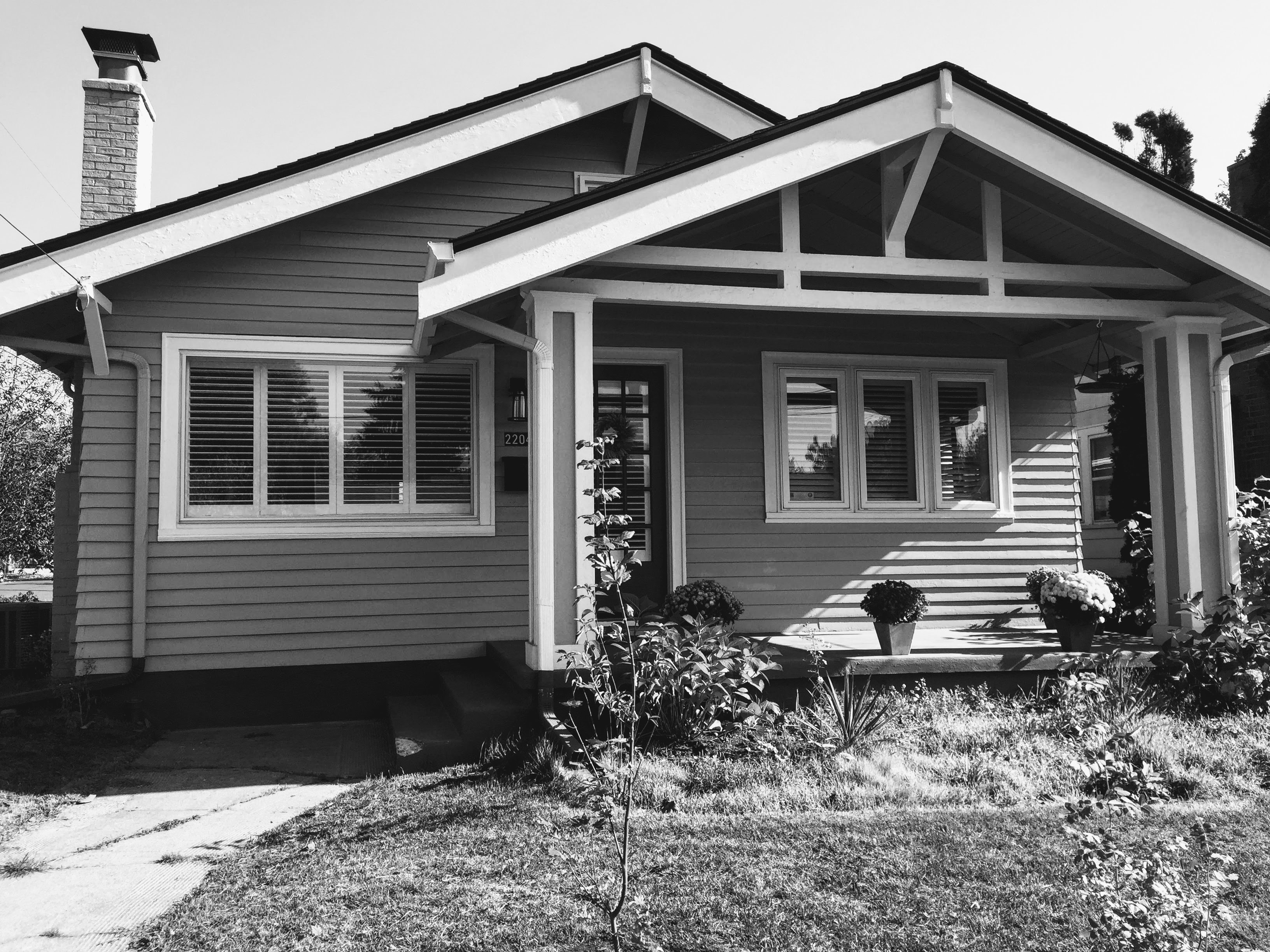
We started landscaping our Portland bungalow with native plants about five years ago. When we moved in, the small yard was almost 100% green grass. We began by planting a small area in front of our porch with low to the ground natives.
Summer, 2018
Soon after, we planted some native trees at various locations to provide some structure and differences of height. We have a very small yard and so our trees that we planted are not going to be more than 20 or 30 feet tall, fully grown.
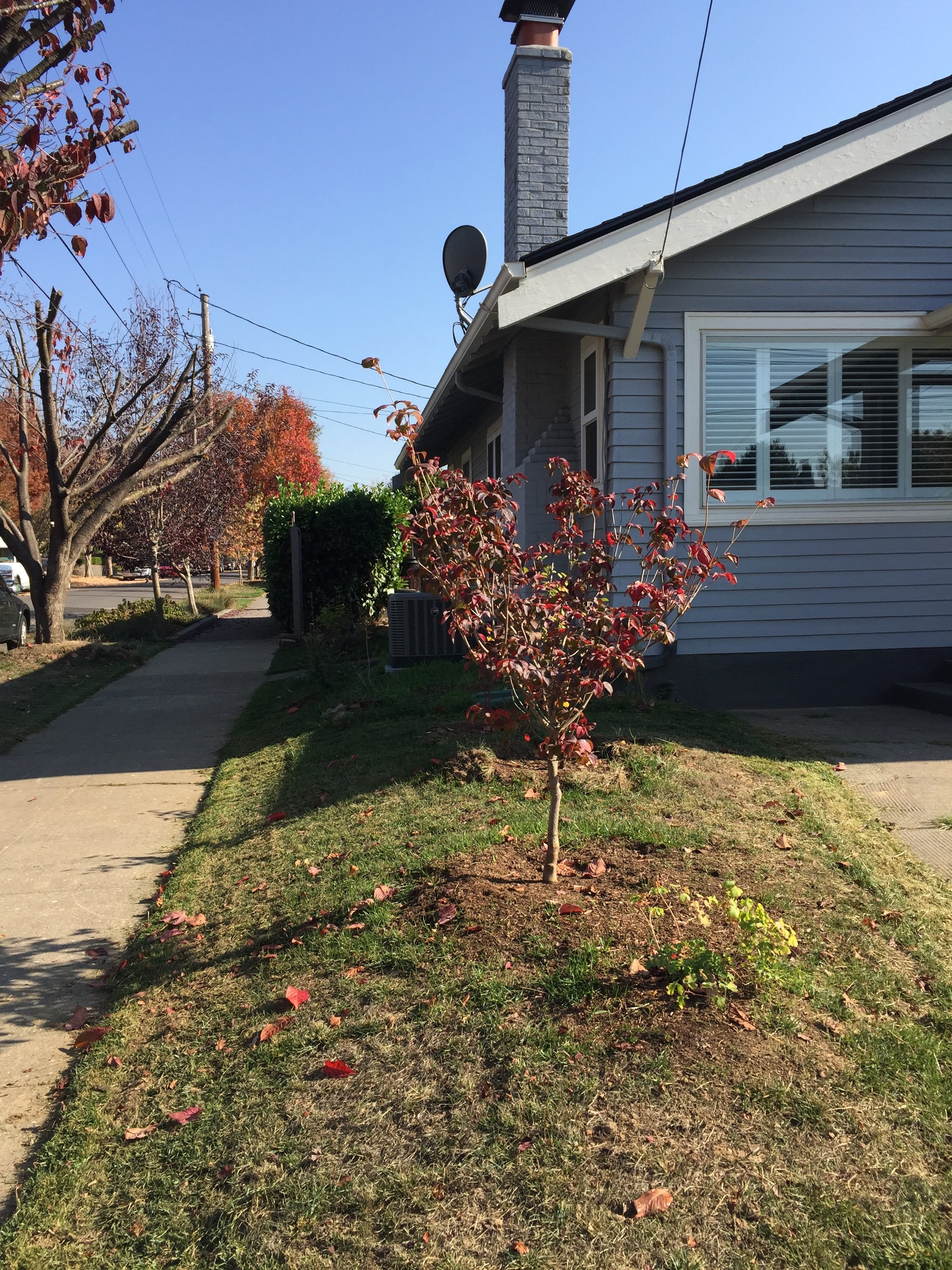
Dogwood tree planted
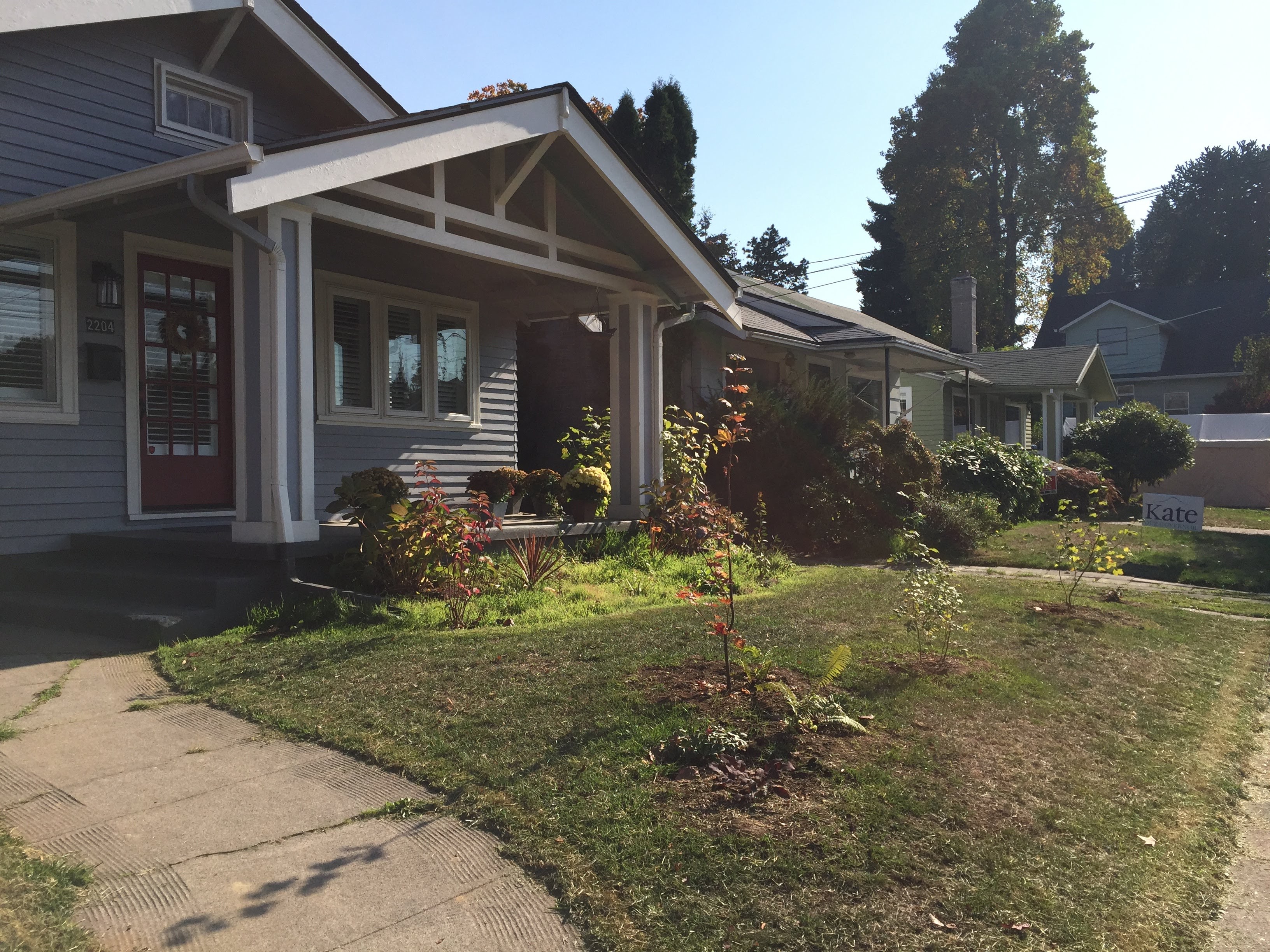
Front yard at starting point. Three native bushes, or small trees, planted.
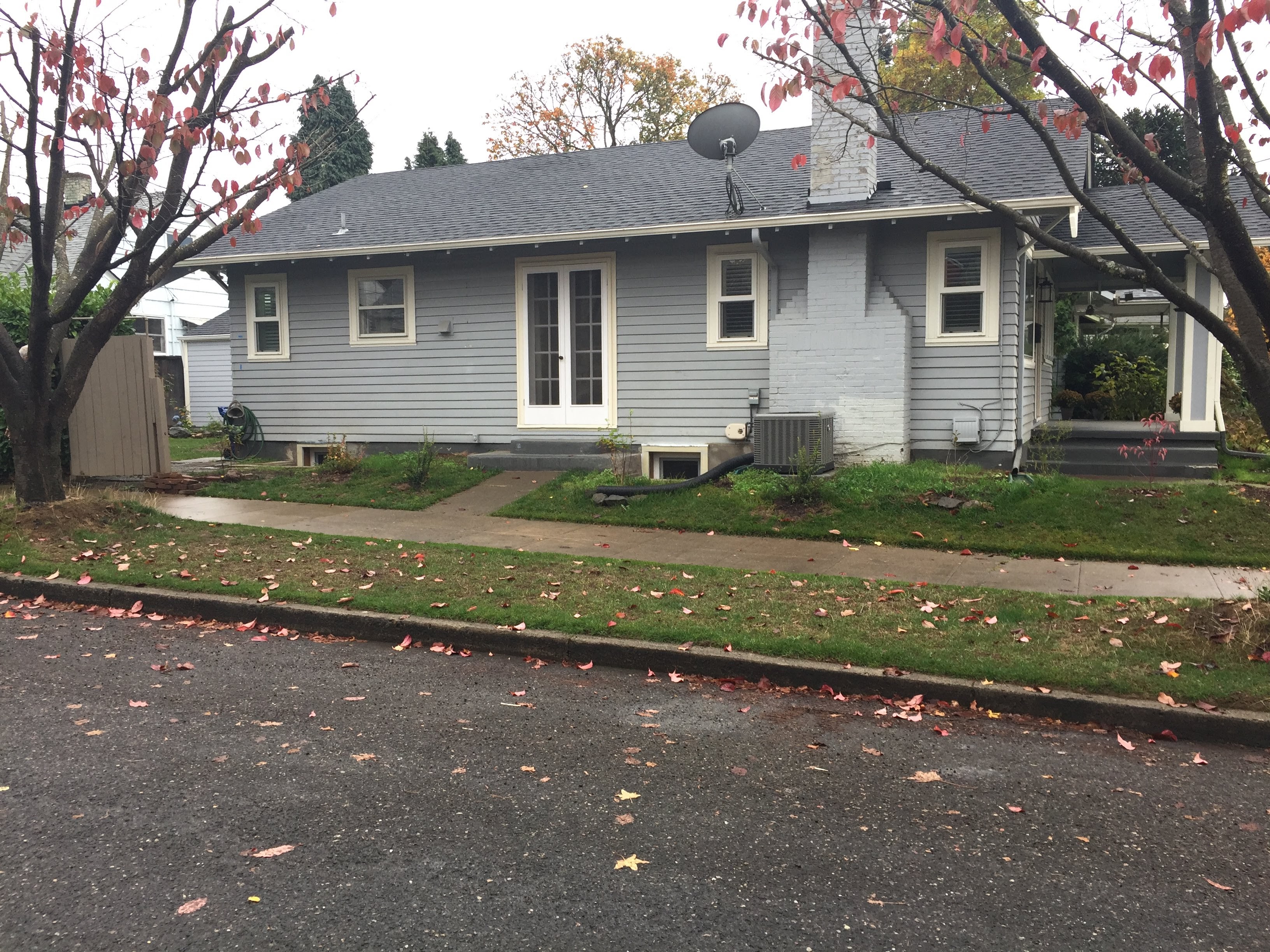
Side yard at starting point
in our side yard, we planted small groups of native bushes and grasses that we called “islands”. We mow the lawn between the islands to give the native areas the semblance of a landscape shape. Without these native plant islands, we would have nothing between our house and the street, but mowed grass.
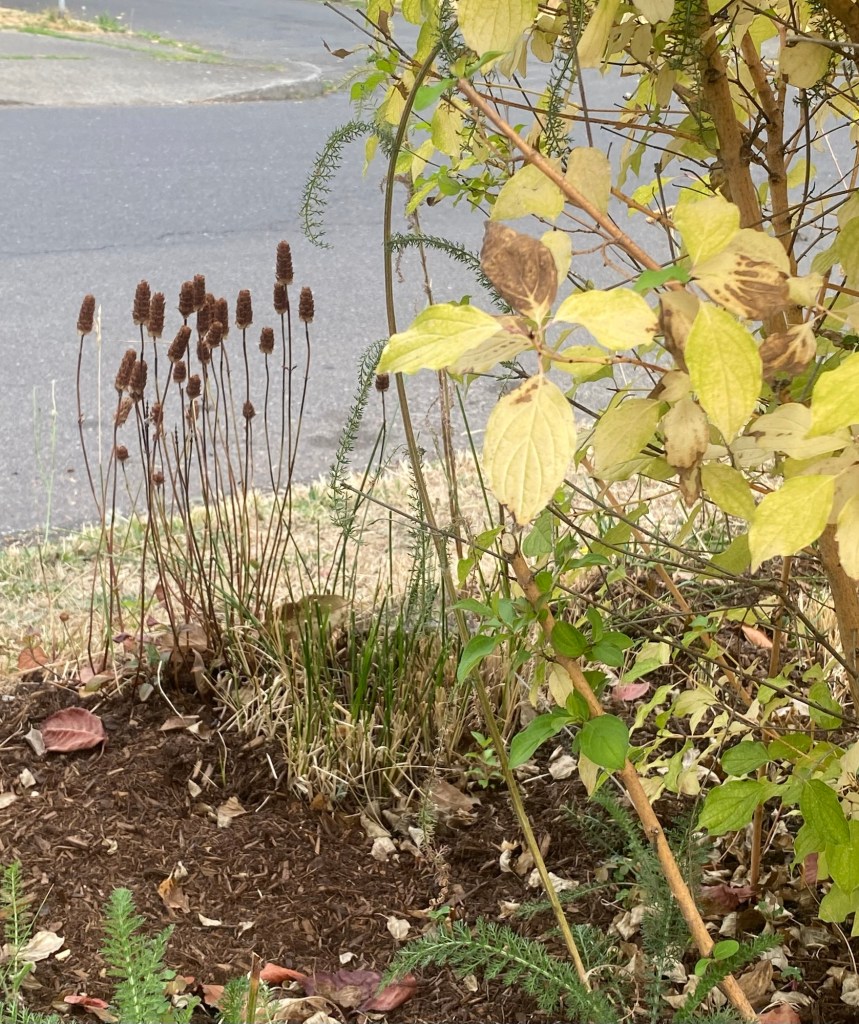
Five years later, in 2023, we are still working with this general concept of a native plant landscape for our yard. I recently photographed our front and side yard to show how it looks in August during a particularly severe dry period. We have had no rain for several months.
Our initial goal of our landscaping was to stand on the front porch and look out to see nature and not just the street. We did not want to go completely wild and ignore how our yard compared with our neighbors’ landscapes. After all, many of us are living on tiny quarter acre plots and we share common views.
Standing on front porch looking out- High height
Medium height
Low to the ground
Photographed from top to bottom, one sees that we can still look out and see the neighbors’ beautiful trees and bushes, with less emphasis on the road between us.
Here is another view of the level changes.
High View
Medium View
Low to the Ground View
In our side yard, the heights of the native plant islands have also matured and offer much more shade, texture and color to the yard. The grass around these native plant islands continues to be mowed to allow pedestrians easy walkways to get to the street, as needed. This his also leaves space for the native bushes to grow into their full sizes.
Islands of Native Plants – Bushes and Grasses
In this introductory post about our northwestern bungalow, I have not provided details of native plants used and their landscaping characteristics, both advantaged and disadvantaged. Details of this nature will follow in future posts. The purpose of this post is to introduce the idea of landscaping city homes with native plants and to consider how the landscaping might look.
What have we learned thus far from our experience planting natives in our yard?
First, native plants attract birds and butterflies and offer a delicious restaurant of berries, leaves, blossoms, nectar, and local grubs and insects for local birds and butterflies to consume. The leaves, small sticks, tall grasses and bushes also provide materials for birds’ nests and locations for cocoons. We have noticeably more birds and butterflies since we have added all these native plants.
Second, the native plants have shapes, sizes and colors of blossoms and leaves that are usefully and artistically built into our planned city landscaped design. We are pleased with the shapes, colors and textures emerging in the yard from these native plants.
Third, planning ahead and anticipating their adult size is necessary. For example, planting bushes that will grow to 15 feet high into areas that can accommodate them reduces the amount of time and effort needed to artificially shape bushes into particular contours or force them into unnatural heights or widths, cramping their style. This nature-sizing accommodation allows plants to emit a type of natural beauty.
Fourth, given our drought conditions, these native plants remain, robust and colorful without requiring much watering.
Fifth, not every plant in our yard is required to be native. While discouraging non-native invasive plants from growing in our yard, we have encouraged non-native roses and hydrangeas adding color and textures in places we desired.
Sixth, we have learned that many popular plant nurseries now offer native plants. We just needed to learn to ask where they are.
I am pleased to say that in our yard, which is now comprised of more than 80% native plants, we have more than sufficient shade, color and texture of plant life to meet our personal landscaping needs while also meeting the needs for food and shelter of some local birds and butterflies.
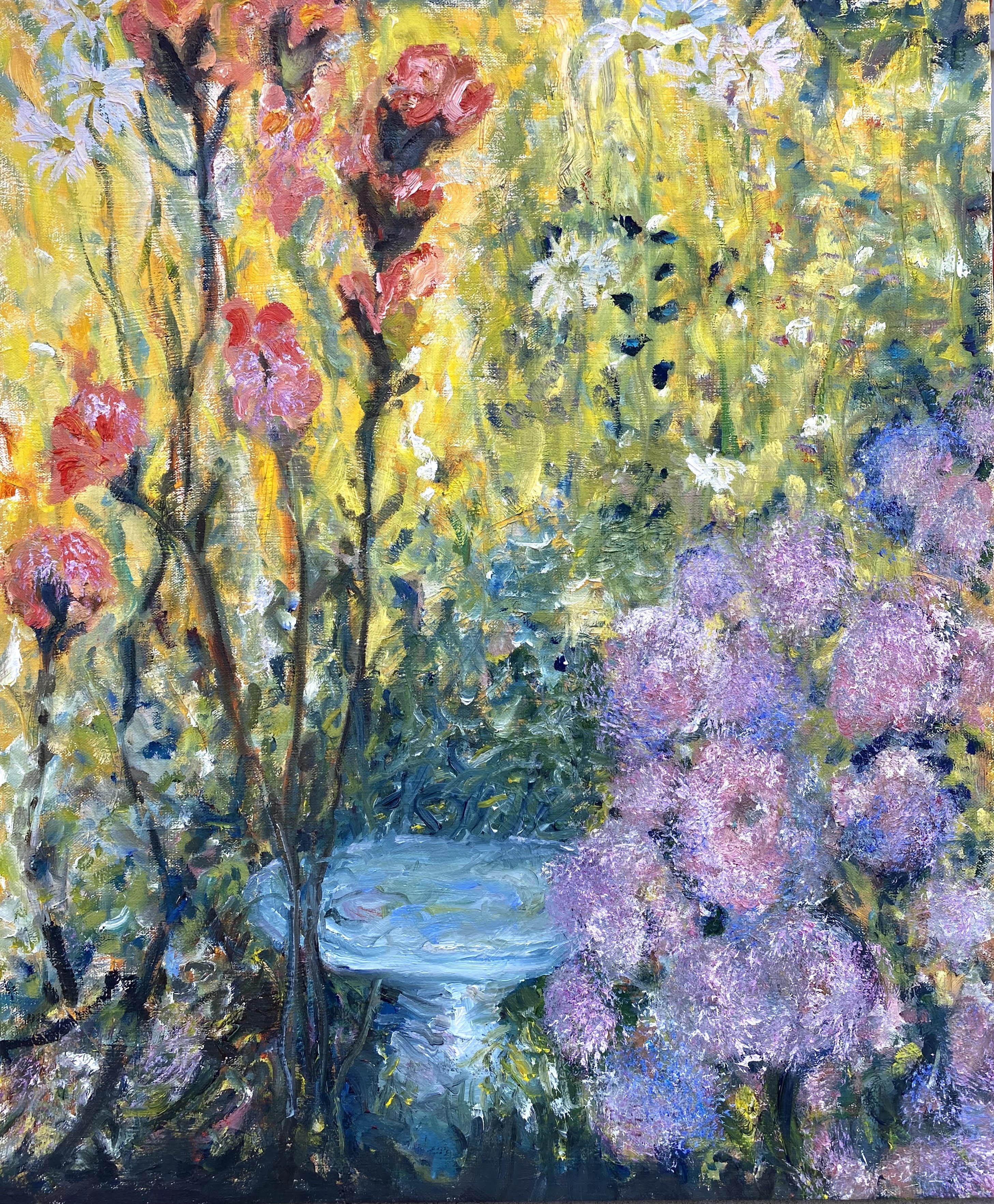
Part of the beauty of gardens are all the hiding places for baby birds who can’t yet fly, for small animals seeking safety while nibbling at low greenery, protecting busy bees and butterflies settling into cooler places during the hottest part of the day. I find when painting these darker places, that they point like arrows to colorful flowers, often contrasting the showers of light that shoot carefree through grasses, and sometimes pointing straight up to daisies announcing, “over here”, “over here” to thirsty birds in need of the bird bath.
This is an oil painting on canvas, 20″ x 24″. My husband asked for the painting before I even took it off the easel in my art studio. I think that he likes it.
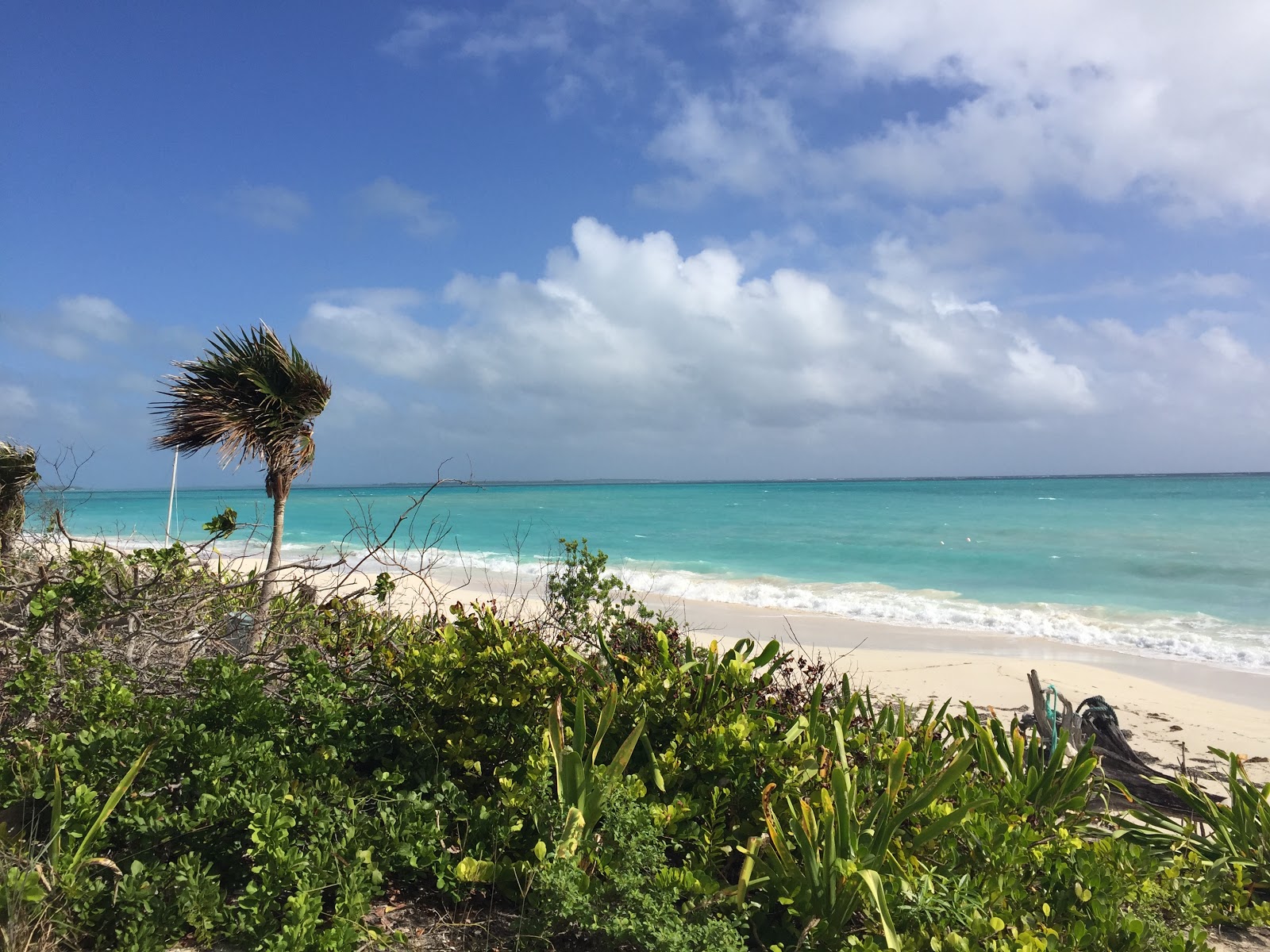
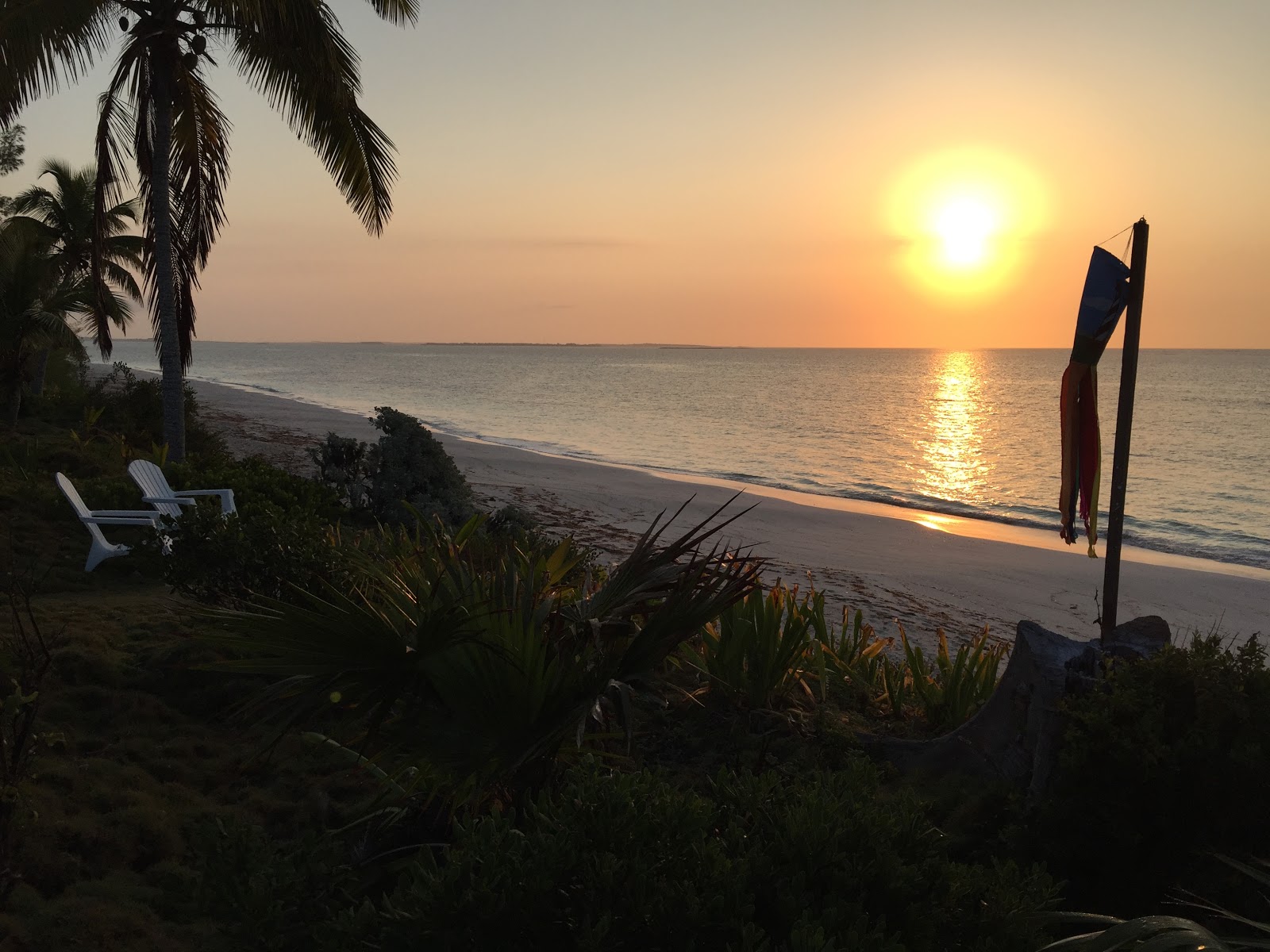
We live in the wintertime in one of the most beautiful places in the world and often refer to it as Paradise.
Like any place, it has its pluses and its minuses. I don’t want you all to be too envious and think we never have problems. No place is perfect. But this place is oceanic beautiful.
And the people are wonderful, too.
Here, it is beautiful throughout the day.
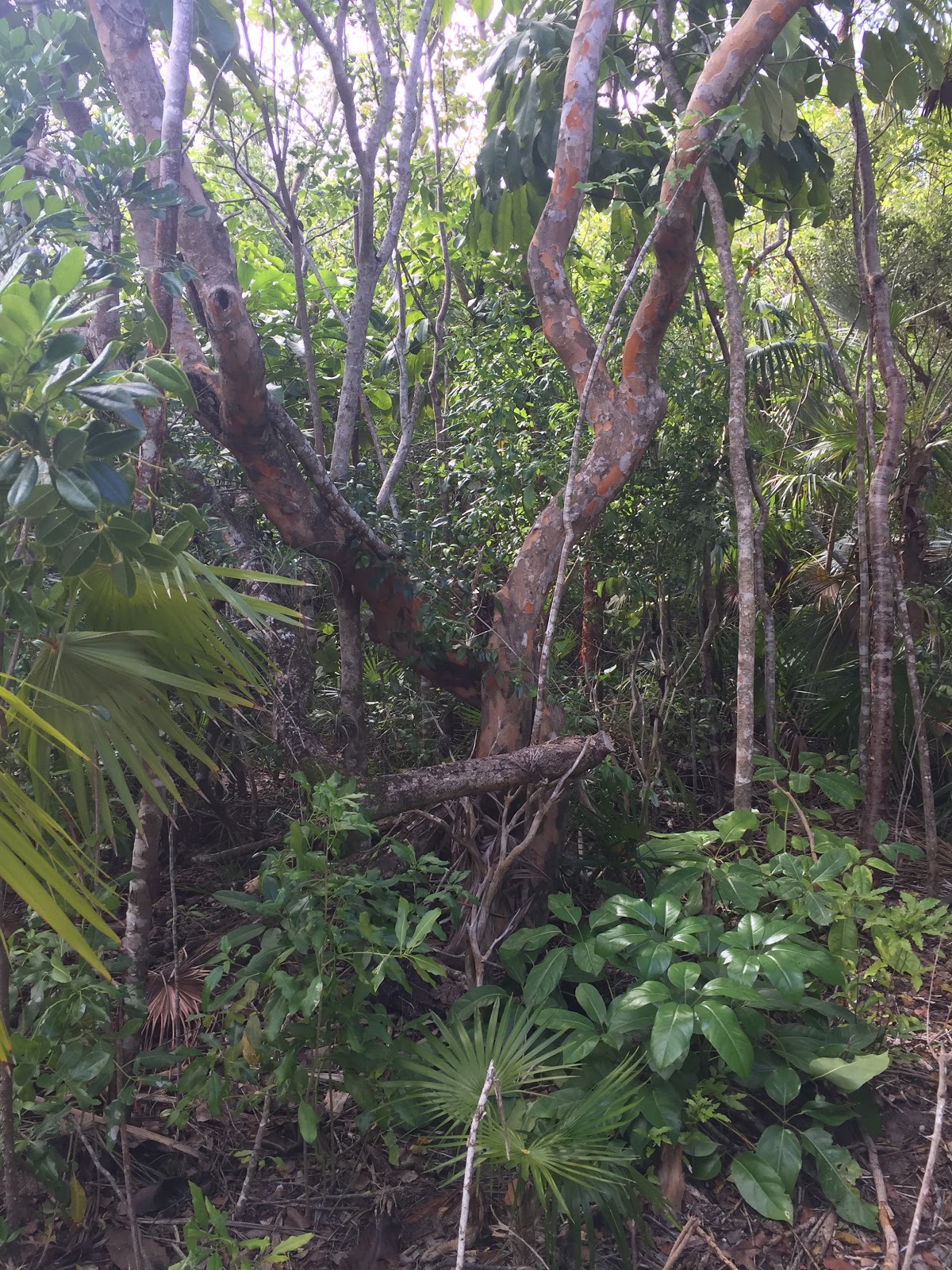
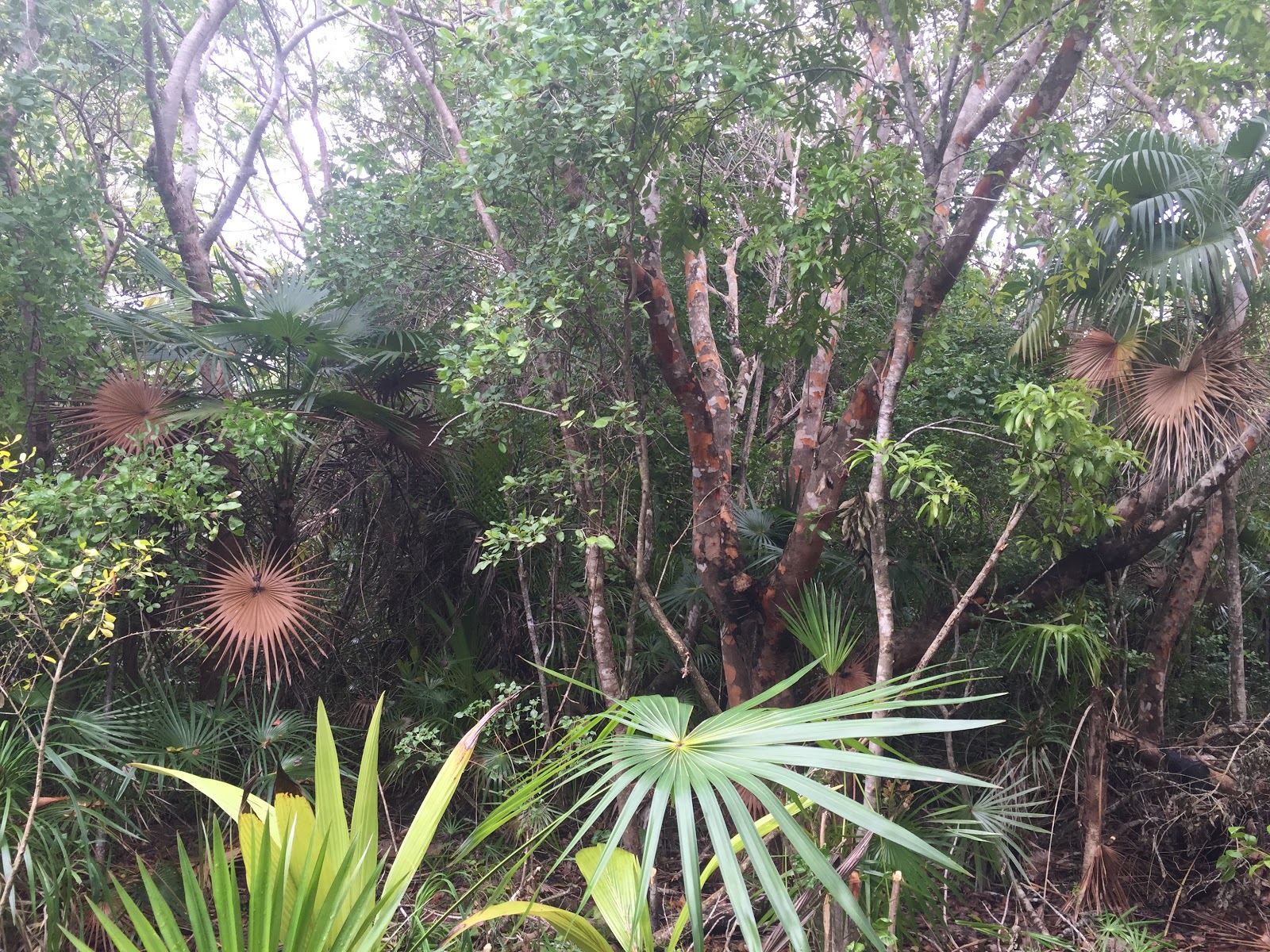
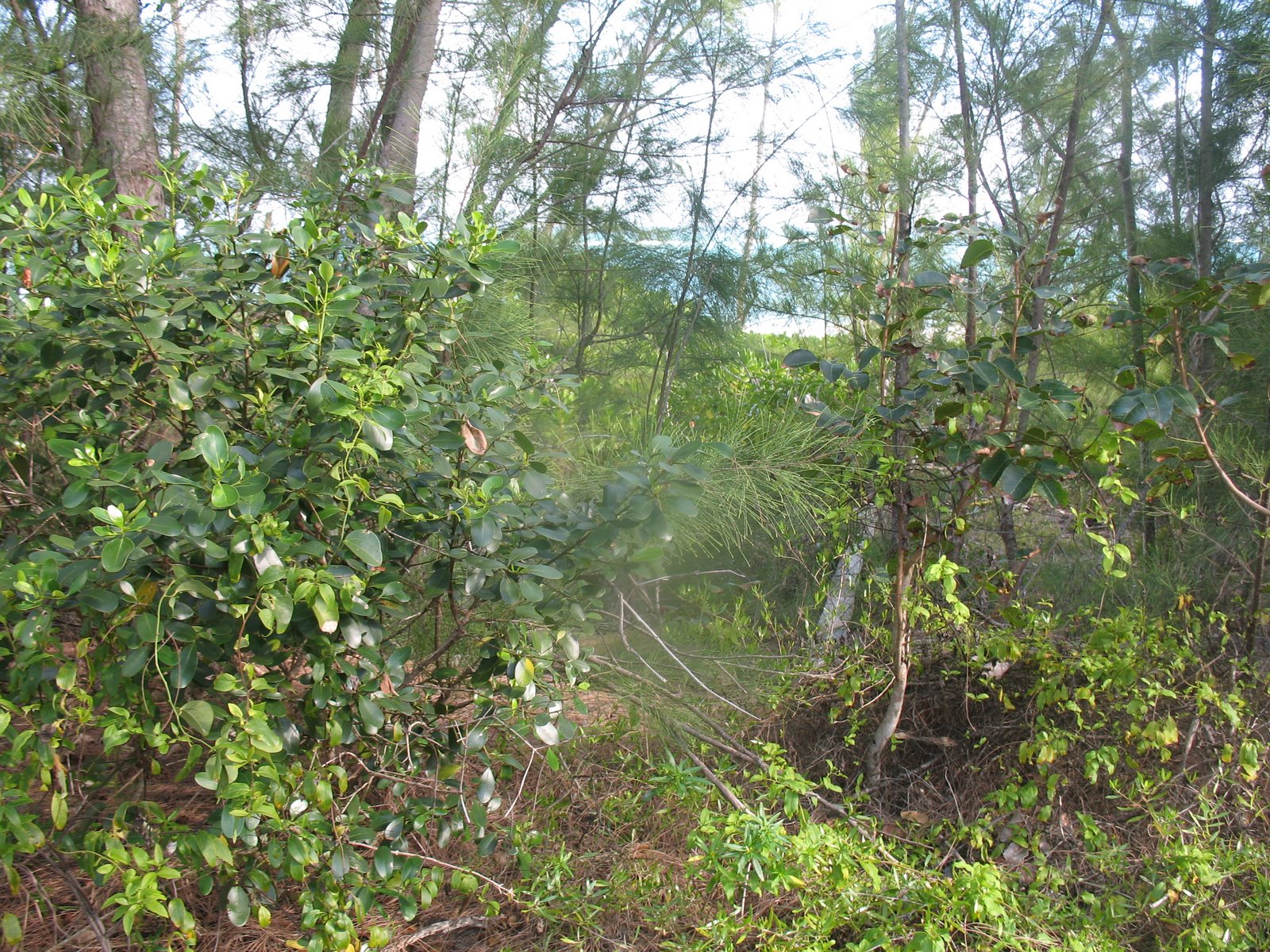
What is not as well known is that next to the ocean, we have natural botanical gardens. Here is an example:
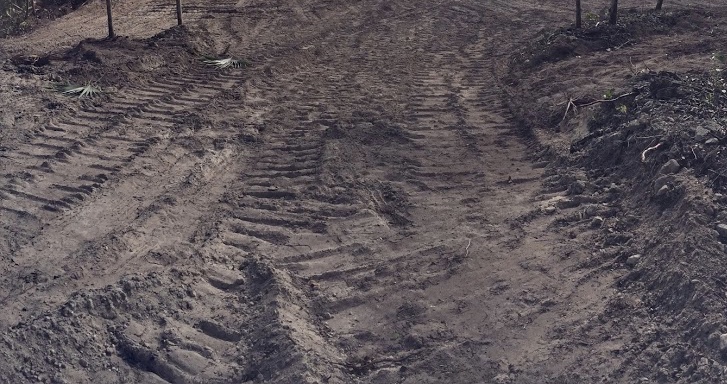
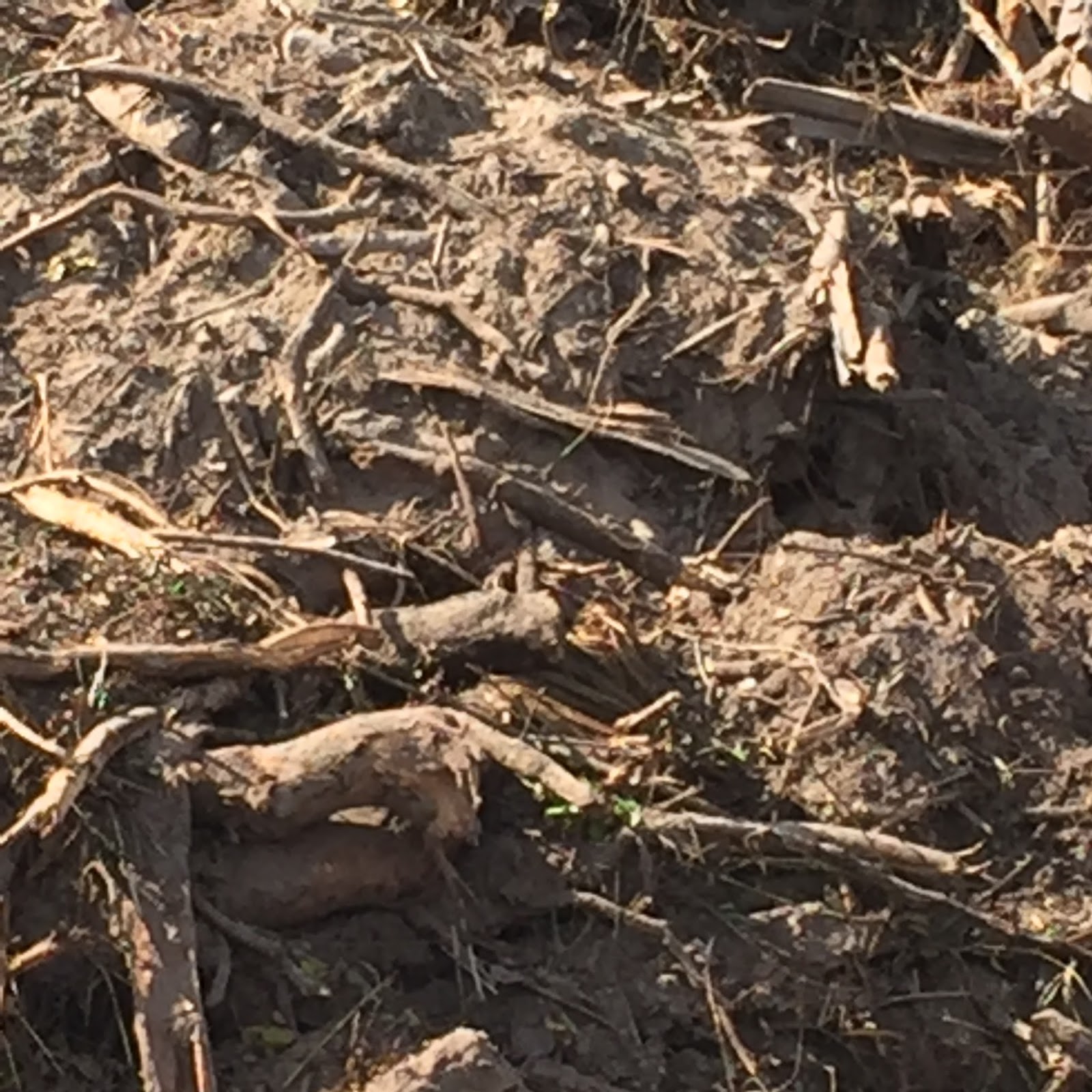
Often the first instinct of some when they decide to build on this land is to remove all the native brush, resulting in this look:
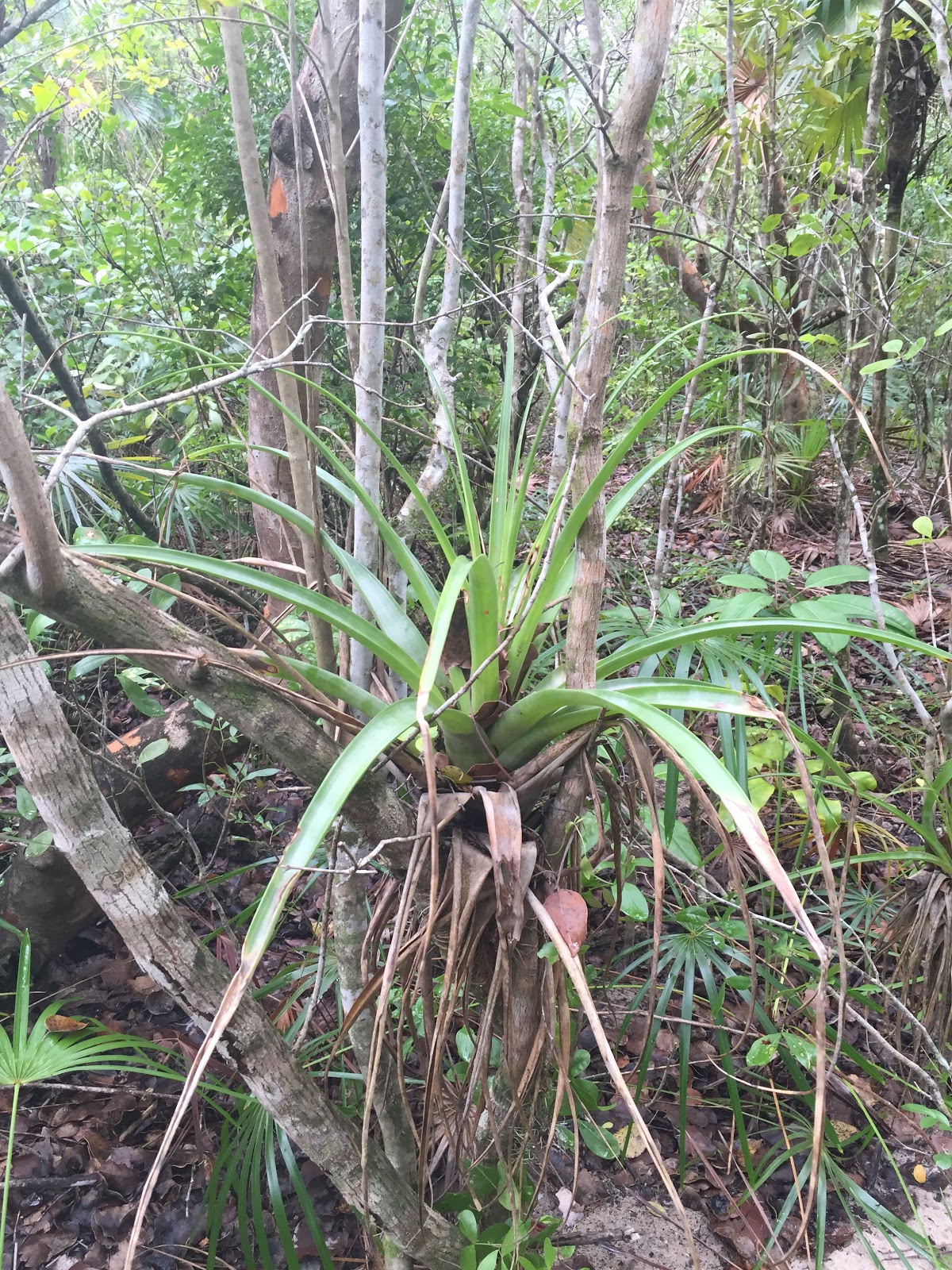
Below, is the kind of greenery that gets plowed over and removed.
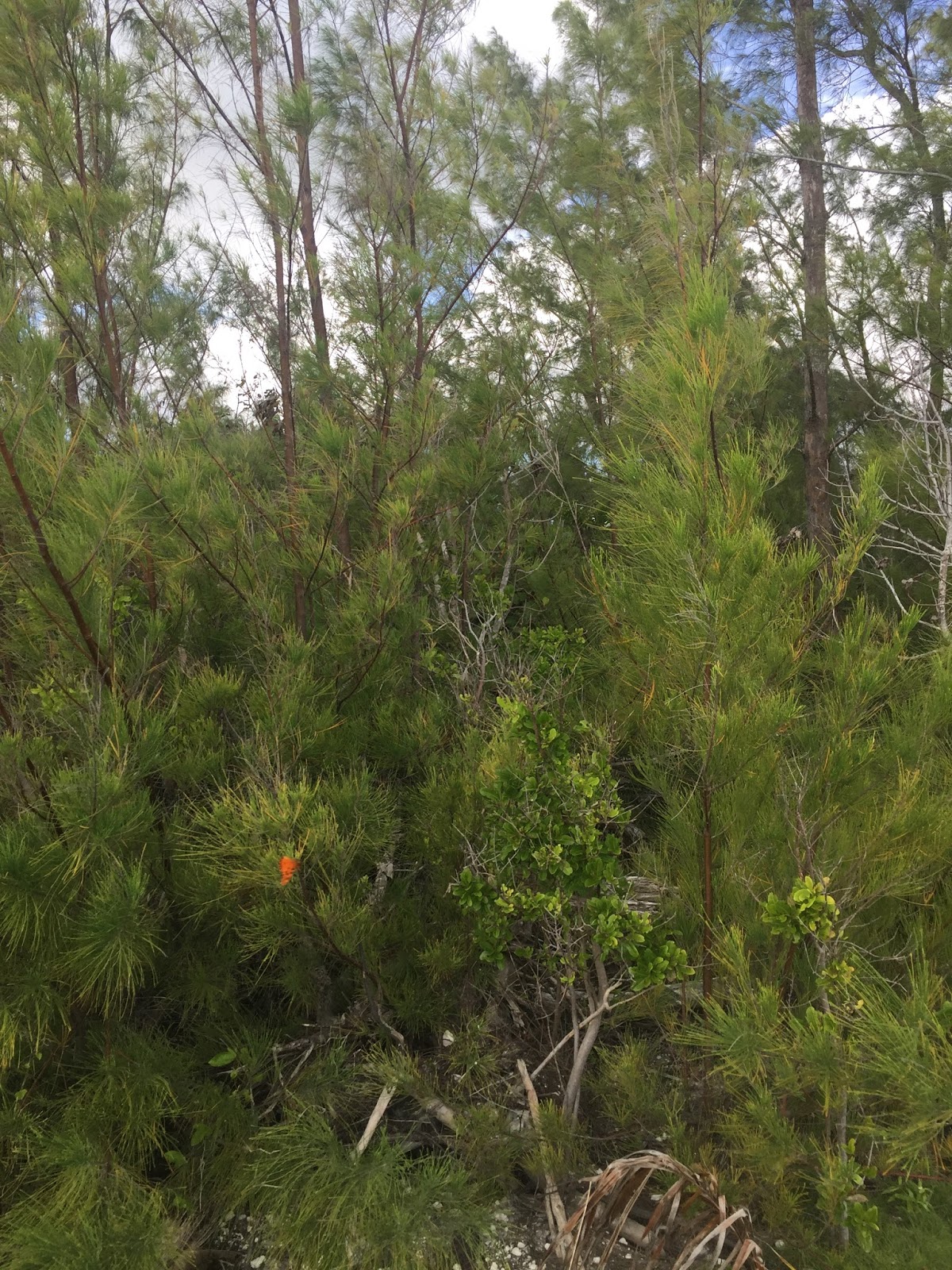
Or this:
The ripped up roots and all the valuable top soil from the land often ends up in a landfill at a nearby dump.
Sometimes after razing the land, one does not get around to building or landscaping and the land sits barren. This reduces the food supply for our native birds and butterflies. Invasive plants take over. The abandoned land tries to return to normal, but is overwhelmed with invasive plants like Casuarinas and Hawaiian Grape that quickly grow, leaving little space for the return of native plants.
Entomologists teach us that insects and birds cannot survive on invasive plants. Invasive plants do not carry appropriate insects and seeds to feed our local birds and butterflies. Their leaves and seeds are not eaten by native birds. Also, fewer insects live on these plants, thus reducing the food supply for birds and butterflies. This is why invasive plants reproduce so quickly. All their seeds survive for further growth because local birds and butterflies are not eating them.
The more the invasive plants grow, the less diversity of plant life is found.
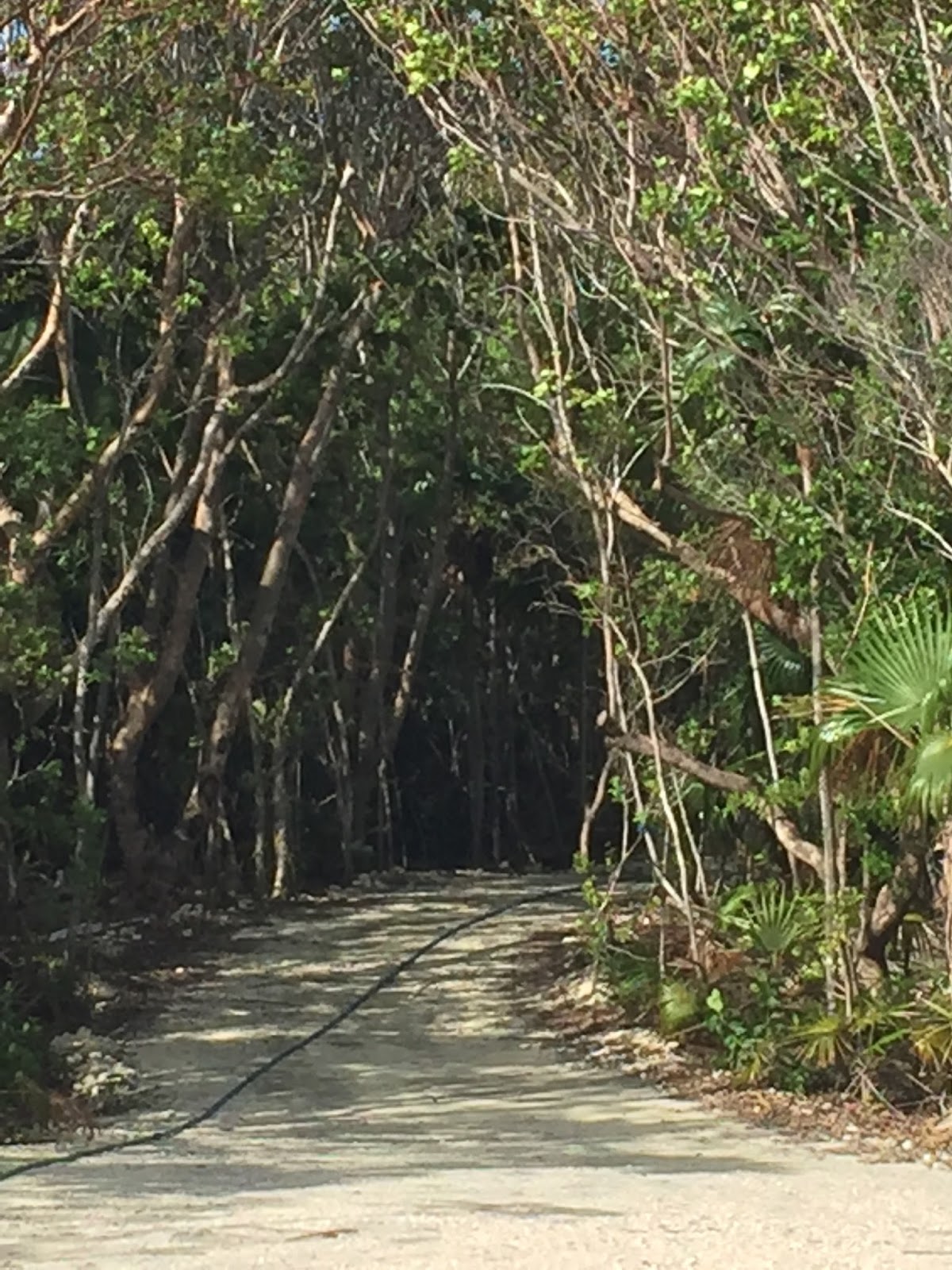
Many are now realizing the values of the original native plants on our properties and are trying to be more selective about what is removed. More often, walking pathways are cut, perhaps with a machete, and carefully selected areas are opened for driving or building. The end result is very striking.
Homes are then surrounded by beautiful, mature, native plants. The air stays cool from the shade of native trees, birds readily find their berries and bugs to eat and butterflies abound as they dip and fly through the bush.
By staying with native plants, tens of thousands of dollars may be saved in burdensome costs for purchasing of replacement top soil, high-priced charges for replanting the land with expensive and often imported plants and costs for purchasing of numerous bags of chemical fertilizer.
In addition, keeping native plants and original top soil eliminates years of frustration that comes with paying others for landscaping ideas on how to revive land that was injured by removing all its topsoil on already nutrient-starved beach property.
A number of us are wondering if there is something that might be done to encourage those who live on land in beautiful natural areas to know their options before they raze the land and have to spend years regretting what was done.
When we moved to a suburb in New York, we had a side yard we developed into a beautiful garden in which we spent many long, happy hours working. I wrote several blogs about the garden. Here is an example: Dressing Down to Dress Up
We have sold our big home with the garden and moved to a very enjoyable, easy to manage condominium. In the process of moving, we no longer own land for outdoor gardening.
I am going to grow a garden anyway.
My inspiration to continue growing a garden without owning one, came from reading about people who took up gardening potholes!
I figure if somebody could successfully make a pothole into a garden, I ought to be able to find an plot of land for gardening in downtown Portland, Oregon.
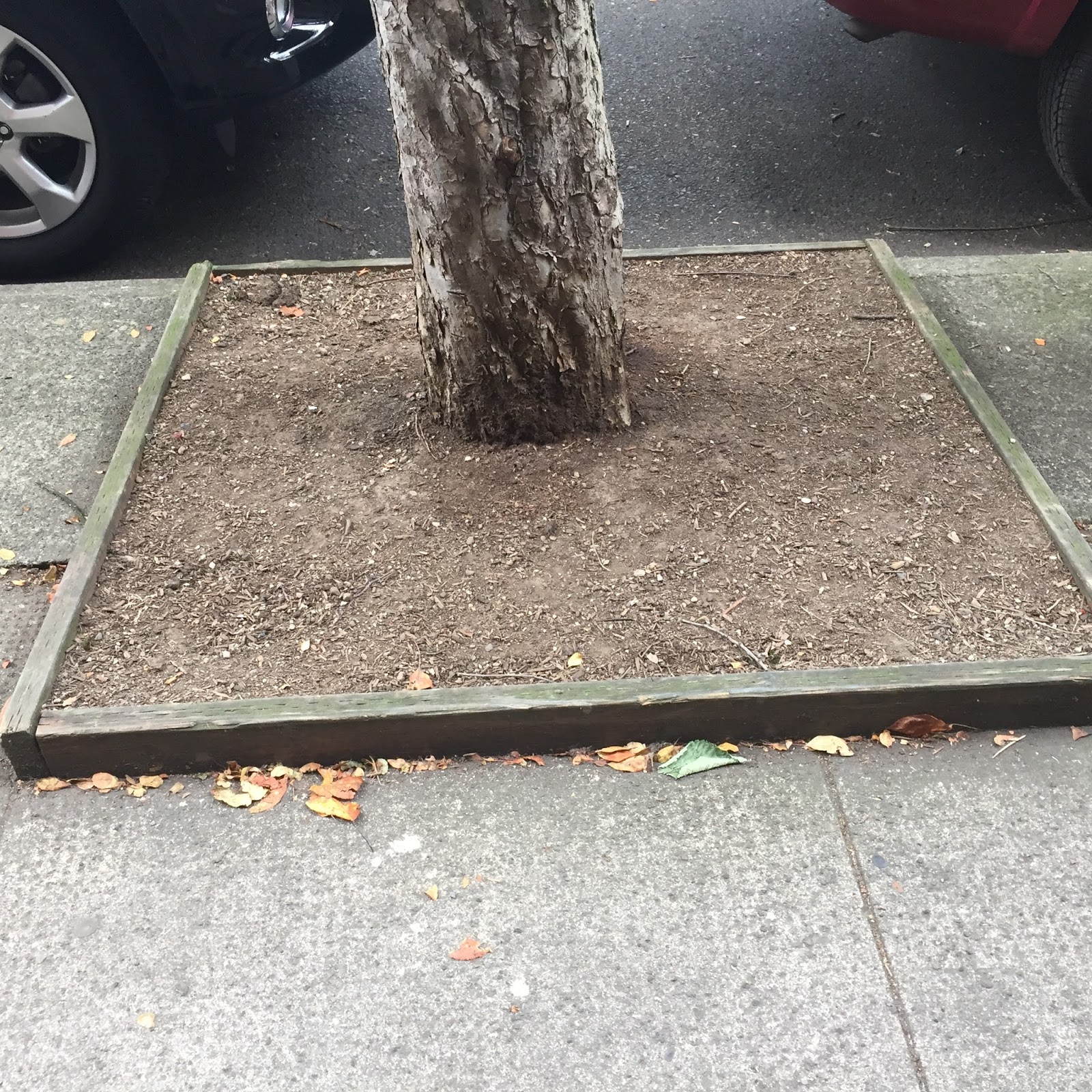
I recently decided to adopt a four foot square area out in front of our condo that has a tree in the middle. This small piece of land is right next to a main thoroughfare and cars often park next to it. Because nothing is on the land and it is shady, because people step on it, because dogs water the tree and wander freely across the dirt, plants haven’t grown.
Here is my chosen plot of land.
You may ask, why would I choose such a spot for gardening? Well, for starters, I figure I can’t do much damage to this plot of land. And with a tiny bit of luck, perhaps I can do better.
It was already the end of the July when I decided I needed a garden which means that most of this year’s growing season is over, not leaving a lot of planting time. Harvest is already upon us.
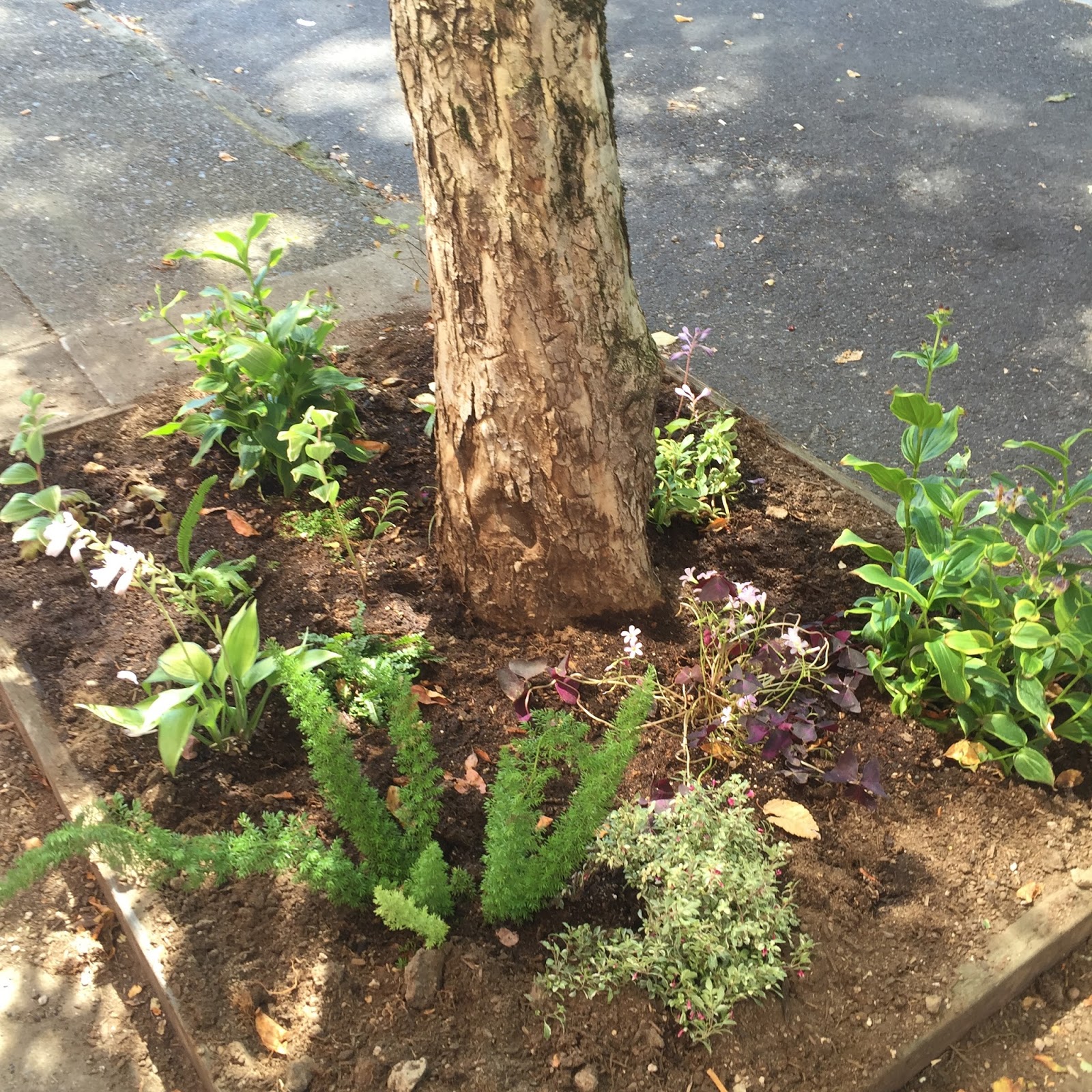
Therefore, I have dug up the area and have started planting perennials, hoping to establish a base of greenery that will root in this year, and expand and flower next year.
An amazing number of people have stopped to speak with me while I work on the garden. Many offer words of encouragement, saying they enjoy seeing the little plot of land change its design as plants are added.
It is a perfect-sized project. I have dug up the dirt, planted a variety of perennials and the biggest goal I have now is to keep the plants watered. I might also drop some bulbs in for spring flowering. Toward winter this little plot of land will be composted and I hope at least some of the newly planted perennials make it through the winter and show themselves next spring.
As of today, the outdoor square area looks like this.
Will it survive? I hope so, but if not, then I can start all over again next spring. If it does survive, I will add many flowers in the spring.
After all, the entire purpose of a garden is to have something to look forward to in the future, to care for something, and to see the cycle of life as it rotates through all its beauty.
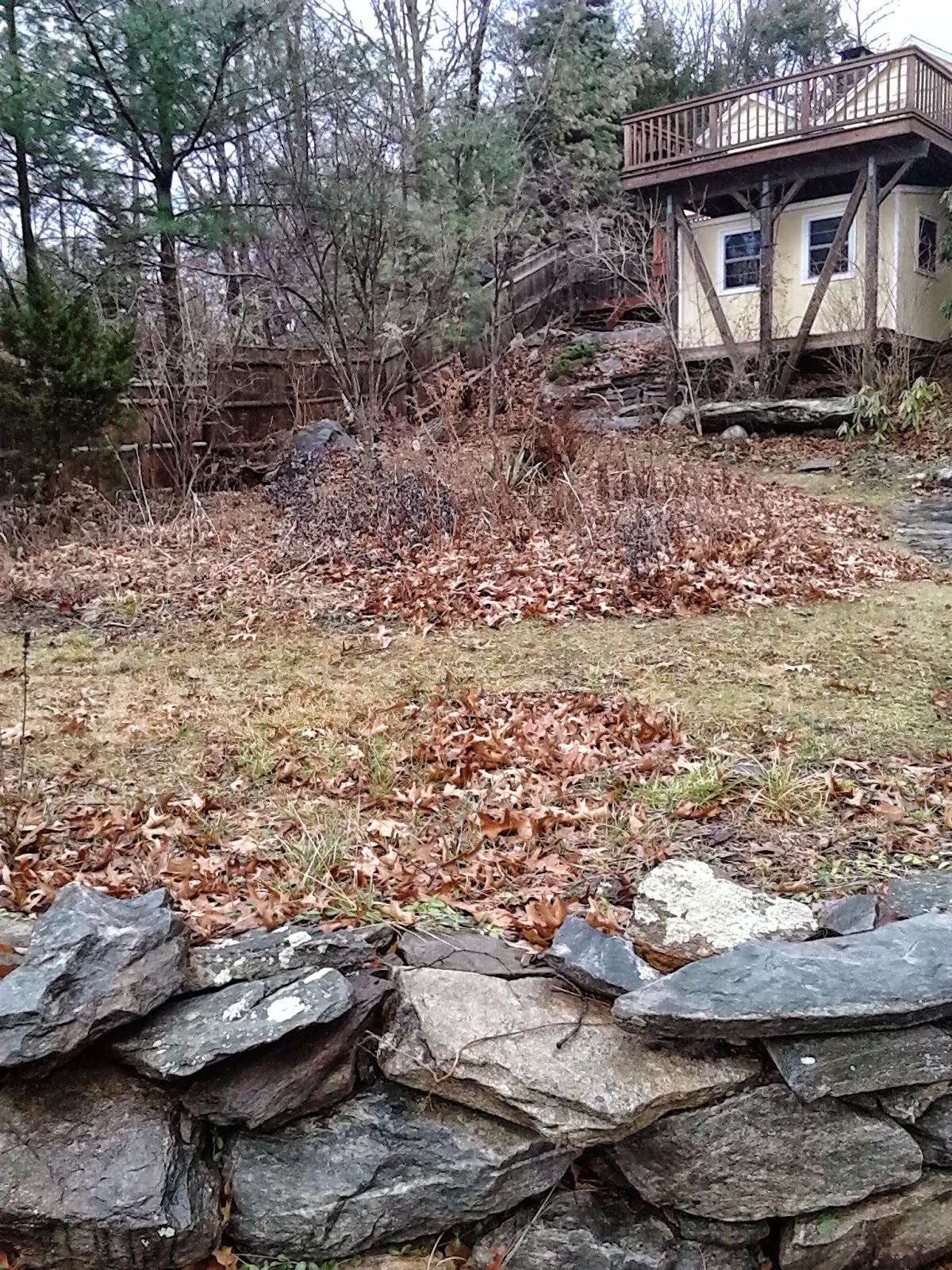
One of my readers asked to see how our cottage garden looks in the winter, so here it is.
The garden now looks like part of the woods. It is tamped down and waiting for more snow and freezing cold. We will do nothing more with it until we rake some of the leaves off in the spring for mixing in our composter.
I will photograph the garden again in the spring and add it to this site.
Just after I took this photo, Joseph shouted from the deck for me to turn around and look at the lake. Much to my amazement, when I turned around I saw a pair of Bald Eagles flying by, looking so magnificent. Sorry that I did not catch a photo of them, but I will remember this moment for a very long time. In real life and at this close range, they look very regal.
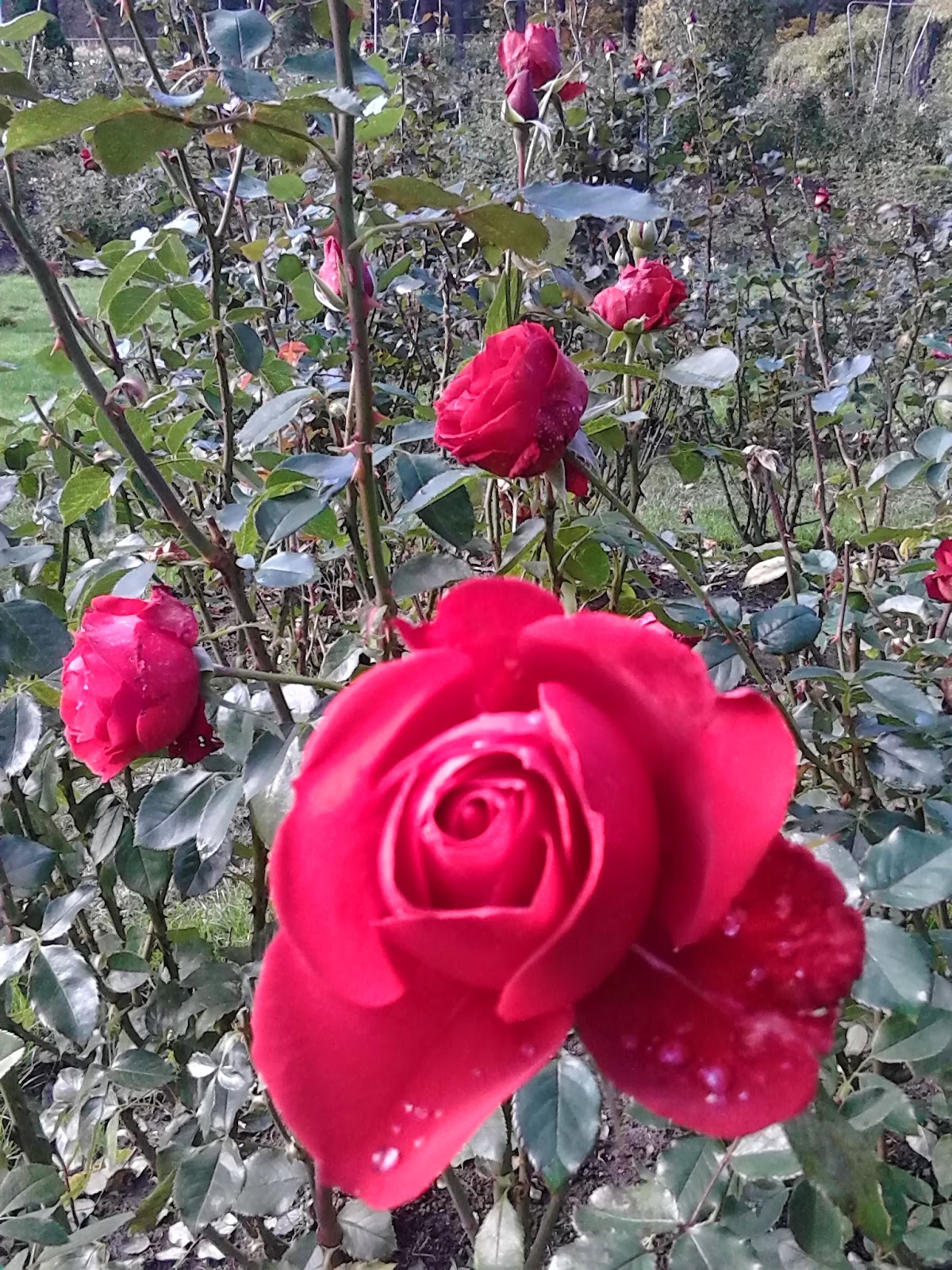
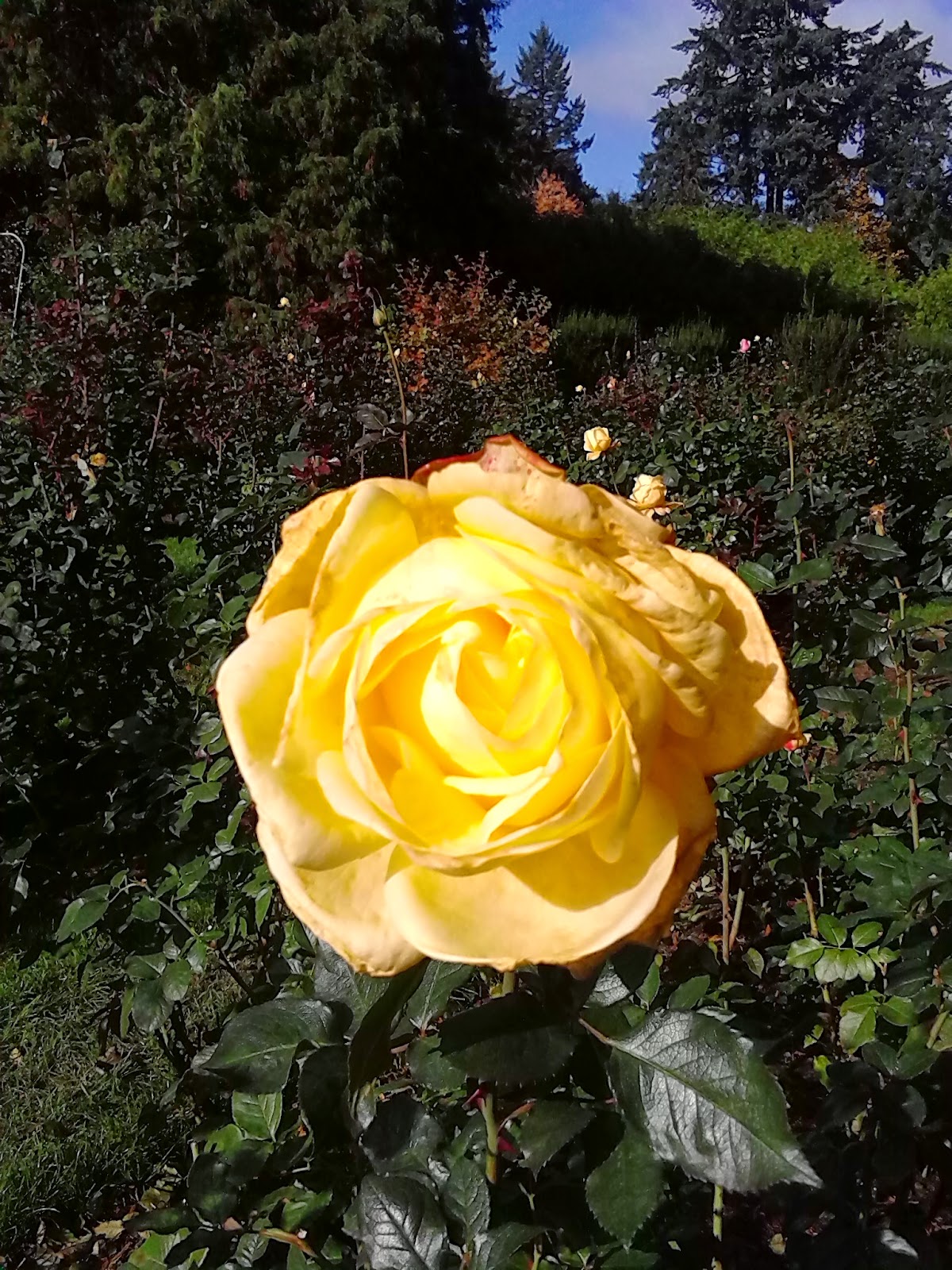
Yes, it is winter in Portland, but the flowers are still beautiful.
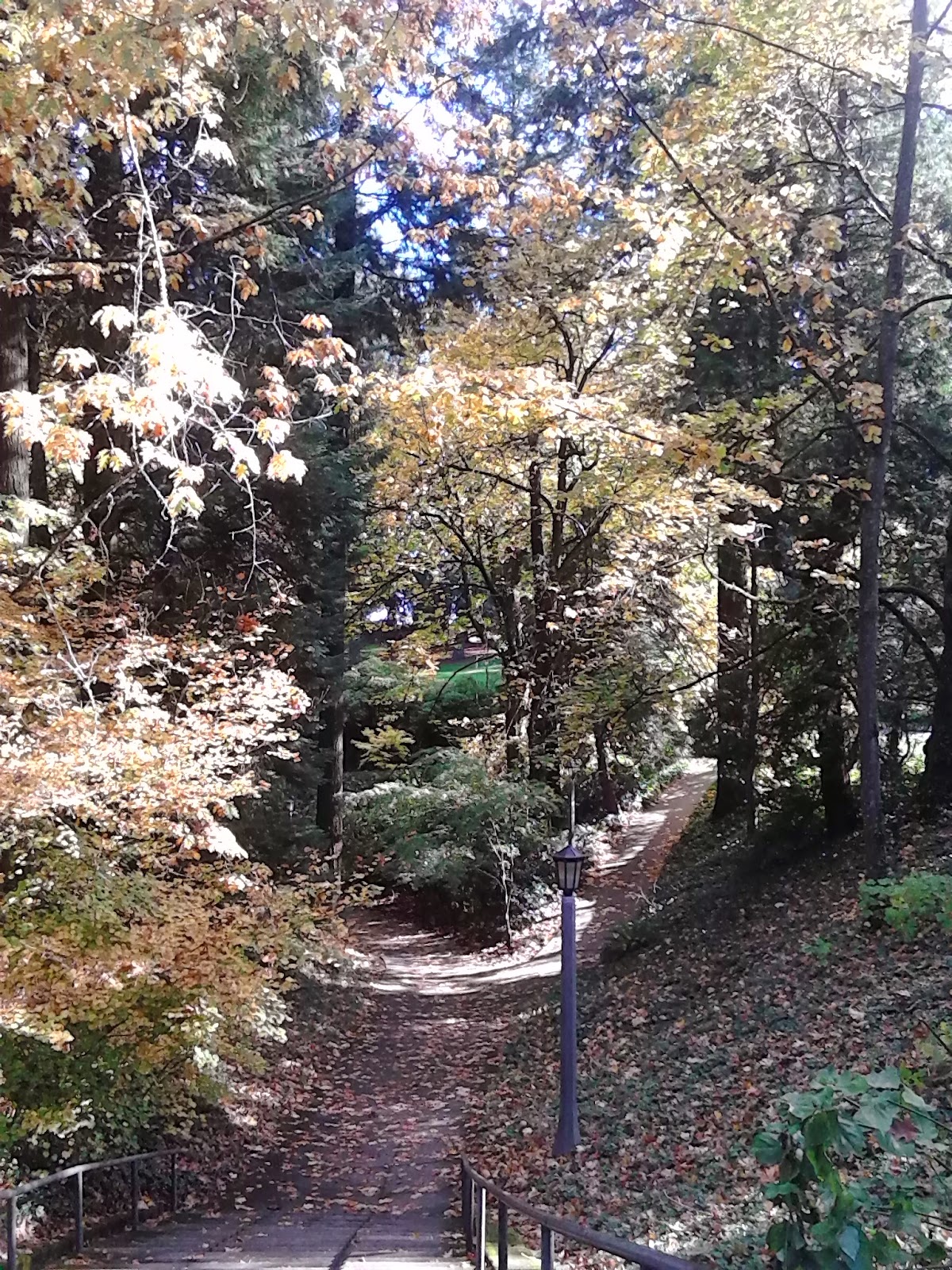
We walk for seven blocks through the city and suddenly we are on the edge of Washington Park, a 40 acre park we walk through to get to the Rose Garden.
Today we hiked up the 220 steps to the top of a big hill on the way to the gardens. The walk through the woods is so peaceful.
It is hard to believe we just crossed Burnside Street in heavy traffic to get here.
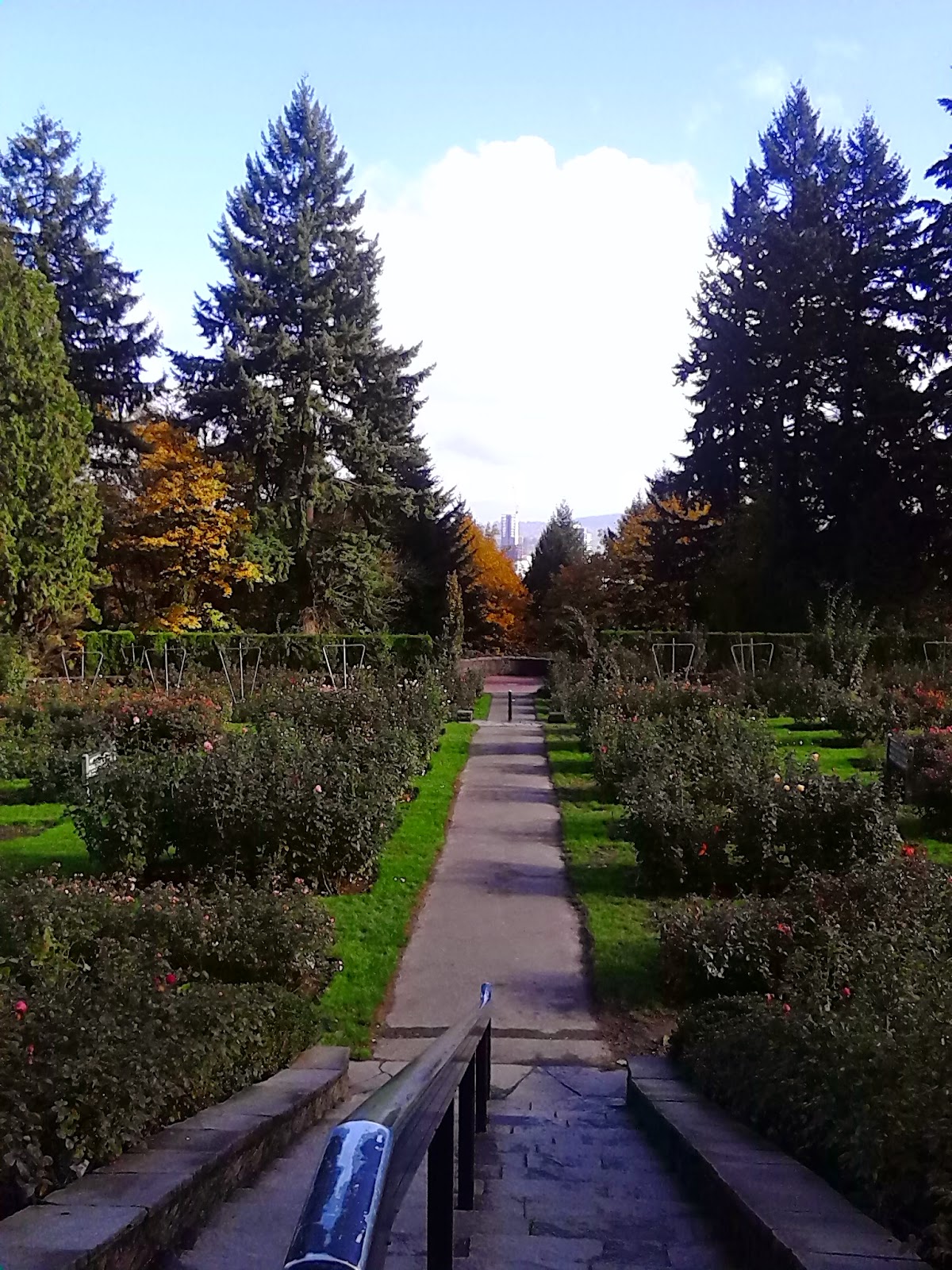
We march up and across to the gardens, where things go from wild and natural to beautifully formal.
The city looms in the distance.
We take a few minutes to look at some of the flowers up close, then head on home. It is roughly a one mile trek, and worth every minute.
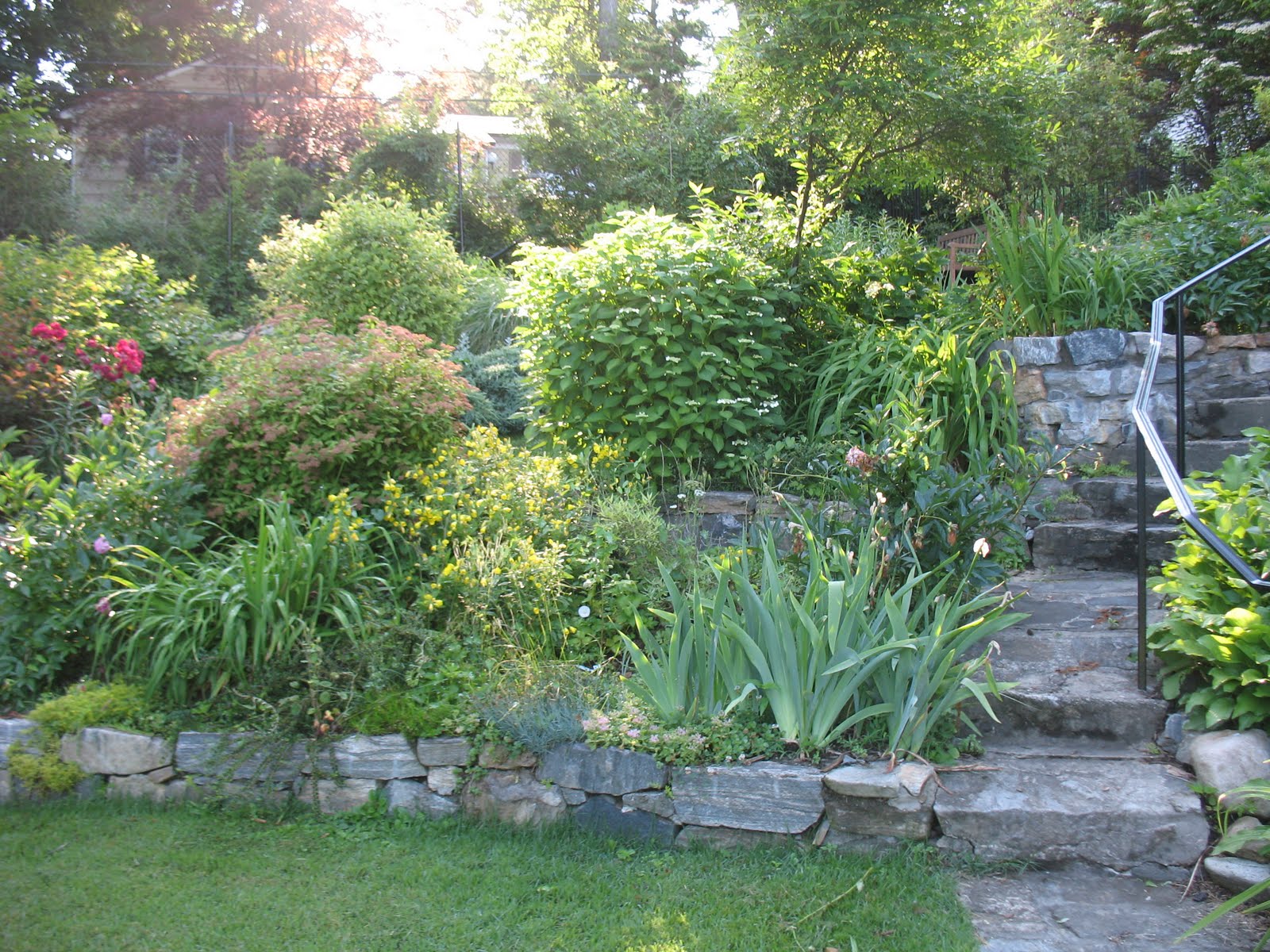
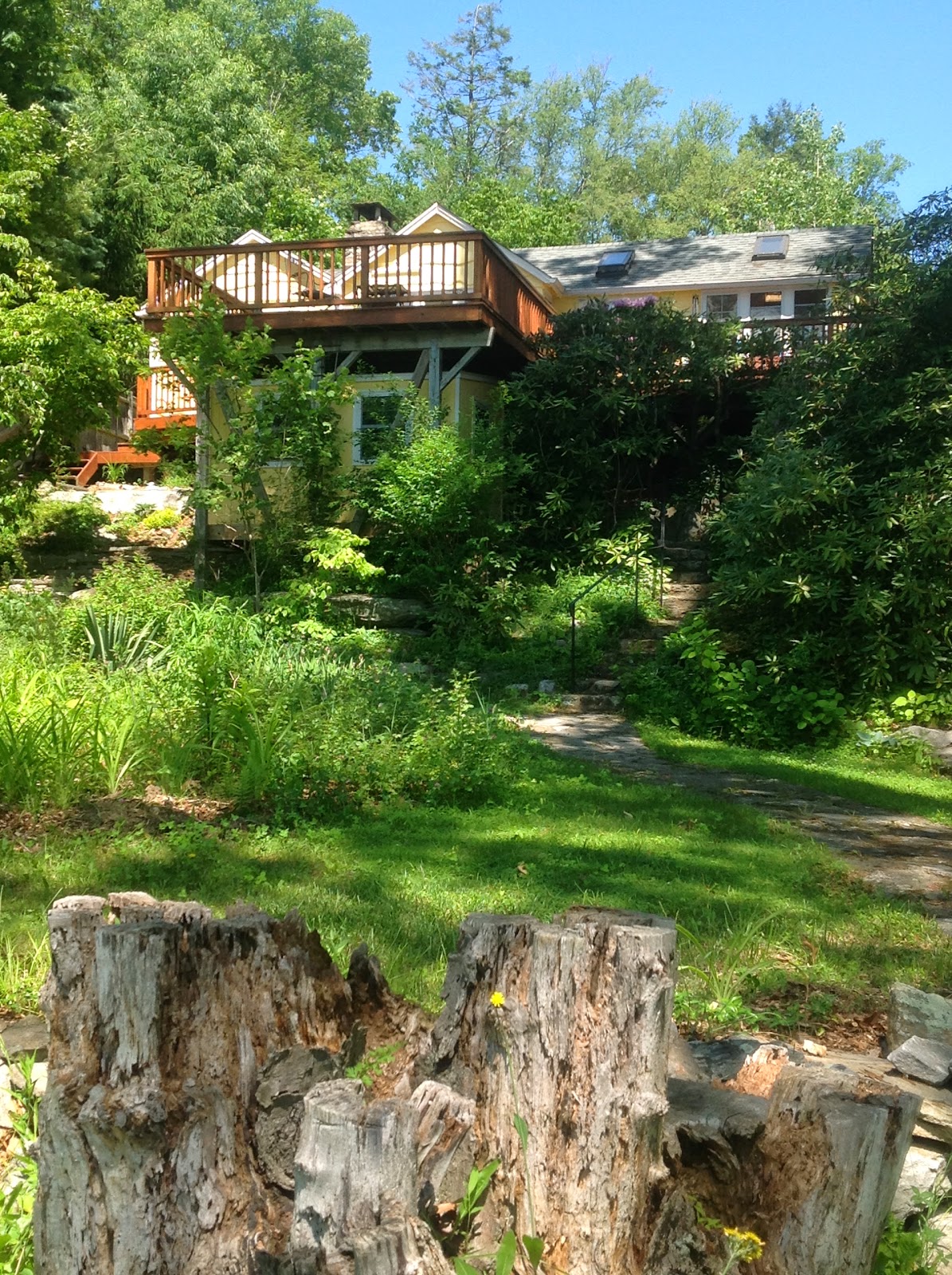
Before we downsized and sold our suburban home, we kept formal gardens and they were wonderful. But the care of our gardens took hours and days and weeks of work to keep them organized and flourishing. The result was marvelous. But the time involved was not. At our new location, our little cottage, we are now experimenting with smaller, more informal gardens that largely depend upon native plants for their blooms and color.
Formal Garden
In our more informal setting, we let the native plants and flowers mingle with the grasses and plants that just pop up and join in for the fun, with the exception of invasives and poison ivy, which we remove by digging up We added a few colorful flowers and bushes, mostly native to our North East area, that mingle next to the wilder plants. We tell our plants in our garden to have fun, make room for everybody, move over, if necessary We wish them luck and tell them we hope that it rains so that they get some water. Surprise us, we say, with your arrangements. The end result is very joyful.
We mow a small amount of our yard to make the wild and wooly chaos of our plants look organized. On one side of our yard, the middle is wilded and on the other side of the yard, the edges are wilded. A stone path runs through the middle.
Informal Garden
Keeping large parts of the yard wilded is making a buffer, slowing down the flow of rainwater into the lake, thus reducing erosion. The end result of simplifying our yard is that we only need to mow small portions of the lawn once a month, just to keep walking paths around the garden. Birds and butterflies enjoy their newly found meadows.
The time we spent before pulling weeds is now spent swimming, kayaking, talking walks, researching and writing.
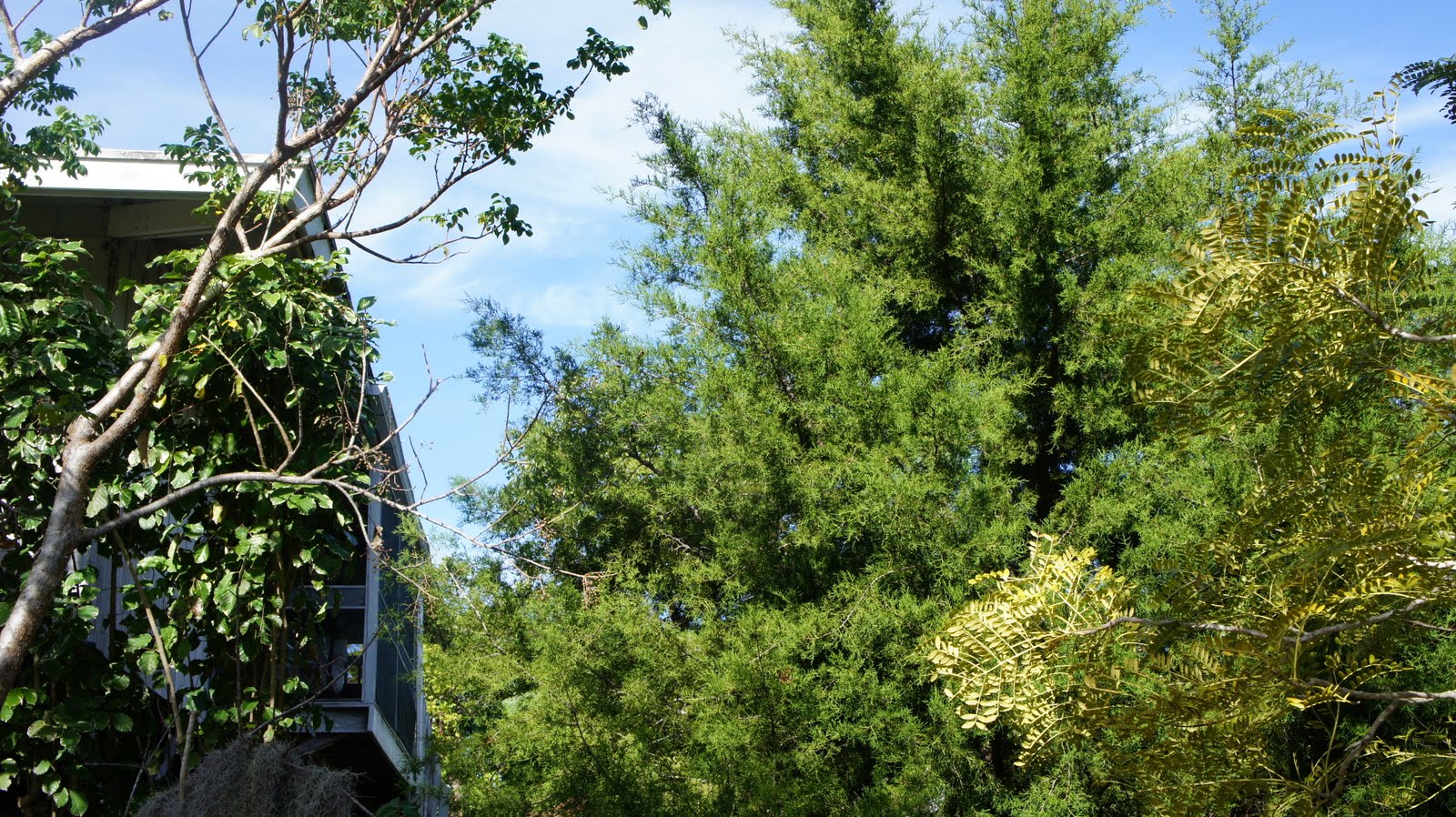
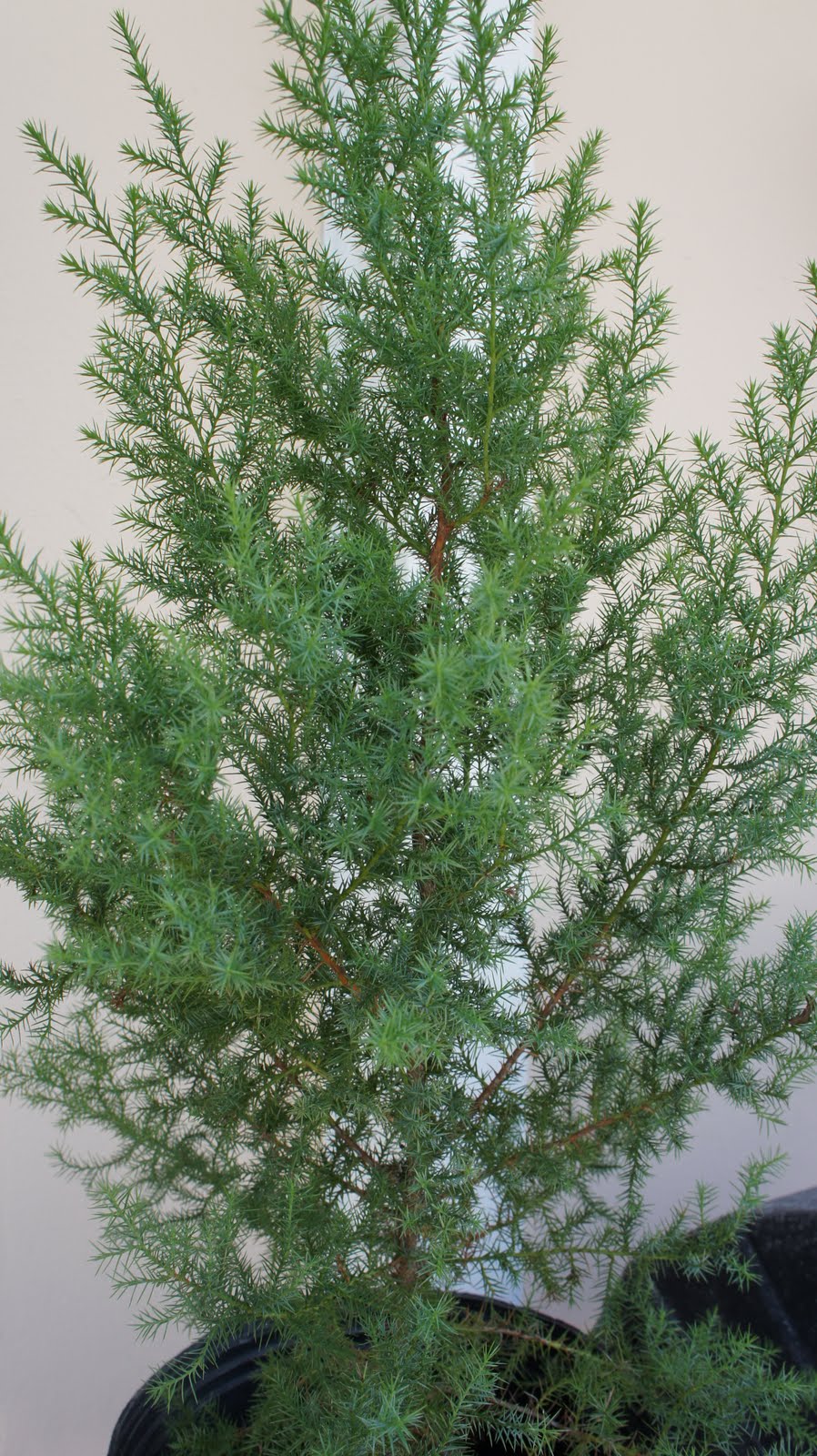
My neighbor invited me to see how big a Red Cedar tree can get. She knew from my earlier blog that I planned to plant one in my yard. She had planted one a number of years ago in her own backyard and wanted me to see the size of it today. She said that if she had known how big it was going to get, she would have planted it farther away from the house. This is what she showed me:
Now I realize how much space I need to give this baby Red Cedar to grow! It certainly pays to plan ahead.
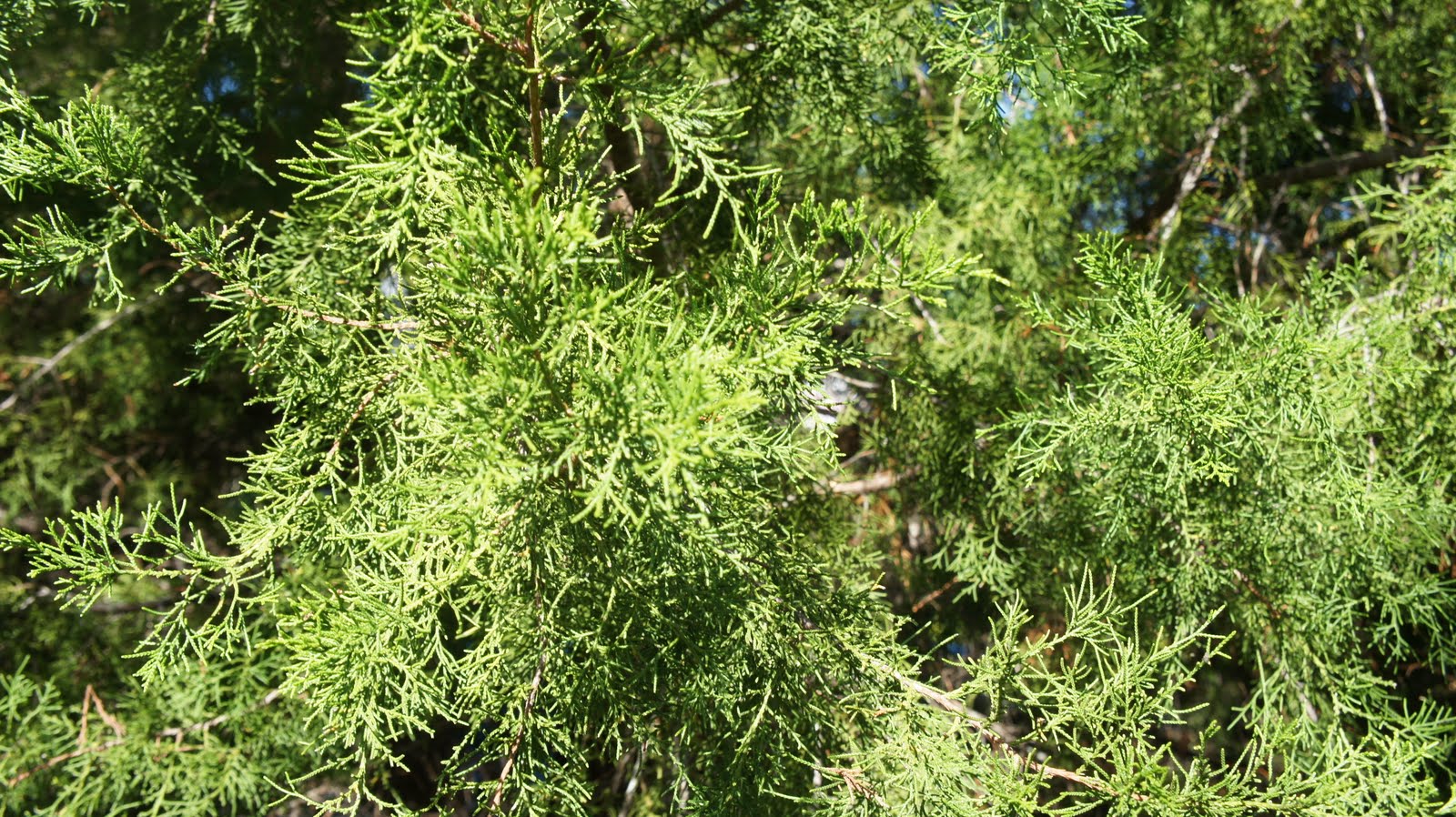
The tree is lovely and dense. I think that it would be best to place it in a place where privacy is desired.
Here is a close up of its branches.
I will plant it on the north side of our house, just as my neighbor did, but a bit farther away.




 marysgardens
