
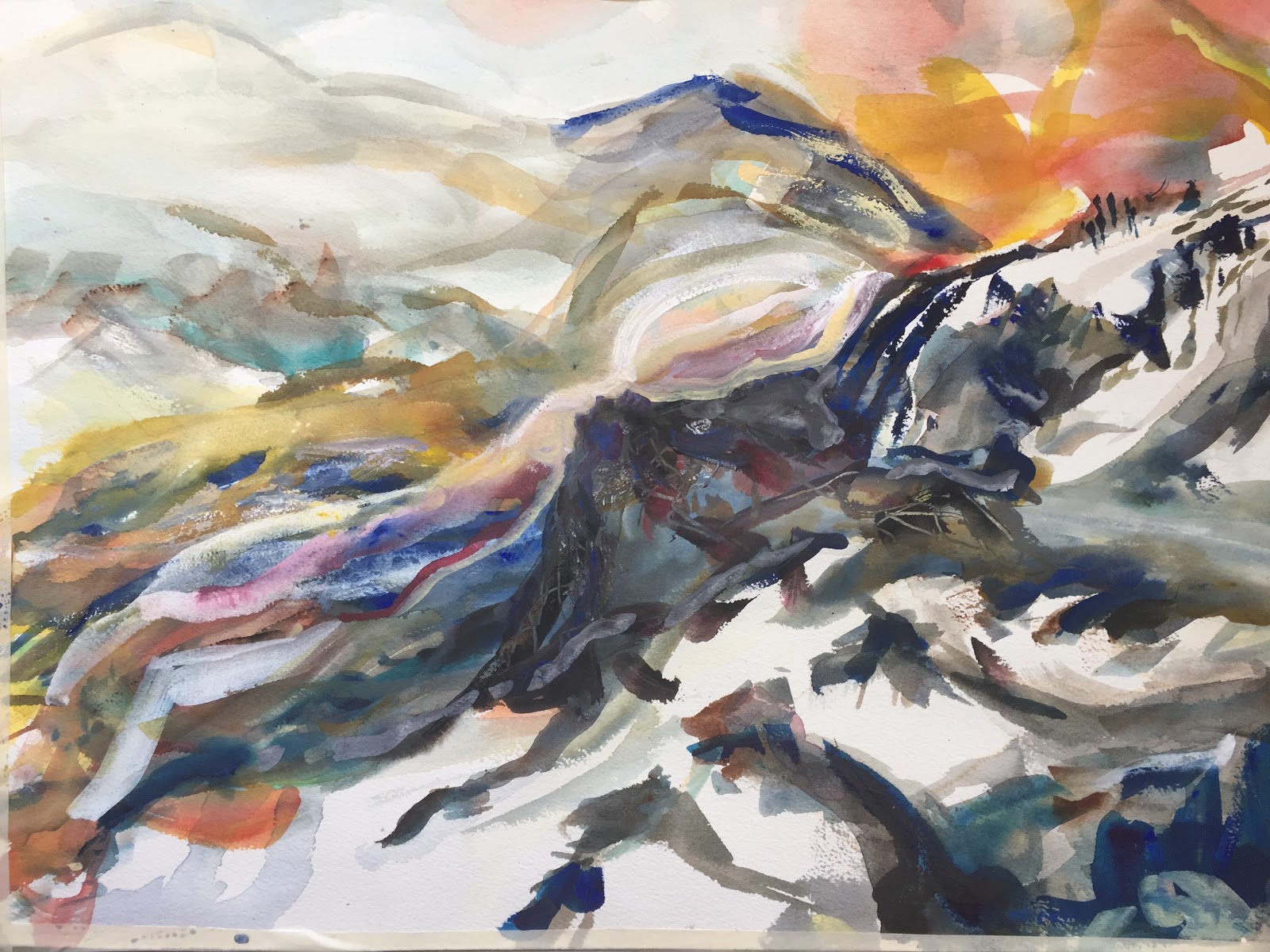
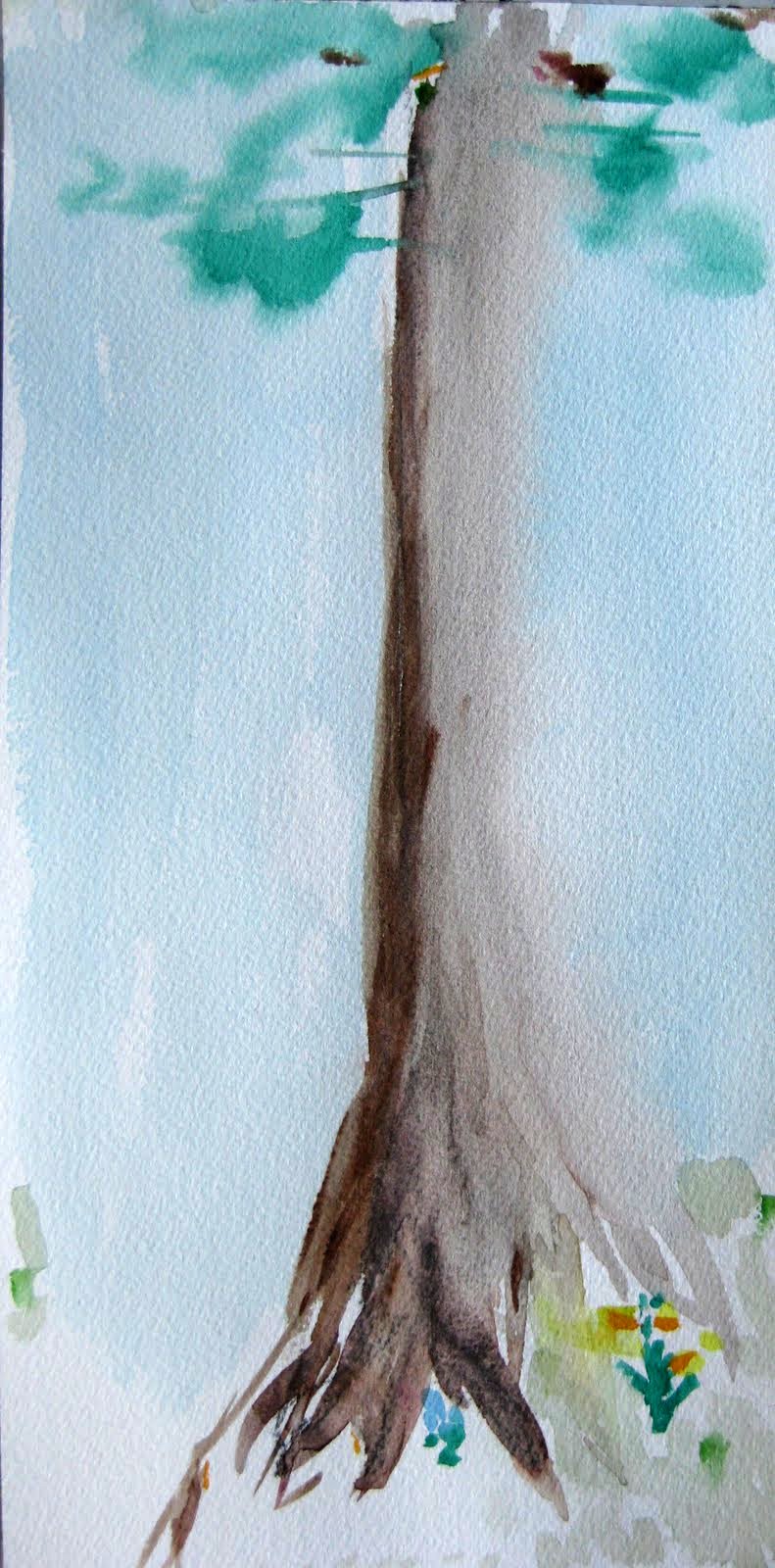
Respect these trees for
they touch skies, deep down in earth;
with grandeur prevail,
green needles protecting bark,
light breaks provoking quiet.
Watercolor and poem by MJC
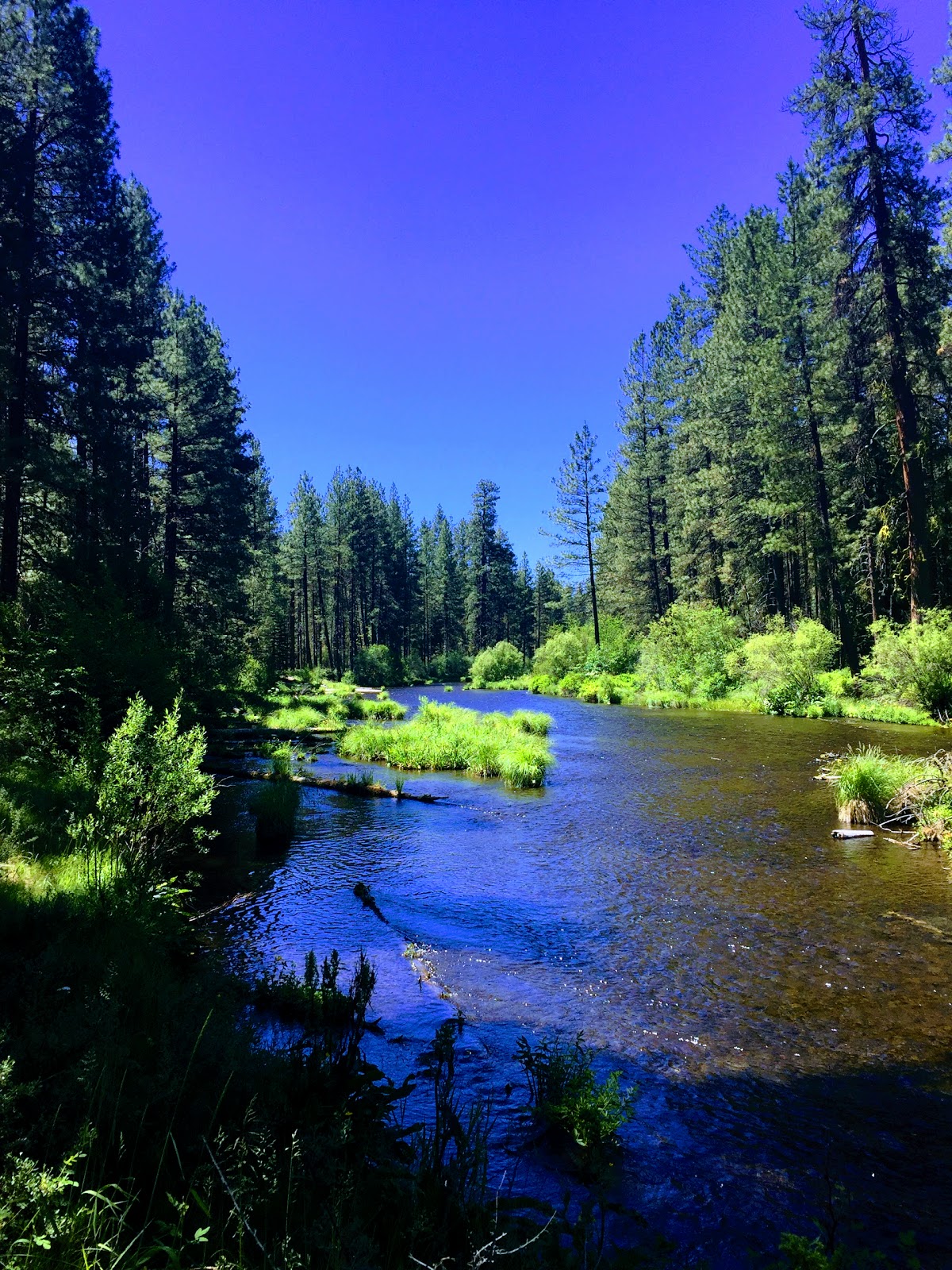
Respect these trees for
they touch skies, deep down in earth;
with grandeur prevail,
green needles protecting bark,
light breaks provoking quiet.
Watercolor and poem by MJC
Posted in Art, Poetry | Leave a Comment »
Posted in Art, Poetry | Leave a Comment »
Posted in Art, Poetry | Tagged Photography | Leave a Comment »
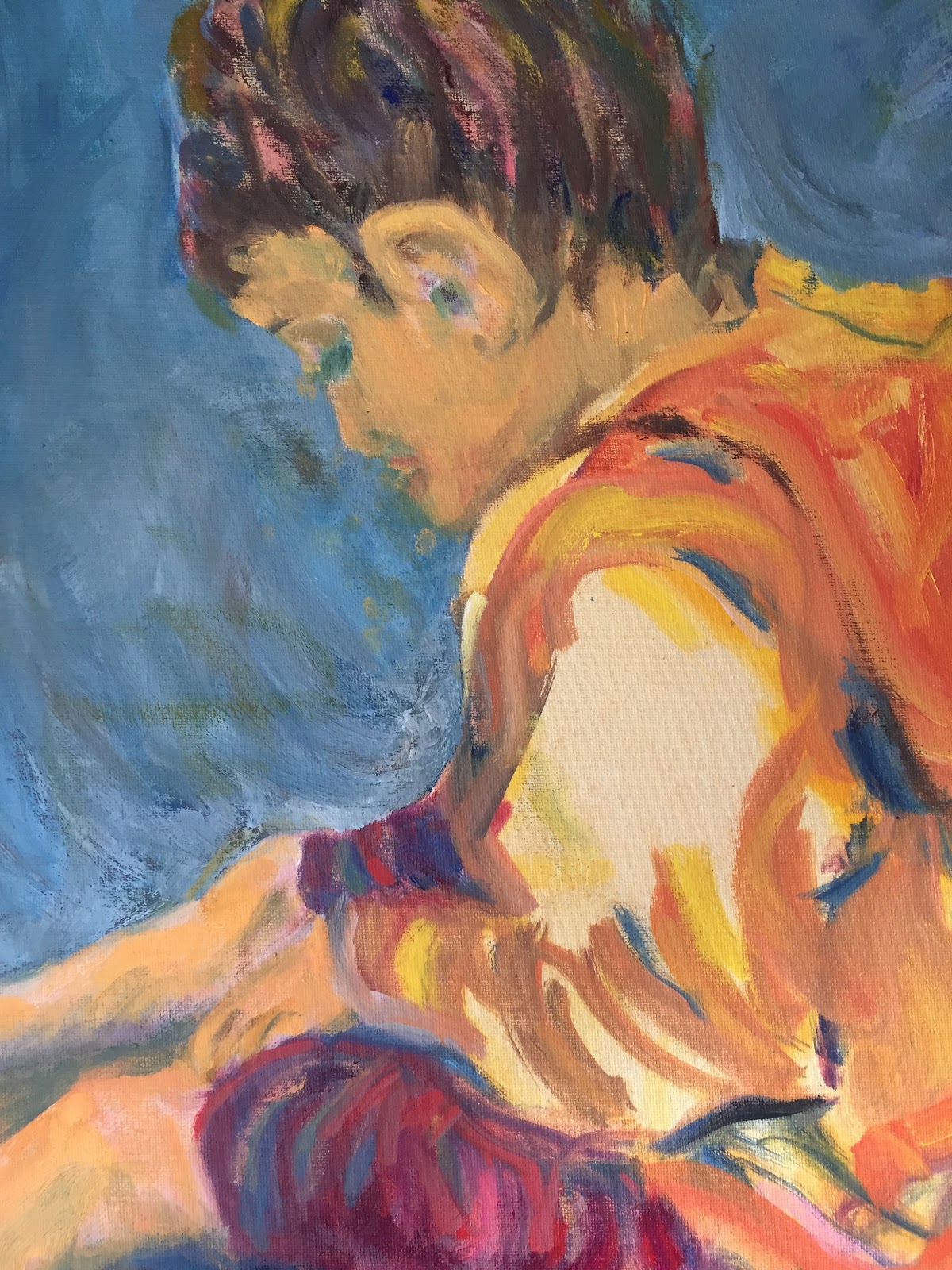
Eyes look up skyward
Then down to the ground, digging.
Soft, thoughtful moment.
He shaded by large tree trunk
I paint him. All becomes still.
Oil painting and poem by MJC
Posted in Art, Poetry | Leave a Comment »
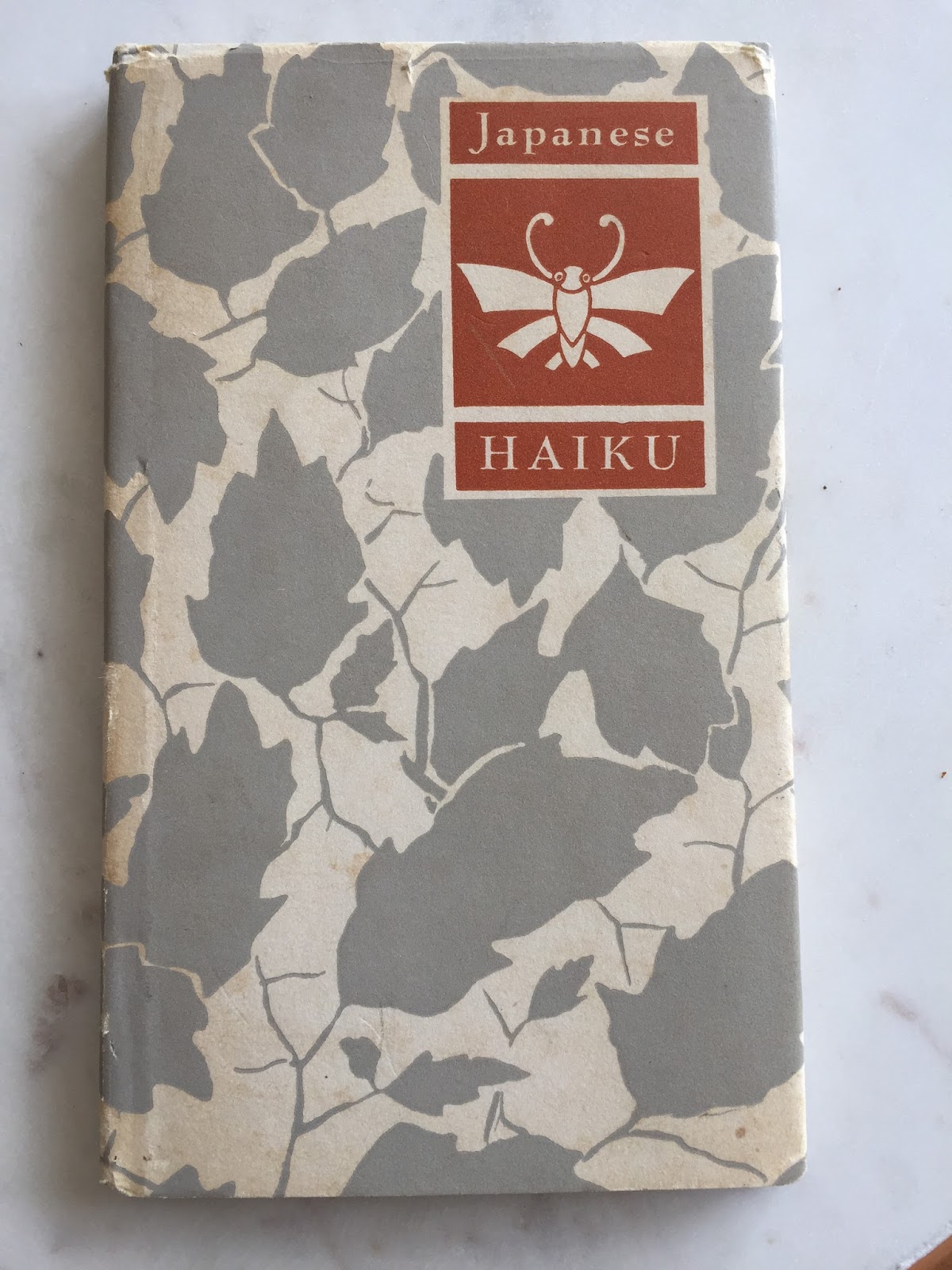
Recently, my sister sent me a small book of Japanese Haiku as a memory of my mother, who passed away several years ago.
It is a small hard-cover book that my mother purchased as a gift for her beloved aunt, who had cared for her when she was a young girl and needed a place to stay. The inscription is lovely, and says,
“To Aunt Edith at Torch Cottage – To one who has enriched my life beyond all means of explanation. With all my love for your love which has never failed me. Janet, Spring, 1964”
It was titled, Japanese HAIKU, published by Peter Pauper Press out of Mount Vernon, in New York in 1955-56 and sold at that time for $1.00. It offered two hundred twenty examples of seventeen-syllable Japanese poems by Basho, Buson, Issa and other Japanese poets, mostly of the 15th and 16th century. It was translated by Peter Beilenson.
The book explains that a haiku poem is comprised of seventeen syllables, looking something like this:
5 syllables
7 syllables
5 syllables.
The tanka has 14 more syllables added to the haiku, for 31 syllables total, looking like this:
5 syllables
7 syllables
5 syllables
7 syllables
7 syllables
This is a grand total of 31 syllables.
Below, is an haiku and tanka that I prepared as an illustration.
5 NIGHT COMES BUT NOT YET
7 THE DIM SKY SPEAKS TO ME NOW
5 BLUE, WHITE, GOLD, ENDLESS.
7 DECLINE TO NEW BLOOMS OF GREY
7 ALL BECAUSE OF THE END GAME.
MJC
Historically, I am told, several poets were involved in the writing of a tanka usually with the first poet preparing the haiku and the second poet completing the last two lines, thus becoming a tanka. Small drawings were often added, artistically, to the poem.
Additional examples of poems and art based on the haiku and tanka are shown here.
Inspired by this little book, I wondered whether it might be possible to paraphrase my mother’s words using the rules of Japanese haiku and tanka poems and here is what I came up with.
TO MY LOVING AUNT
LIFE ENRICHED BEYOND ALL MEANS
BY TORCH LAKE COTTAGE
FOR YOUR LOVE THAT NEVER FAILED
GRIEF ENSNARED BUT NOT BY YOU
MJC
Although I have never really completely understood why poetry has so many rules and quite often rebelled against them when forced to use them, I find this simple way of playing with words and syllables intriguing.
Thus inspired, I think over the next few days, will try to come up with some personal versions of haiku and tanka, with personal drawings illustrating them, just for the fun of it.
Who knows, perhaps a tanka a day keeps the doctor away?
Posted in Family/Friends, Poetry | Tagged Writing | Leave a Comment »

Posted in Art, Poetry | Leave a Comment »
Poem and painting by Mary Chamie.
Posted in Art, Poetry | Leave a Comment »
Posted in Art, Poetry | Leave a Comment »
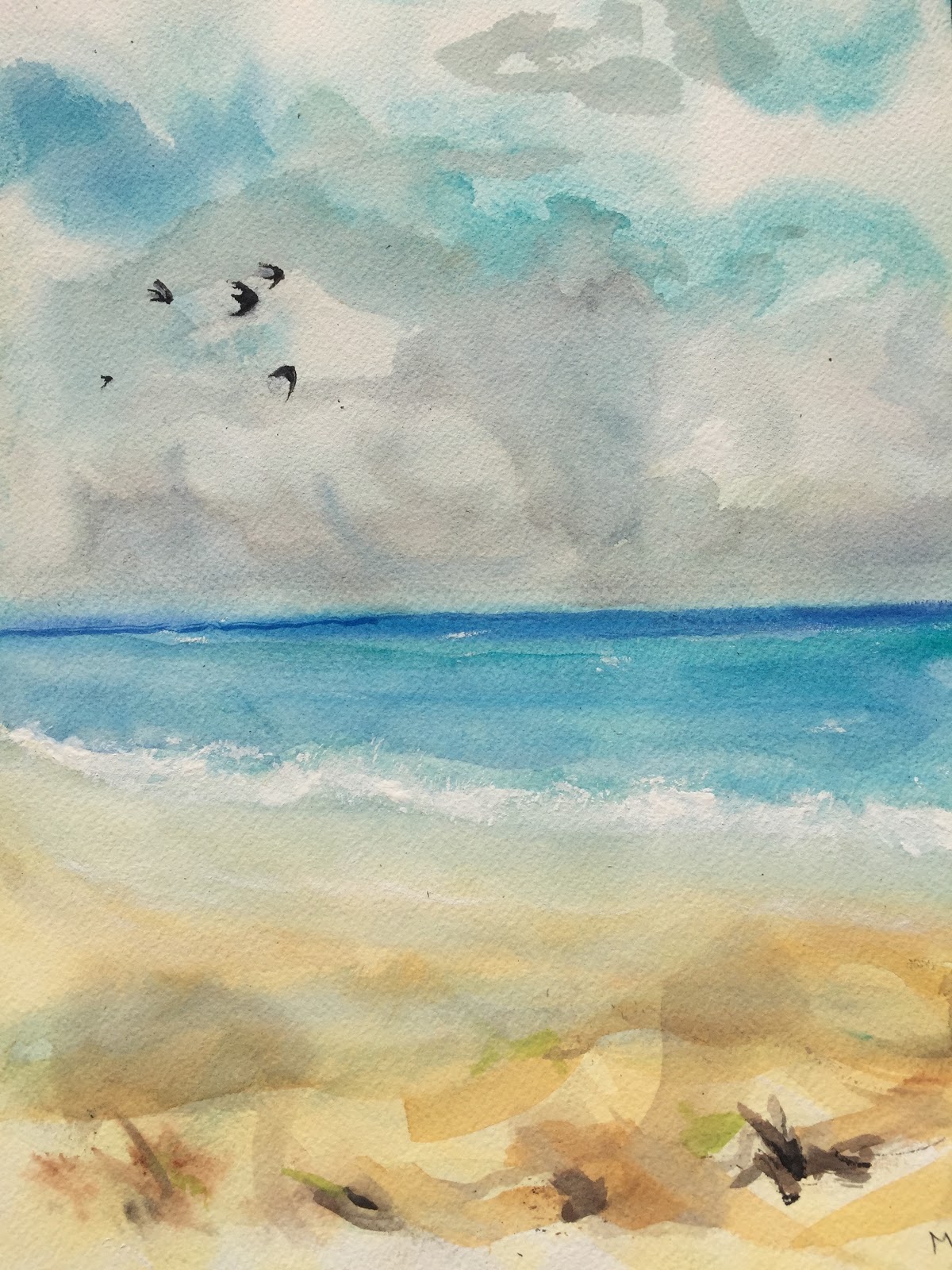
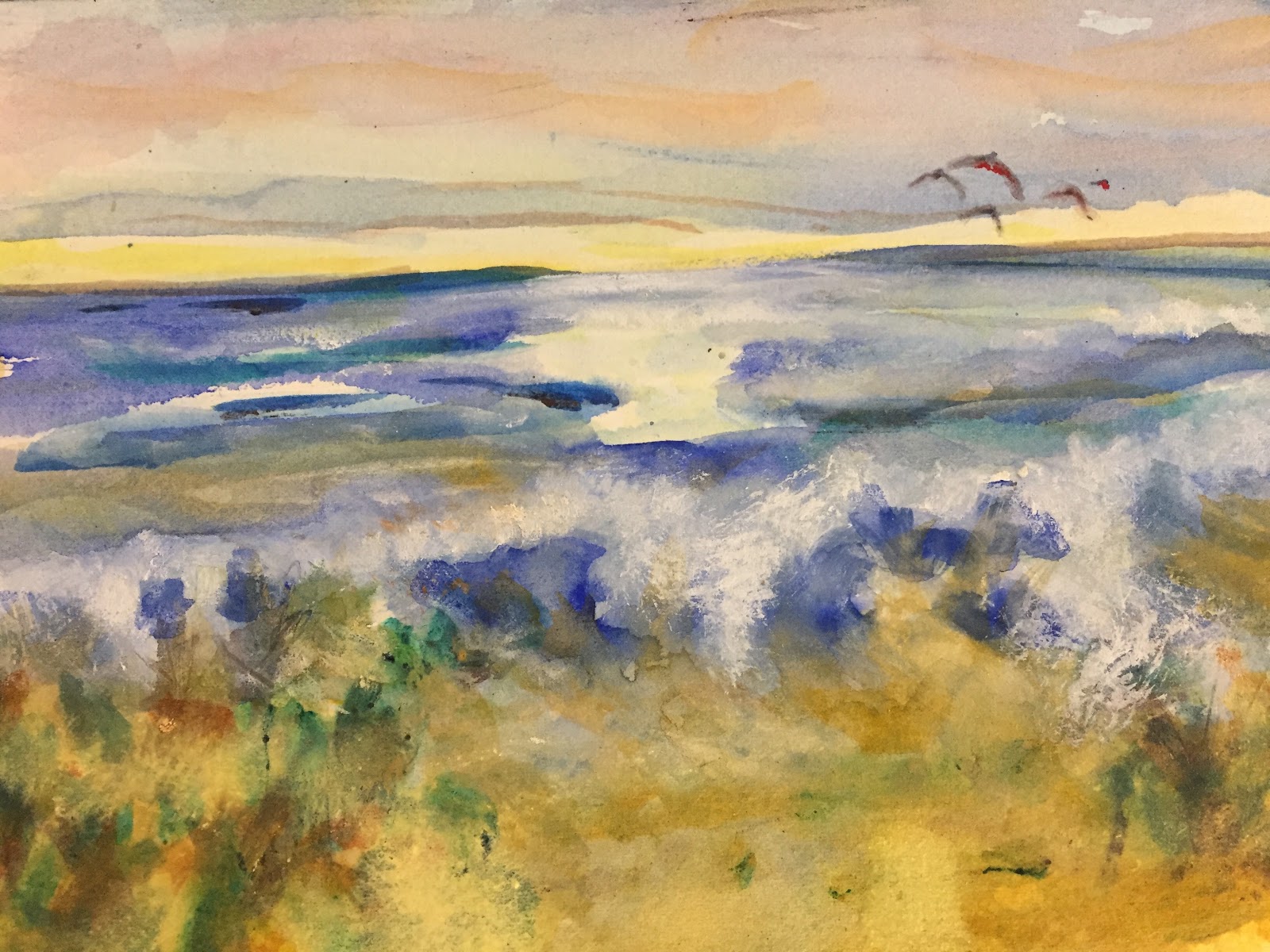
We stay for the winter months in the Abacos, one of the northernmost islands of the Bahamas. It is a place often nicknamed Paradise by those who visit and by those who live here, when describing its natural beauty. The extent of its unending changing beauty is hard to describe. Much of it is the subtle colors, the shifting of the light, the way the breeze runs across the beach.
Recently, I have tried to depict my feelings about this place using watercolors.
The more I paint, the more I see the wonder of this place. The more I see, the more I paint the wonder of this place. It is becoming quite an obsession.
The first painting is of early morning, what we see when we look toward the ocean. It is followed by paintings at various times of day.
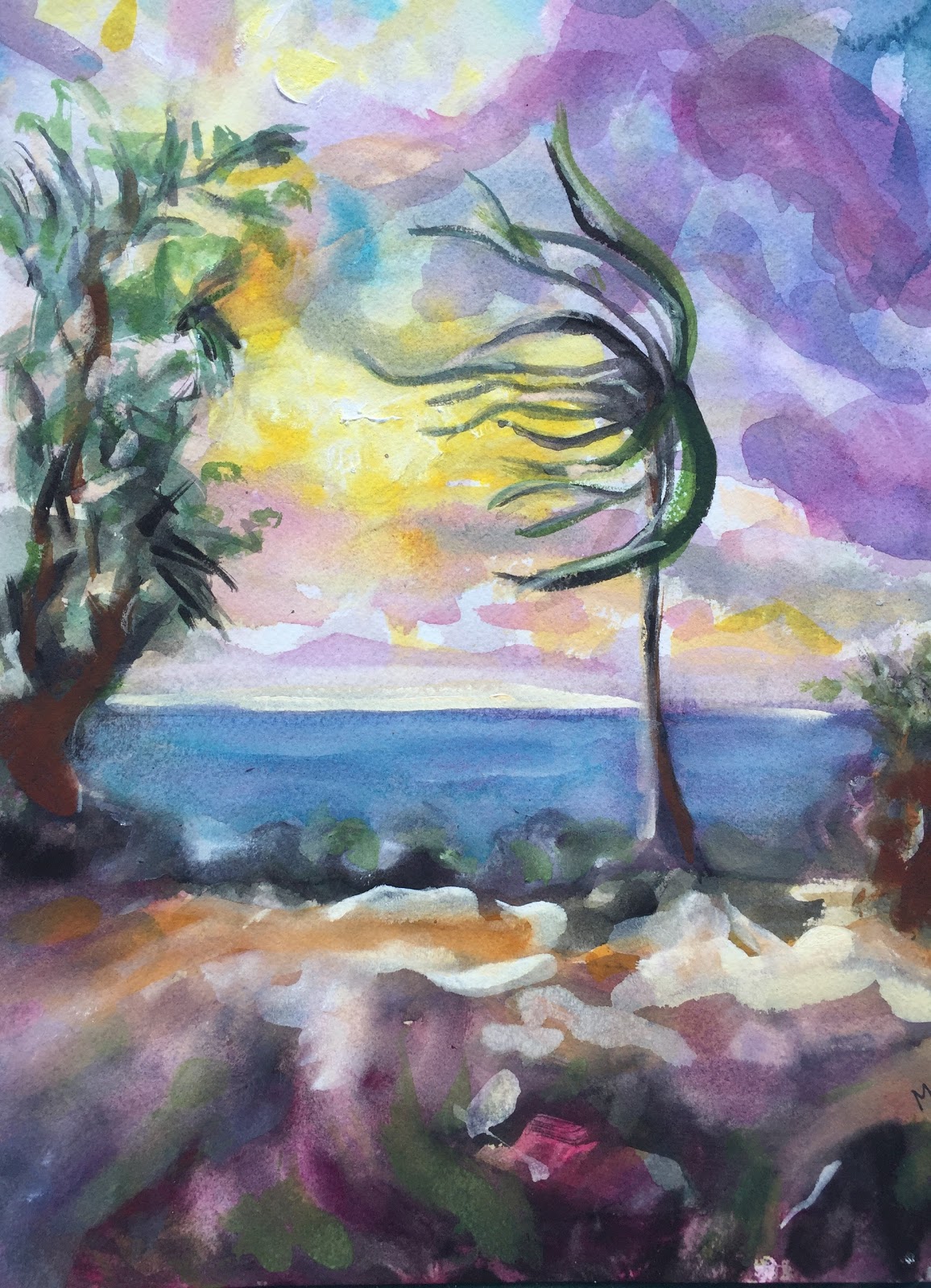 |
| Early morning. |
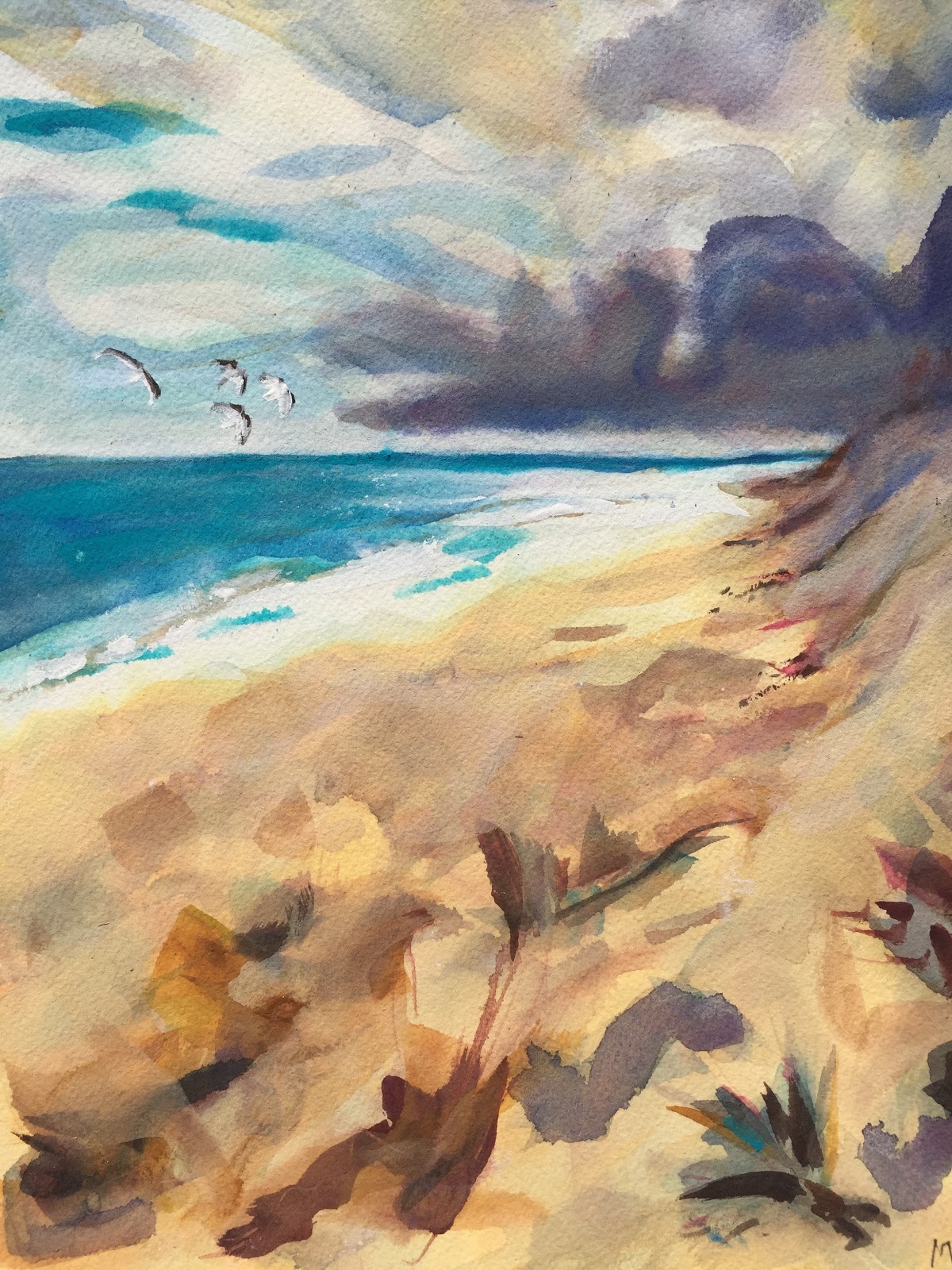 |
| Late afternoon |
 |
| Mid-day |
 |
| Before a Rain |
These paintings were from our front yard. The stillness and motion of the ocean is what makes for much of the beauty.
The natural island settings of the low trees and bushes along the beach edge, facing the backyard are also very beautiful, however quite different from our front yard.
More to follow, next time.
Posted in Art | Tagged Abacos | Leave a Comment »
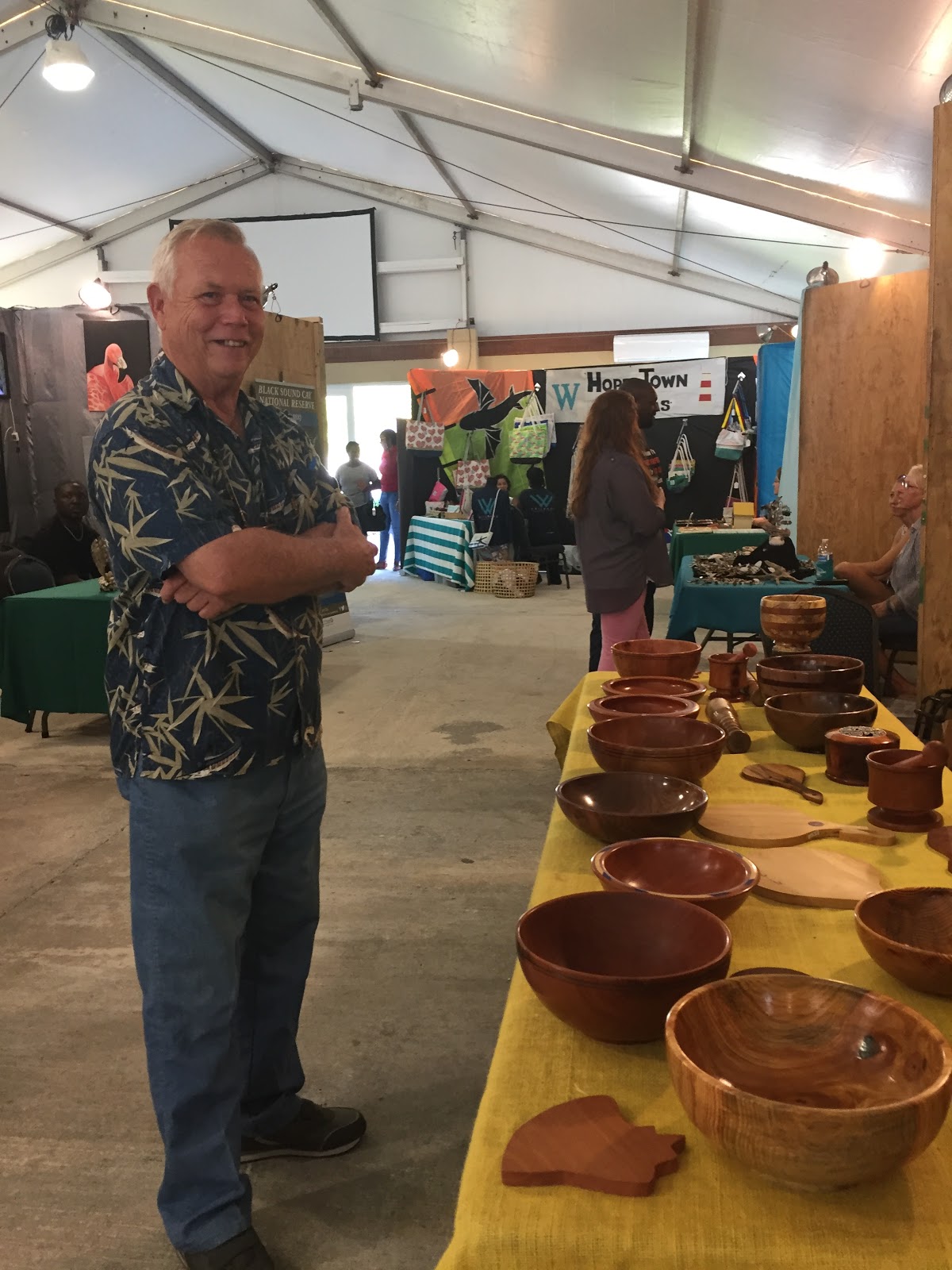
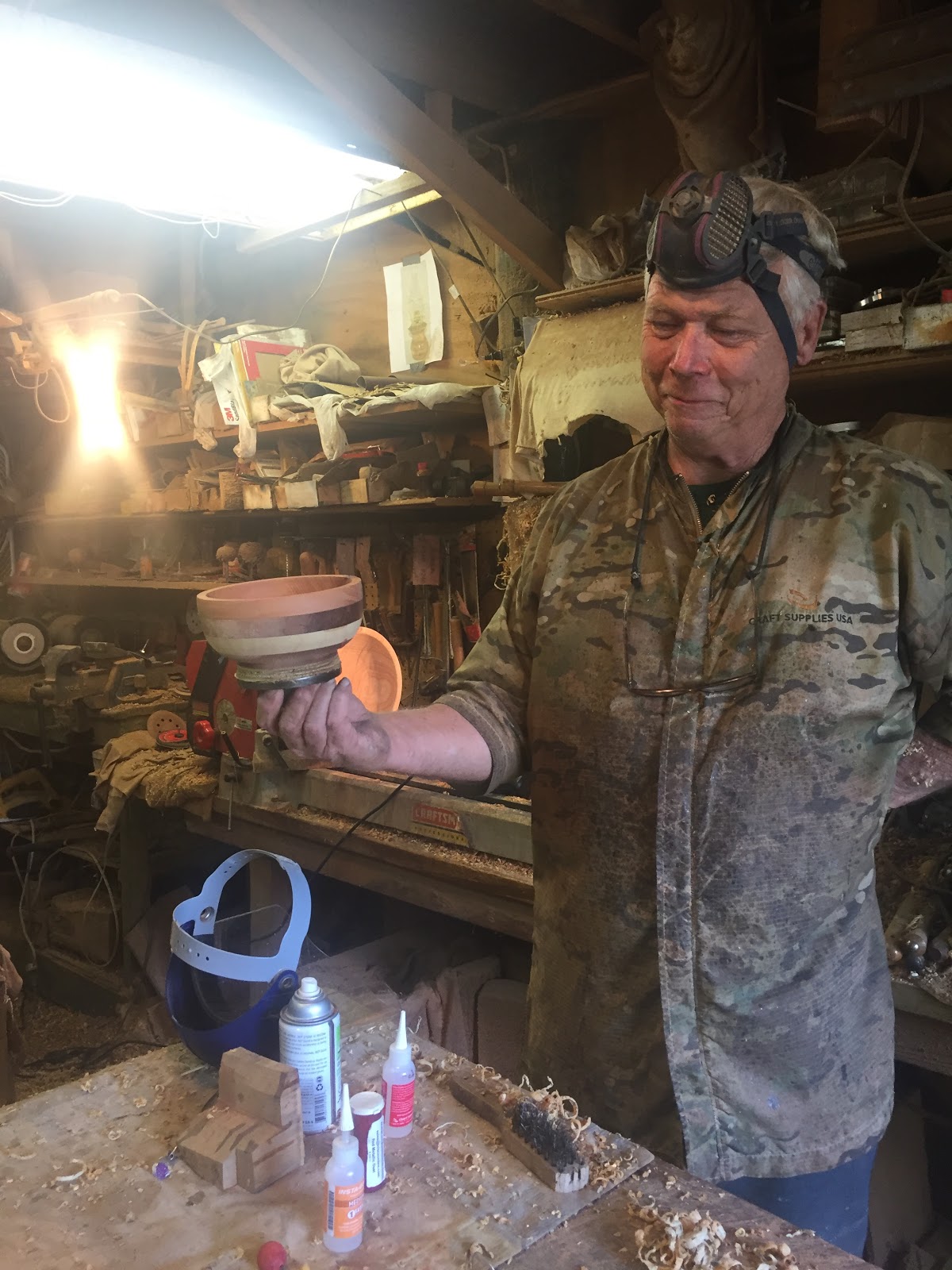
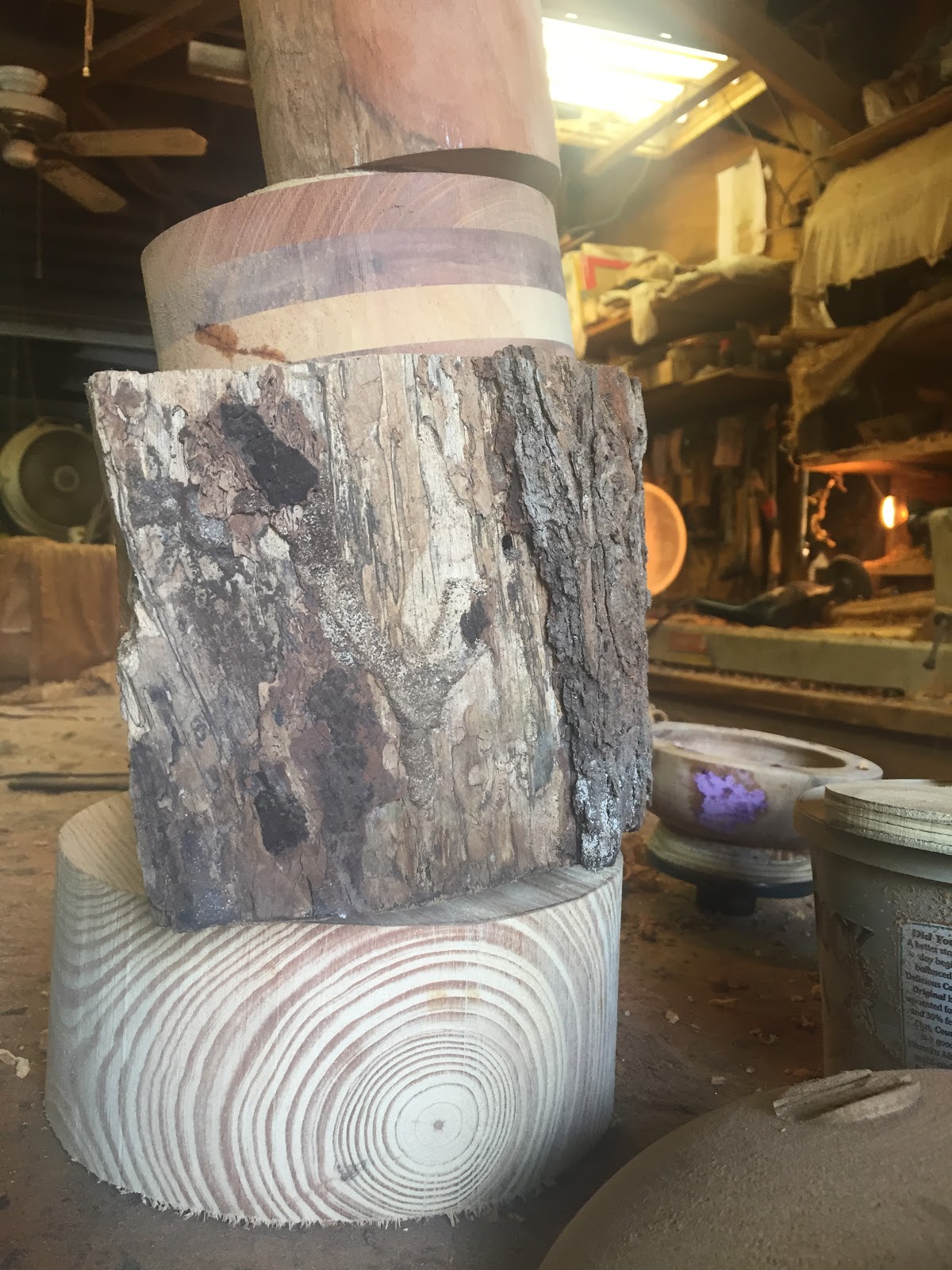
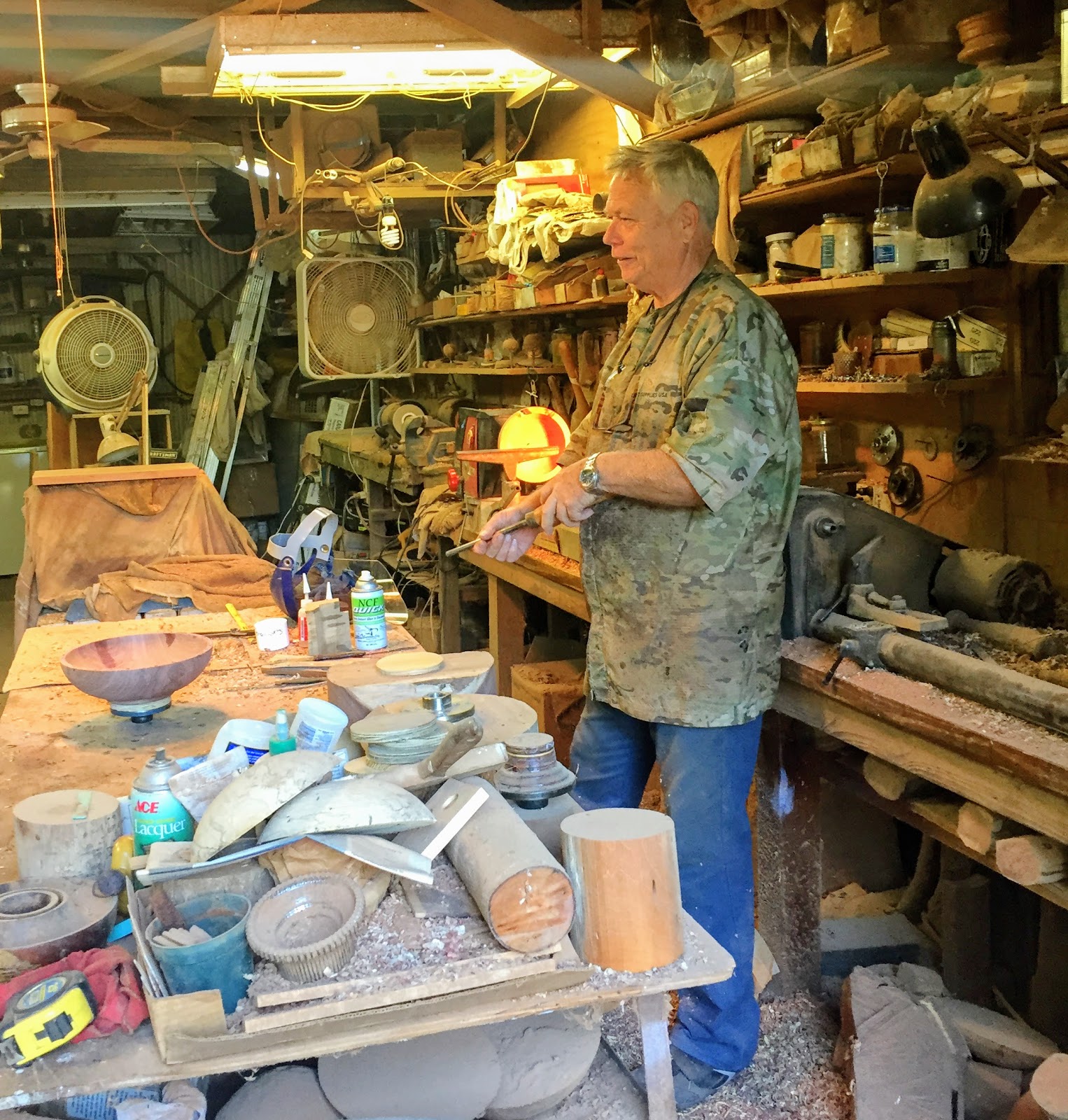
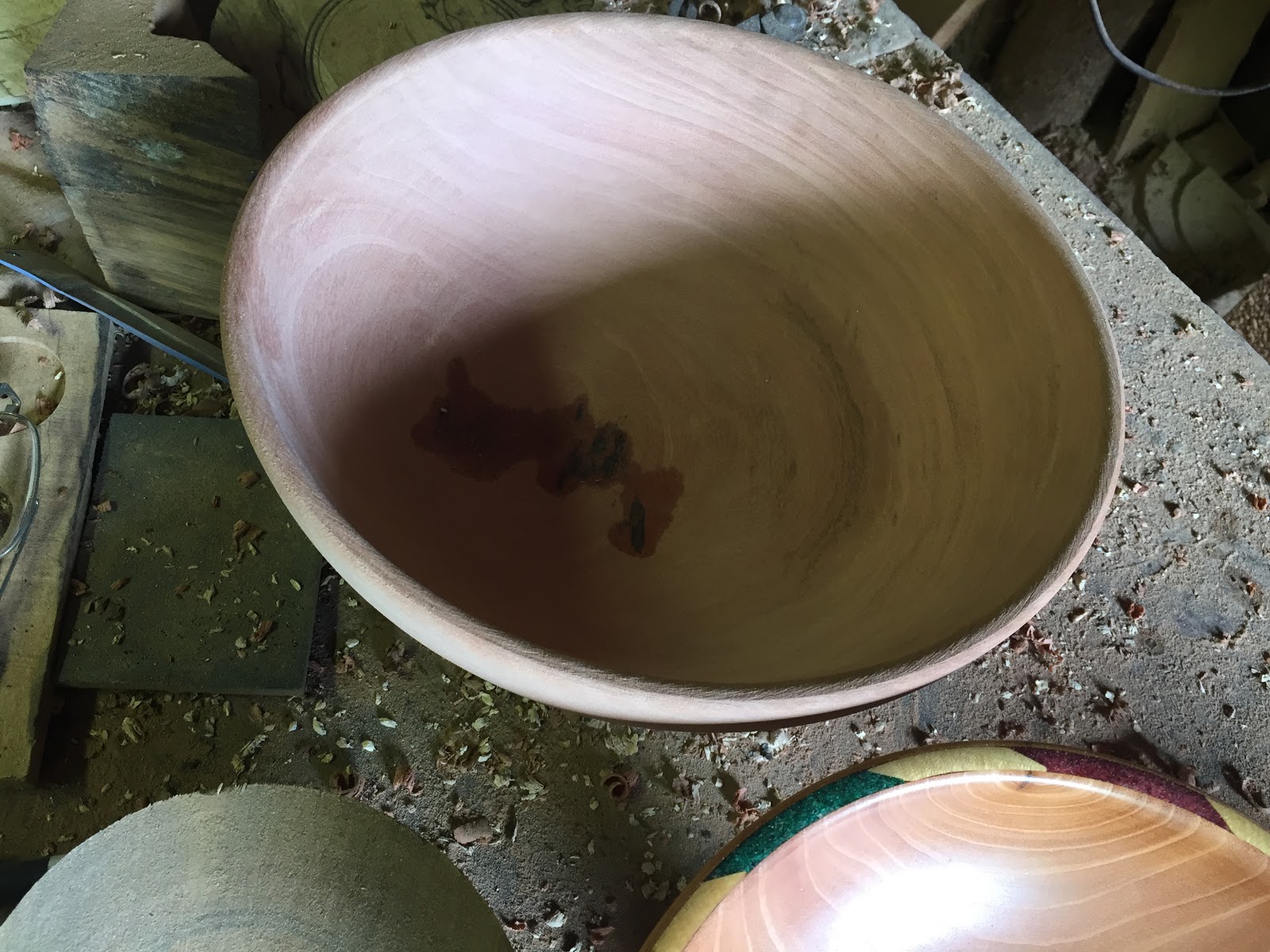
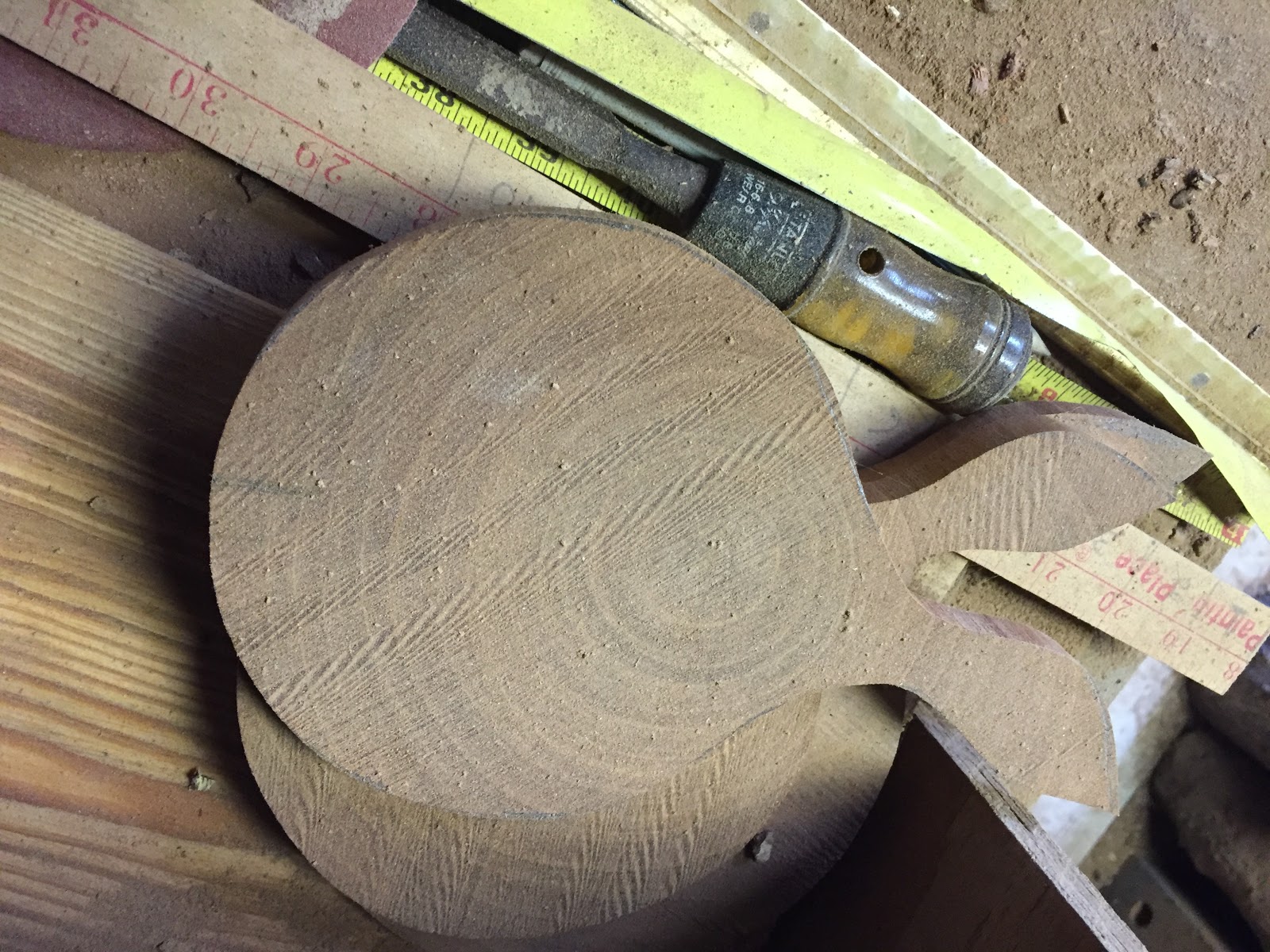
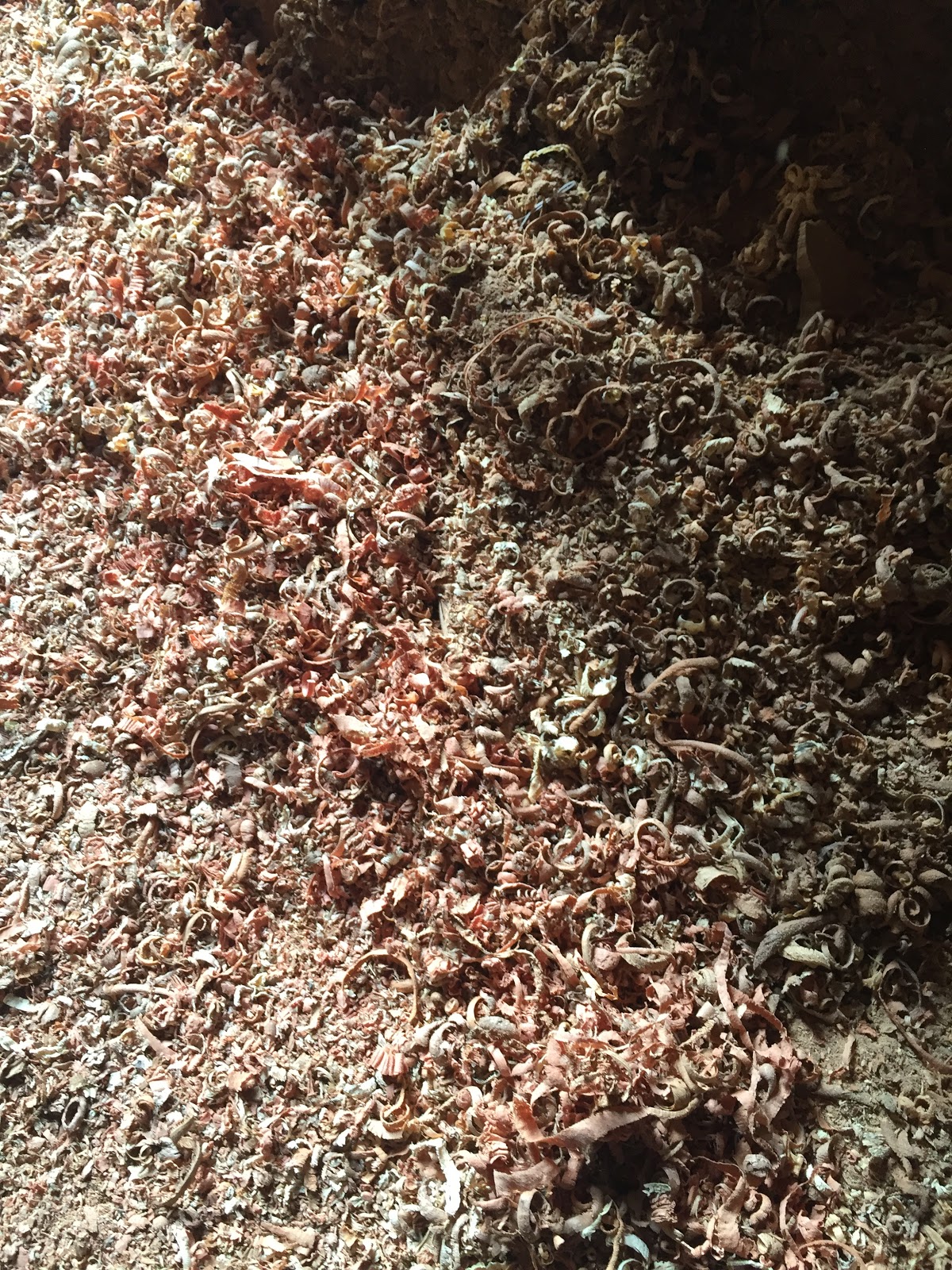
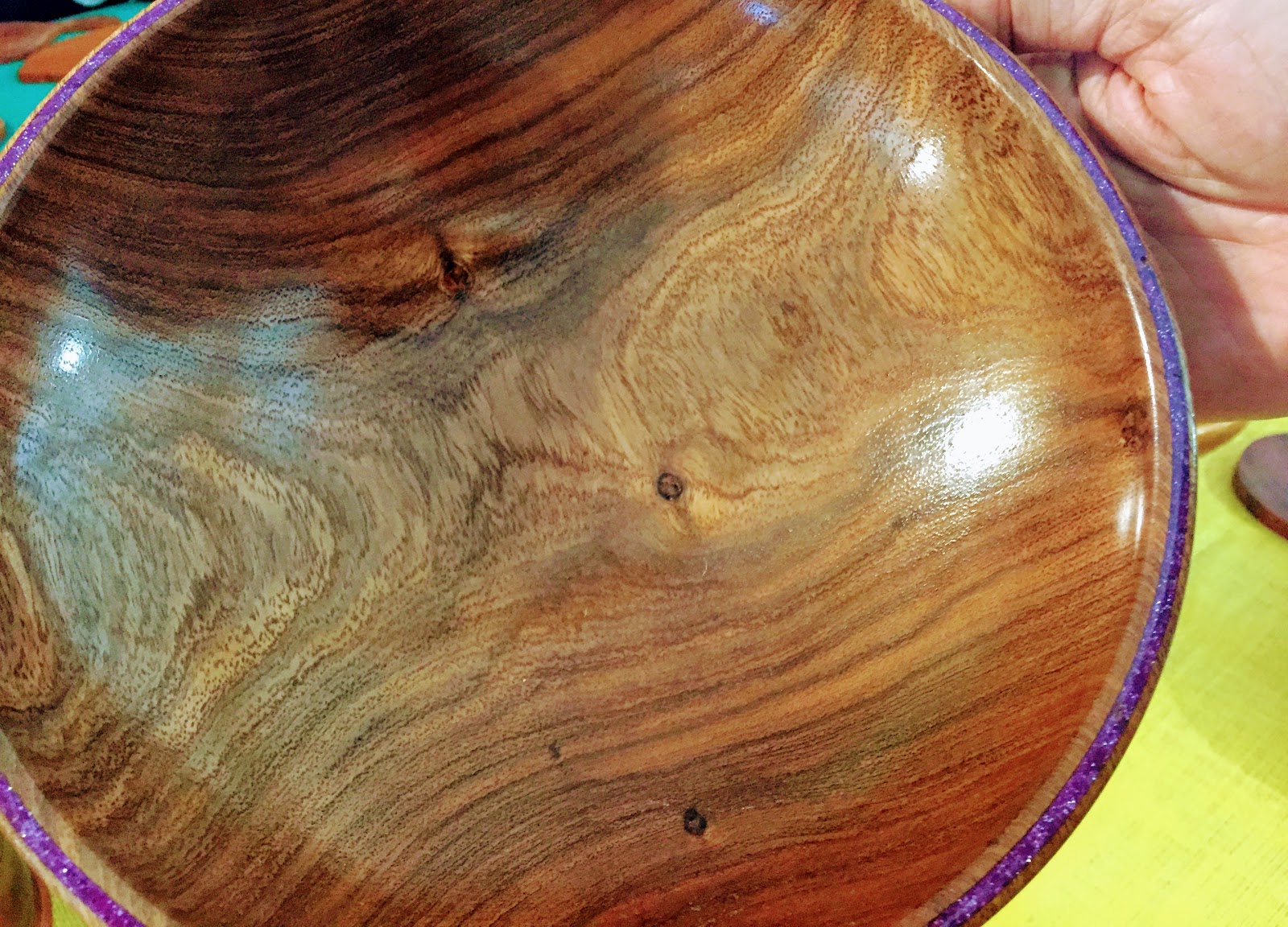
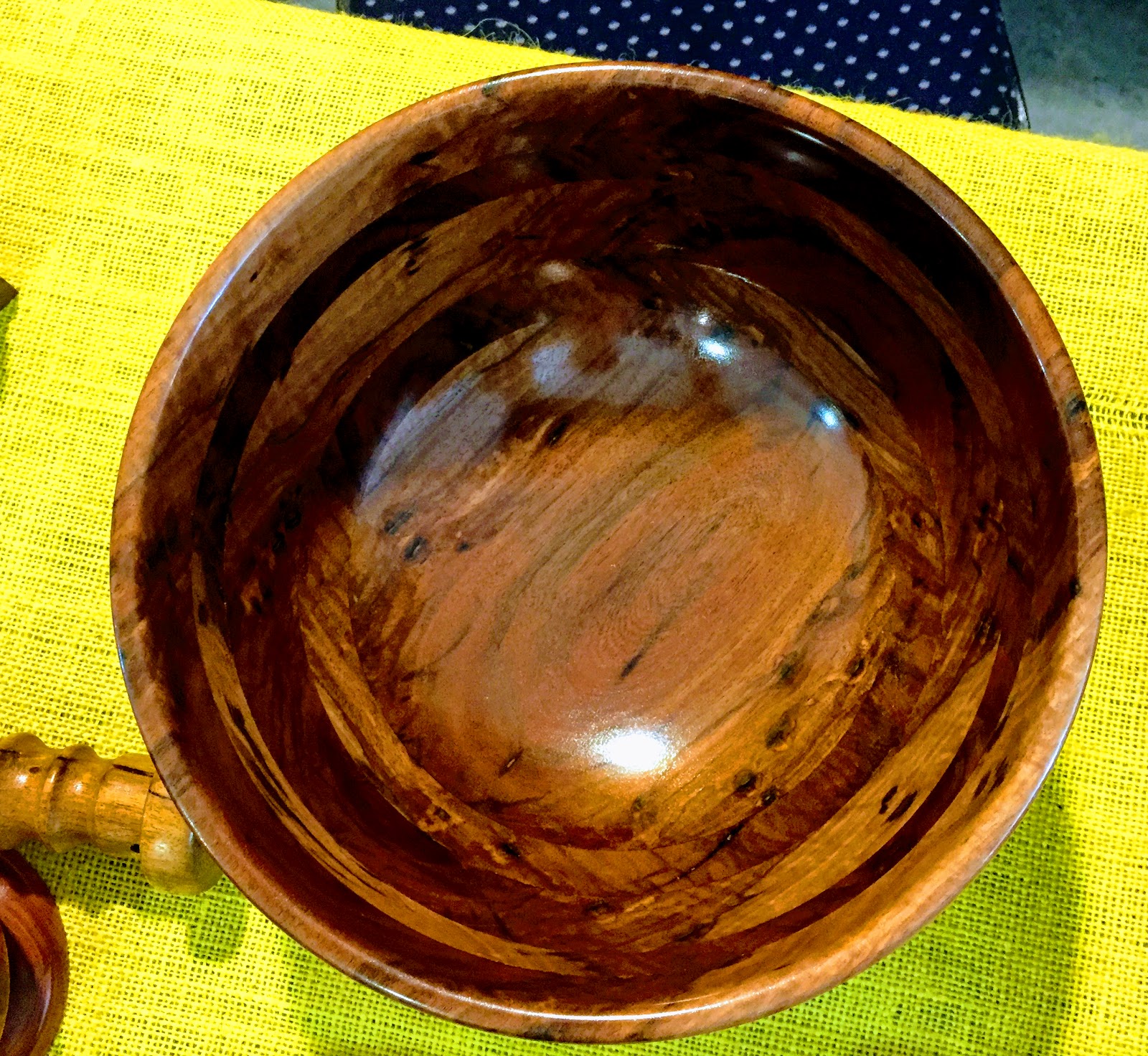
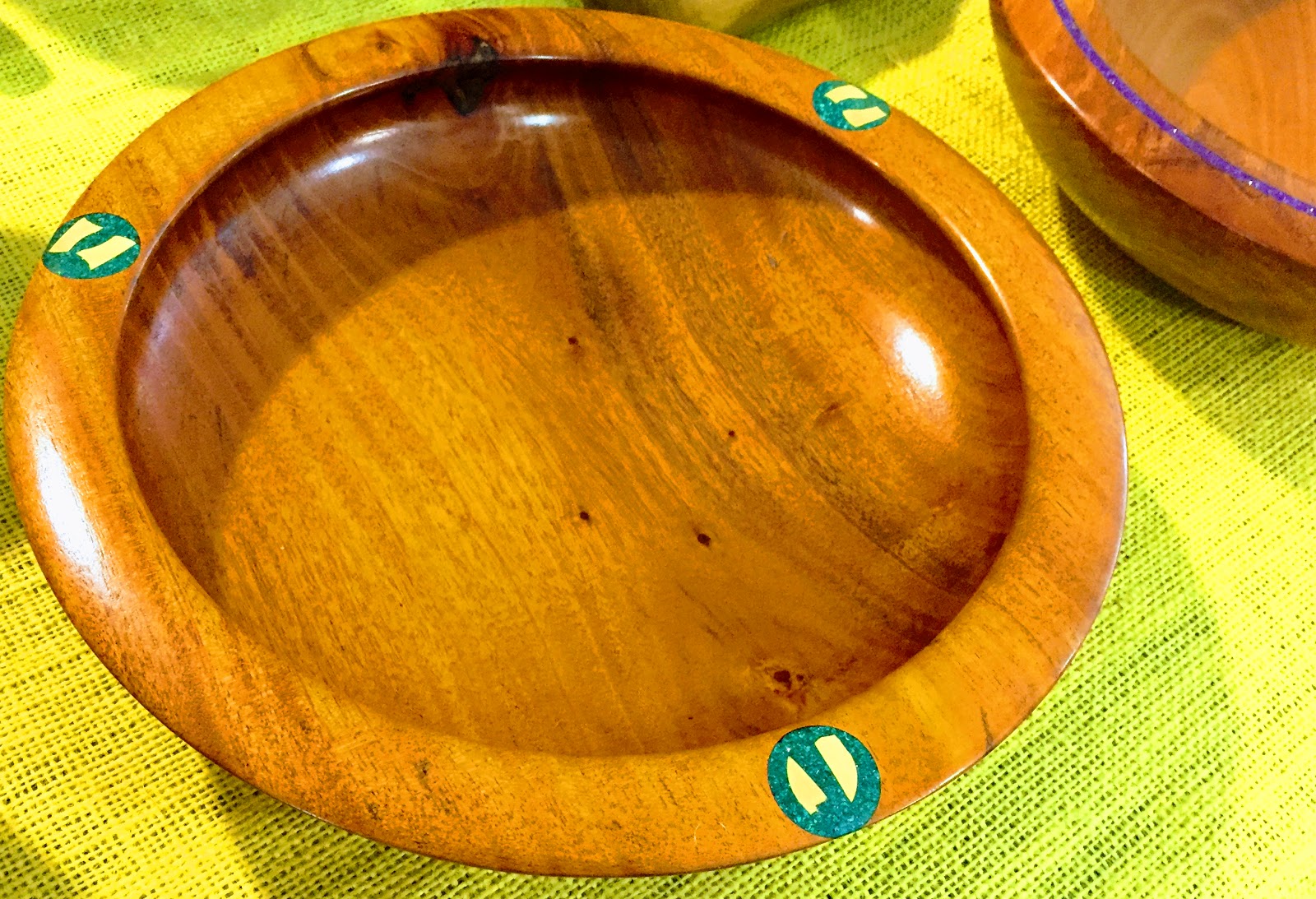
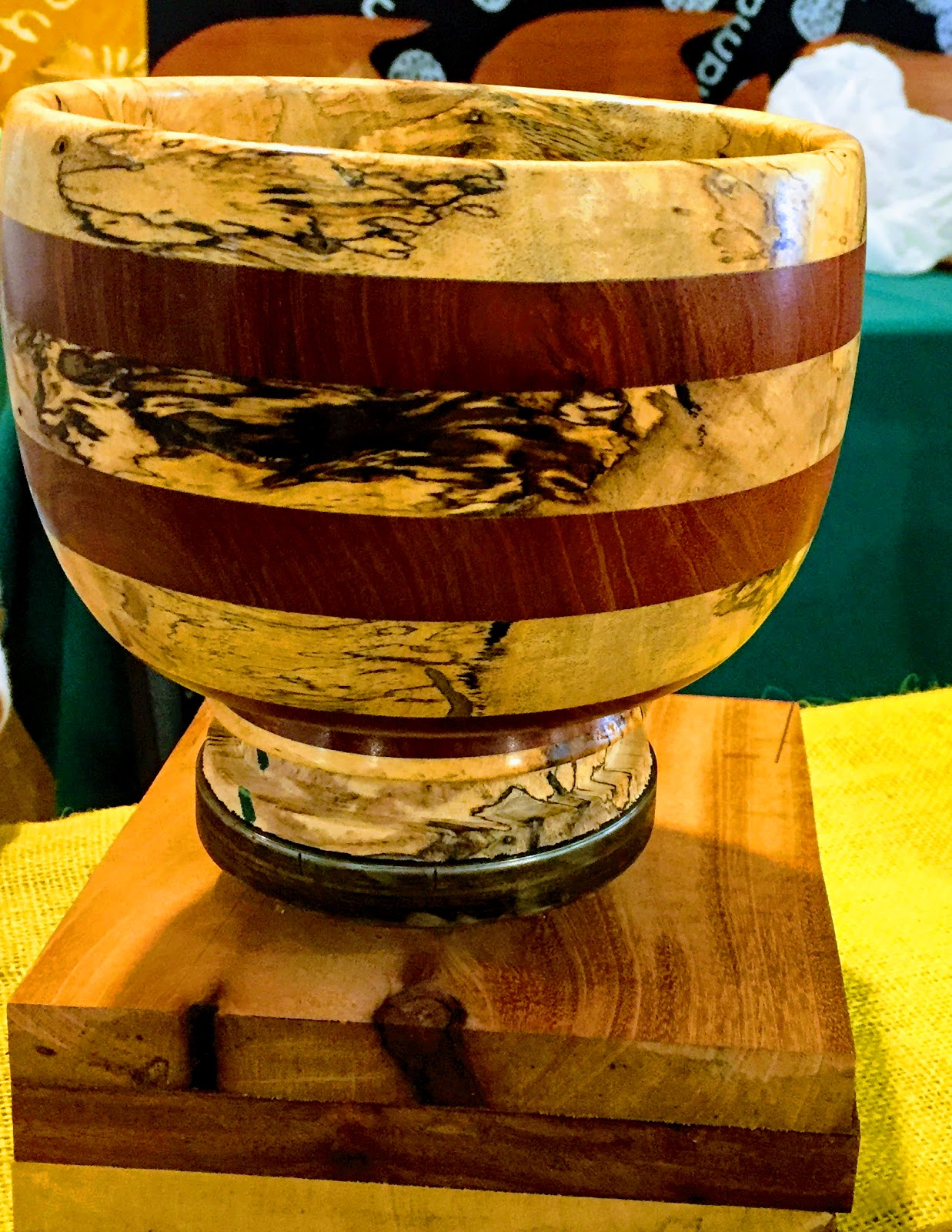
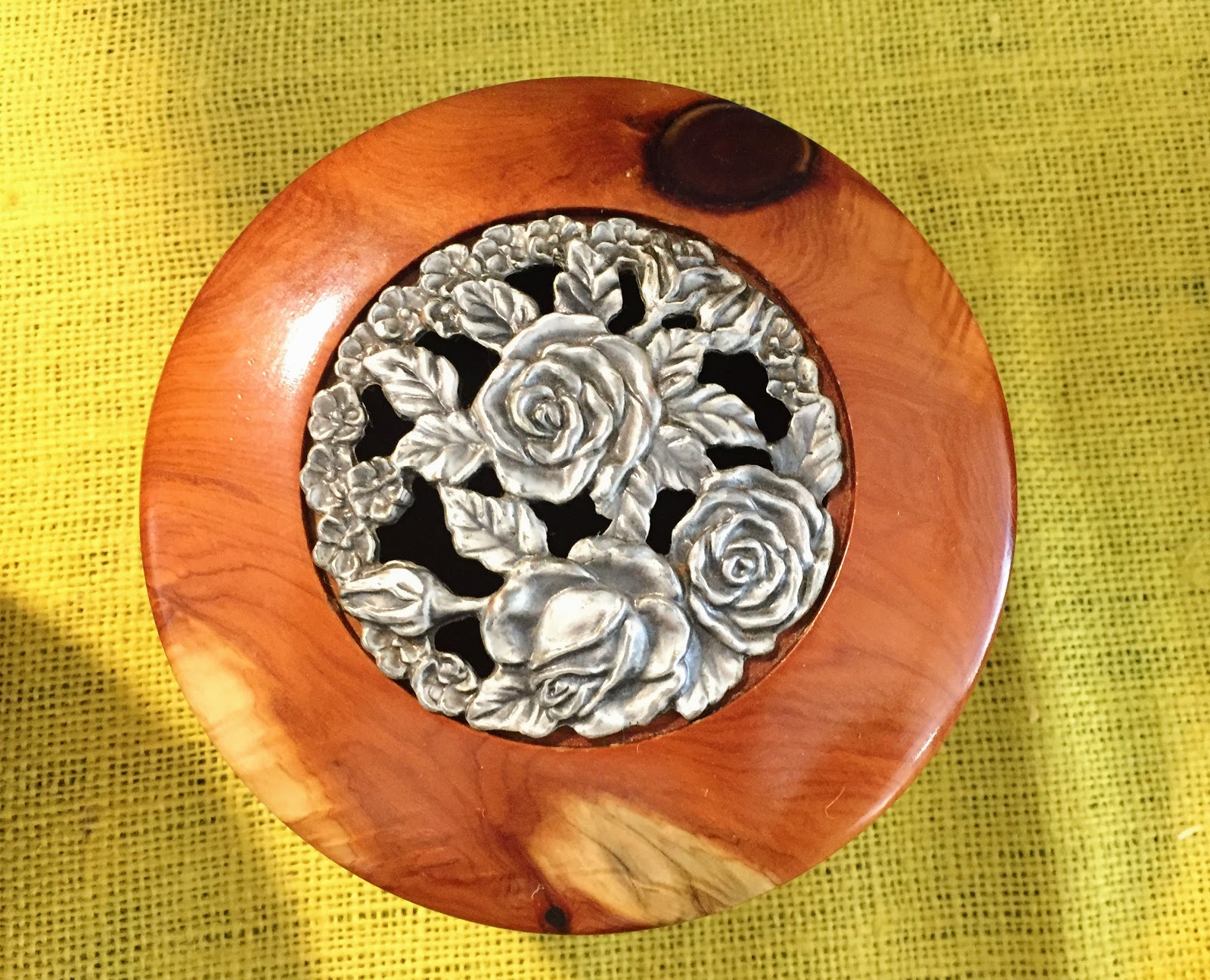
Our neighbor, Steve Knowles is a wood turner who makes beautiful wooden bowls and other wood products that are all hand crafted in his workshop at his home in the Abacos at Bahama Palm Shores. He has taken on woodturning as a hobby. Every year his work becomes more popular and he now shows his pieces at art fairs around the country.
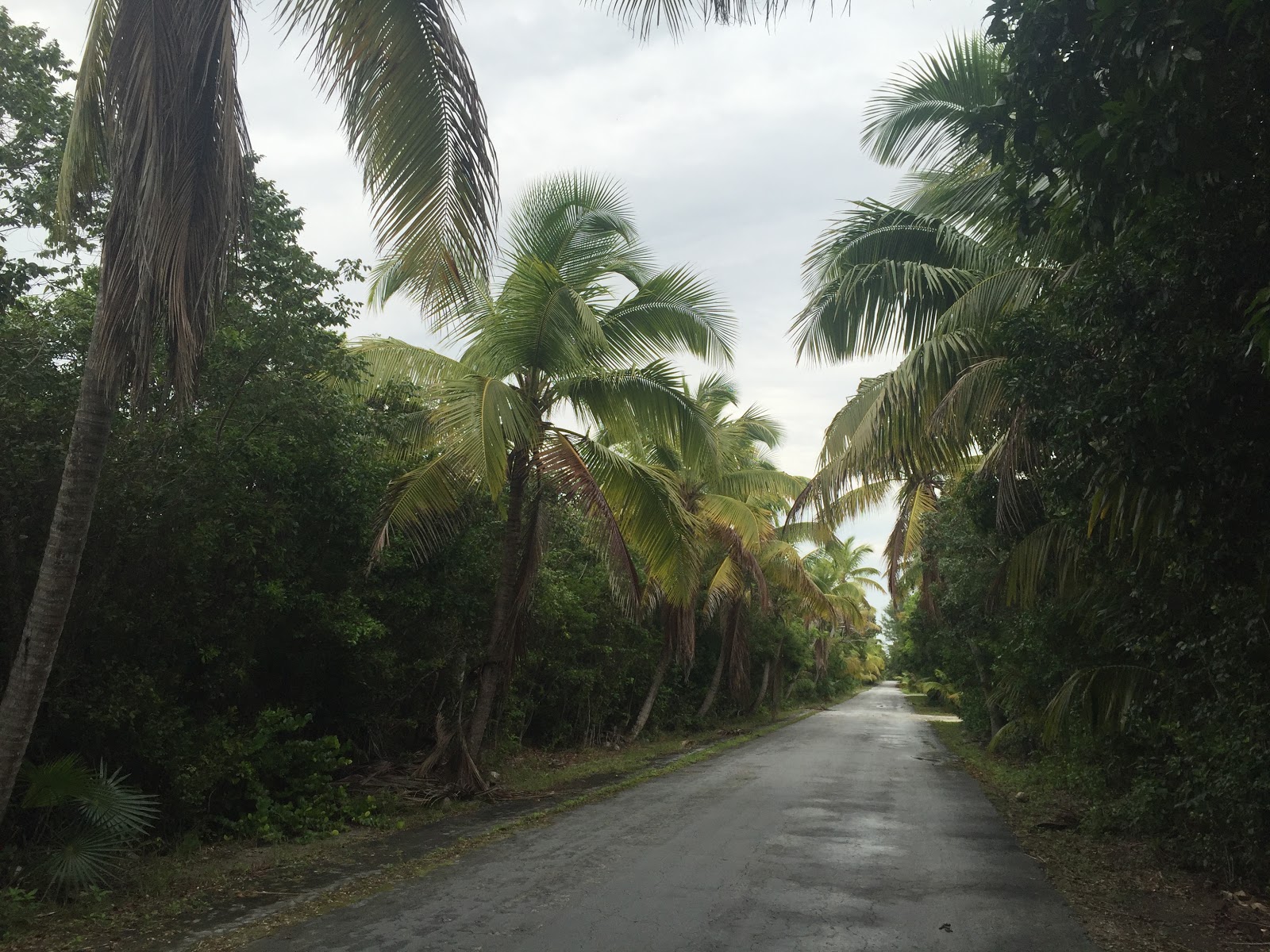
He currently works at Abaco Hardware where he services home appliances. He is also the Assistant Fire Chief for the High Banks Volunteer Fire Services. He and his wife Anita live in a natural and woodsy part of the Abacos called Bahama Palm Shores, an area surrounded by beautiful trees and bushes, with many different kinds birds settled in the greenery.
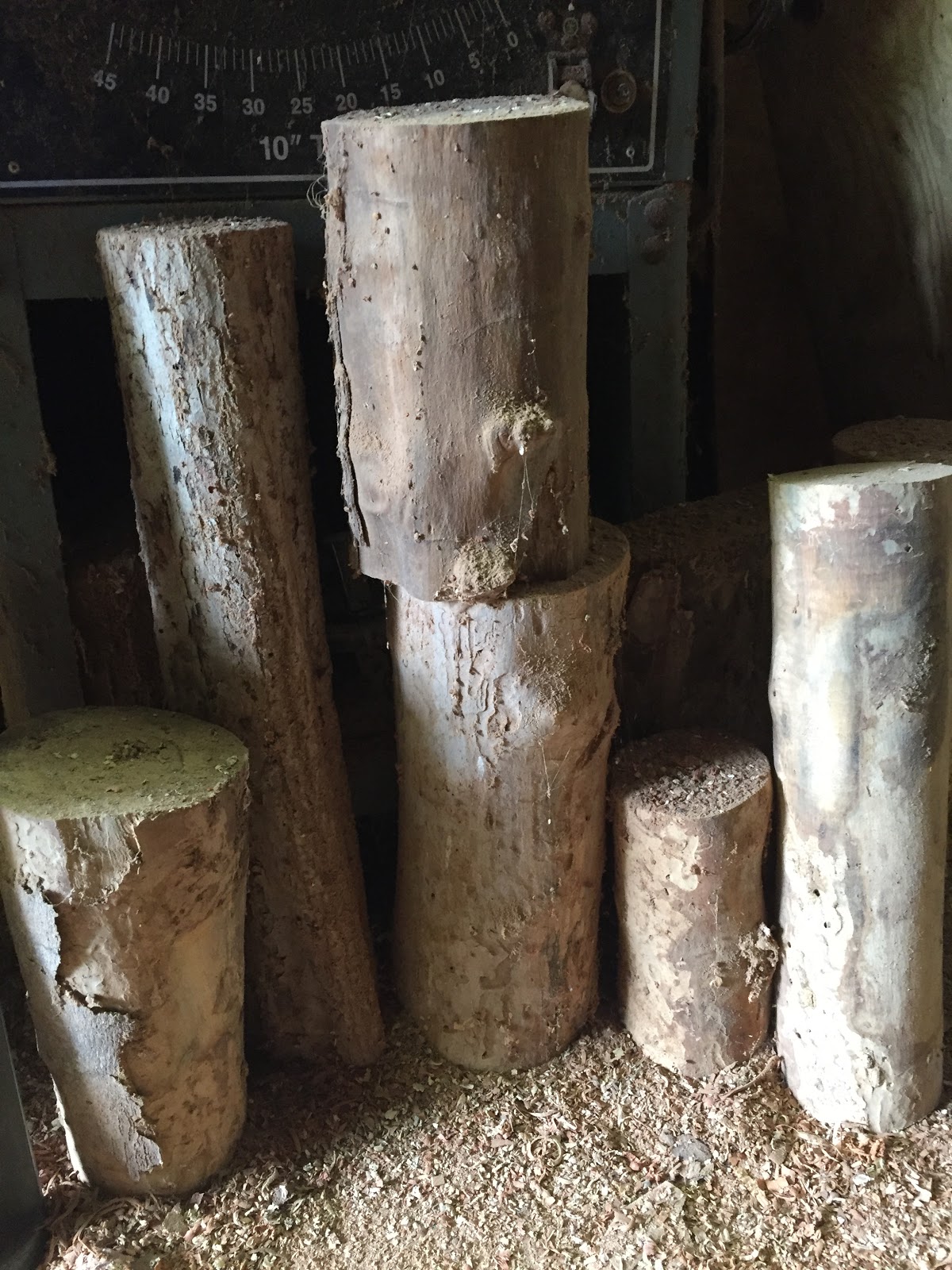
Bahama Palm Shores is well-known for its parrots and for its natural beauty, and is also well known for being a vibrant, active little ocean-side community. It is a great place for Steve to find wood for his many craft projects. Neighbors call him to tell him that a tree or branch has fallen in a storm and he comes over and retrieves some of the wood.
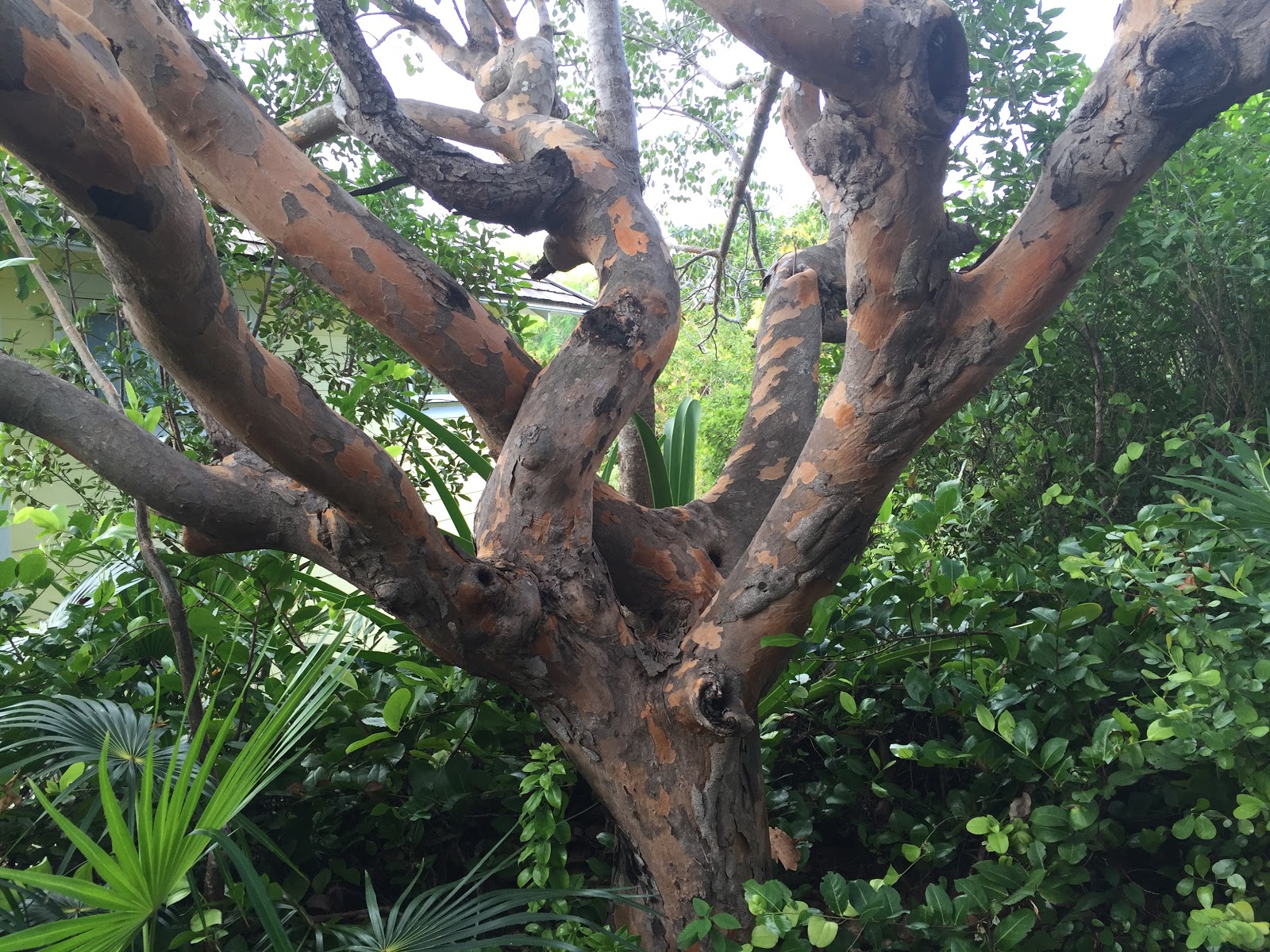 |
| Poison wood tree |
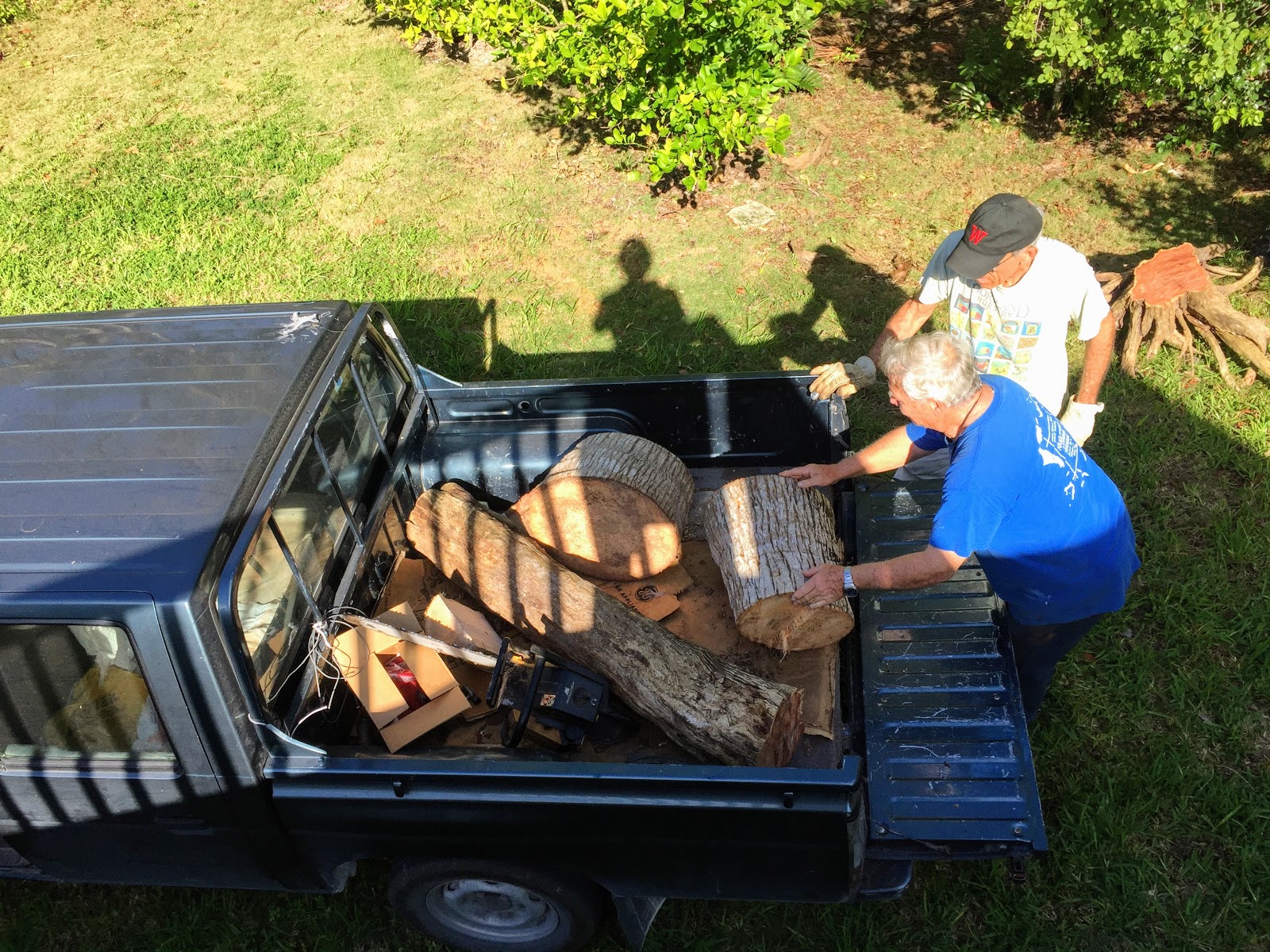 |
| Picking up wood from a neighbor. |
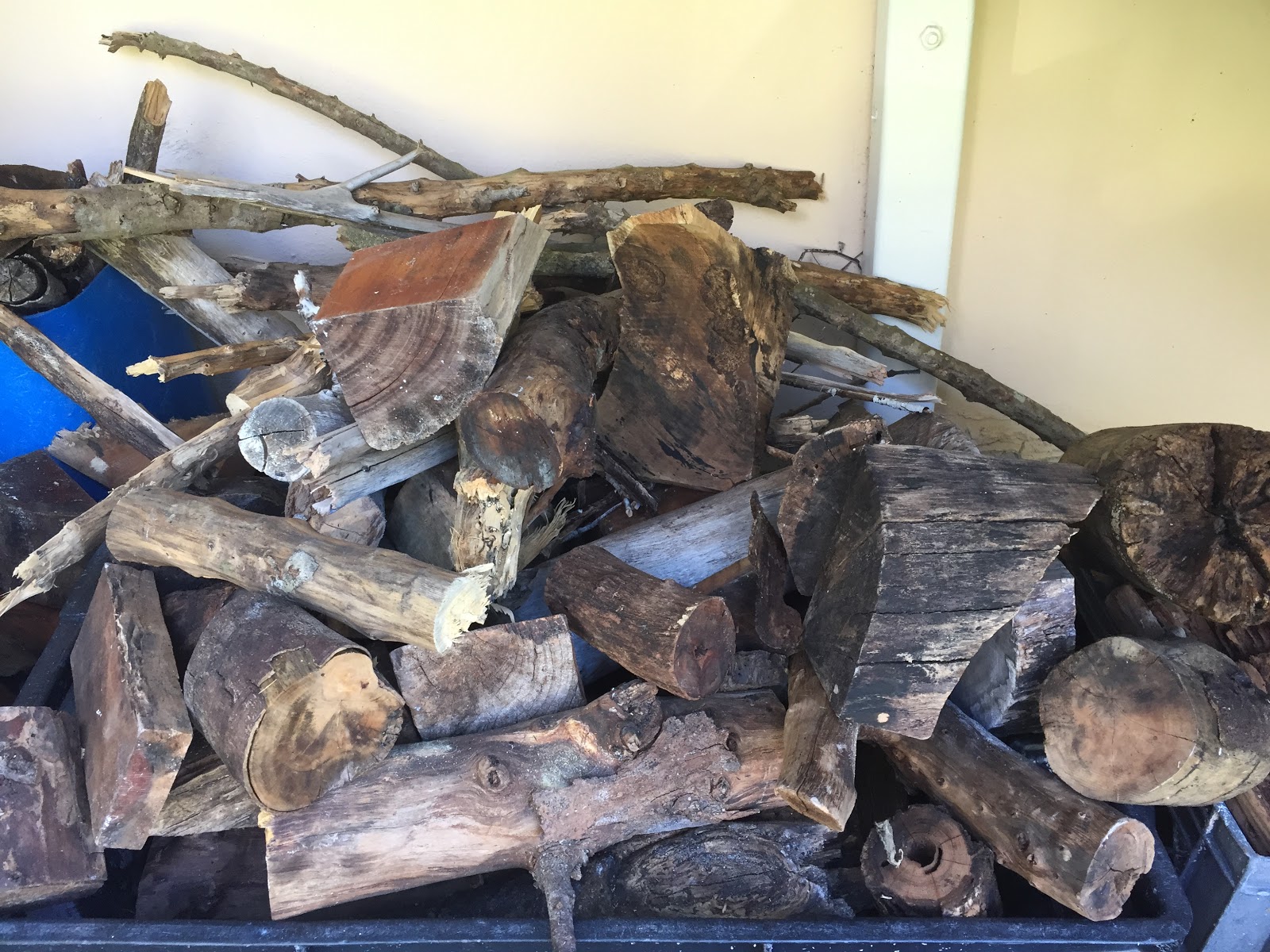 |
| Wood piled up ready to take to his wood shop. |
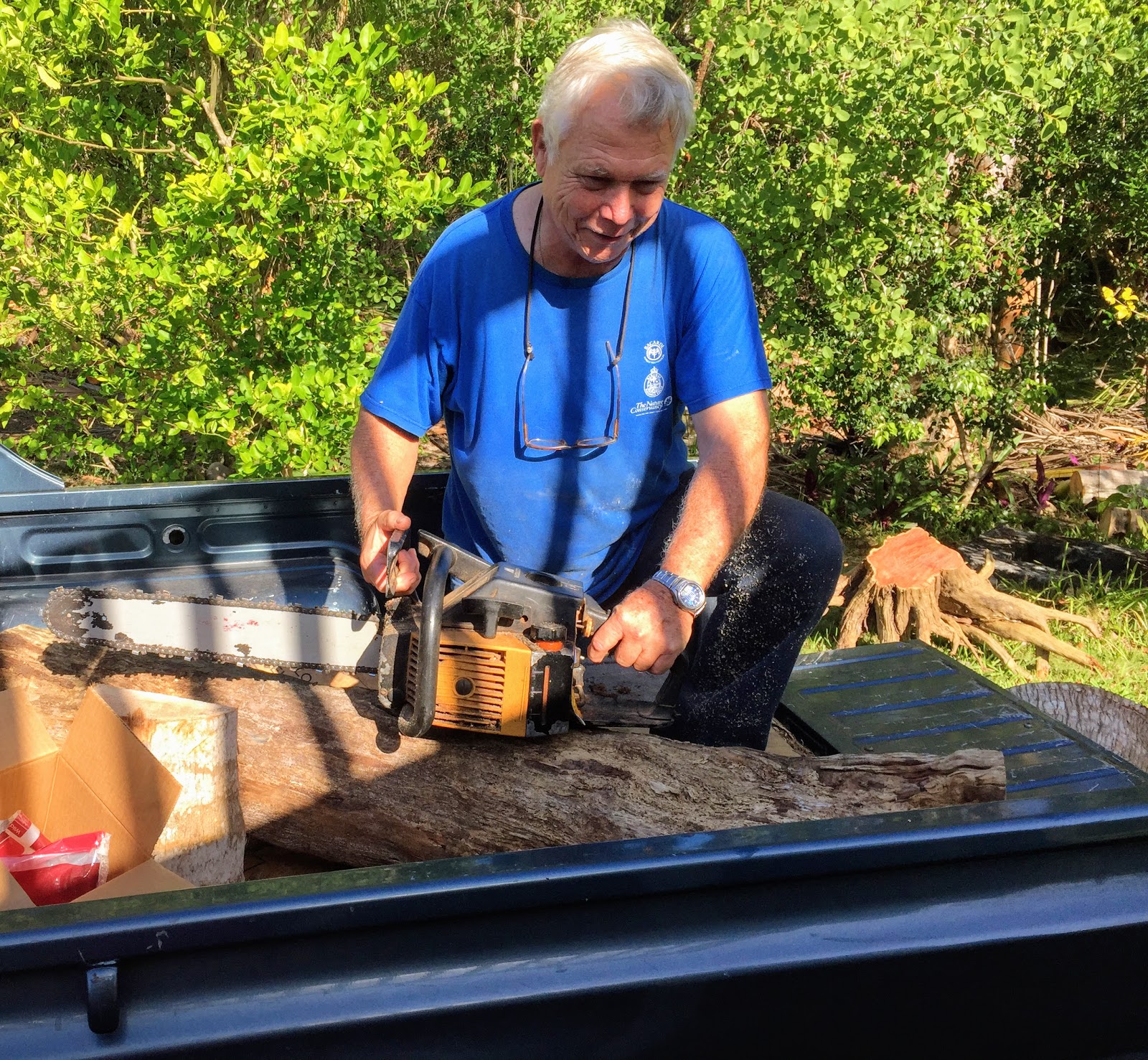 |
| Cutting wood into blocks. |
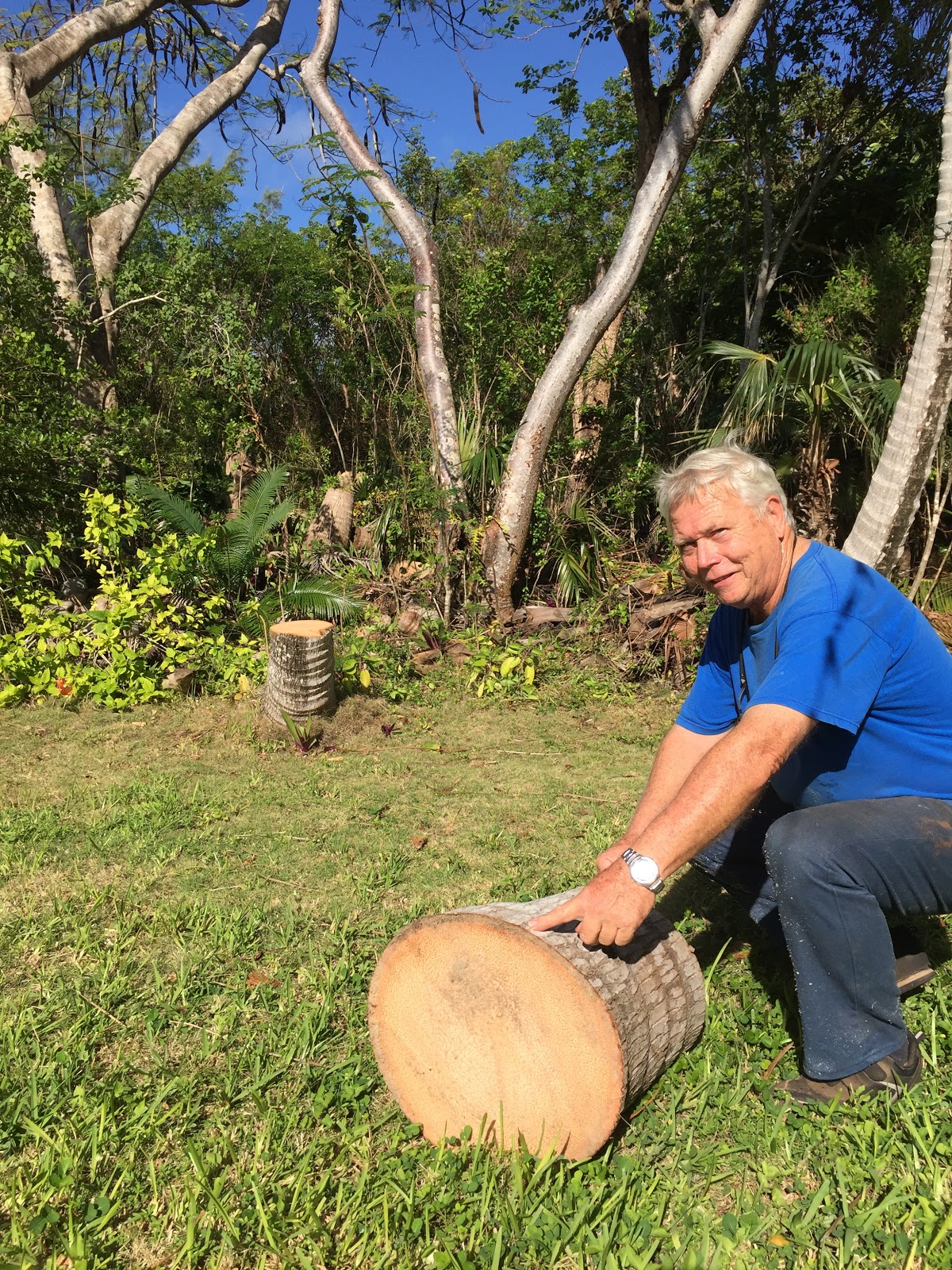 |
| Palm tree downed by neighbor. |
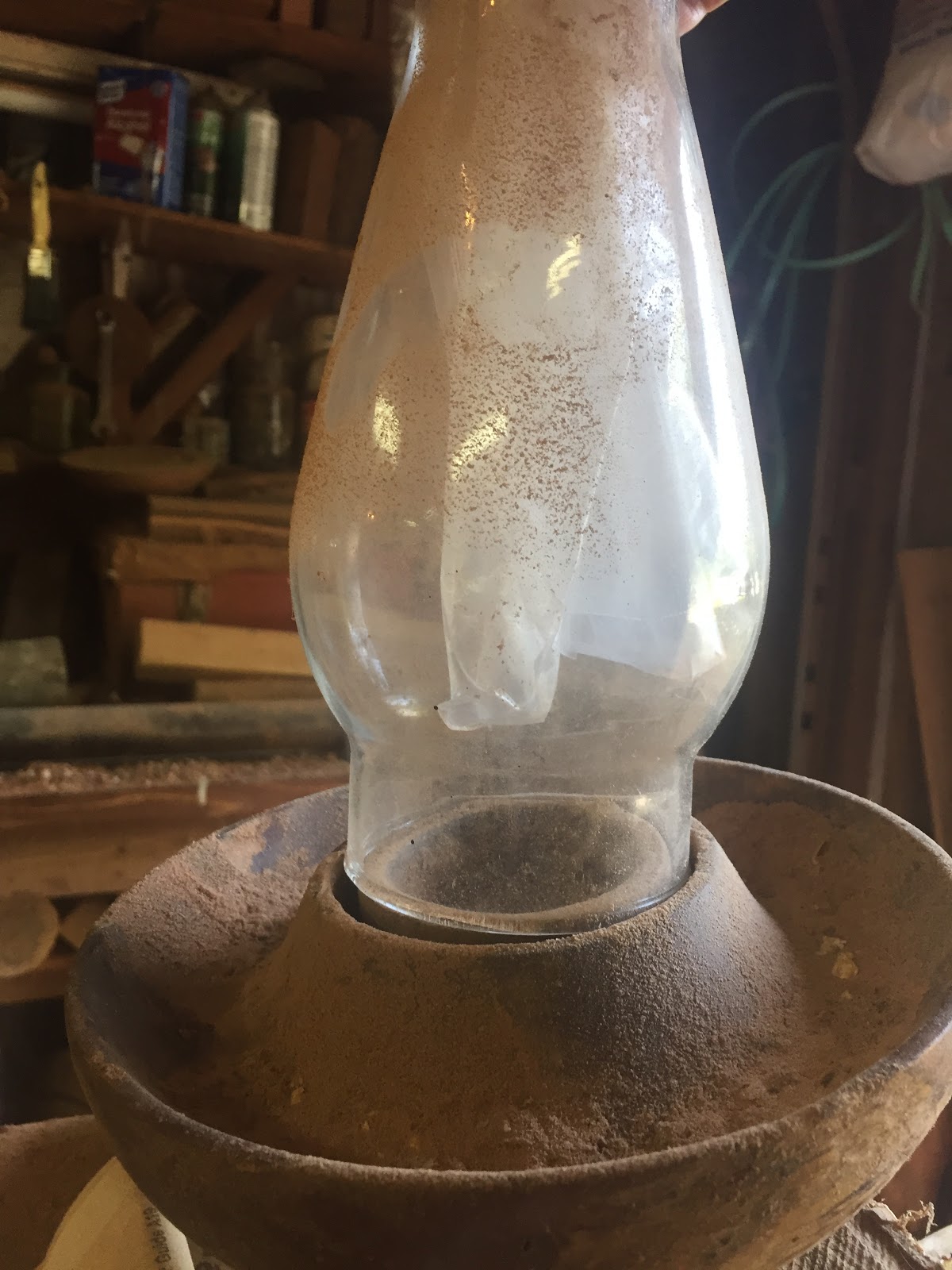 |
| Candleholder, prepared years ago. |
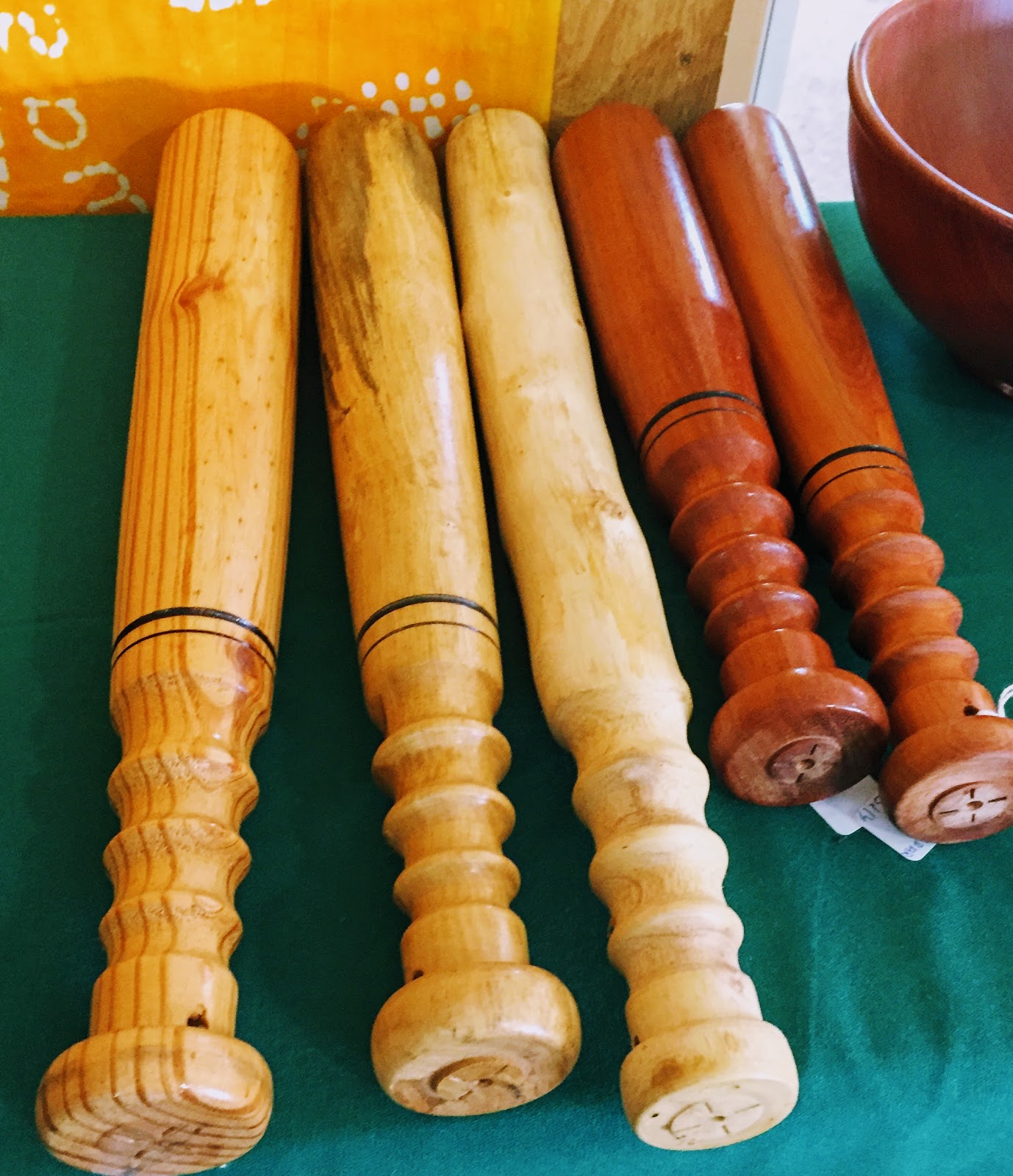 |
| Ready to go to an art show. |
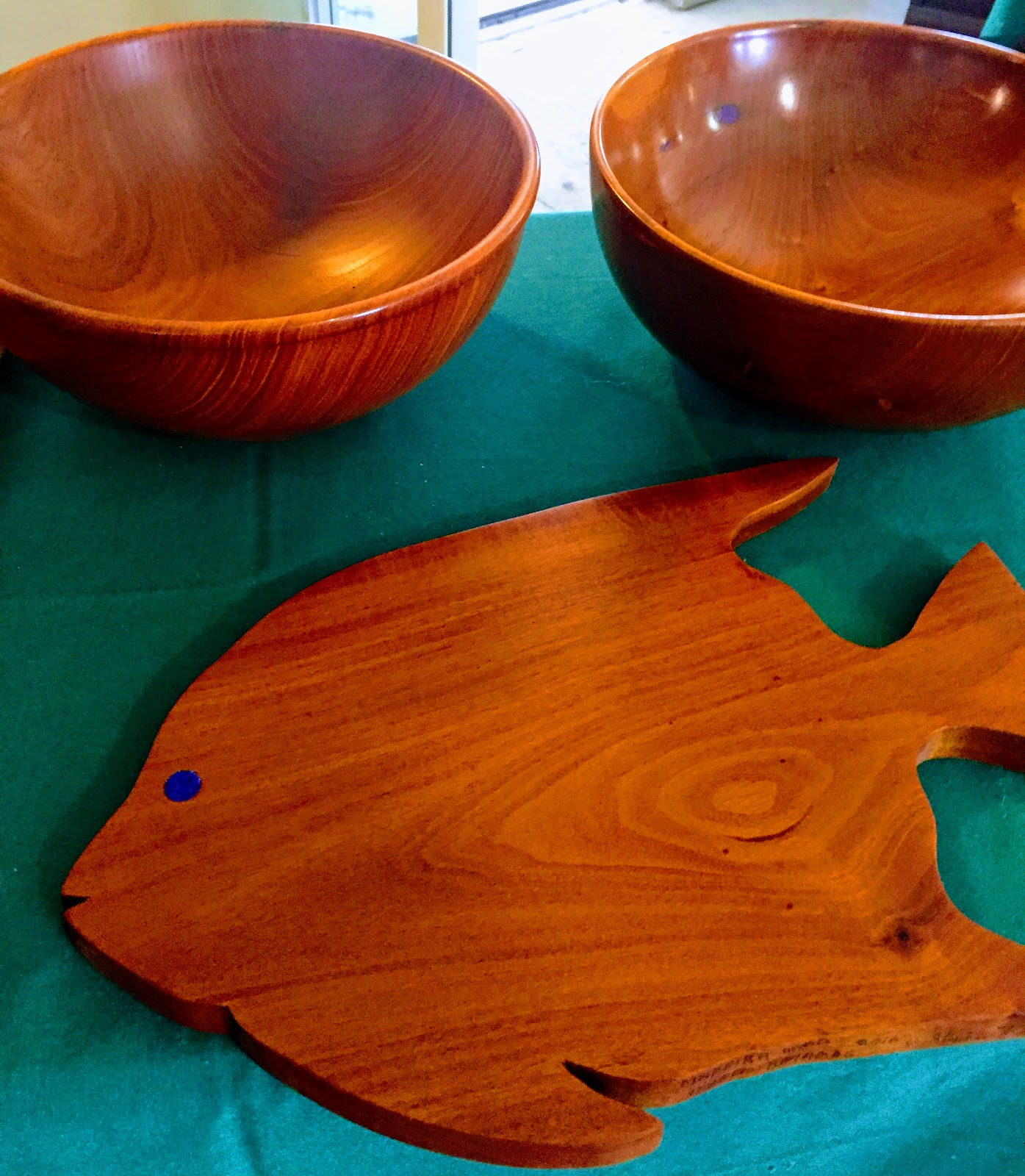 |
| Fish hot plate and bowls. |
 |
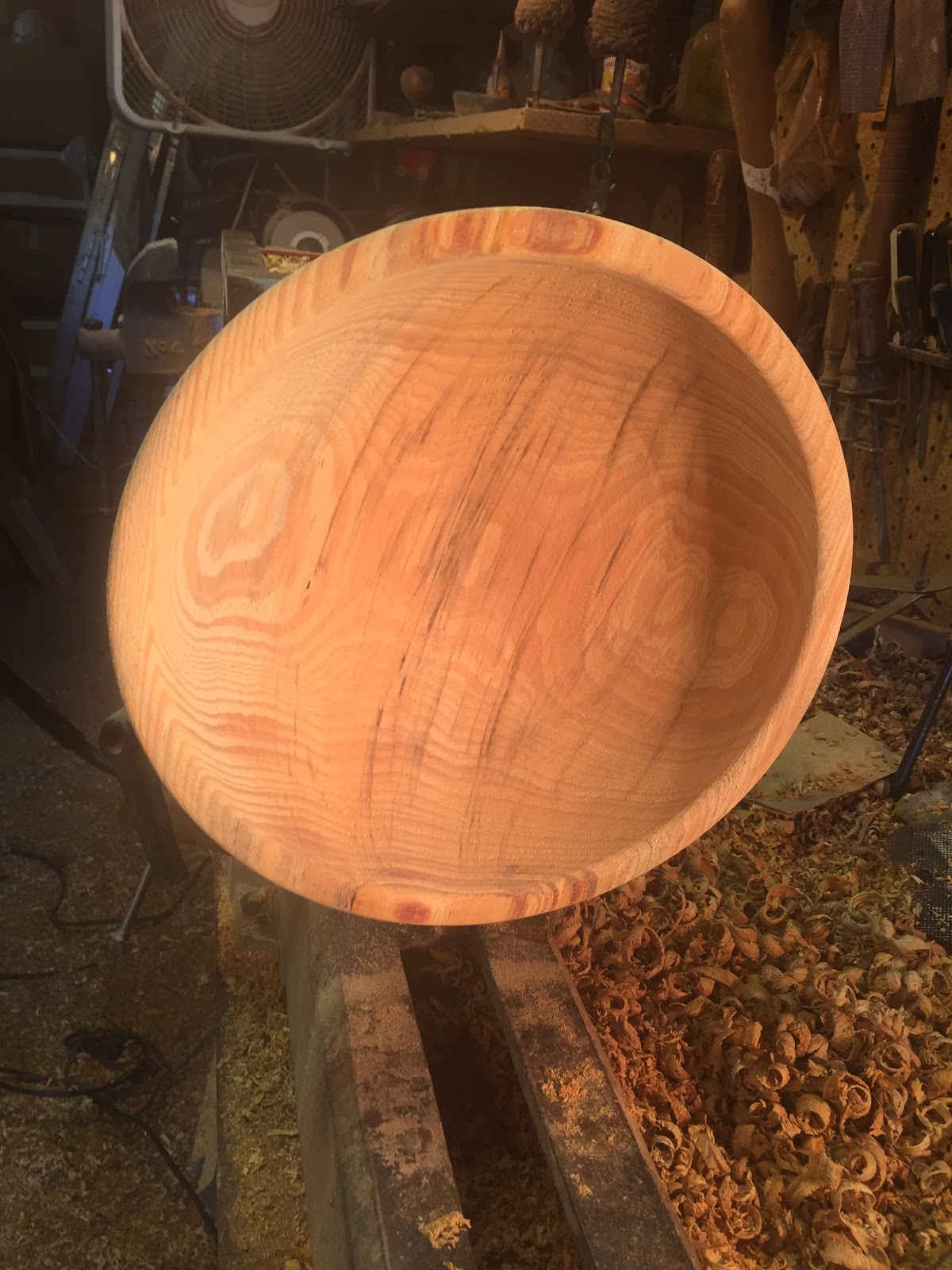
| Early shaping of a bowl. |
 |
| Initial wood cuttings |
 |
| Sawdust on the floor. |
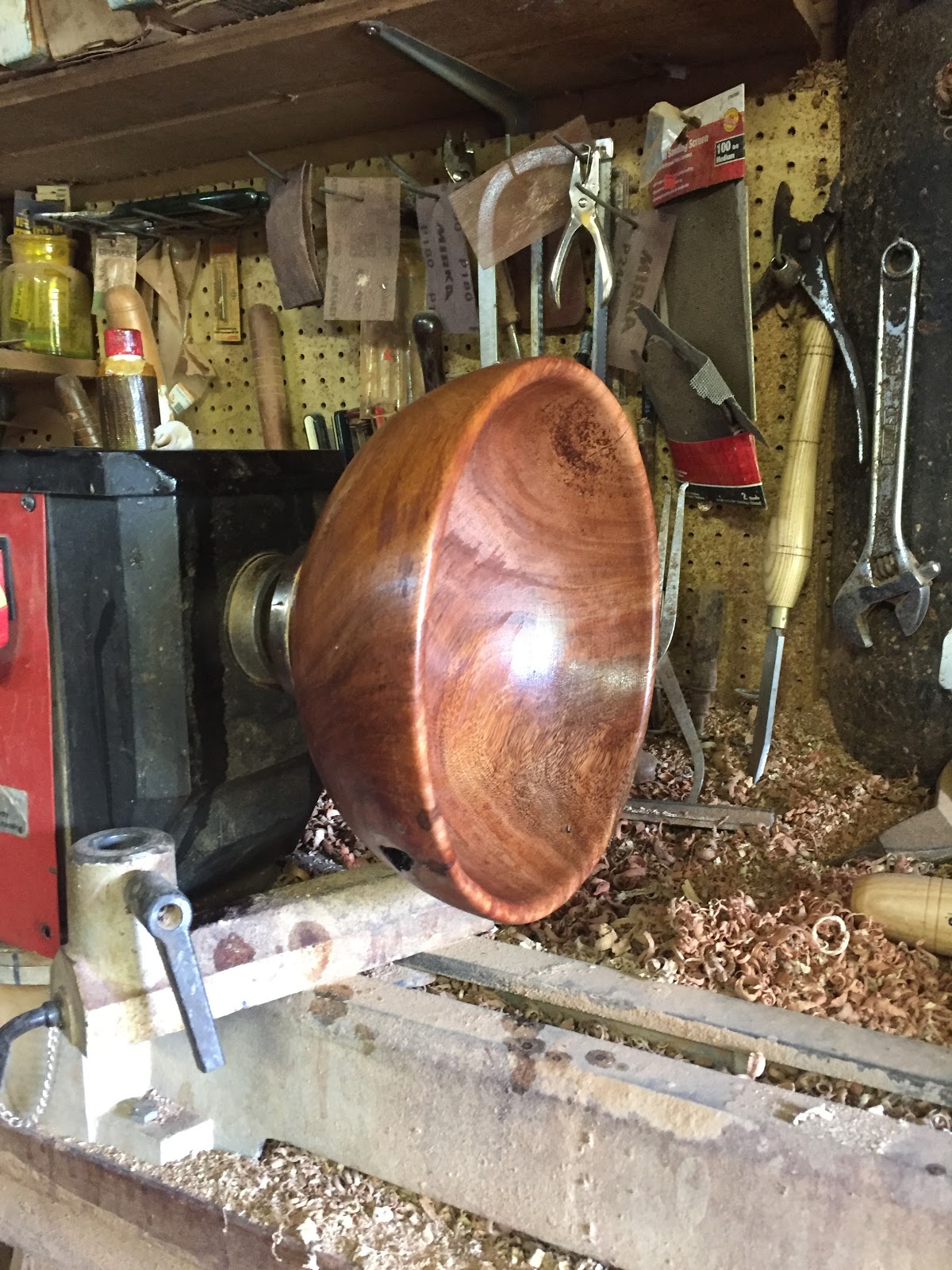 |
| Turning the wood. |
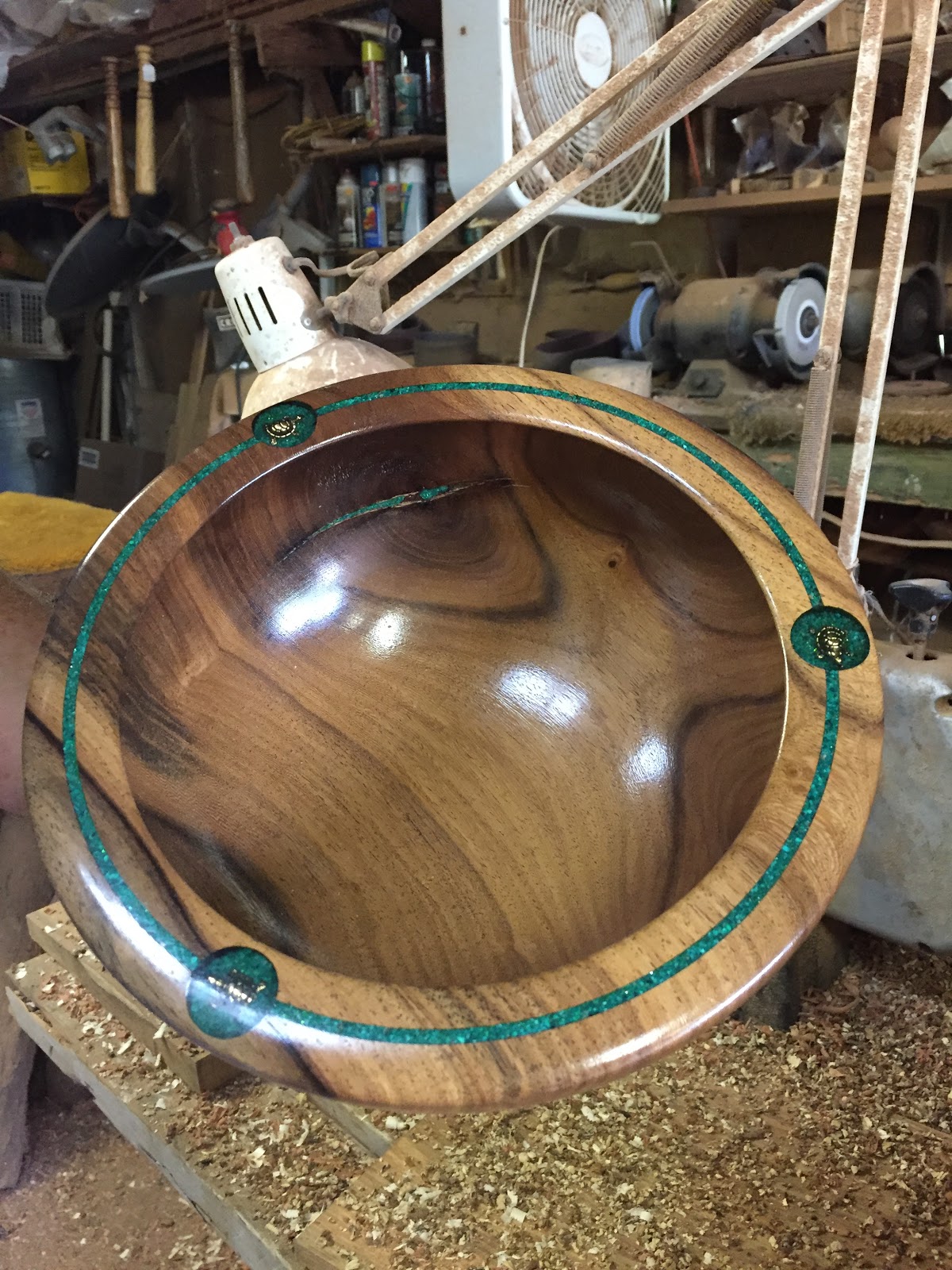 |
| Bowl, ready to go. |
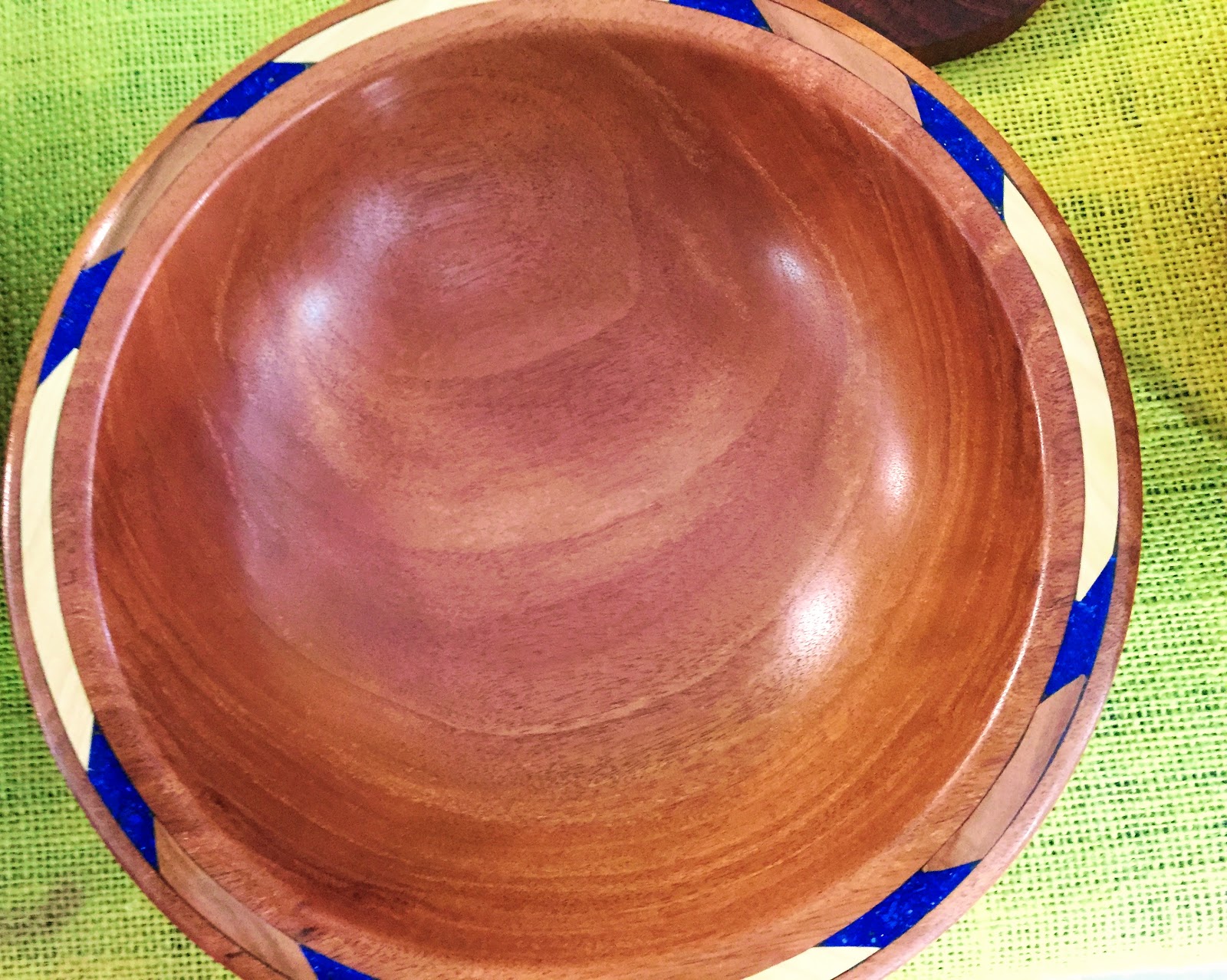
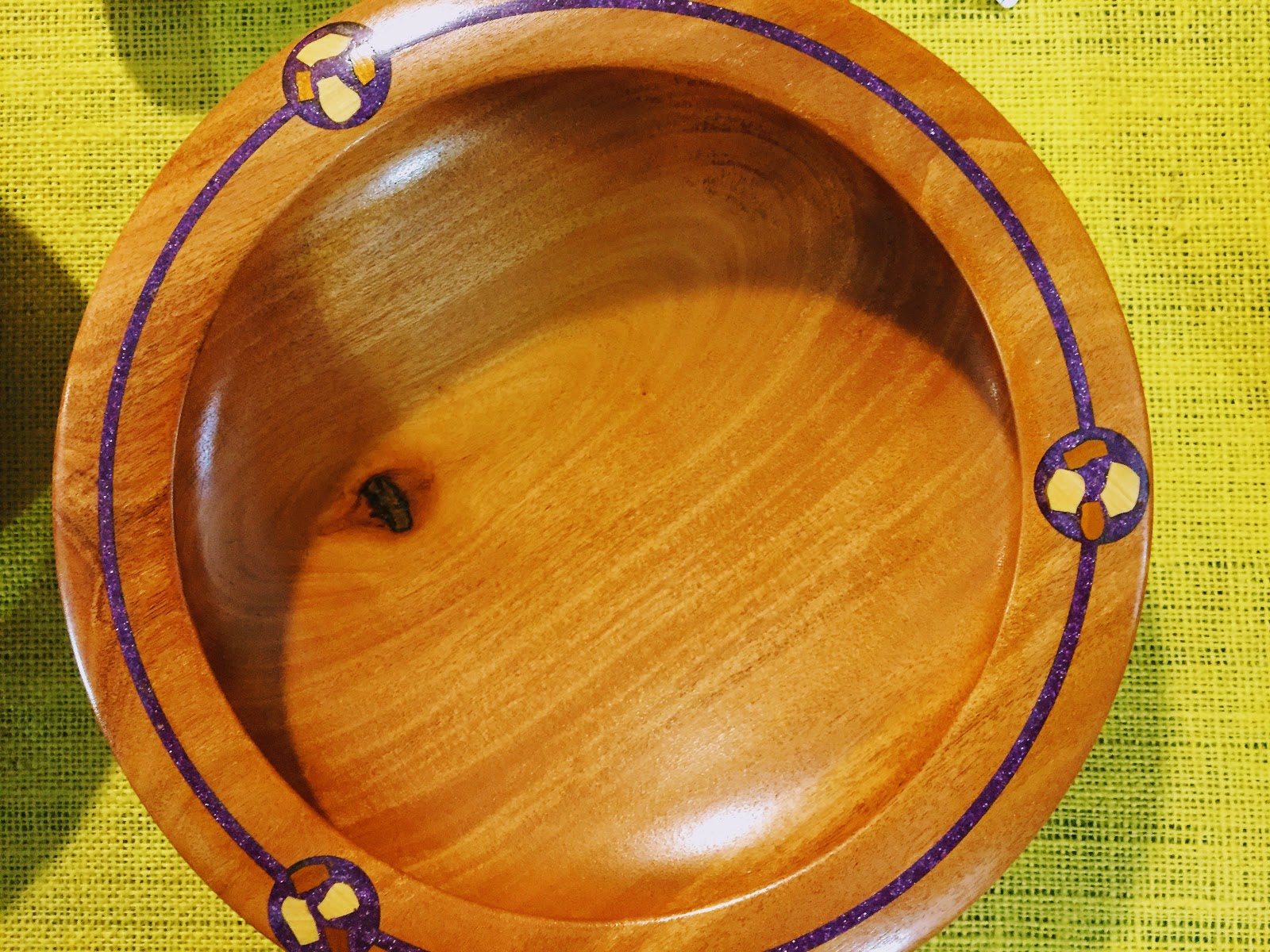
Selected finished pieces of Steve’s work were recently displayed at The Bahamas National Trust, Art for the Parks held at Abaco Beach Resort in Marsh Harbor.
Posted in Art | Tagged Abacos, Crafts | 2 Comments »

