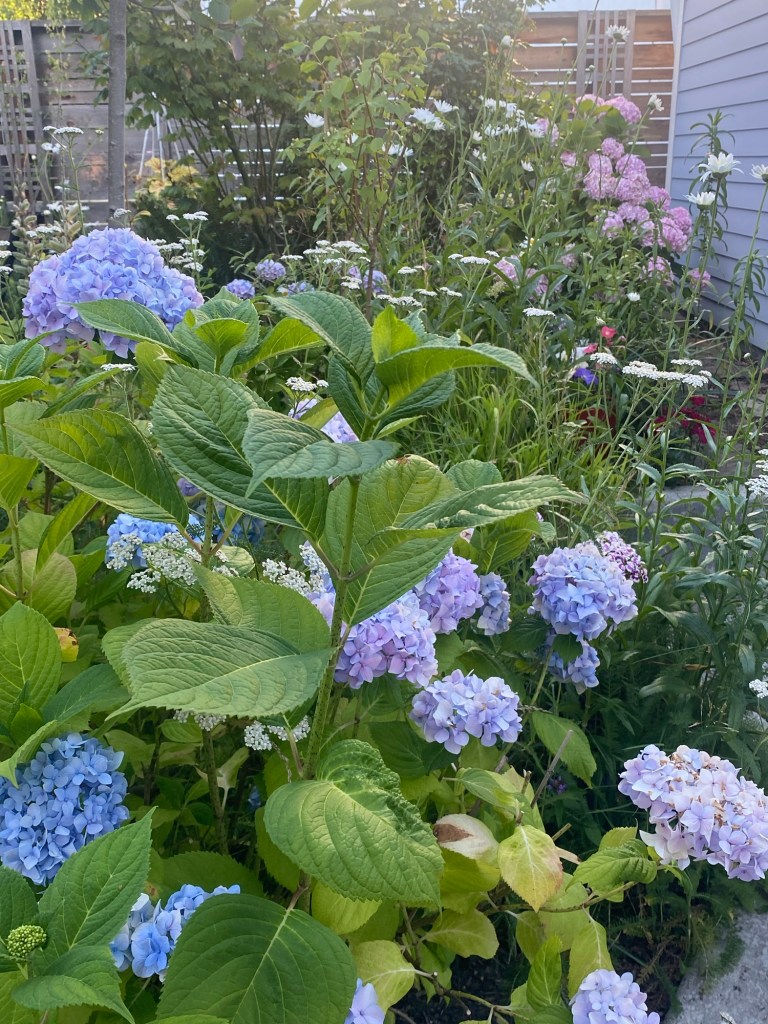
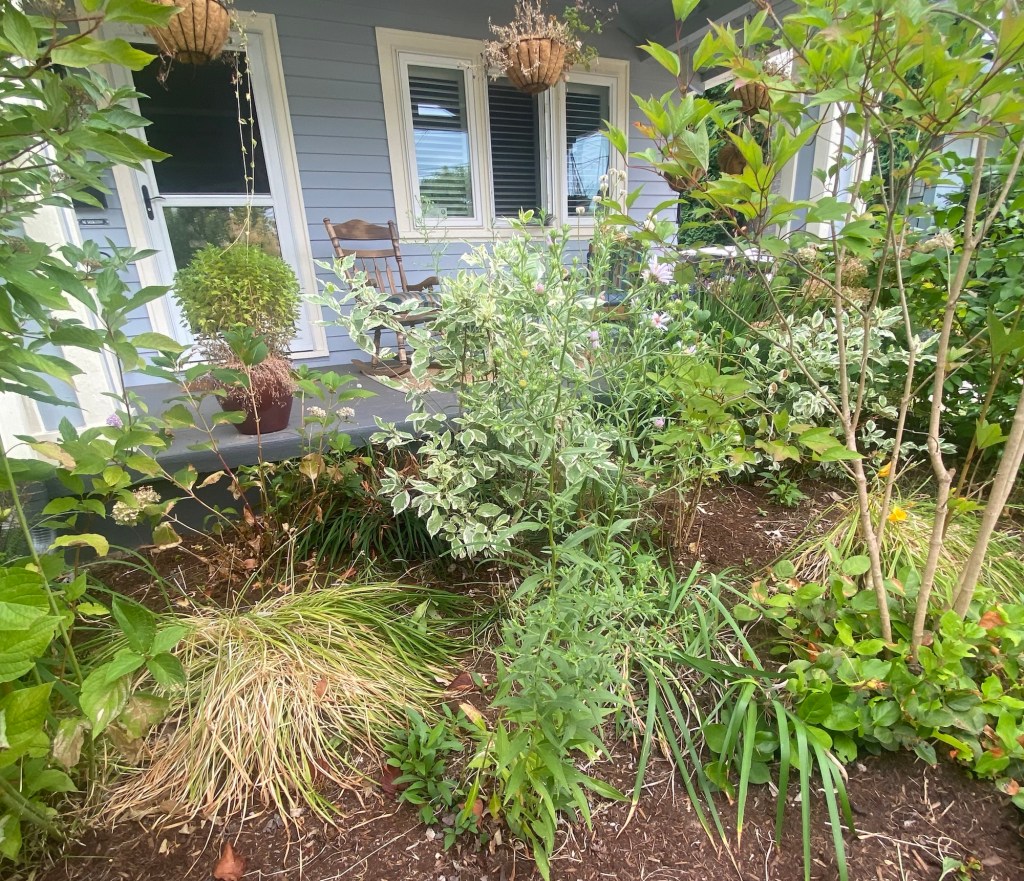
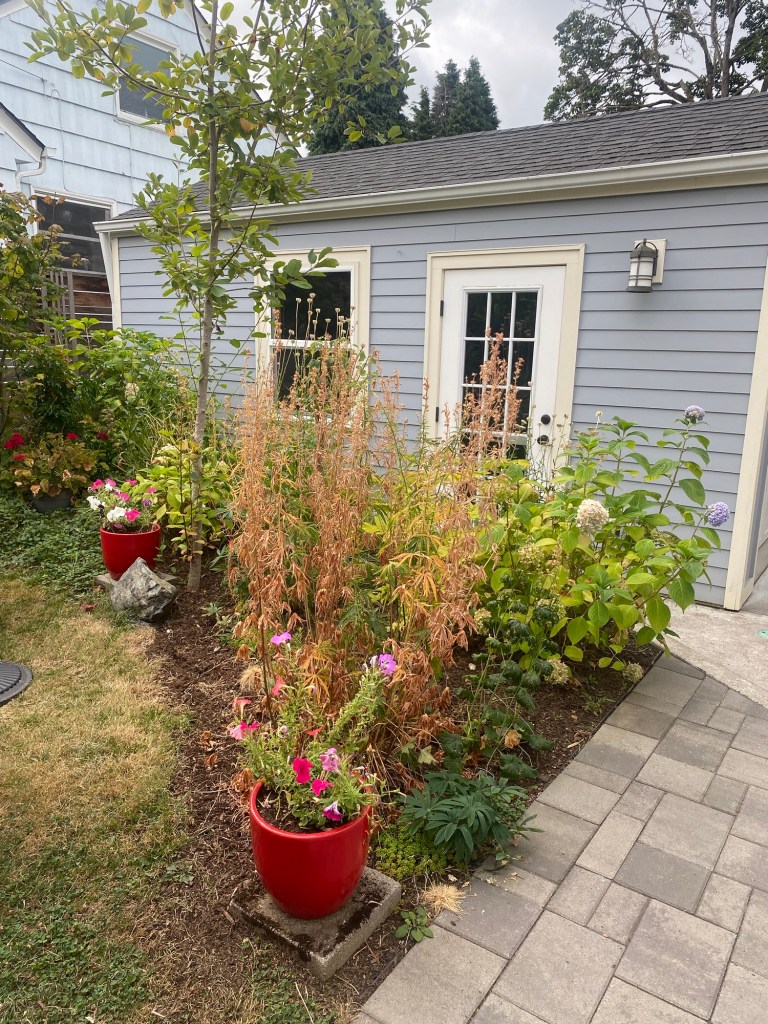
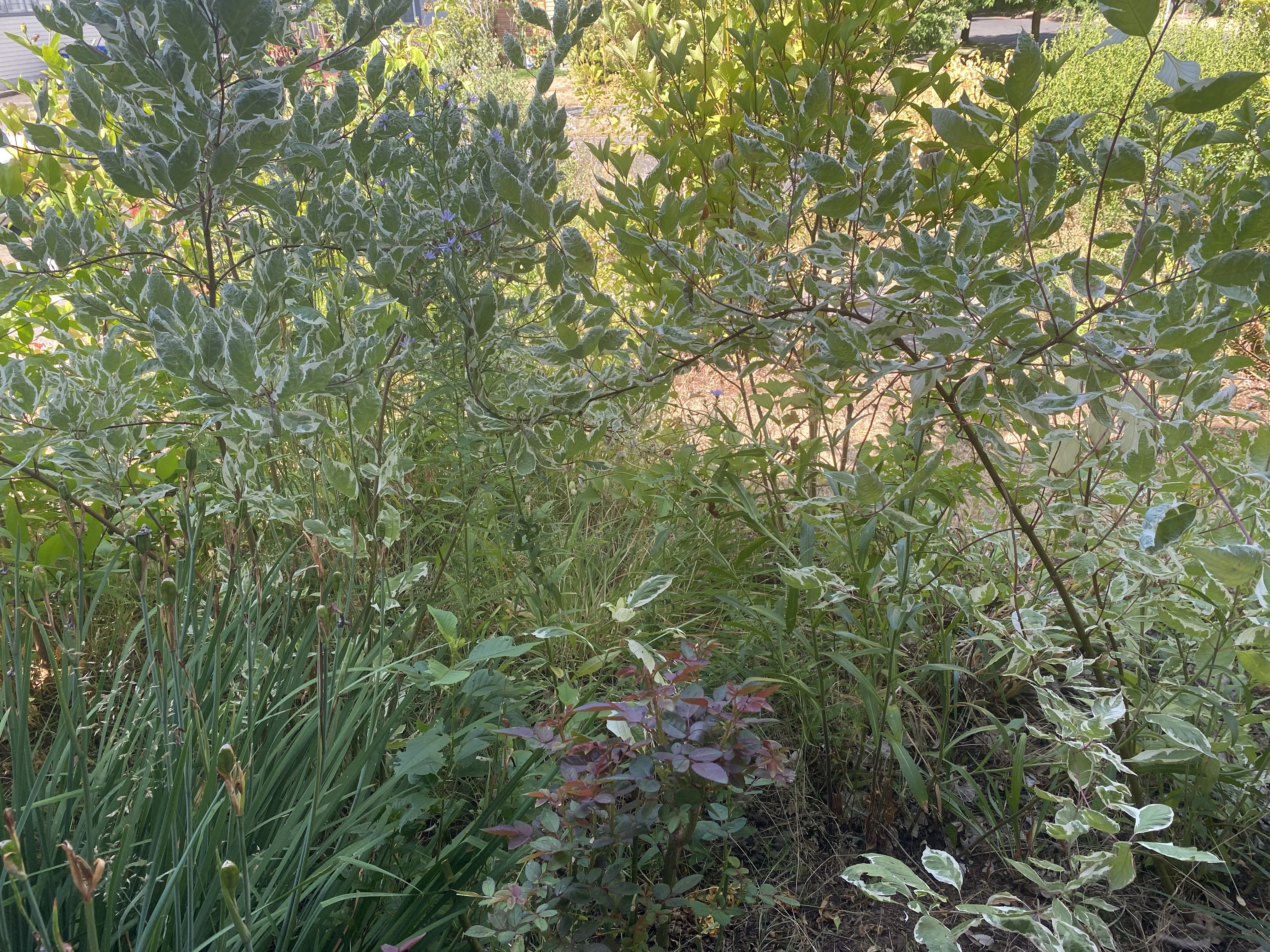
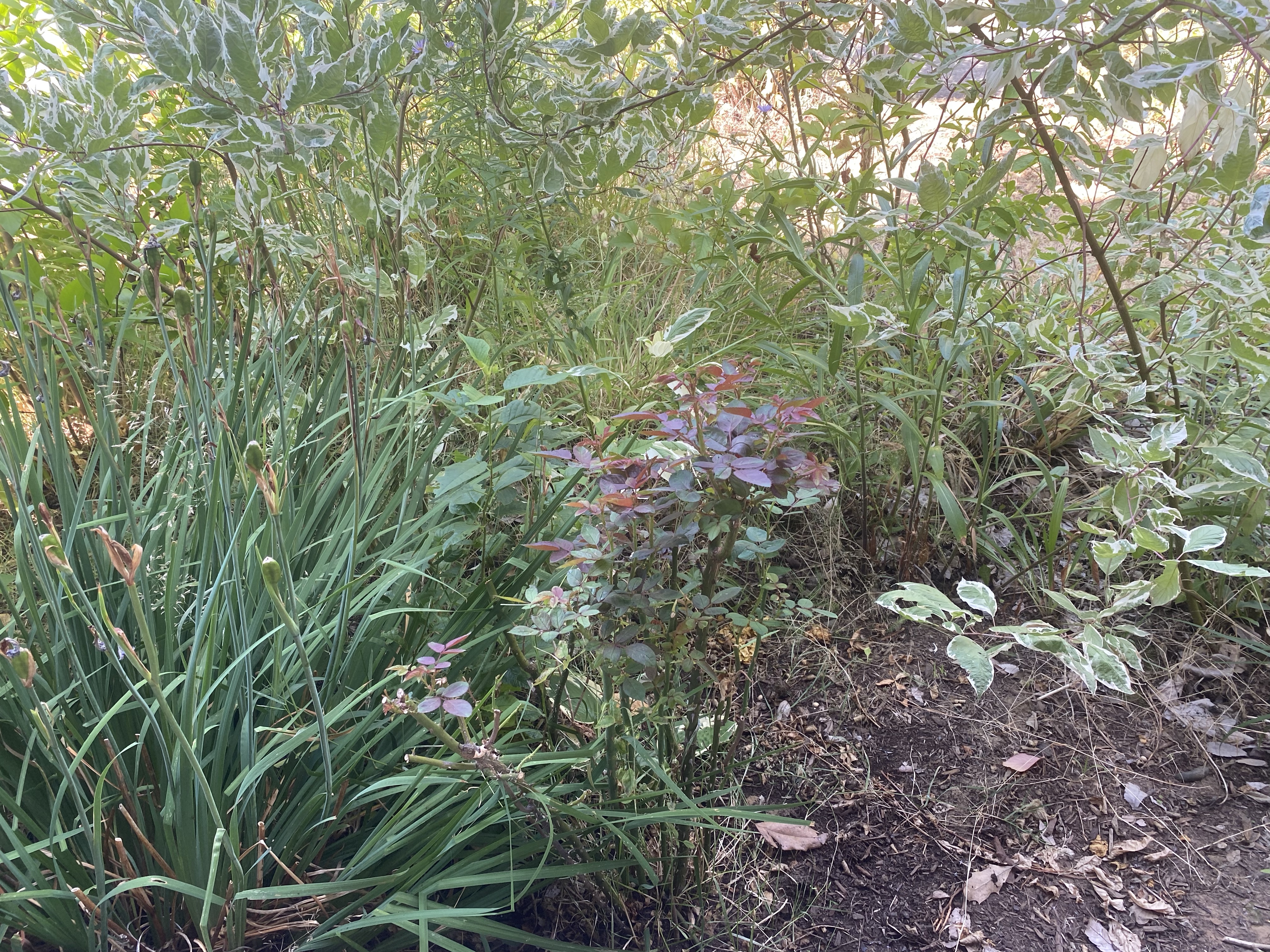
There has been little rain since June, and our native plants have withstood the onslaught of sun and dryness with aplomb. The taller native plants also have shaded our non-native hydrangeas and geraniums from the oppressive sun and heat.
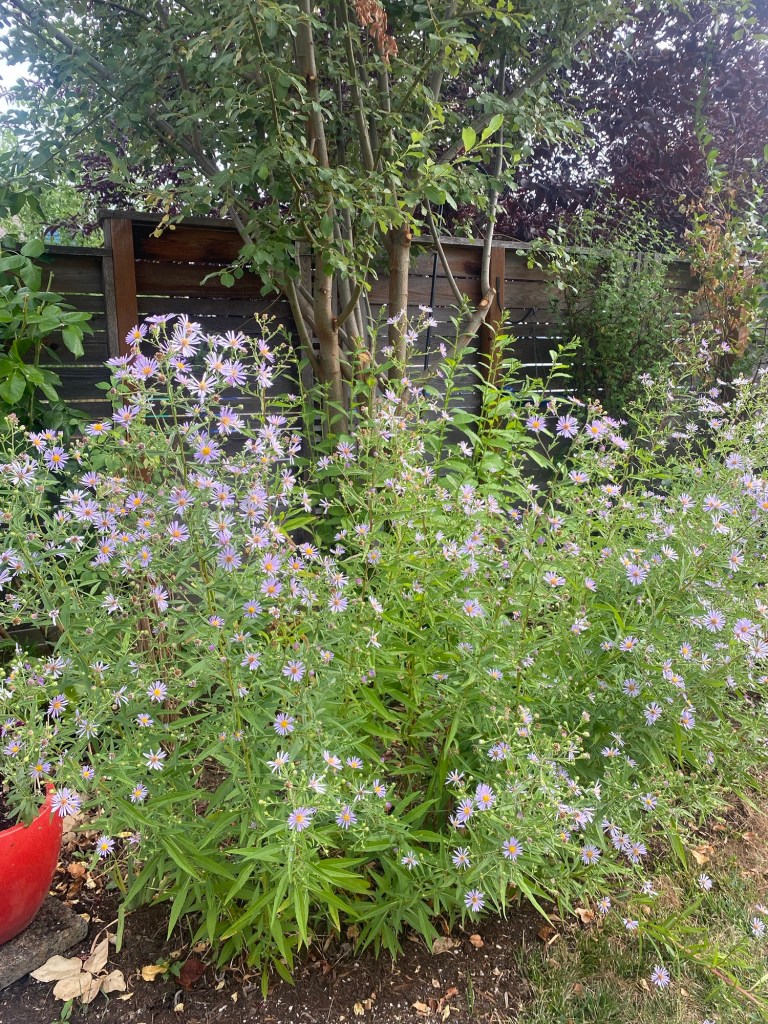
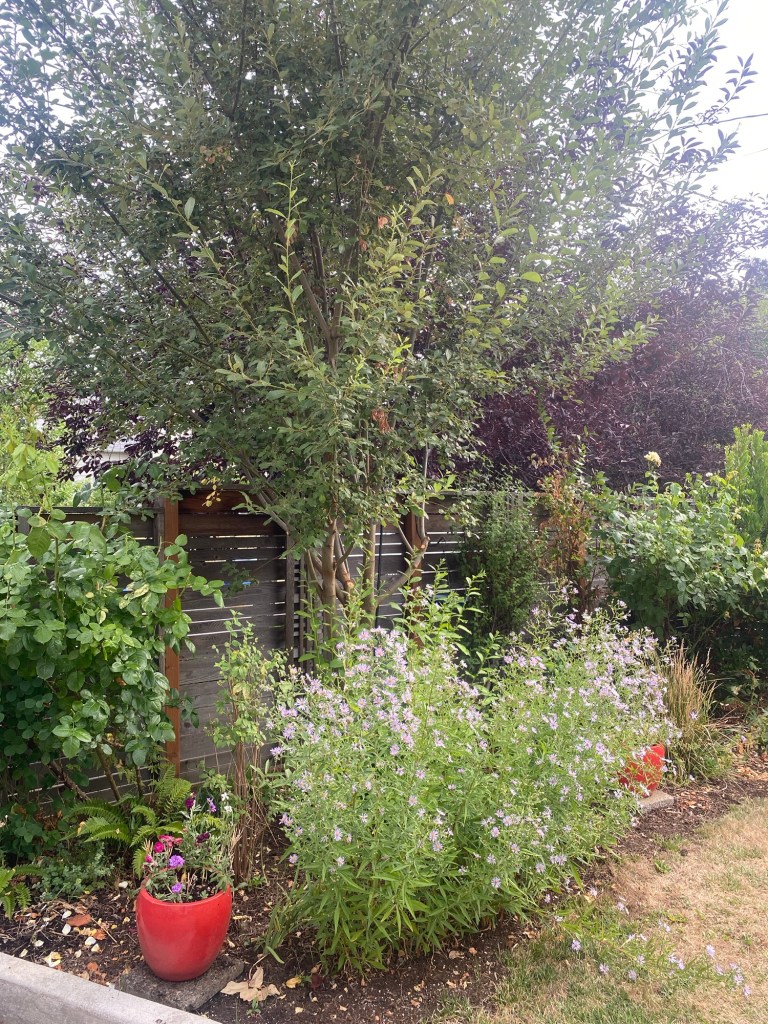
The Douglas Asters stand tall and proud while sheltering ferns and other shade plants behind them. All are sheltered by the native willow bush above them.
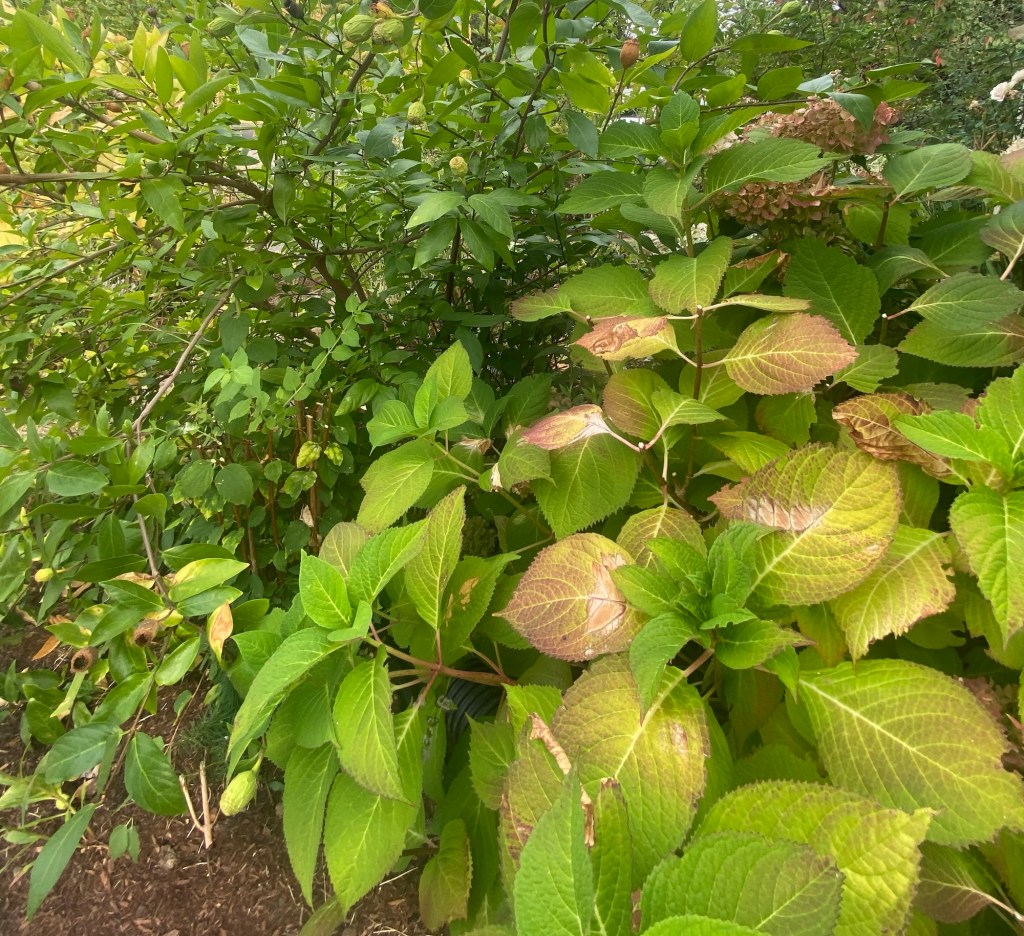
The hydrangeas peek out from under the Spicebush and show their big leaves.
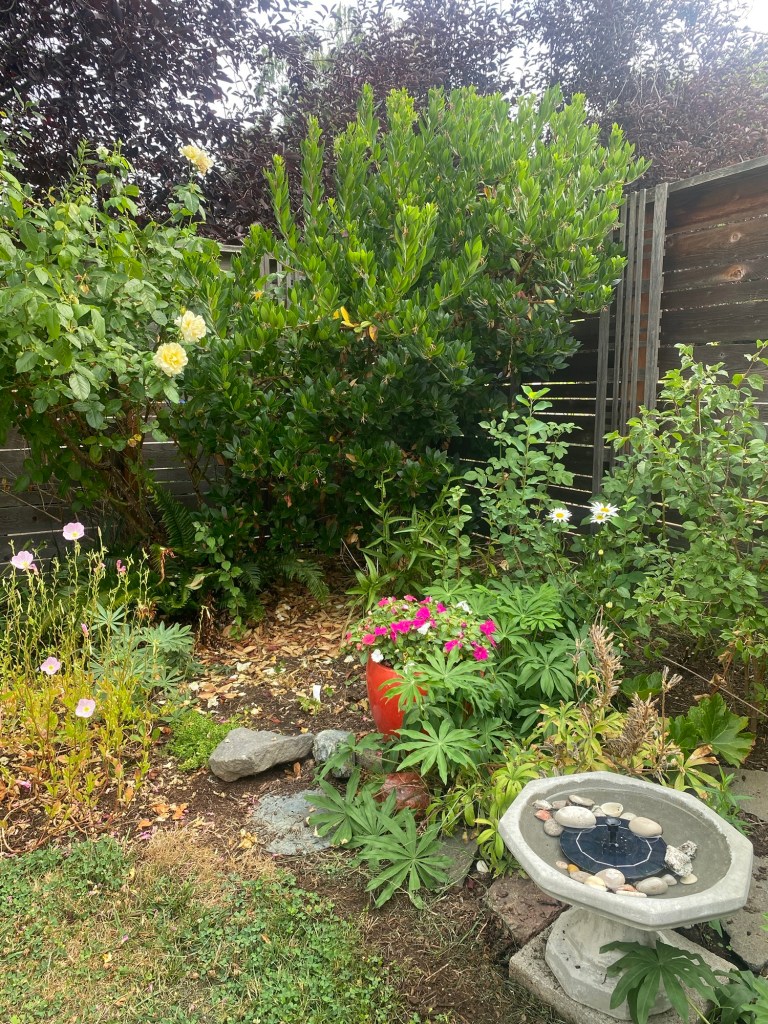
Under the Western Spice Bush in the front yardUnder the Cascara Tree and the Vine Maple Tree in the backyard
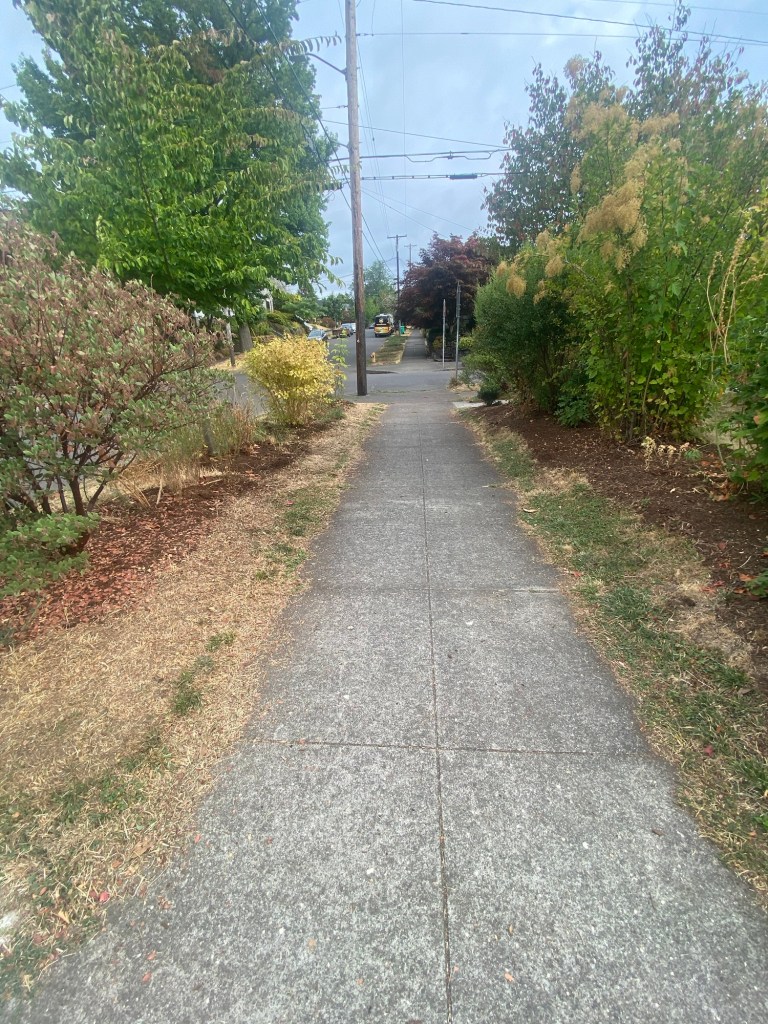
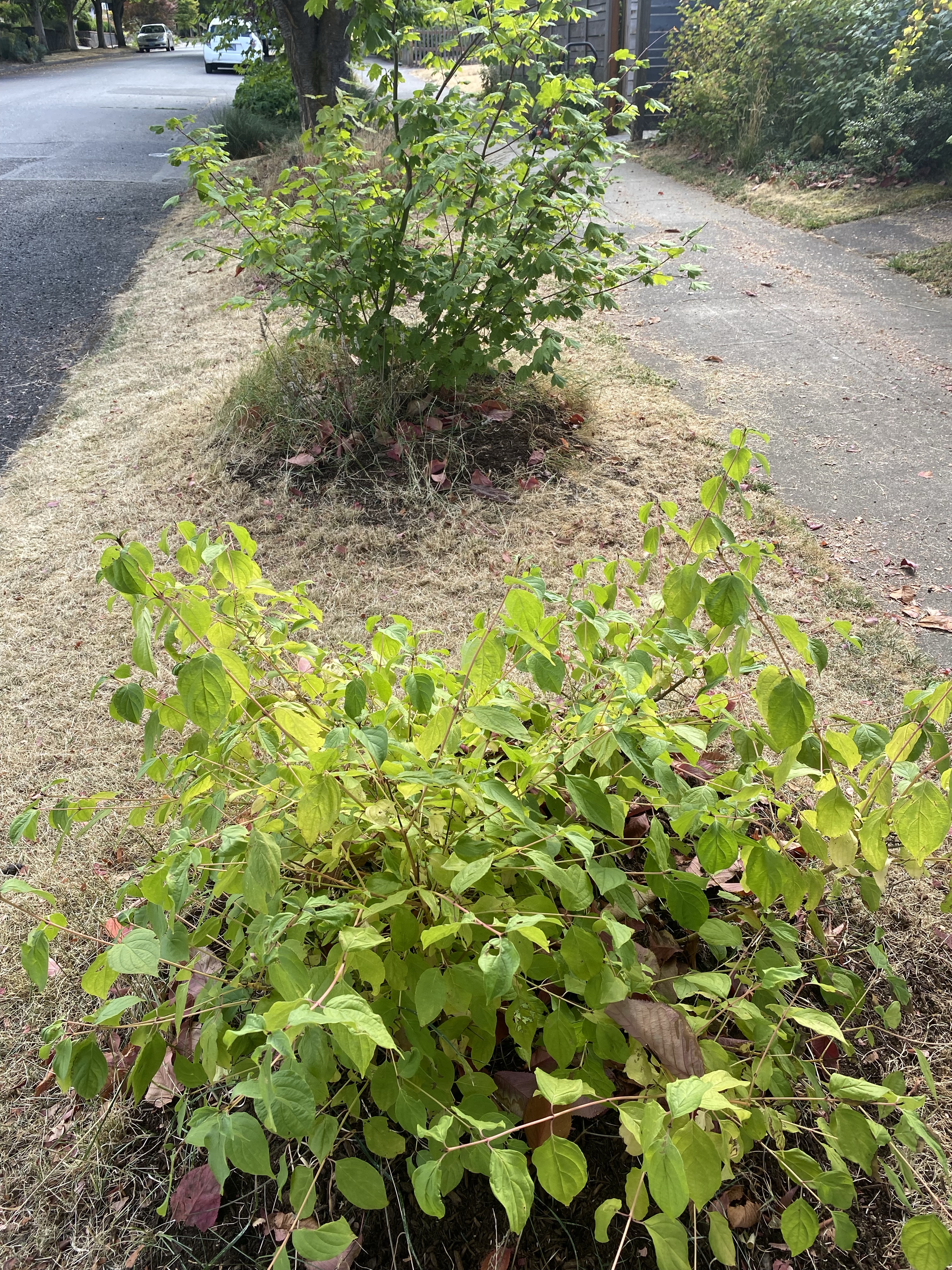
We maintain the centers of defined areas next to the street with native plants while mowing the edges to give them some semblance of organization.
We leave the grass unwatered so that the entire color of the yard, this time of year, is a melange of yellows, greens and soft browns.
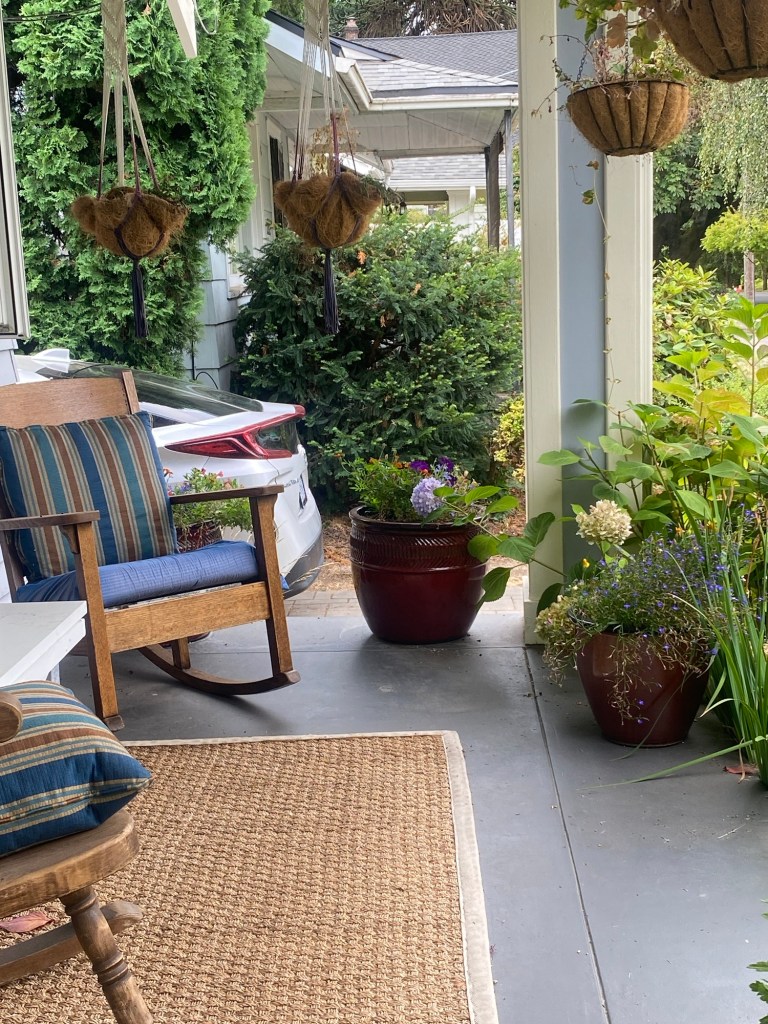
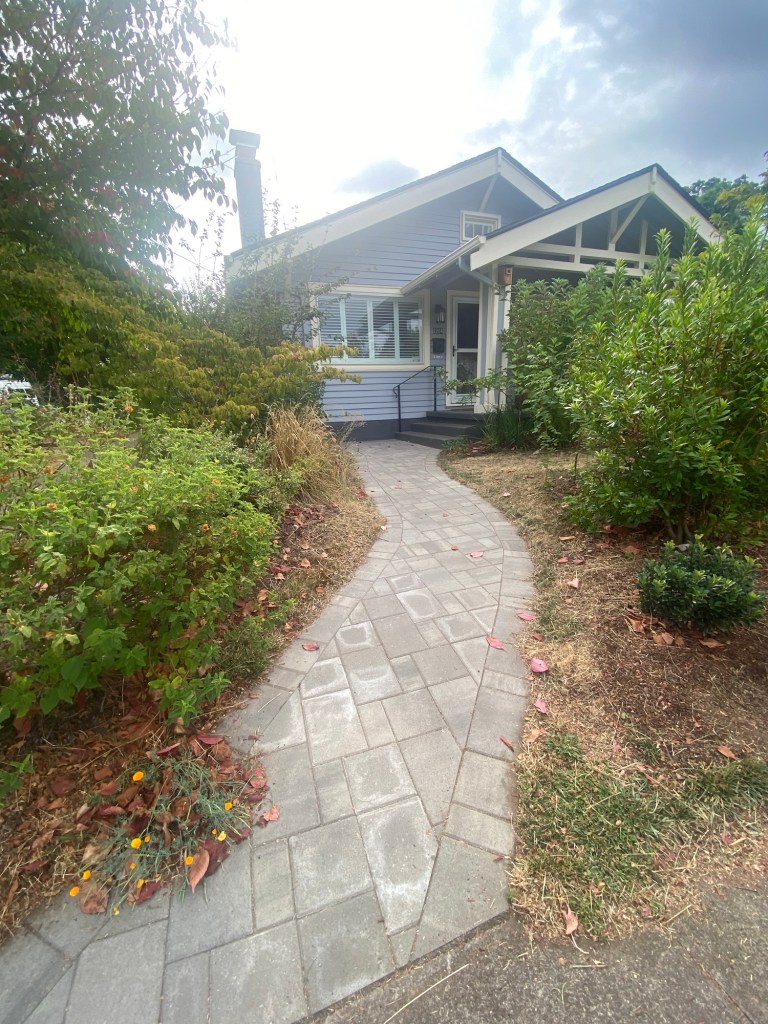
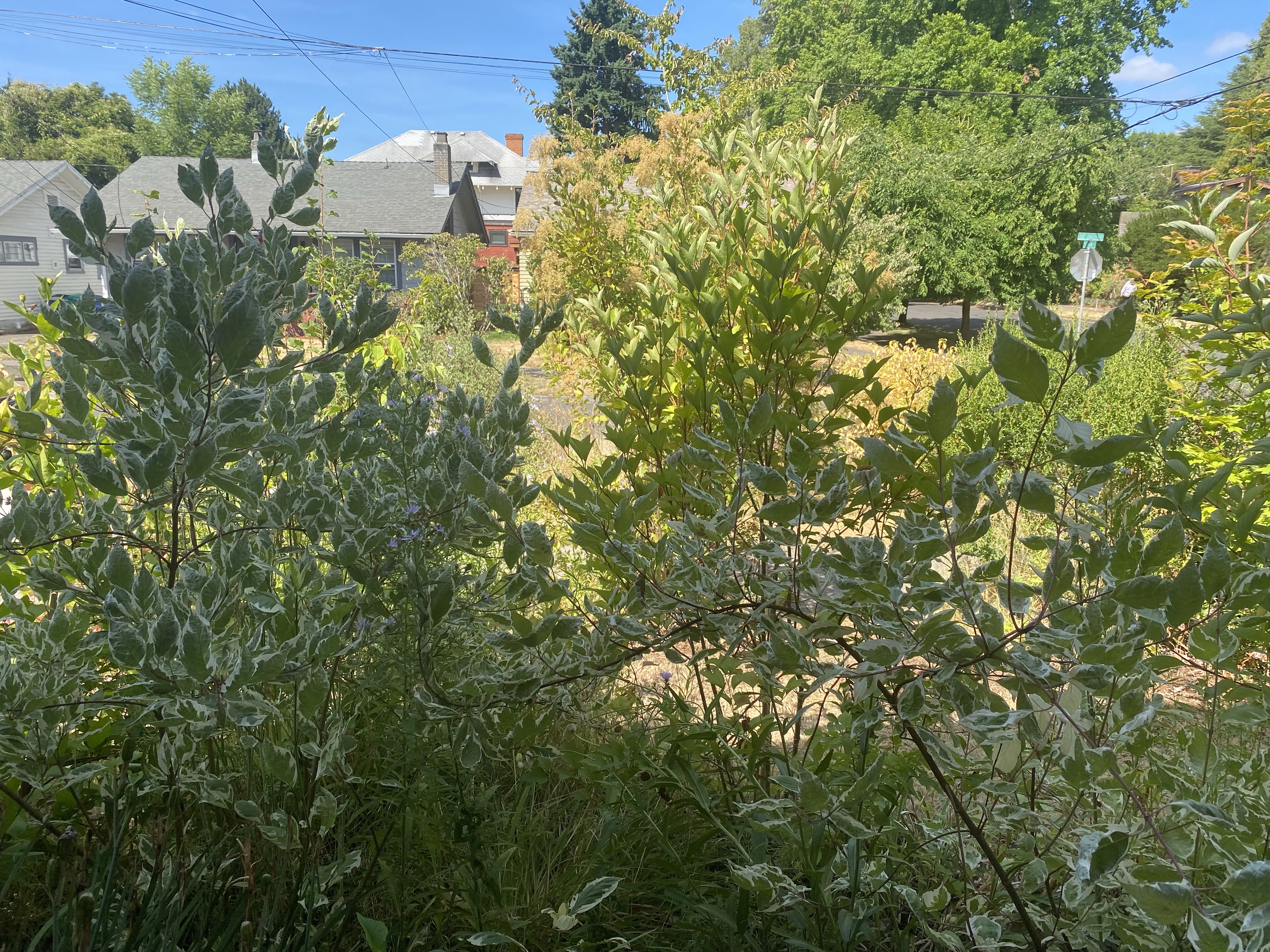
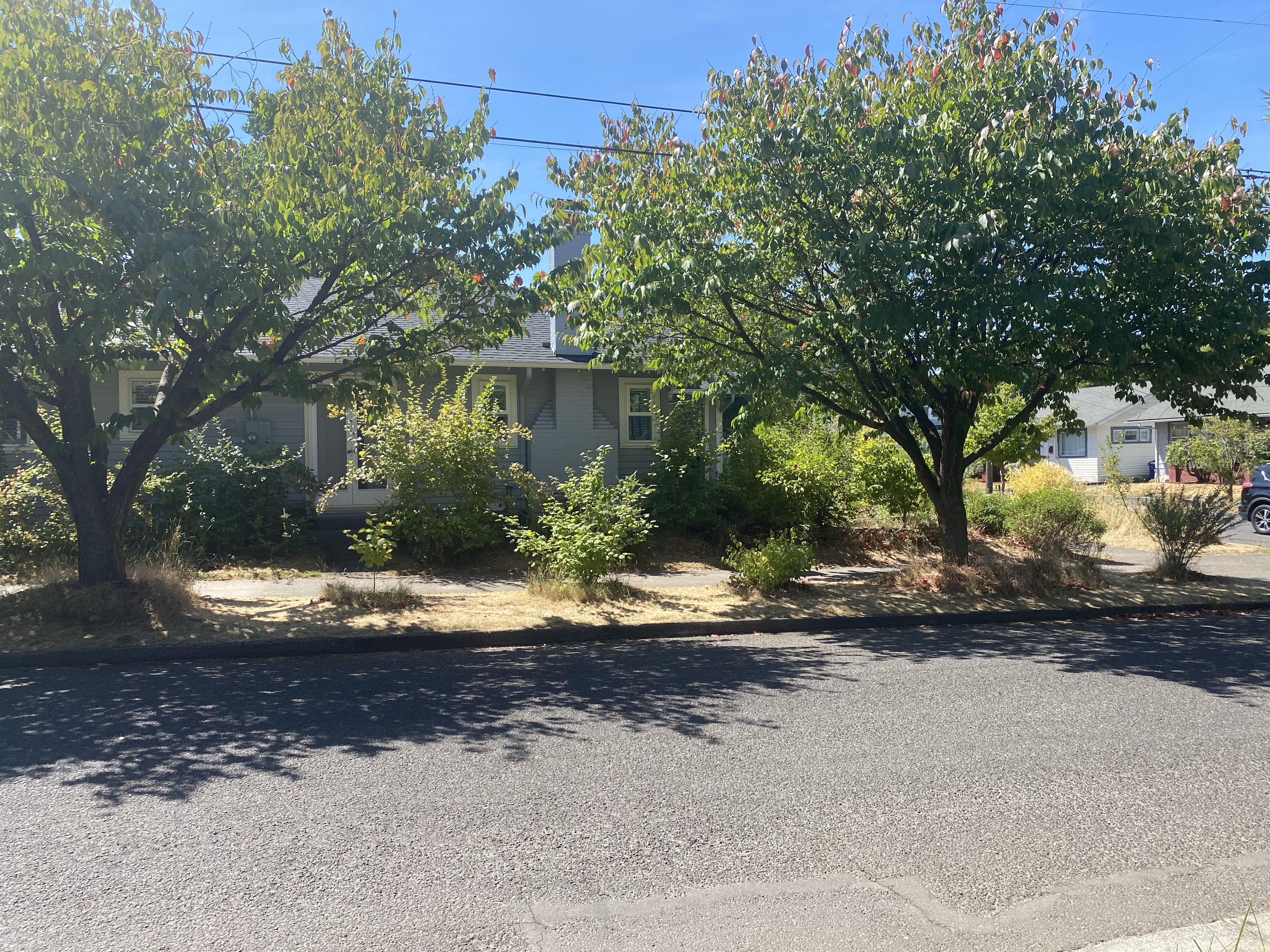
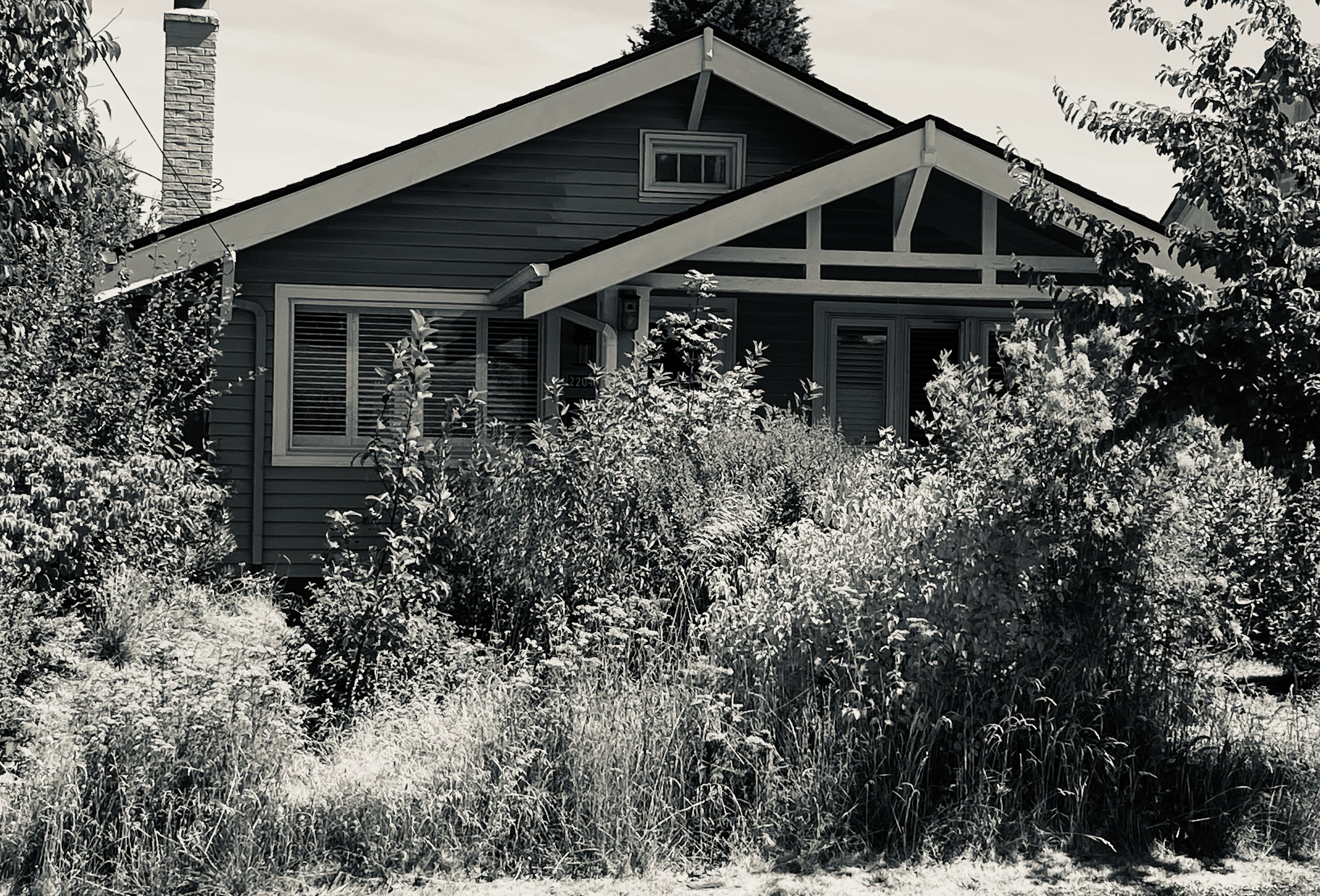
The front porch is seen from the street and yet the landscaping gives it a sense of natural privacy.
Our neighbor also shares greenery with us which is very nice to look at from the porch. All in all, we have lots of nature and yet still feel a part of our local urban spaces.
Looking to the front porchLooking from the front porch to the street
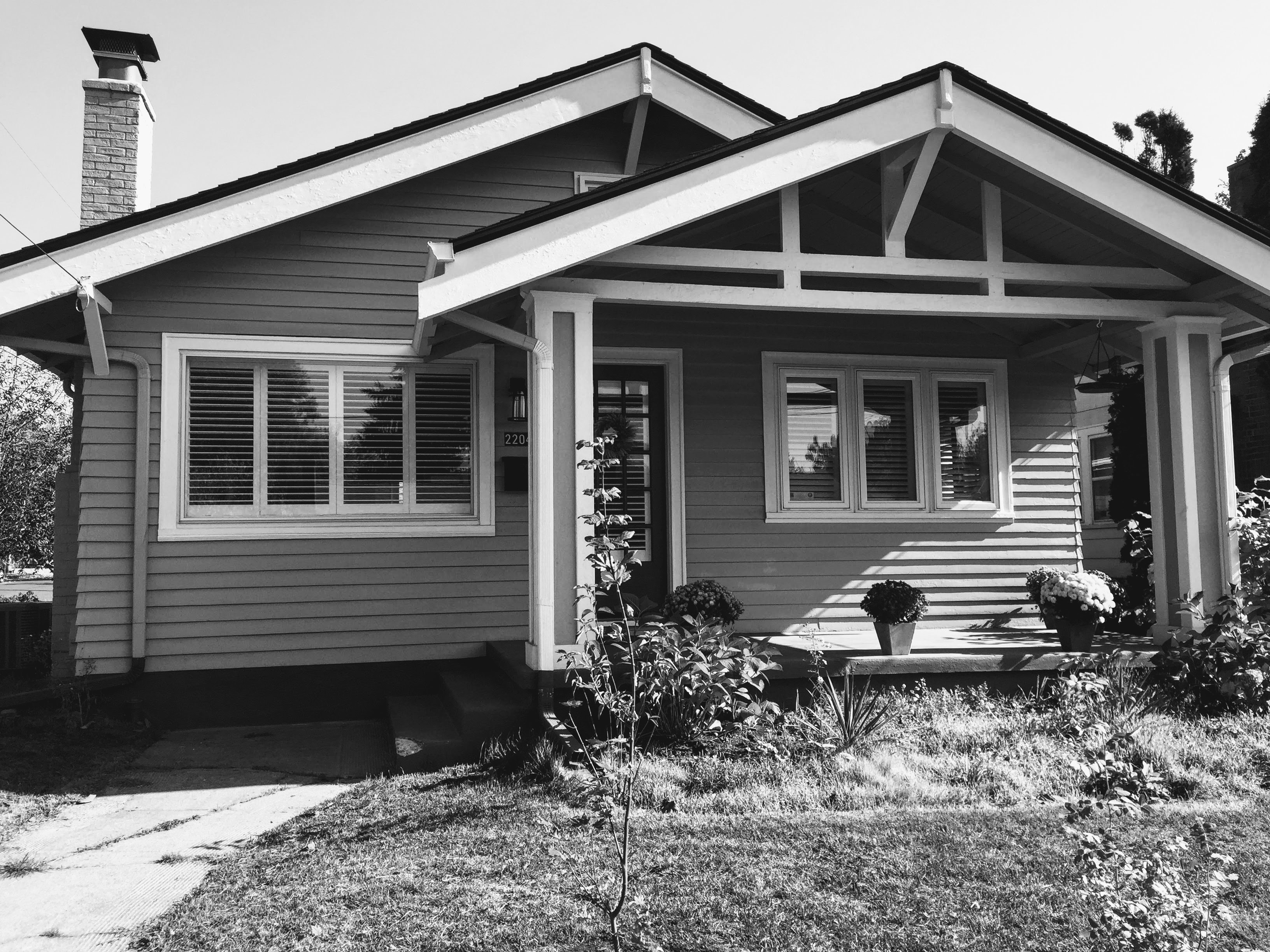
We live in a tiny bungalow in the City of Portland, next to restaurants and other city features. However, our native plants habitat brings us birds and natural micro habitat settings to explore and enjoy.
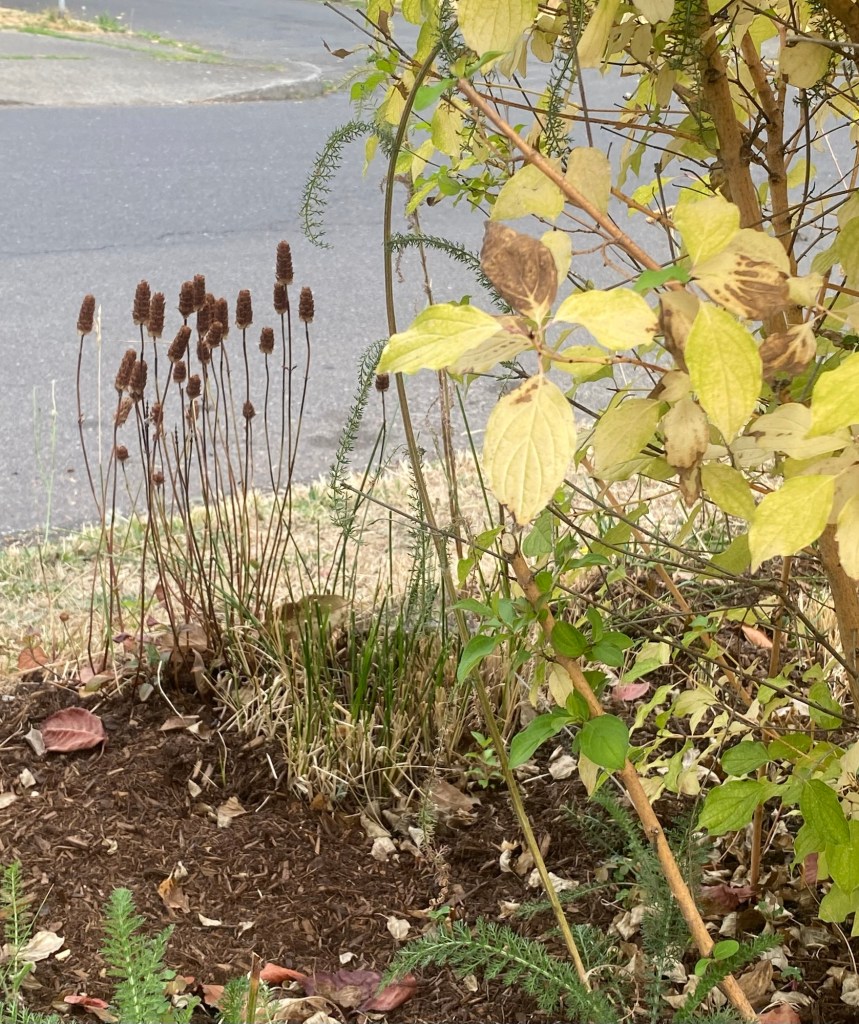
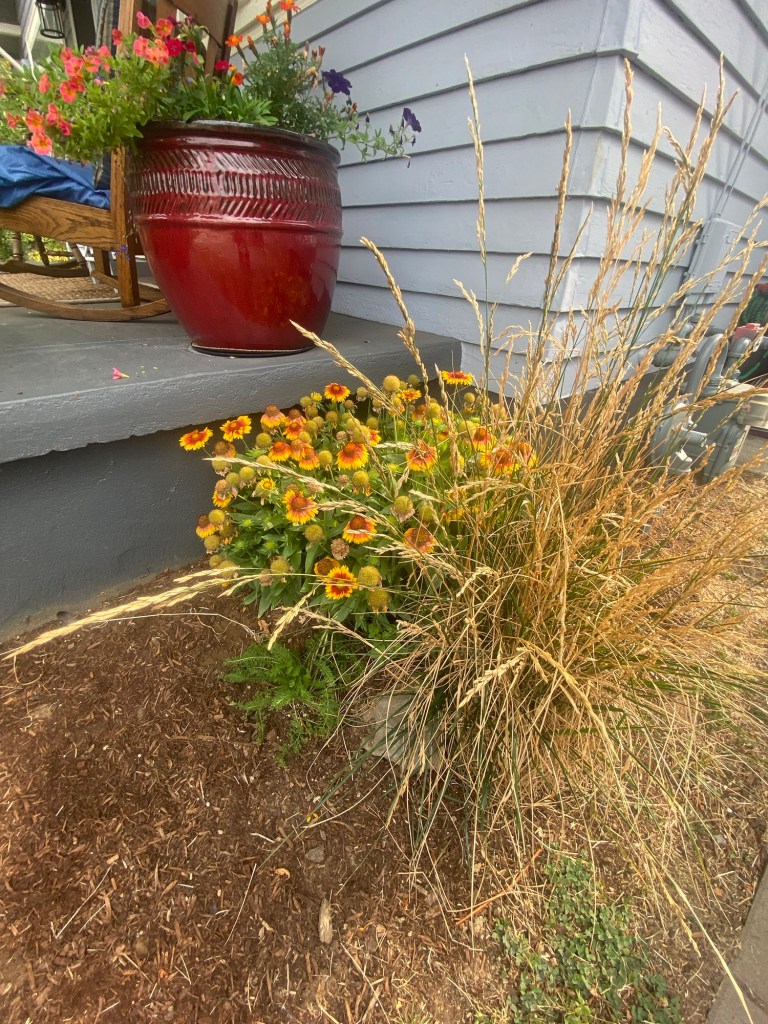
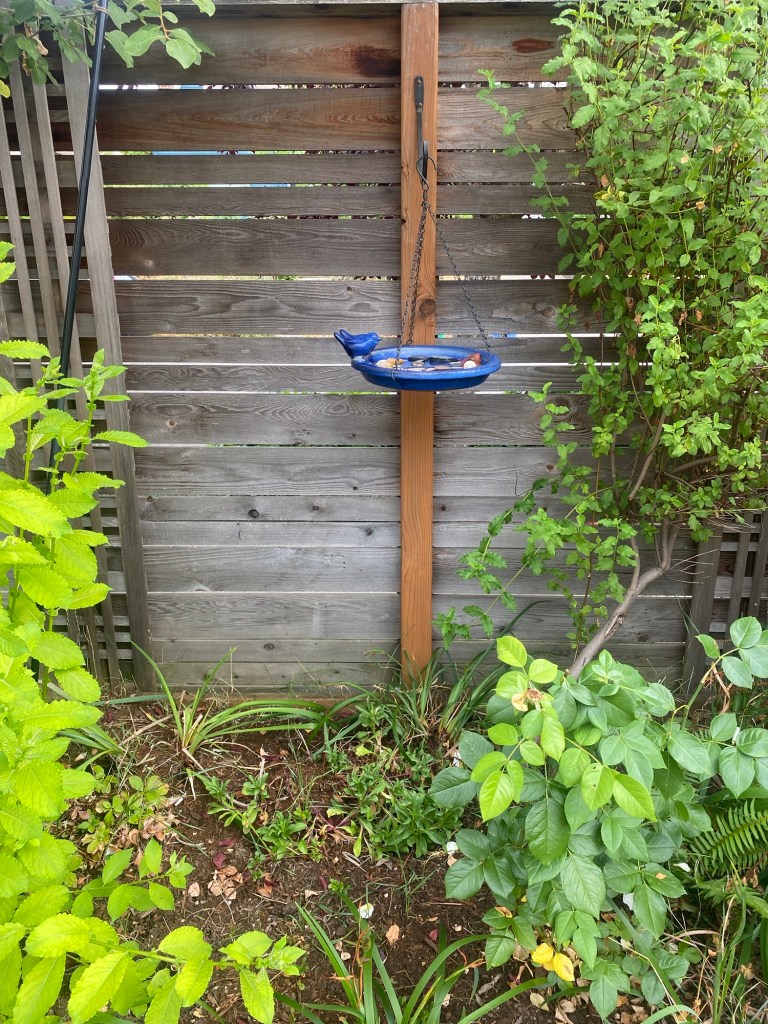
Oregon Sunshine flowers and natural grasses. Backyard with water stations for birdsOur baby Madrone Tree is starting to take shape in the corner.
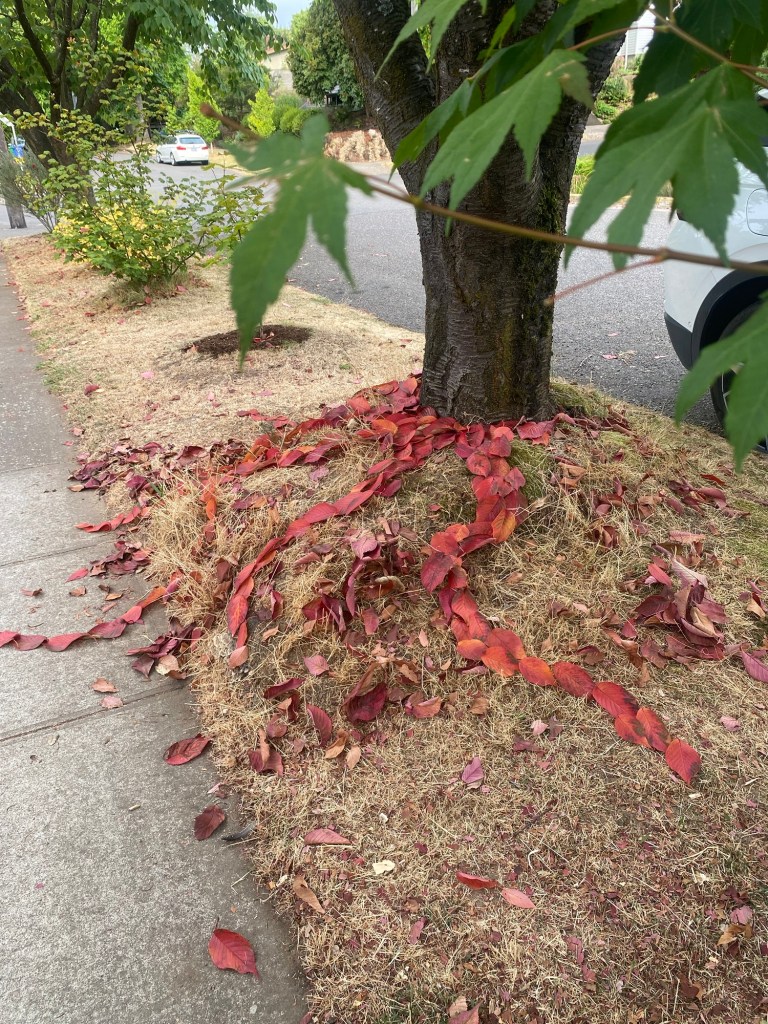
Today is a special day for us as it is our wedding anniversary. Much to our amusement, we watched a passerby this morning as they stopped to enjoy our yard and made a pretty design with leaves from our tree. It was a special anniversary gift from an unknown artist. Thank you!
A Presentation of Art provided by a passerby Front entryway
We started landscaping our Portland bungalow with native plants about five years ago. When we moved in, the small yard was almost 100% green grass. We began by planting a small area in front of our porch with low to the ground natives.
Summer, 2018
Soon after, we planted some native trees at various locations to provide some structure and differences of height. We have a very small yard and so our trees that we planted are not going to be more than 20 or 30 feet tall, fully grown.
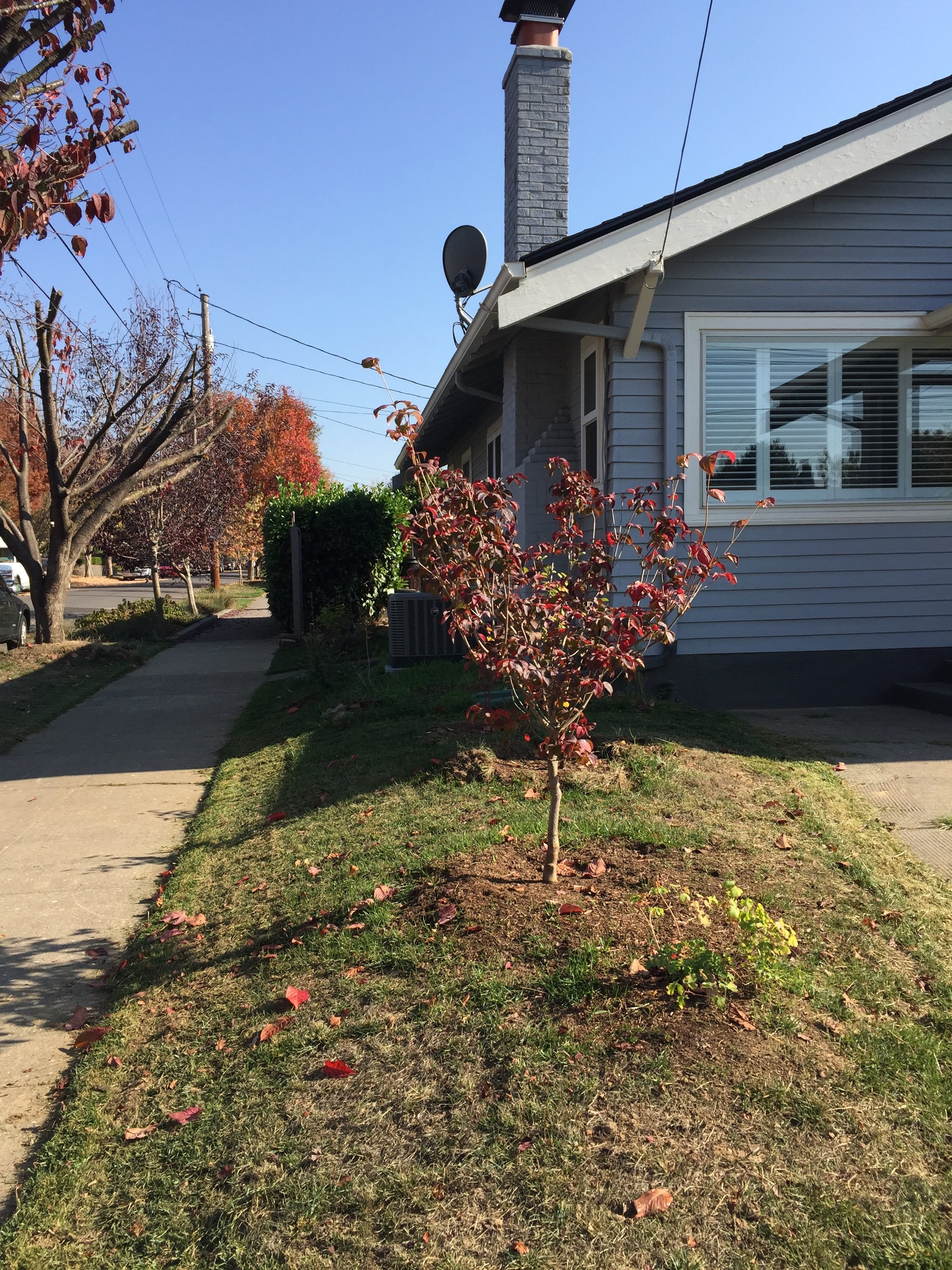
Dogwood tree planted
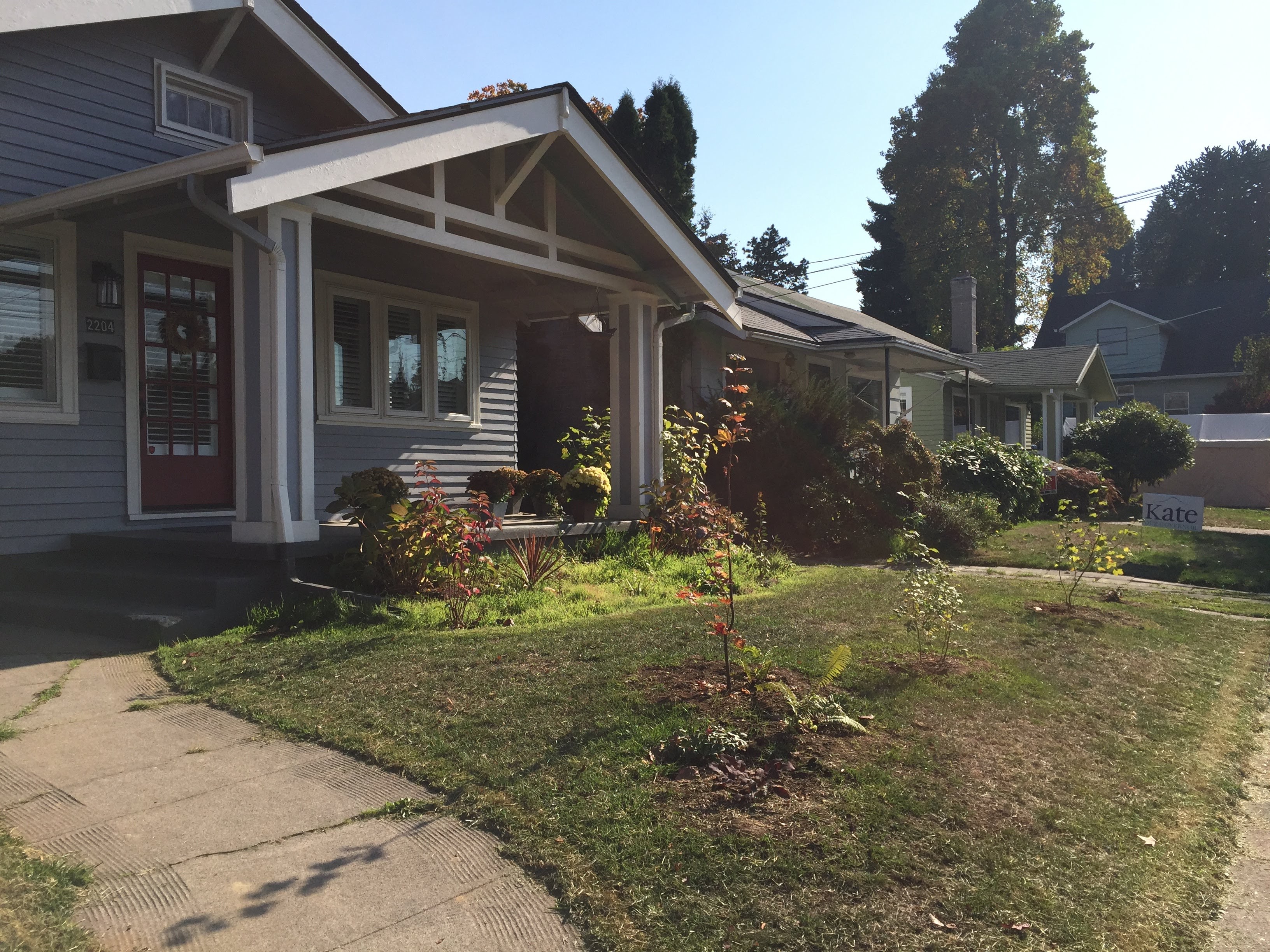
Front yard at starting point. Three native bushes, or small trees, planted.
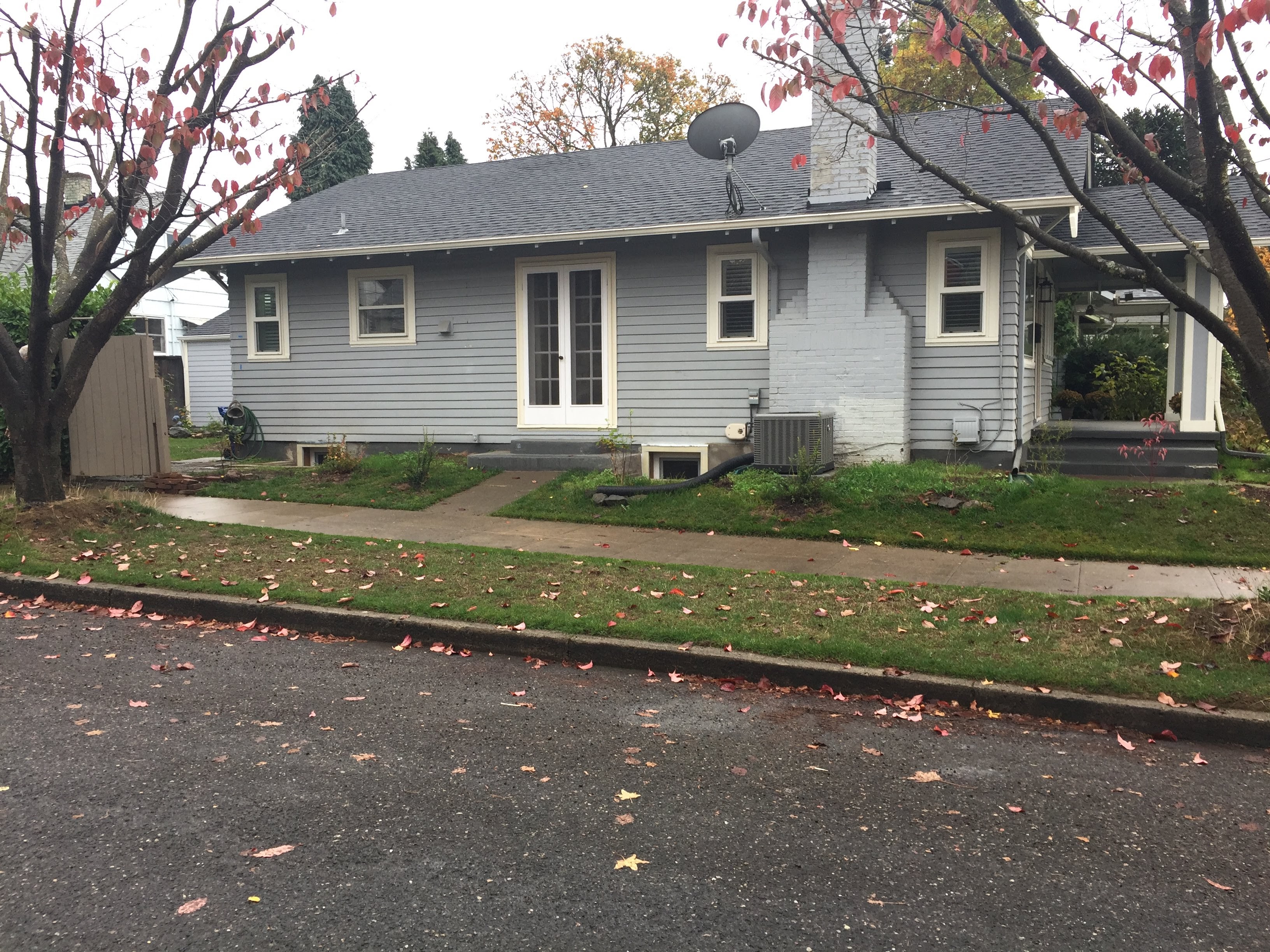
Side yard at starting point
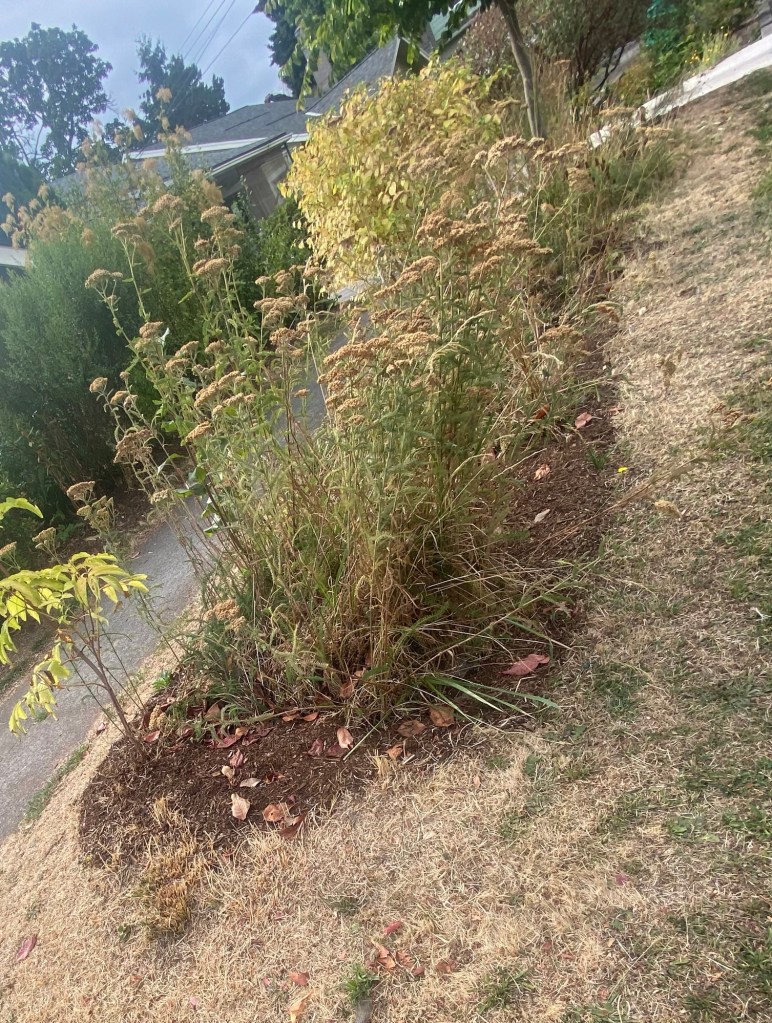
in our side yard, we planted small groups of native bushes and grasses that we called “islands”. We mow the lawn between the islands to give the native areas the semblance of a landscape shape. Without these native plant islands, we would have nothing between our house and the street, but mowed grass.
Five years later, in 2023, we are still working with this general concept of a native plant landscape for our yard. I recently photographed our front and side yard to show how it looks in August during a particularly severe dry period. We have had no rain for several months.
Our initial goal of our landscaping was to stand on the front porch and look out to see nature and not just the street. We did not want to go completely wild and ignore how our yard compared with our neighbors’ landscapes. After all, many of us are living on tiny quarter acre plots and we share common views.
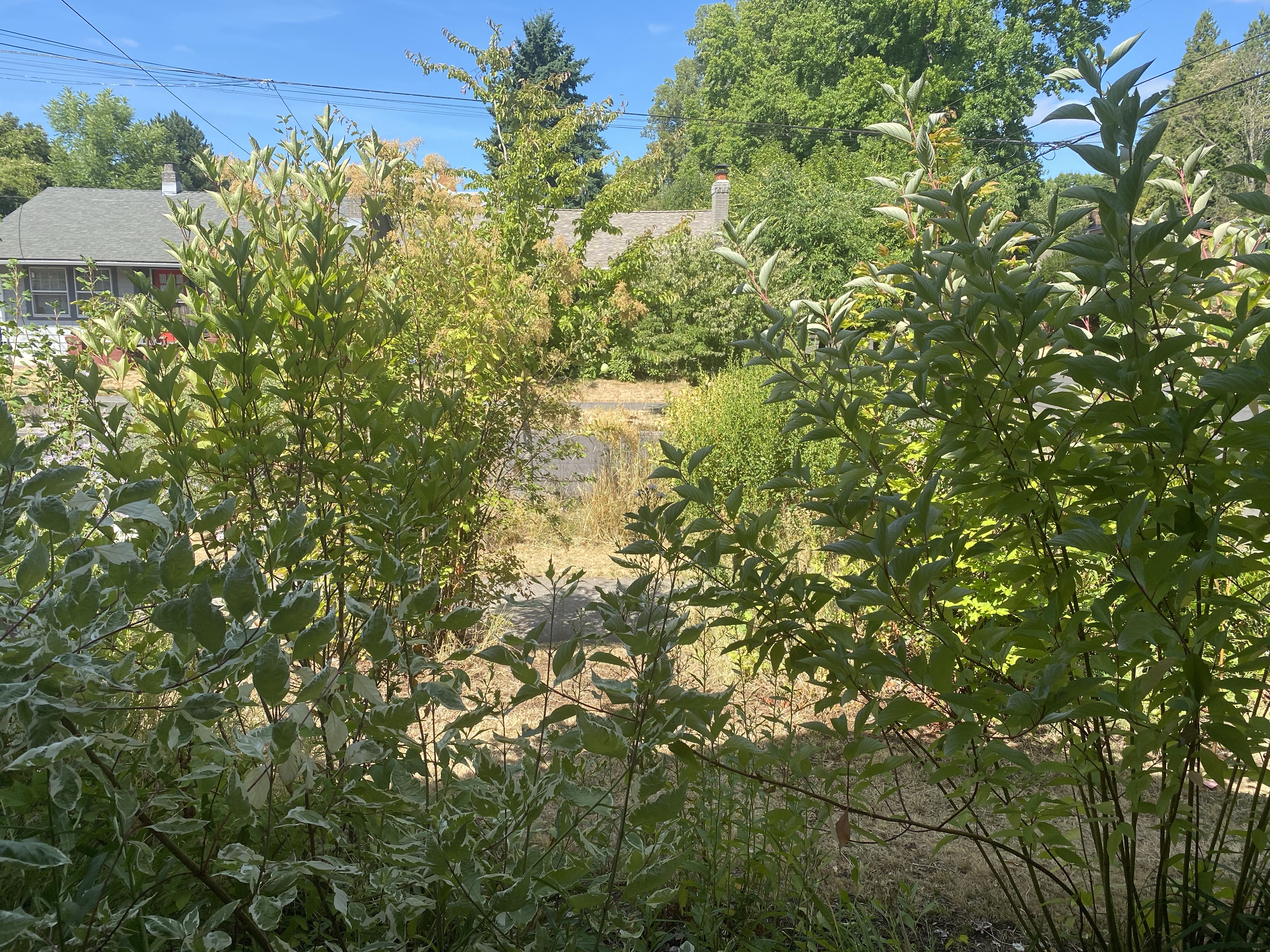
Standing on front porch looking out- High height
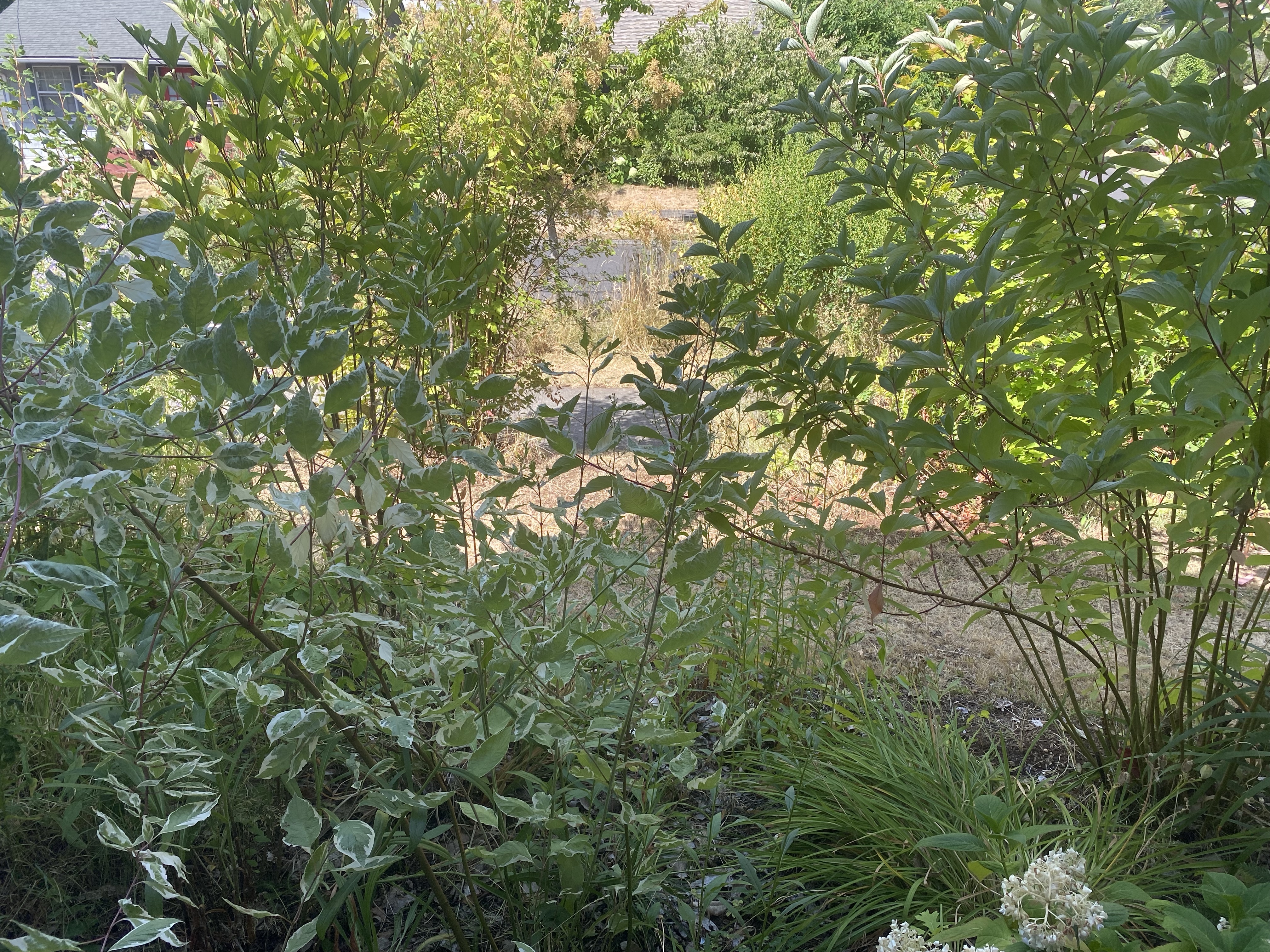
Medium height
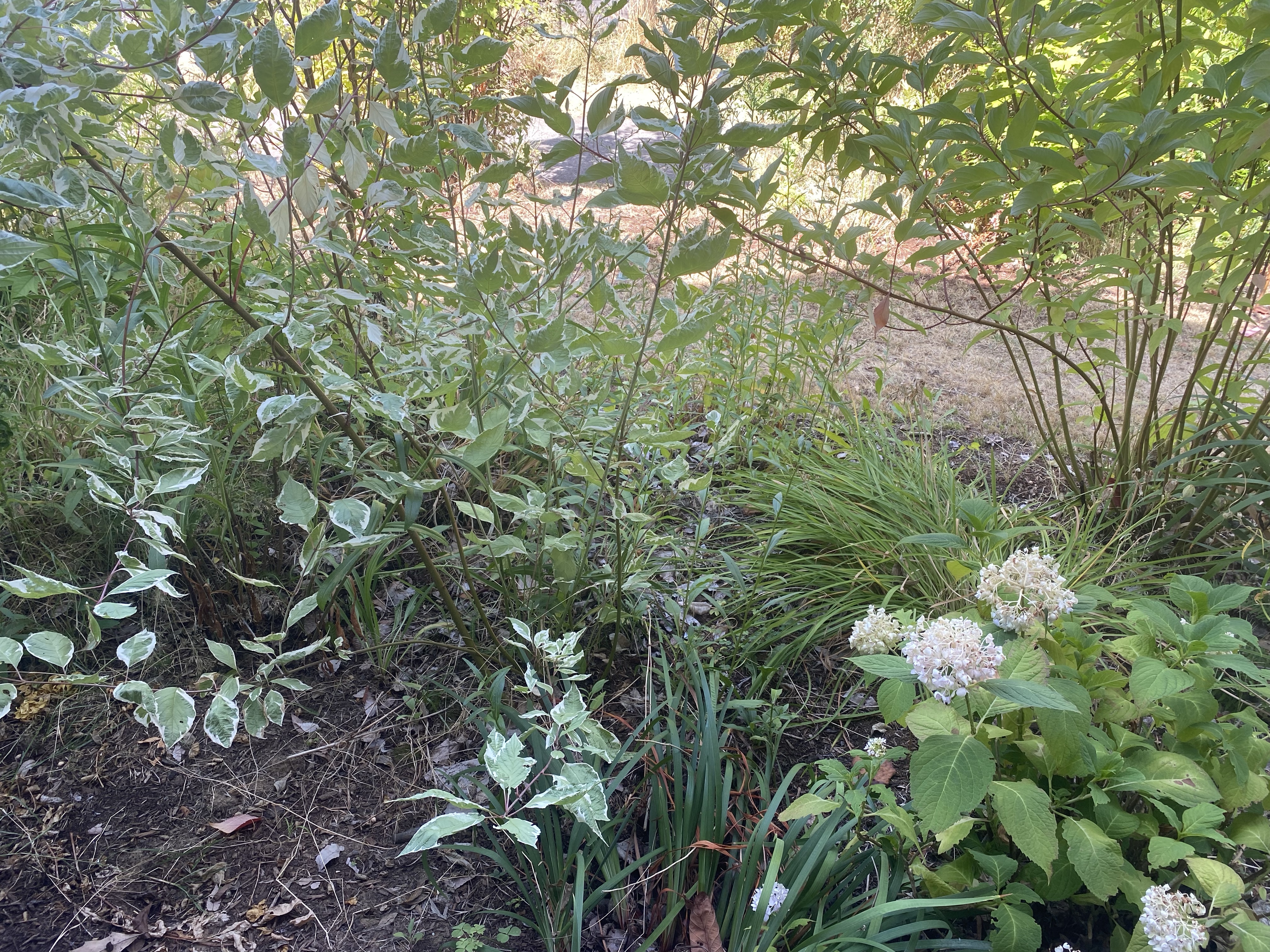
Low to the ground
Photographed from top to bottom, one sees that we can still look out and see the neighbors’ beautiful trees and bushes, with less emphasis on the road between us.
Here is another view of the level changes.
High View
Medium View
Low to the Ground View
In our side yard, the heights of the native plant islands have also matured and offer much more shade, texture and color to the yard. The grass around these native plant islands continues to be mowed to allow pedestrians easy walkways to get to the street, as needed. This his also leaves space for the native bushes to grow into their full sizes.
Islands of Native Plants – Bushes and Grasses
In this introductory post about our northwestern bungalow, I have not provided details of native plants used and their landscaping characteristics, both advantaged and disadvantaged. Details of this nature will follow in future posts. The purpose of this post is to introduce the idea of landscaping city homes with native plants and to consider how the landscaping might look.
What have we learned thus far from our experience planting natives in our yard?
First, native plants attract birds and butterflies and offer a delicious restaurant of berries, leaves, blossoms, nectar, and local grubs and insects for local birds and butterflies to consume. The leaves, small sticks, tall grasses and bushes also provide materials for birds’ nests and locations for cocoons. We have noticeably more birds and butterflies since we have added all these native plants.
Second, the native plants have shapes, sizes and colors of blossoms and leaves that are usefully and artistically built into our planned city landscaped design. We are pleased with the shapes, colors and textures emerging in the yard from these native plants.
Third, planning ahead and anticipating their adult size is necessary. For example, planting bushes that will grow to 15 feet high into areas that can accommodate them reduces the amount of time and effort needed to artificially shape bushes into particular contours or force them into unnatural heights or widths, cramping their style. This nature-sizing accommodation allows plants to emit a type of natural beauty.
Fourth, given our drought conditions, these native plants remain, robust and colorful without requiring much watering.
Fifth, not every plant in our yard is required to be native. While discouraging non-native invasive plants from growing in our yard, we have encouraged non-native roses and hydrangeas adding color and textures in places we desired.
Sixth, we have learned that many popular plant nurseries now offer native plants. We just needed to learn to ask where they are.
I am pleased to say that in our yard, which is now comprised of more than 80% native plants, we have more than sufficient shade, color and texture of plant life to meet our personal landscaping needs while also meeting the needs for food and shelter of some local birds and butterflies.

 marysgardens