Feeds:
Posts
Comments

“When someone is cremated, can their ashes be strewn around?” I ask. 
“You can place them  anywhere you want” she replied, “after the death is registered.”

“Then in that case,” I said, “Scatter some of my ashes into the winds.  Throw some under that apple tree in front of our cottage and drop the rest into the ocean. Don’t bury me anywhere.  I’m too claustrophobic.”


I imagine the work left behind in my old office is still there, some of it piled in the corners, papers spilling over onto the floor, reports clogging up the bookshelves and stacked up in the hall closets, very little of it filed properly, but for some registered items.

Someone picked up the baton where I left off.  Like workers before me finding it always there, never ending, forever needing attention, filling up the desk, spilling onto the floors, clogging up the bookshelves.

The best part of the work day was that early moment in the morning when I took off my coat , sat down at my desk or my workbench and pondered what needed to be done, appreciating the morning quiet before the storm, the steady beat of rain drops on a metal roof,  thunder rolling across the sky, silent slushy winter snowstorm filling up the streets, causing much churning of ice water through guttered curbs, hurried runs for fresh cups of coffee and a sweet roll before the first early meeting.  Quick notes drawn up of ideas to be fleshed out in the coming months. Dreams sketched on chalkboards and paper, typed up in our computers, discussions with a colleague during an early phone call, commitments made, promises offered.

The worst part of the work day was the begrudging moments of administrative matters, pushing for decisions to be unreasonably made by 10am without exception, promptly reporting the irrational results on single sheets of paper and filing them endlessly in alphabetized folders, costing monies that might be better used on people needing real services, rather than to things mattering not at all, but to administration. I’m not sure they even remember why they asked it to be done anymore, once it is properly filed.

I see our results, those steel shards of war, crushed peoples, green phosphorous clogged waters, murderous politics, plague outbreaks, journalistic lies, top heavy unearned wealth.

Work everywhere lies strewn around in offices and on floors, stuck in files, cut into small strips to keep it secret.

It is unfinished. I am not sure that it is yet begun. 


My vote won the popular vote, but lost the electoral vote. Perhaps your vote won the electoral vote and lost the popular vote.  In any case, we have a new president-elect.

It is neither simple nor easy for many of us to accept the results, especially since in this instance, the winner forcefully declared that the election was rigged and said he would decide after the election whether or not to accept the results. Now that he is sure that he has won, he accepts the results and no longer declares the election rigged.  


Upon what should our own acceptances of these election results depend?


In two previous presidential elections losers of the election declared that they intended to reject every proposal our newly elected President Obama would make.  They told the press that no matter what he proposed to Congress, they would reject it.  This was not just any one casually saying no to an acquaintance.  It was our elected officials of Congress saying no to our newly elected President, not based on evaluation of the proposals, but instead, upon sore losing.


What a shameful response to our democratic system and its process of checks and balances.


In this most recent election, Trump lost the popular vote.  But he won the electoral vote.

He won, but not overwhelmingly.
It seemed that he won by a lot, because so many pundits were wrong and had predicted his demise.

I have been listening to the barrage of explanations for the results of this election by pollsters, economist, journalists, comedians, congressmen, psychologists, psychiatrists, fortune tellers, winners, losers and bloggers.  I am neither pleased nor satisfied with any of the explanations.


I find them all wanting.


But most of all, I find arguments by the winners telling us to accept the results, wanting.  They are asking us to do what they did not. They did not embrace the man we previously elected, they refused his proposals, they ridiculed him, called him names, they lied about his citizenship and religious affiliation, they ridiculed his background his family, his ideas. They did all that they could to make our elected president seem fraudulent and illegitimate.  


It is most unfortunate that our newly elected president Trump participated in all this lying and negativity.


How does one stop a vicious back and forth response to previous sore losing?


There are ways and means that we have worked out to control hatred and violence when it brews in weak political systems.  We know how to manage it, to reduce its terrible force and damage.  There are alternatives to racism and sexism and brute force responses to ethnic rivalries that have been tried and worked. There are ways and means to stop the poor from being further shafted, to rein in the rich and powerful, to further develop and share infrastructure and services, to stop brutalizing our natural environment, to control outrageous behavior of banks and corporations. There are ways and means to manage corruption and crime, to flag liars.

We know how to do better.


This leaves me believing that this is not the time to capitulate.


It is now the time to clearly state our intentions to keep going, to be part of this great system we share, whether it is through peaceful demonstration or actively monitoring the actions of our newly elected officials. We must continue to be part of the debate.


Now is the time to work even harder to prevent our leaders from declaring war and bombing and attacking other countries with fake excuses, such as weapons of mass destruction that do not exist. Because we already know that this could happen. 


Let us not allow our leaders to weakly stand by when a huge natural calamity such as floods, fires, earthquakes, or dangerous infectious diseases erupt and threaten our very existence. Because we already know that this could happen. 


Let’s be prepared with a good government plan and program to respond to it, to prevent it from becoming yet another highlight of our disaffection with each other. Because we already know that this could happen.


If a good idea is proposed, let’s get behind it and support it, regardless of who proposed it.  And if it is a bad proposal, let’s argue against it.


This is not the time to allow our people to become ravaged by conquerers who may argue that winners take all.  After all, parties win our elections.  They do not win our country.  


Our country is something we all share.  And we also share responsibility for monitoring our newly elected officials and ensuring that they implement government programs as we intend, through negotiations, compromise, using objective and fair implementation practices.


Let’s get serious about serving a democratic government by learning more about what it takes to be one, and acting accordingly.


Once upon a time there was a little girl.  And a little boy.  They heard about voting and wondered what it was.

So they asked their moms and dads,

“Mom, Dad, What does voting mean?  Why do you vote?”

Mom said, “It means to declare who you want to leaders of our country.”


Dad said, “Voting is an activity where you boil your opinion down to ‘yes’ or ‘no,’ about every four years or so.  It simplifies things.  It balances power.”


The other Mom said, “Voting is part of our constitution, it is an obligation.  It is like when I say, ‘Eat your vegetables, it is good for you.’  Just trust me.  You need to vote.  It is good for you.


The other Dad said, “Ahh, just fagettt about it.  It doesn’t make a twit of difference if you vote or not. The system is rigged. “


The little girl decided to vote.  The little boy did not.  Guess who won the election?


Michael Moore recently put out a concerned CALL for action reminding us of the importance of voting.
We have the privilege of voting in privacy, and freely, and ONCE
and he reminded us of the power of our vote.

Of course,  many of us will remember to vote.

But his words also remind me that although voting is necessary it is not sufficient.
We, the people, must be more informed and more politically active,
look past our personal grievances, religious affiliations, ethnic identities and take on a bigger sphere of concerns.
We all lose when we aren’t concerned about the WHOLE of our country.

This means reading articles and listening to people who disagree with us.
This means reaching out to others and listening to their grievances.
This means being informed and choosing effective candidates at
local, state and federal levels.
This means “We the People” and not big business or rich interests.
We, the voters insist on good governance.

Starting this year, I want to see our elected Congress act, 
making decisions and choosing actions,
not through refusals to meet or talk, saying “NO” to compromise.
I want our representatives to act positively, through 
debate, discussion, deliberation, negotiation, and decision.
I want them to act through compromise.

Whether it was the drawing up of our Constitution, 
or the struggle to agree on any Bill of Rights,
or whether it is a contemporary problem needing agreement, allowing us to govern and be governed, we must learn to negotiate.  

In diplomatic circles, it is often stated half jokingly, that it is not until the various groups are relatively equally unhappy with the proposed solutionsthat a compromise deal can be reached.

We all lose when there is 
NO discussion, NO debate, No negotiation, No compromise.
When there is no negotiation, there is stagnation and fighting.
We all think we are right.  But that is not enough.
We have to listen to other people’s points of view and figure them into our decisions, to the best of our abilities.

We need balance in government using the deliberations of Congress, the White House and the Supreme Court, taking into consideration all of our people’s votes. We need to agree to use the system, wholly and effectively, and respectfully. 

I want a balance of power through governance,
not through personal name-calling and ridicule
not through wealth, pay-offs, cronyism and corruption.
not through refusal to compromise,
not through cheating and lying.
I want it through discussion, deliberation, decision and compromise, of individuals representing all of us.

And I want it now.

JUST FOR FUN:

An Australian friend of mine sent me this performance of the haka,  a tradition of the New Zealand Maori tribe.

It is used when they challenge others.  
According to my friend, the polite thing is for the opposition is to watch and listen in respectful silence.  I hope you enjoy it.

When we  moved to a suburb in New York, we had a side yard we developed into a beautiful garden in which we  spent many long, happy hours working.  I wrote several blogs about the garden. Here is an example: Dressing Down to Dress Up

We have sold our big home with the garden and moved to a very enjoyable, easy to manage condominium.  In the process of moving, we no longer own land for outdoor gardening.

I am going to grow a garden anyway.

My inspiration to continue growing a garden without owning one, came from reading about people who took up gardening potholes!

I figure if somebody could successfully make a pothole into a garden, I ought to be able to find an plot of land for gardening in downtown Portland, Oregon.

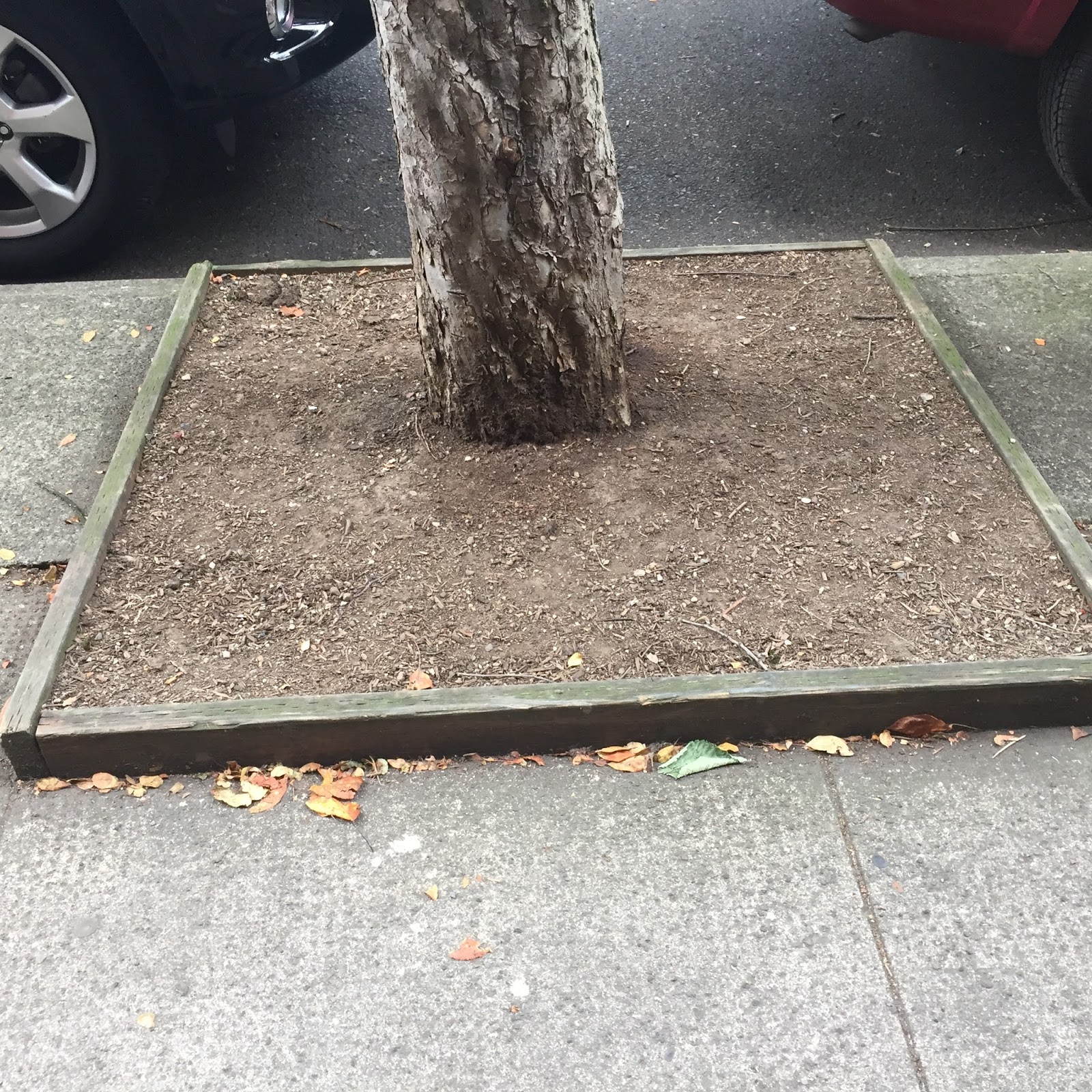
I recently decided to adopt a four foot square area out in front of our condo that has a tree in the middle.  This small piece of land is right next to a main thoroughfare and cars often park next to it. Because nothing is on the land and it is shady, because people step on it, because dogs water the tree and wander freely across the dirt, plants haven’t grown.

Here is my chosen plot of land.

You may ask, why would I choose such a spot for gardening?  Well, for starters, I figure I can’t do much damage to this plot of land. And with a tiny bit of luck, perhaps I can do better.

It was already the end of the July when I decided I needed a garden which means that most of this year’s growing season is over, not leaving a lot of planting time. Harvest is already upon us.

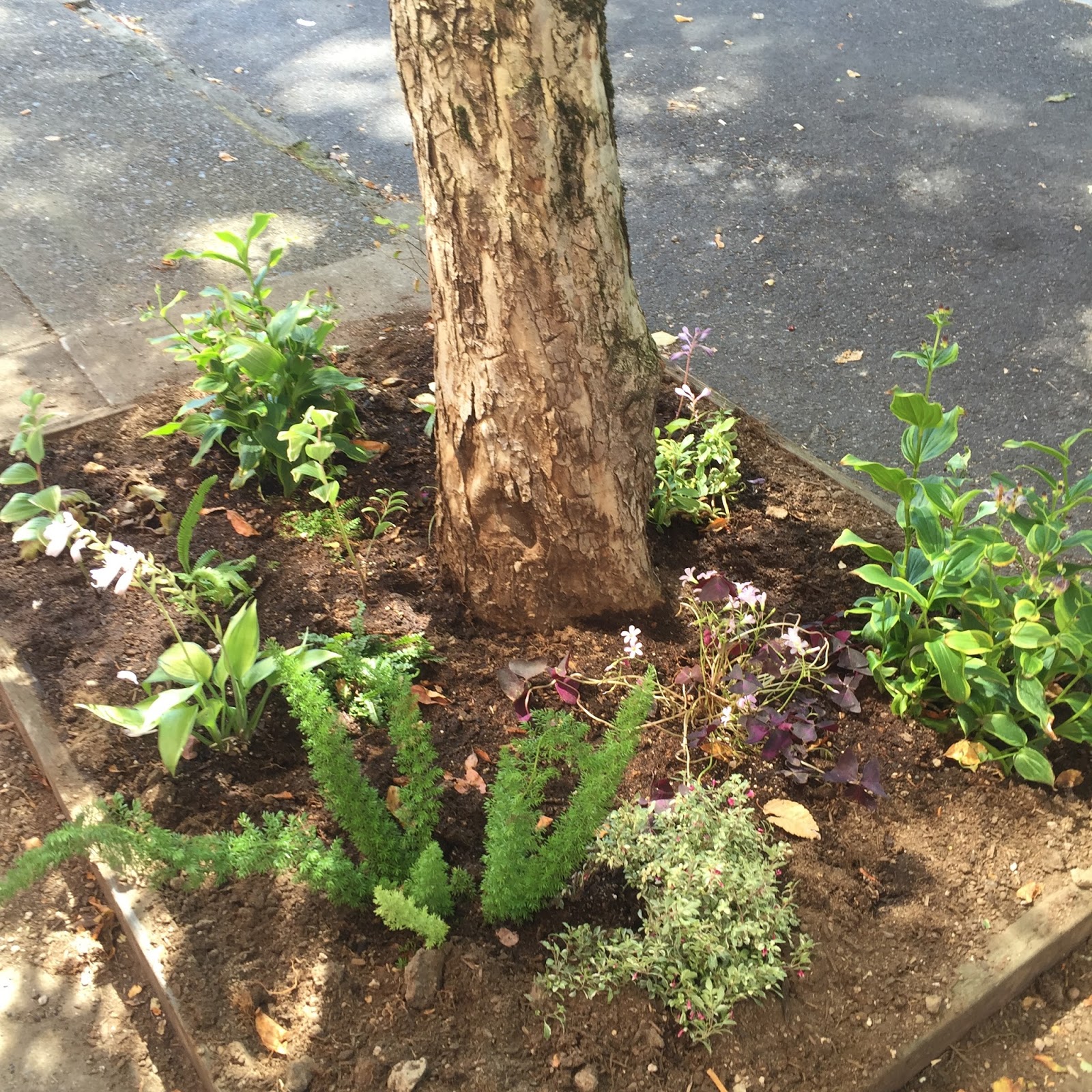
Therefore, I have dug up the area and have started planting perennials, hoping to establish a base of greenery that will root in this year, and expand and flower next year.

An amazing number of people have stopped to speak with me while I work on the garden.  Many offer words of encouragement, saying they enjoy seeing the little plot of land change its design as plants are added.

It is a perfect-sized project.  I have dug up the dirt, planted a variety of perennials and the biggest goal I have now is to keep the plants watered.  I might also drop some bulbs in for spring flowering. Toward winter  this little plot of land will be composted and I hope at least some of the newly planted perennials make it through the winter and show themselves next spring.

As of today, the outdoor square area looks like this.

Will it survive?  I hope so, but if not, then I can start all over again next spring.  If it does survive, I will add many flowers in the spring.

After all, the entire purpose of a garden is to have something to look forward to in the future, to care for something, and to see the cycle of life as it rotates through all its beauty.

We have no car on the mainland any more.
Life just got simpler
and we feel a whole lot better from the exercise.

Now that we live in a condo in a big city like Portland, the question keeps coming up.

Do we need to drive?  When we think about it, probably not.

We consider biking instead, or walking, depending on the distance we need to go.

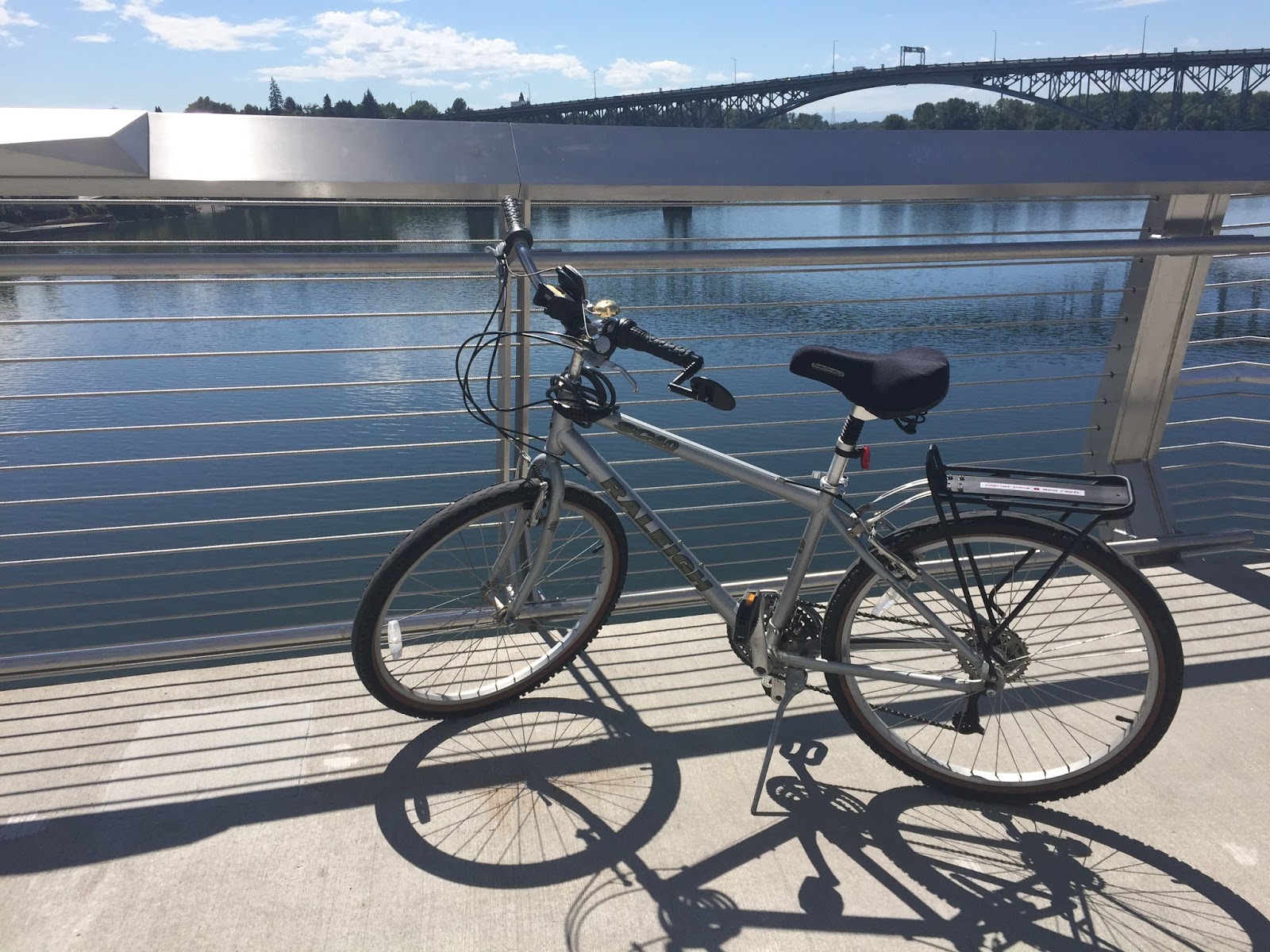
We own bikes and are getting in the habit of using them for every day travel to nearby places.
Bikes are easy to use in a city like Portland, Oregon.

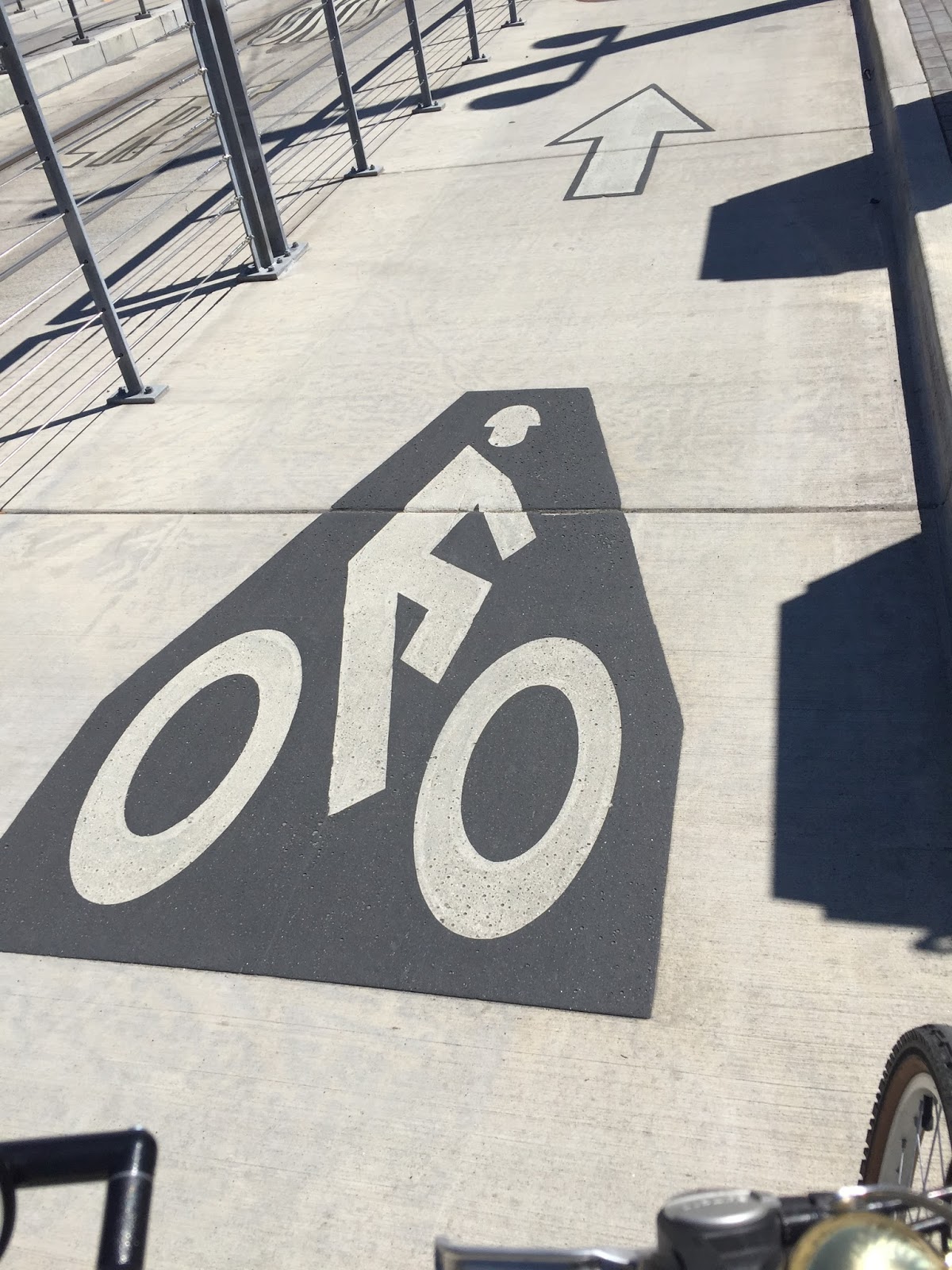
Portland and many other urban settings like New York City are planning to keep bikes as a major source of public transport. Entire lanes and off-road areas are dedicated for bikers, making it easier to avoid competition between bikes and cars and reducing potential, unnecessary, collisions.

We learn bike rules, however.  We are expected to know how to signal when changing lanes, where to position our bikes when we turn left or right at crossroads.  We stop at red lights and at stop signs.  We stop for pedestrians.

Roads here are designed and marked to clarify space between people who need to open their car doors and bikers who ride by on the road.  I still keep my eye on parked cars, just to be sure no one is about to open their door and get out.

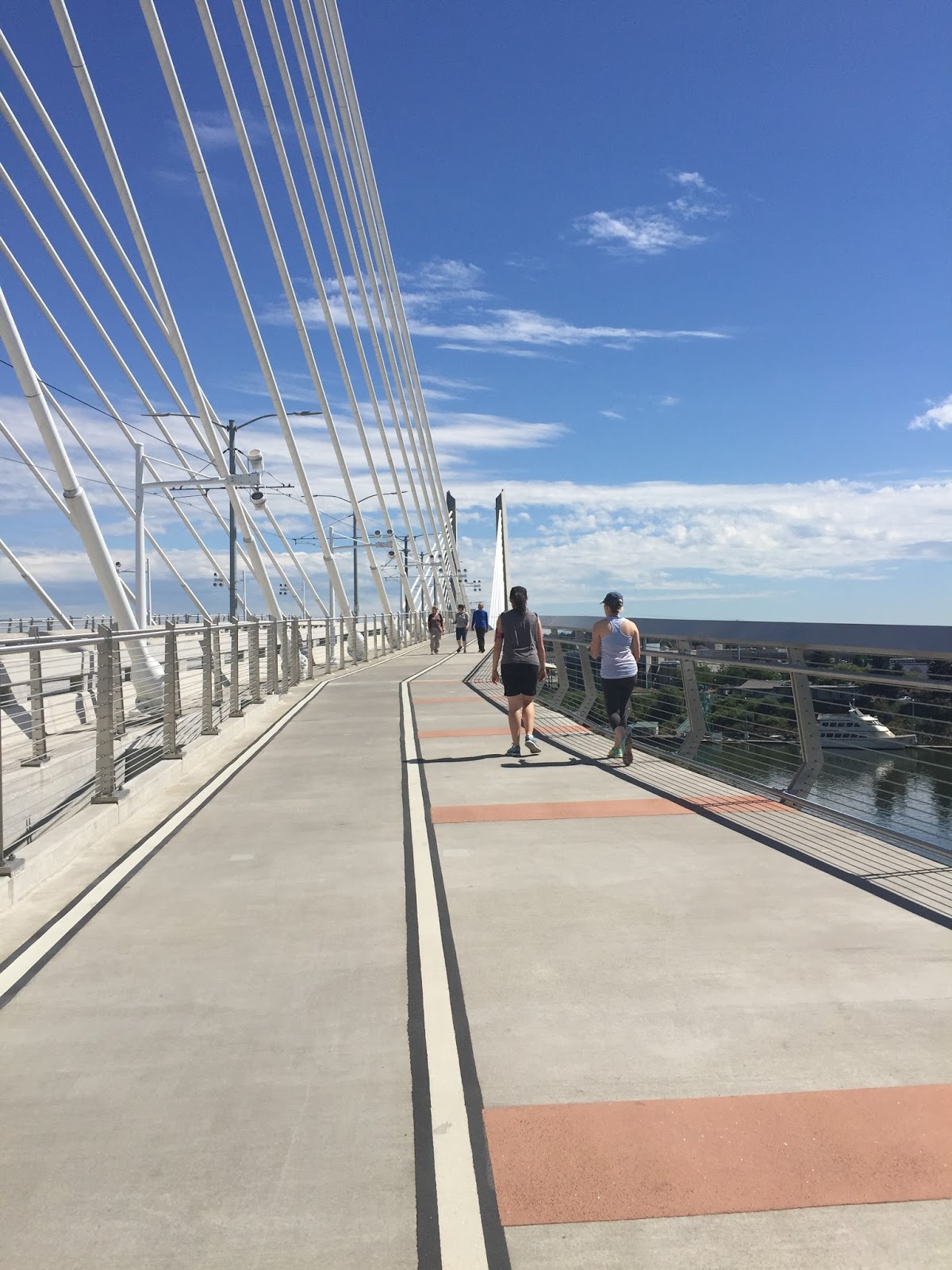
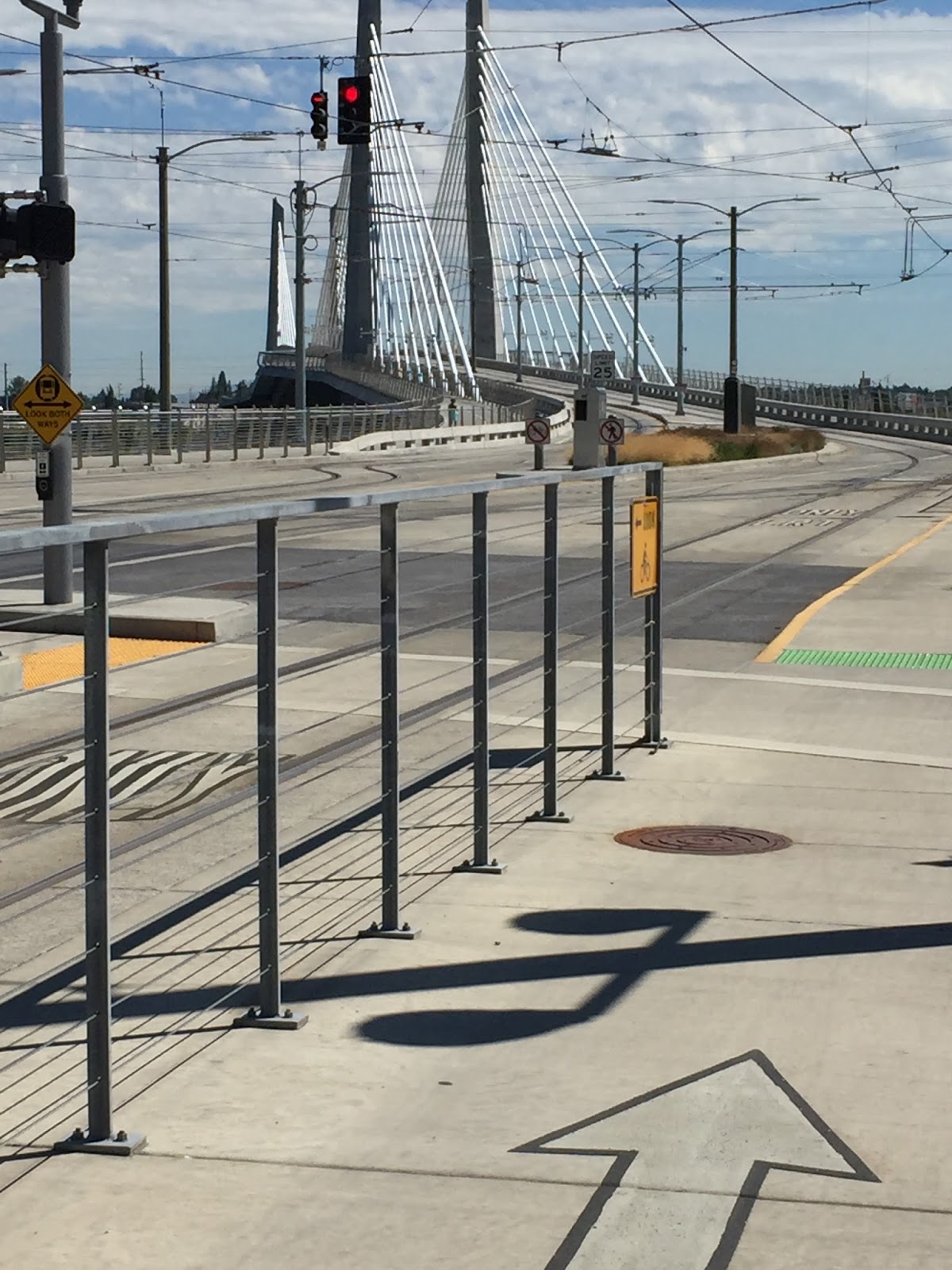
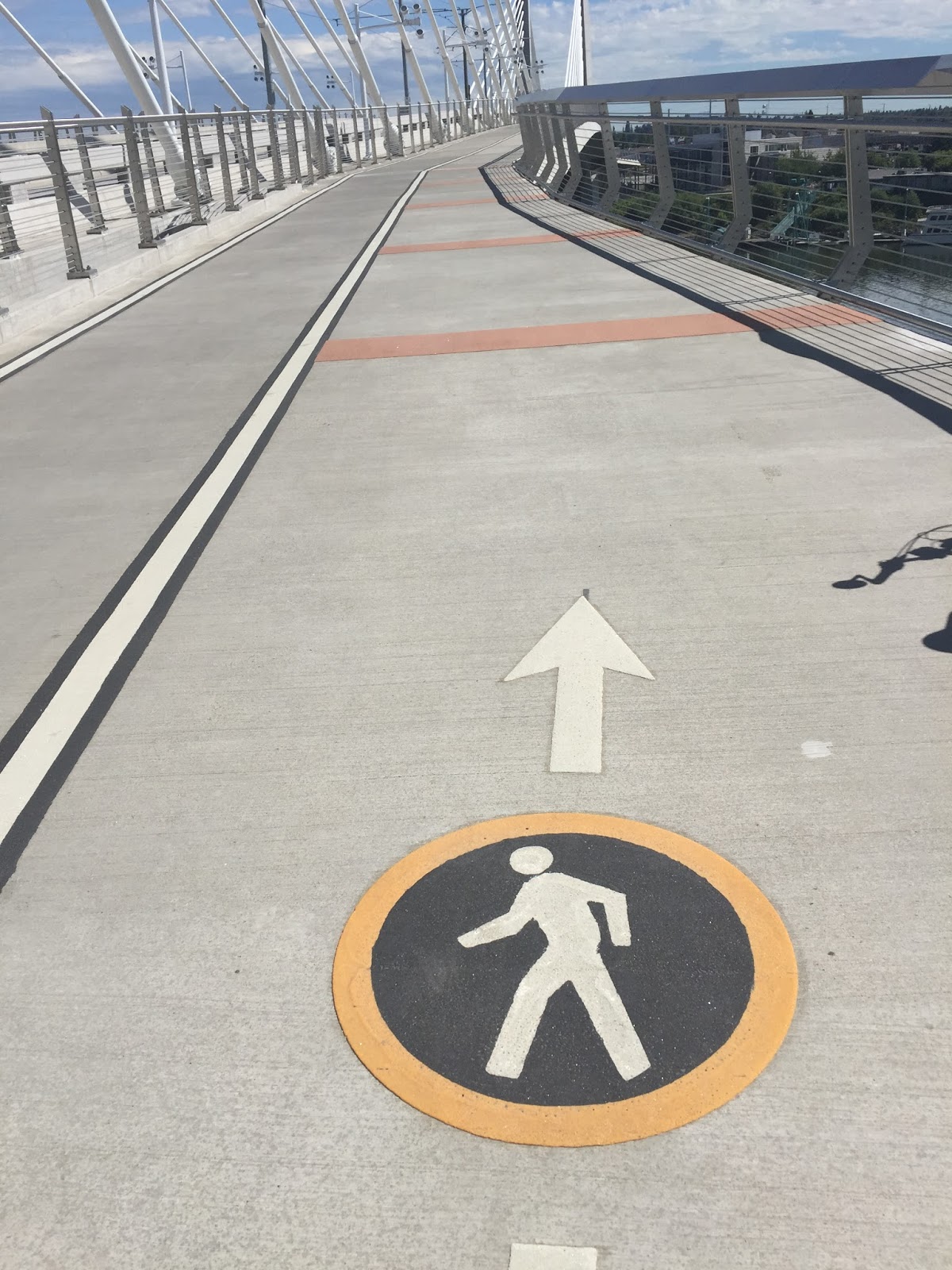
Portland has entire bridges dedicated to pedestrians, bikers and rails.  Here is one we take almost every day, the Tililikum Bridge.  Walking, or riding the bike across this bridge is such a thrill and a bit of a challenge on the way up to the top.

Lines and signs clearly lay out where pedestrians and bikers are supposed to be, reducing the usual dance between them.

The views from the top of the bridge are spectacular as well and reward us for our work.  We often stop to admire the view and take a breather from the upward part of the bridge.  Although, going down on the other side gives us plenty of respite, as well.
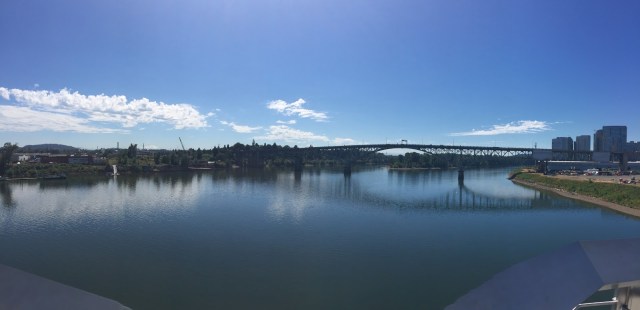
The view
Top of the bridge

Not interested in owning a bike?  Then why not rent one?  Numerous cities are now experimenting with bike rentals and part of their public transport systems.

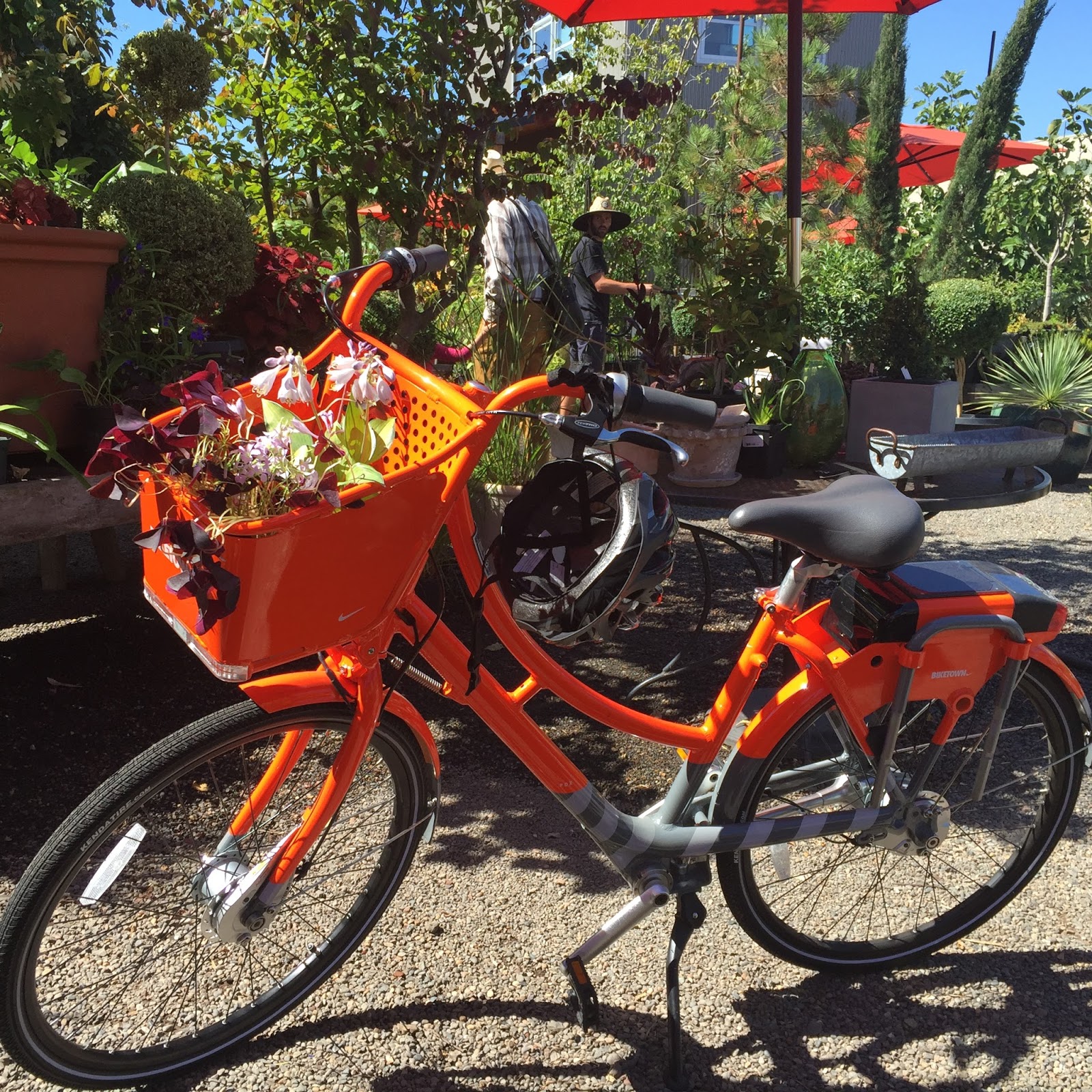
Here in Portland, they now have a program called Biketown that offers bike rentals on a daily, or annual basis.  I joined it recently and use it for getting around town and shopping, or going to appointments.  The bikes are ever so colorful and fun to ride.

But, remember, it is BYOH, or bring your own helmet.

Shopping at a nearby nursery.

Don’t want to bike somewhere?  Are you thinking that it is too far to go on a bike?  Don’t want to?  How about rent-a-car?

We figured out costs of renting or using short-term car rentals like Zipcar and there is no way we could make the costs of rentals for shopping and getting around town equal to the cost of owning one’s own car in the city, paying for parking.

In our case, we have Zipcar right around the corner. Other companies also offer short-term rentals. I’ll bet some people walk as far just to get to their garage as we do to get to a car rental.

In any case, life is but an adventure, and biking is certainly a lot of fun, and it is also a very practical way to get around town.

Try it!  You may get addicted to all that fresh air.

The Art of Seeing

When first learning watercolor, I started by painting what I saw.  I now realize this process is teaching me to see things differently.

I paint landscapes in en plain air sessions where we stand for several hours painting a picture based on what we see around us.  The longer I look at the scenery, the more amazed I am at how much there is to comprehend. I  feel I need a simpler way to look at things.

The scenery changes before my eyes. Clouds, wind, light, texture, reflections shift continuously. Ocean waves appear and disappear, only lasting for a second, Lake waves lap quietly on the shore and then are no more. A dog runs in front of us, heading home. A bird flies by.

As I stand there taking in the scenery, my observations are also moving about, shifting and changing. What I see in the beginning is not what I see after spending an afternoon looking at it. My perception of what I see changes.

Colors and shading merge then disappear and reappear with new highlights Shapes erode into broad patterns of light and dark. I note new reflections bouncing off water and sky.

I move the horizon on my paper to consider how much of the universe I feel like including in my painting. Geometric patterns of buildings or objects are adjusted as I become increasingly aware of how angles, light and color affect my rendition of them.

The more I paint, the more I realize that I need more time to fully open up and visualize what I see. I need time to let the scenery seep into my mind and to learn to hold it as an impression. I need to recognize the myriad of patterns, colors and shapes shifting in front of me, offering various perspectives on how I might represent them, to reflect how I feel about seeing them.

While doing all this, I often come to some sense of how I want to paint my picture. Then, for several hours I am lost, completely lost in my painting. Time stops.

Seeking to better comprehend what happens in art, I attended some lectures given by Ruth Armitage at the Oregon Society of Artists. In her talks, she encourages us to look more deeply into ourselves for art inspiration and to also explore the work of other artists for ideas about techniques of expression.

At the same time, she encourages us to to express our own points of view more freely, without the preconceived notions and limitations of other’s prescribed reality.

Under her tutelage, I am at first shy and can’t figure out what to do with the canvas and my paint brush in order to express my supposed inner self artistically that I am still seeking to find. With time, I manage to begin to play with the lines and shapes, to magnify the colors, to soften the degree of detail that sometimes interrupt the painting’s underlying thought. 
Ocean Holiday
We are learning the pleasure of experimenting with perspective.  This is just a beginning and I hope to continue exploring art this way.

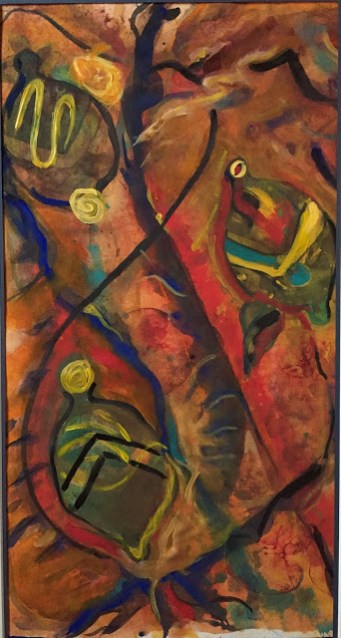
Celebration

Sargy Mann, a well known British artist who successfully painted even after becoming blind, spoke about the importance of perception in art.

He said, “I have come to the conclusion that drawing and painting could be almost like a sixth sense.” I believe the activity of art is a way of learning about this sixth sense.

Sargy Mann’s last interview before he died in 2015 is  inspirational and provocative and is HERE for others to enjoy.


Remember that day?


A neighbor of mine for many years  gave me a copy of his memoirs, in bound and printed form. It was a book he had written by himself, with no idea of publication and sales in mind. He personally chose the title of the book, designed the cover and had the book copied and bound for further distribution to his family and friends, as he saw fit. 


I read the book with great interest and then shared it with another neighbor who asked to borrow it, and since then it has been loaned to another person who is supposed to return it to me when they are done reading it.  I am happy to share the book with others.  This book is not sold in any stores.  There are probably only 20 or 25 copies of the book in its entirety.  It is a book that is likely to be cherished for years to come owing to the fact that we all enjoy reading about the life of a friend or family member when it has been so carefully laid out and presented.

My neighbor is a retired architect who had a very successful career  in government who has authored numerous technical manuals and bureaucratic reports but never until now, a book he could call his own. The book he gave me as a gift is about his life, not his career.  It is about his childhood, not his life at the office.  It is a story about introspect and old friends, people who inspired him, people he loved, or who puzzled him.  In his book he tells funny stories and relays charming moments that changed his life forever.  I really enjoyed reading his stories.

He and I talked at great length about the value of writing such a book, a personal book to be shared with family and friends and not a book to be submitted for publication, reviewed, edited and the like. Its purpose houses no future career.  He doesn’t want to sell the book to make money.  He wants to share his ideas and perspectives in printed format, and he has done so, very successfully I might add.

Personal writing can become part of a larger story.  Professor Lillian Schlisser published an historical book based on the letters and diaries of a hundred women who took the trip across the continent to Oregon or California between 1840 and 1870 in covered wagons. Without access to their hand-written notes their stories, Professor Schlisser could never have written such a personal narrative that unfolded so beautifully into an historical perspective.

Personal writing often goes beyond straightforward documentation of what happened.  It may also open the mind to think more imaginatively and creatively.

Tara Parker-Pope of the New York Times reviewed research showing personal writing may lead to behavioral change and improved happiness.  Through writing and rewriting our stories, we may change personal perceptions about ourselves and others ultimately leading to improved health.


One thing I wanted to do but never got around to doing until I retired, was writing a novel that exceeded the boundaries of my professional, scientific and technical world that I lived in for most of my adult life.  My desire was to write stories that  are free-wheeling, imaginative and footnote-free, largely based upon personal experience, but not limited to it.

Years later, my personal novel and a series of short stories are written and re-written numerous times.  Chapters have been added, deleted and merged with other chapters.  Dialogue has come and gone.  Characters have appeared and disappeared.

It only required me to take moments out to write and rewrite.  There were no travel costs, no public speaking engagements because of it, no stress over trying to sell it.  It just is.

These unpublished stories are slowly developing a life of their own.

I open up my computer and see them on the screen and always enjoy relating to them.  Sometimes I rewrite a paragraph, reformulate a dialogue, redo a paragraph, choose or delete a word.

It is one of the most enjoyable things I have done, on my own, for no one in particular.

Picking up a Romance Writers Report dated May 2015, I scanned through and saw an announcement on page 15 listing romance writers who had died between March 2014 and March 2015 and it included on the list, Gwynne Forster.

She was Gwendolyn Johnson Acsadi, a demographer who was formerly a chief of section in the United Nations Population Division.

In the mid-1990’s, we spoke when she retired from the United Nations.  At the time we were neighbors at Roosevelt Island, an island in the East River of New York City.

I asked, what were her plans?  

“This may surprise you, ” she said, “I am learning to write romance novels, writing under the pen name of Gwynne Forster. I would appreciate it if you would keep this a secret because I am trying to keep my publications as a demographer and romance writer separate.”  

Her decision to shift into such a different field intrigued me, and I could not help but follow her accomplishments over the years from successful demographer to accomplished writer of romance novels and  pioneer of African American romance fiction.  

She ended up merging these seemingly disparate experiences by using her research and demographic expertise to form stories. She took studies about birth and death, sex and reproduction, the consequences of unplanned pregnancies, issues of social class, economic poverty and brought them to life in the world of romance novels.  An illustrative example is shown here, in her book Fire Down Below.

At the bottom of the page of the Memoriam was a quote by Margaret Atwood saying,  “In the end, we’ll all become stories.”  
The question then becomes, who will write them?
In Gwen’s case she delivered her stories to us in a well planned package.