Feeds:
Posts
Comments

Posts Tagged ‘The Study of Art’

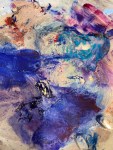
Part of the palette

This is the to be continued story of my painting exercise on an old canvas where I shift from idea to idea and technique to technique while “holding that structural thought.” Currently, I am playing with a painting of ocean and atmosphere and considering their shared emergence into the sense of horizons.

I find the choices in painting horizons to be infinite. Much like a snowflake, each depiction of a a horizon is unique, yet somehow we continue to recognize the horizon for what it is.

We may continue to sense the horizon even when we cannot really see it.

Horizons do not need to be depicted as straight lines across the canvas. Some artists have horizons that are shown via diagonal slopes. Here is an example painted by my sister, Elizabeth Rose. I like the sense of view that she is approaching the mountain from the sky rather than viewing it from the ground.

Elizabeth Rose, acrylics

My sister Elizabeth and I both paint and we enjoy sharing our paintings and styles with each other. She paints in her living room. I have an art studio in my basement. We both reach for new understandings through painting. We both have grandchildren who enjoy painting and sketching with us. It is a wonderful way of relating.

In Elizabeth’s case, she is painting a kind of revelation that reaches awesome thoughts of clouds and light trajectories across majestic mountains that seem to reach beyond our planet and out to the universe.
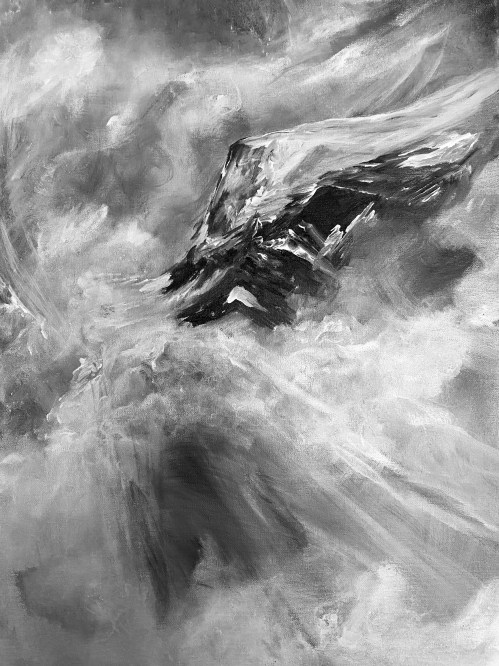
I show her painting in black and white to emphasize the point of motion and shifting light.

In my experimental painting, I am imagining an early morning sunrise out in the ocean on an island, where color, reflection and time are all blurred or merged into a single multi sensory, abrupt experience

I started with this roughed up canvas using white and black for the emphasis of light and dark areas (Canvas A).

Canvas A

Then I prepared a kind of Notan design that suggests motion as well as balance of light and dark (Canvas B).
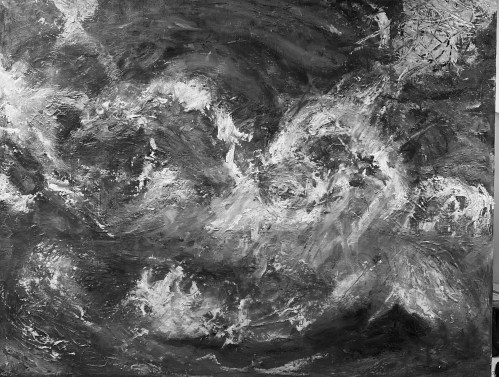
Canvas B

Then I shifted to the underlying pastels of sunrise ( Canvas C).
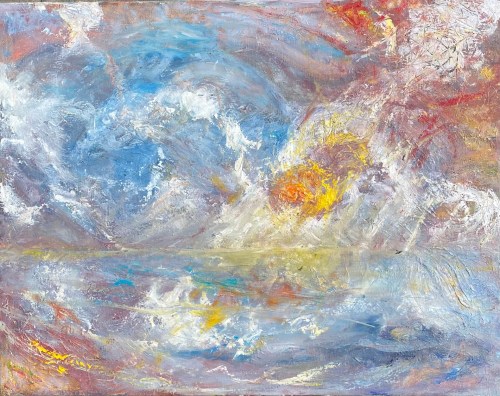
Canvas C

This was followed by the over-slap of bright colors put on by palette knife and softened by brushes to be reflective of the split-second deeply bright shooting sunrise itself (Canvas D)

And as it looks today, I have worked on grasping the abrupt brilliance of those few split seconds where sunlight takes over the morning skies and water reflections
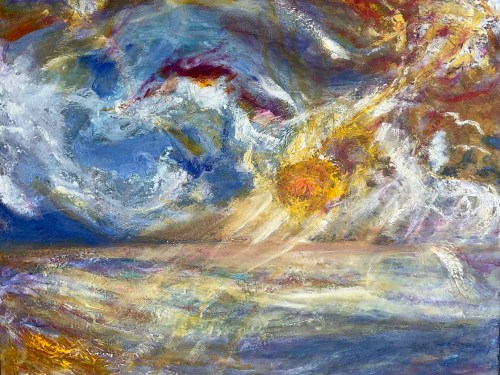
Canvas D. Early Sunrise, Oils

In conclusion, much like life itself, all present paintings have pasts and futures to contemplate. Horizons are moving targets just like everything else and our sense of timing and judgement of their emphasis is an artist’s prerogative.

I now take a moment to hold that thought.
Read Full Post »

Calligraphic messages seem to be everywhere in nature. They emerge from our natural surroundings and are etched into our consciousness.

By referring to “nature’s calligraphy”, I refer to a form of art that is inspired by nature, yet looks like handwriting or calligraphy, and has artistic implications that go beyond the written word.

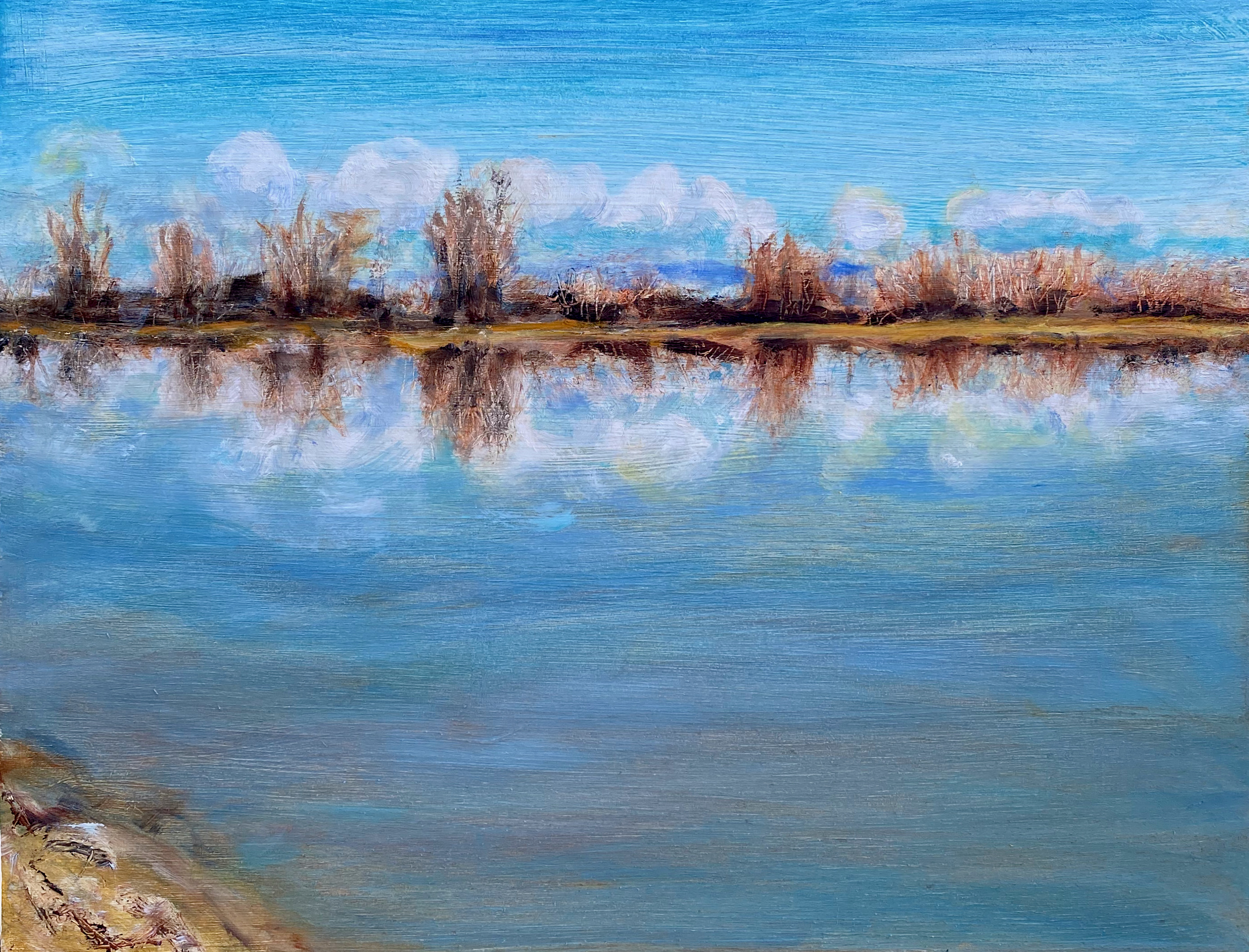
Sauvie Island Calligraphy, oil painting on birch wood

How do I ever know what to paint when standing in such beautiful natural scenery? Where does land end and water begin? What color is the in-between?

I know by my feelings when to start painting. I will sense when that moment is here.

It is when my eyes stop at a point, where I ponder what I see, where I wonder how this place even exists it is so ephemeral. Then it is time to paint.

This quiet moment is in March and occurs while walking off-road at Sauvie Island, near Portland, Oregon We are standing in a field, looking at almost still waters. The scrub bushes and small trees on the other side of the pond are sending what looks like a calligraphic message, punctuated by clouds.

It is our first time out in a long time, owing to COVID constraints. This is also a global pandemic moment for us, an outing free of other people, social-distancing not required.

There is no noise, but for soft sounds of birds. It is a perfect moment.

It is now a painted moment.

In my mind’s eye, I see this same scene in another way, as calligraphy.

I plan to paint this again, but in a much wilder, simpler way, via the style of a notan.

The above painting was completed during the period of time that I have been taking the art classes of Michael Orwick, offered by the Oregon Society of Artists.

Read Full Post »

When I was a child, some of the first things I thought to draw were pictures of the sky. It would seem that clouds were the easiest thing to draw in the world. I took my crayon, put up a white oblong shape, perhaps with the yellow sun peeking out, and was done. Voila! I had painted a cloud.

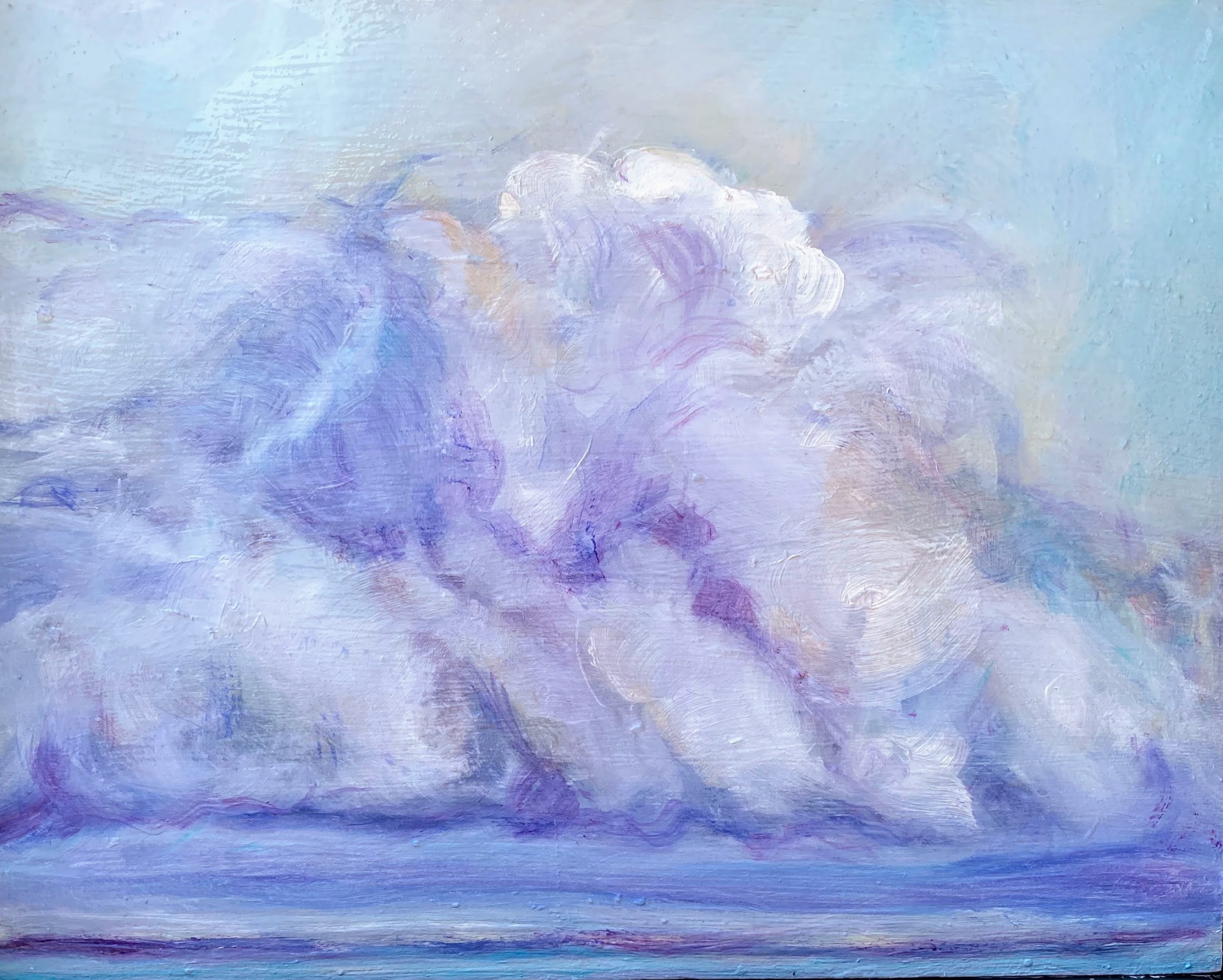
Clouds over Water, oil painting

Now that I am an adult, painting clouds as part of a painting exercise for an art course, I am amazed how elusive, expressive and complicated they are. Where does a cloud begin, and when does it end? How does the sky manage to peek through the clouds in such soft and unimaginably subtle ways? Do I ever really paint a cloud, or rather an allusion to one?

The more I paint them, the more amazed I am with the ephemeral nature of clouds.

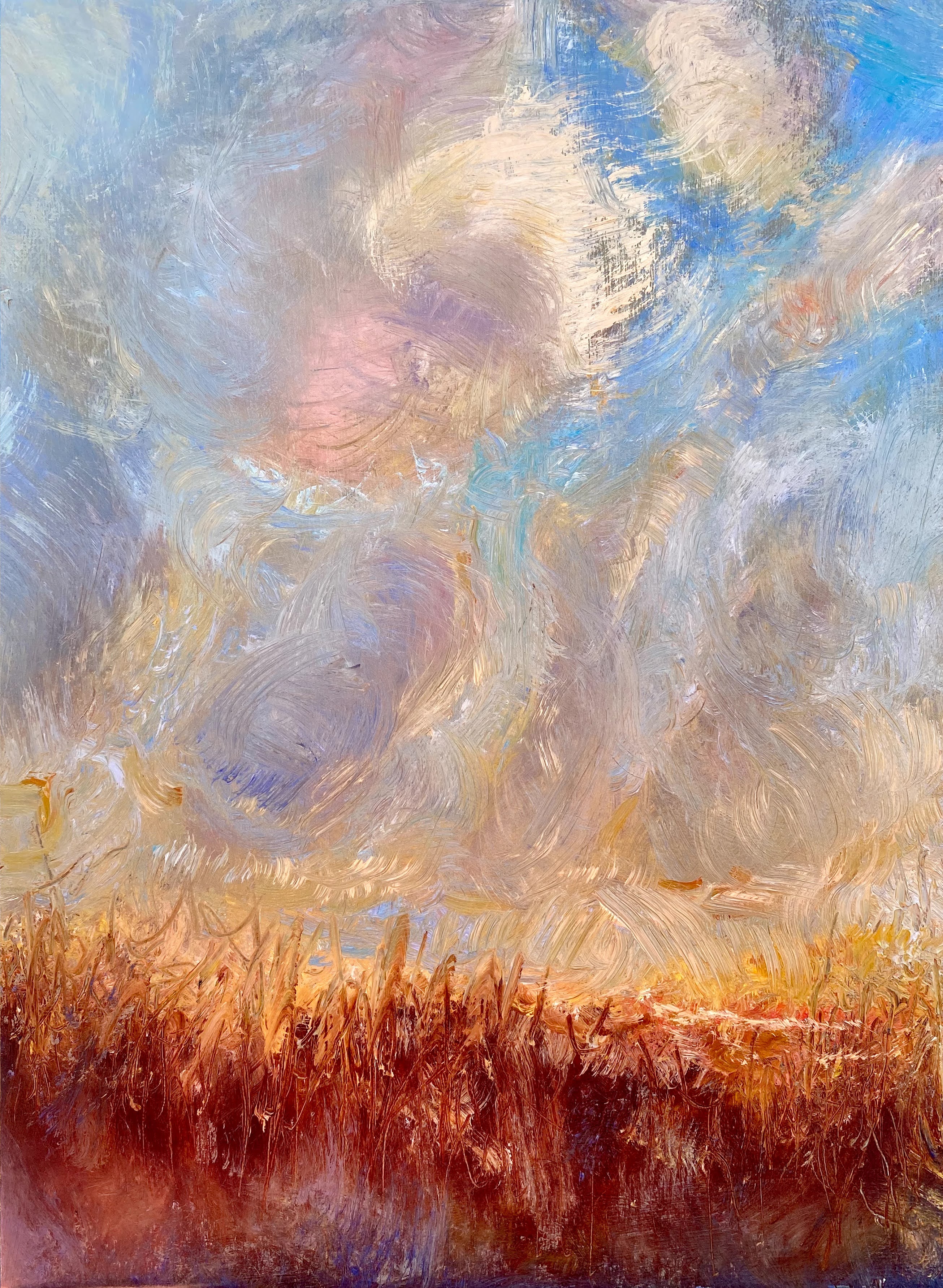
Clouds over Island Sunrise, Oil painting

It is a challenge to use less and less color in a painting, yet still have the colors of the atmosphere roaring through, bouncing everywhere, not respecting boundaries. I think this happens often because of our focus on light streams and reflection, in addition to shape.

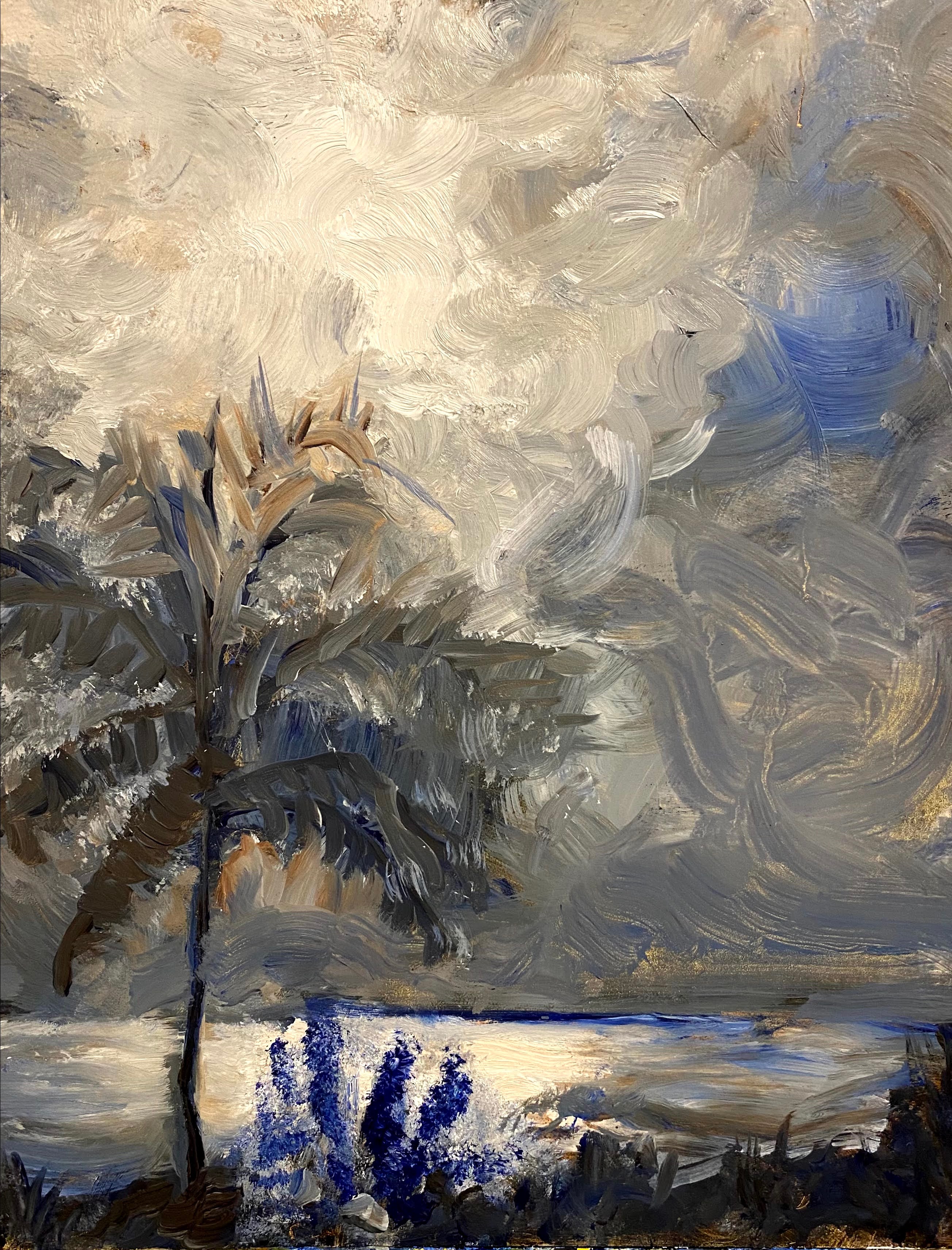
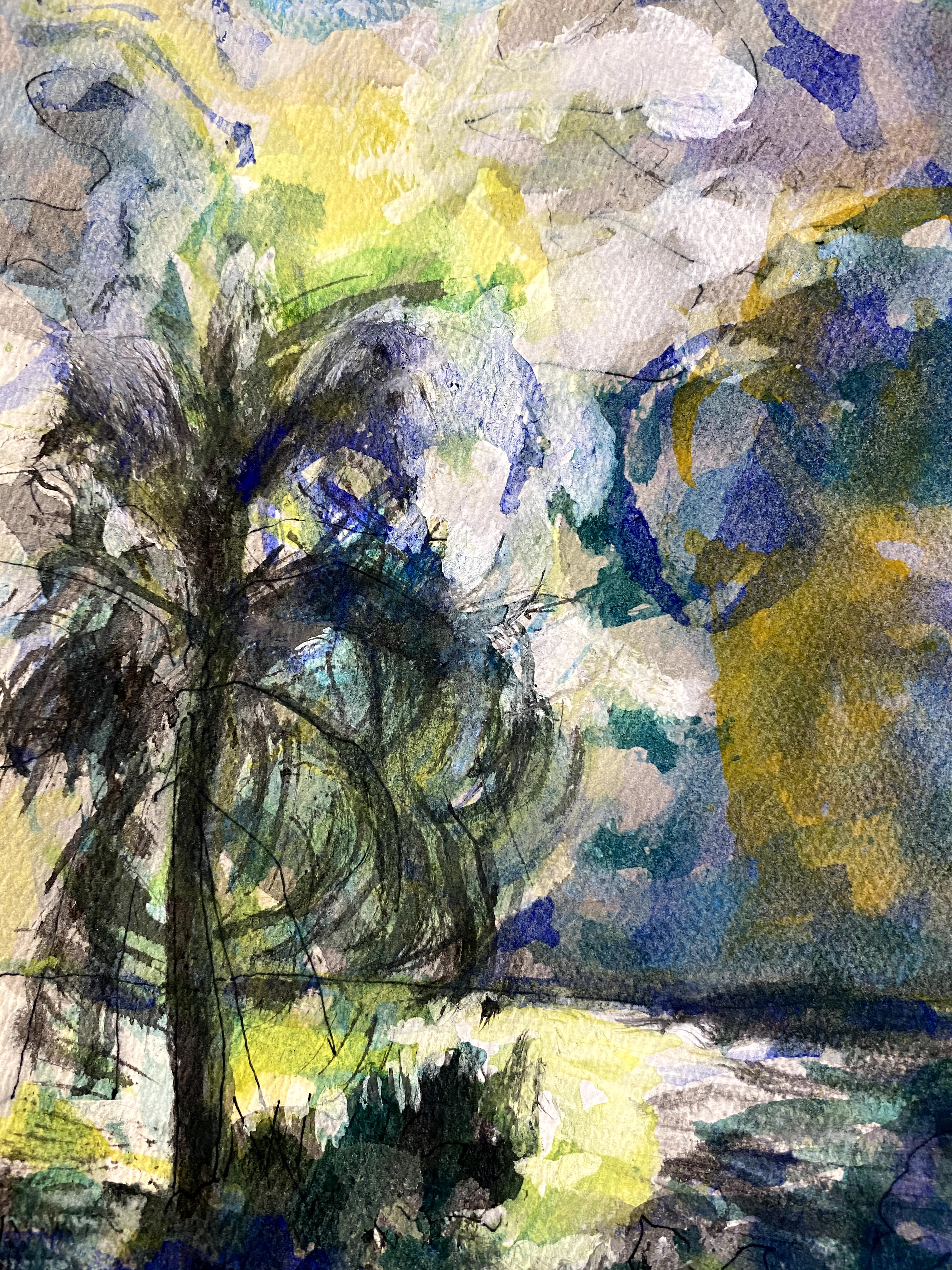
This seems to be true, even when painting clouds from the light of the moon.

Clouds in Moon Light, Oil Painting
Clouds in Moon Light, Water Color, Ink and Gesso

Now that this idea of painting clouds has become part of my daily art routine, I expect to see many new ways to relate to them with canvas, brushes and paint. Once discovered, never forgotten.

The above paintings were completed this year, during the period of time that I have been taking the art classes of Michael Orwick, offered through the Oregon Society of Artists.

Read Full Post »