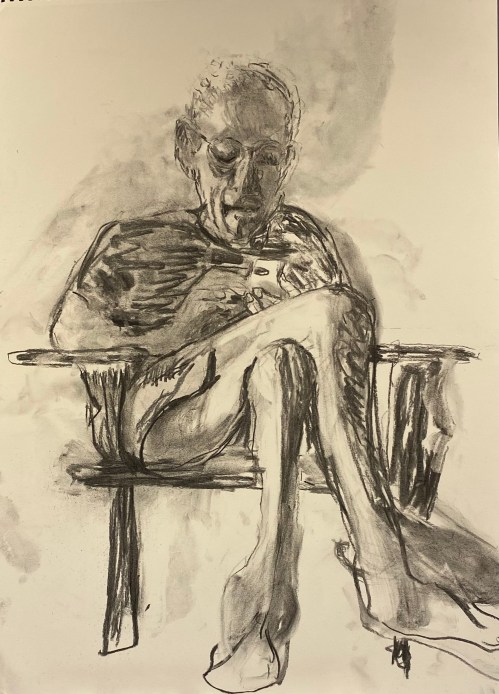
This winter I have completed a series of sketches with pencil, pen and crayons on plain paper. The idea is to try to make my point while using limited art supplies.
“Alone”, sketched with Conte crayon, MJChamie
Part of the fun of this kind of sketching is playing with gestures to imply what one sees. For example, in this sketch, I highlighted the broad sweeping curve of the land against the ocean with a single stroke, while also implying the island plant life in the lower right corner using what I call caligraphic gestures.
During the last six months, I have switched from oils and watercolors to graphite/clay/charcoal pencil and ink pen for my artwork. My goal in switching to these simple and readily available and cheap tools is three fold:
First, I am searching for environmentally safer ways to do art;
Second, I want to focus attention to shape and form, density and texture for art expression rather than on myriads of color as a way of sharpening my drawing skills; and
Third, I like that any and all paper may be used – no expensive specially prepared, high absorptive papers or textured canvases are required when using these simple tools.
Just grab a pen or pencil with a good eraser, and get to work on a piece of note paper.
I use this internet site, much as I would a paper and pen, to compose my thoughts, and to exchange ideas with a small community of friends and family.
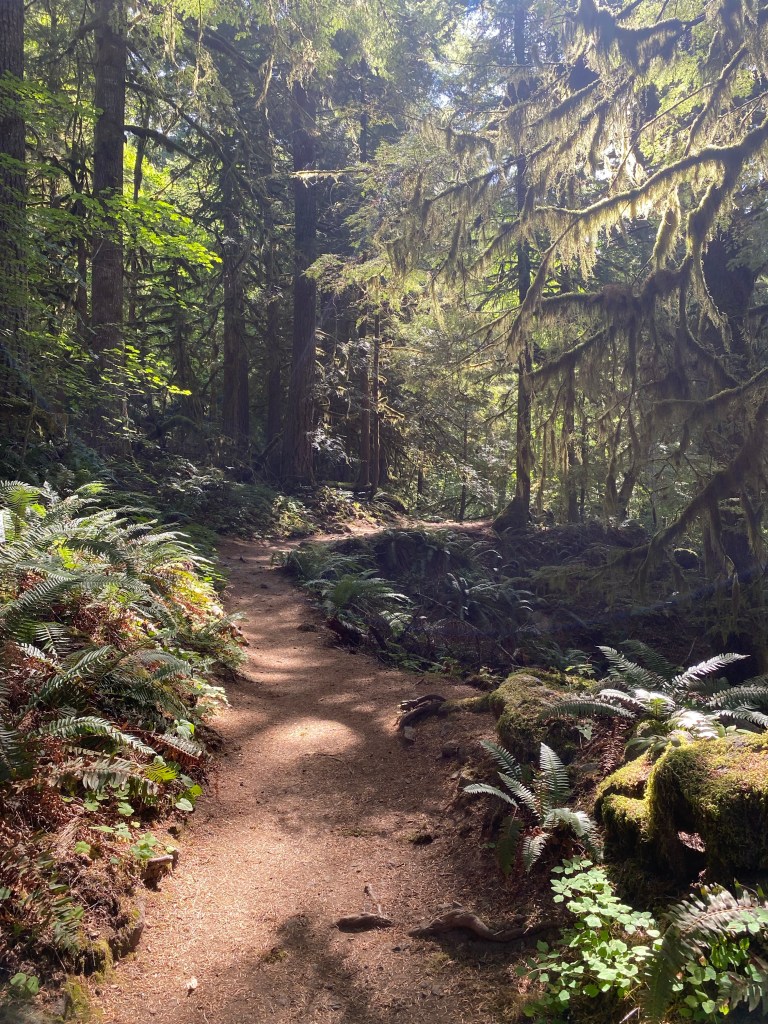
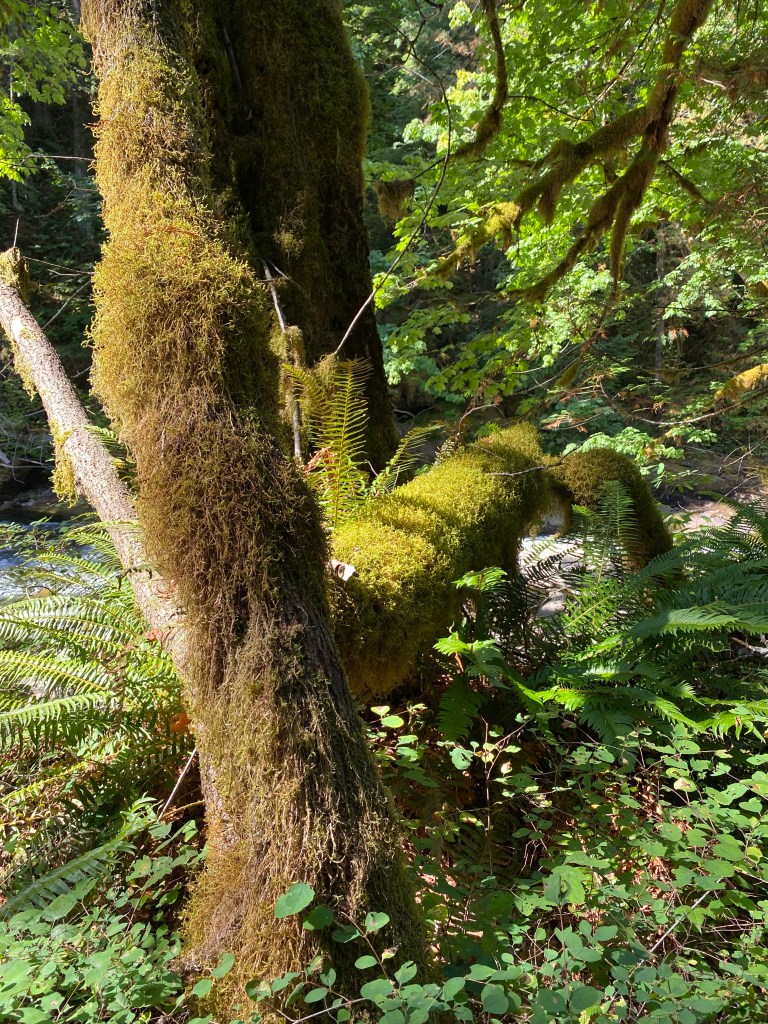
Yet, just as some hikers stop to freely appreciate the view, some swimmers sense the clean waters in which they swim, some walkers regale the trees along the paths they take, some stargazers sit under the dark night sky and imagine the size of the universe, some stop in to appreciate a painting, to read a poem or to ponder a story.
Personal photo taken on the Old Salmon River Trail
This is the to be continued story of my painting exercise on an old canvas where I shift from idea to idea and technique to technique while “holding that structural thought.” Currently, I am playing with a painting of ocean and atmosphere and considering their shared emergence into the sense of horizons.
I find the choices in painting horizons to be infinite. Much like a snowflake, each depiction of a a horizon is unique, yet somehow we continue to recognize the horizon for what it is.
We may continue to sense the horizon even when we cannot really see it.
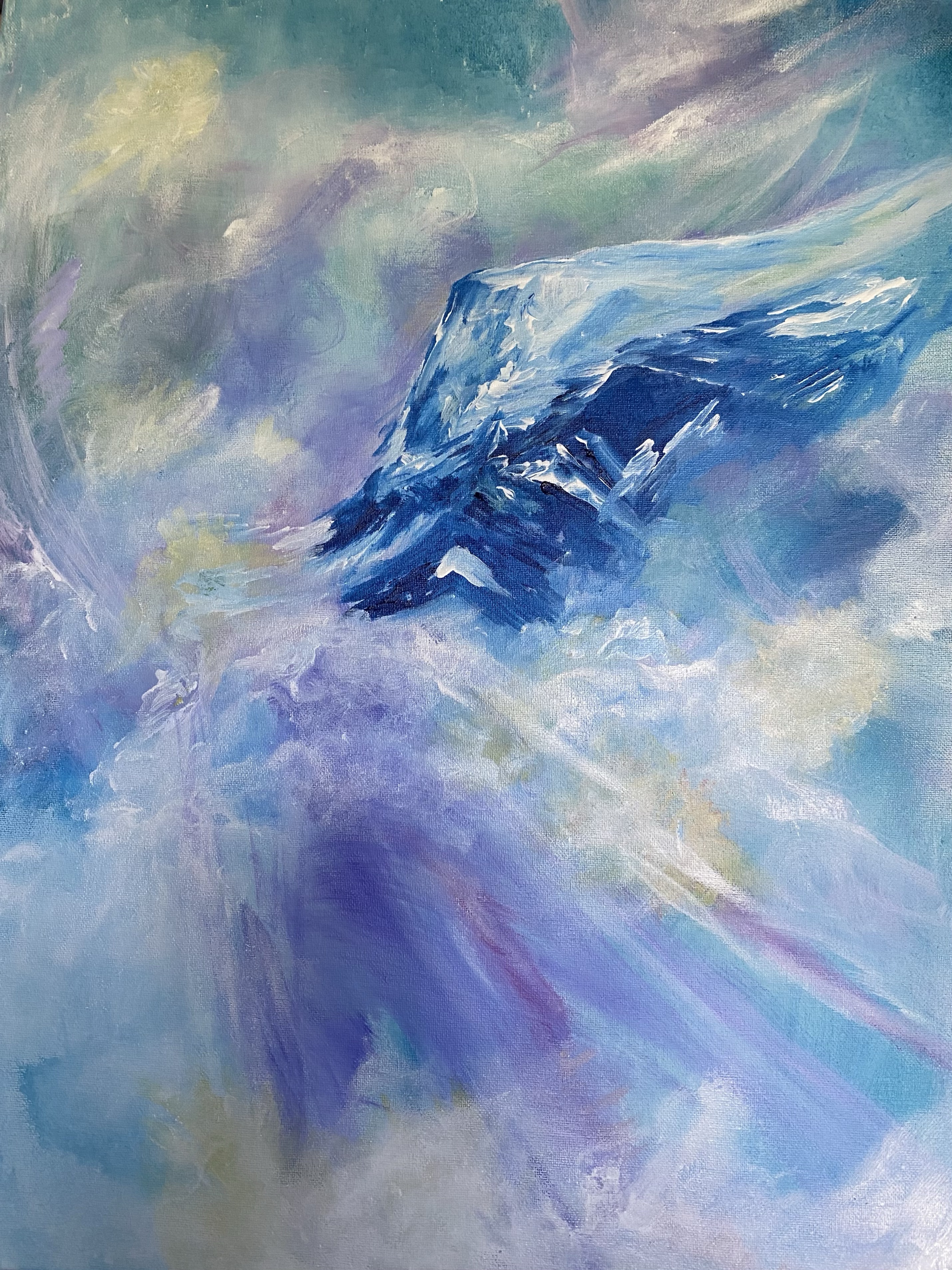
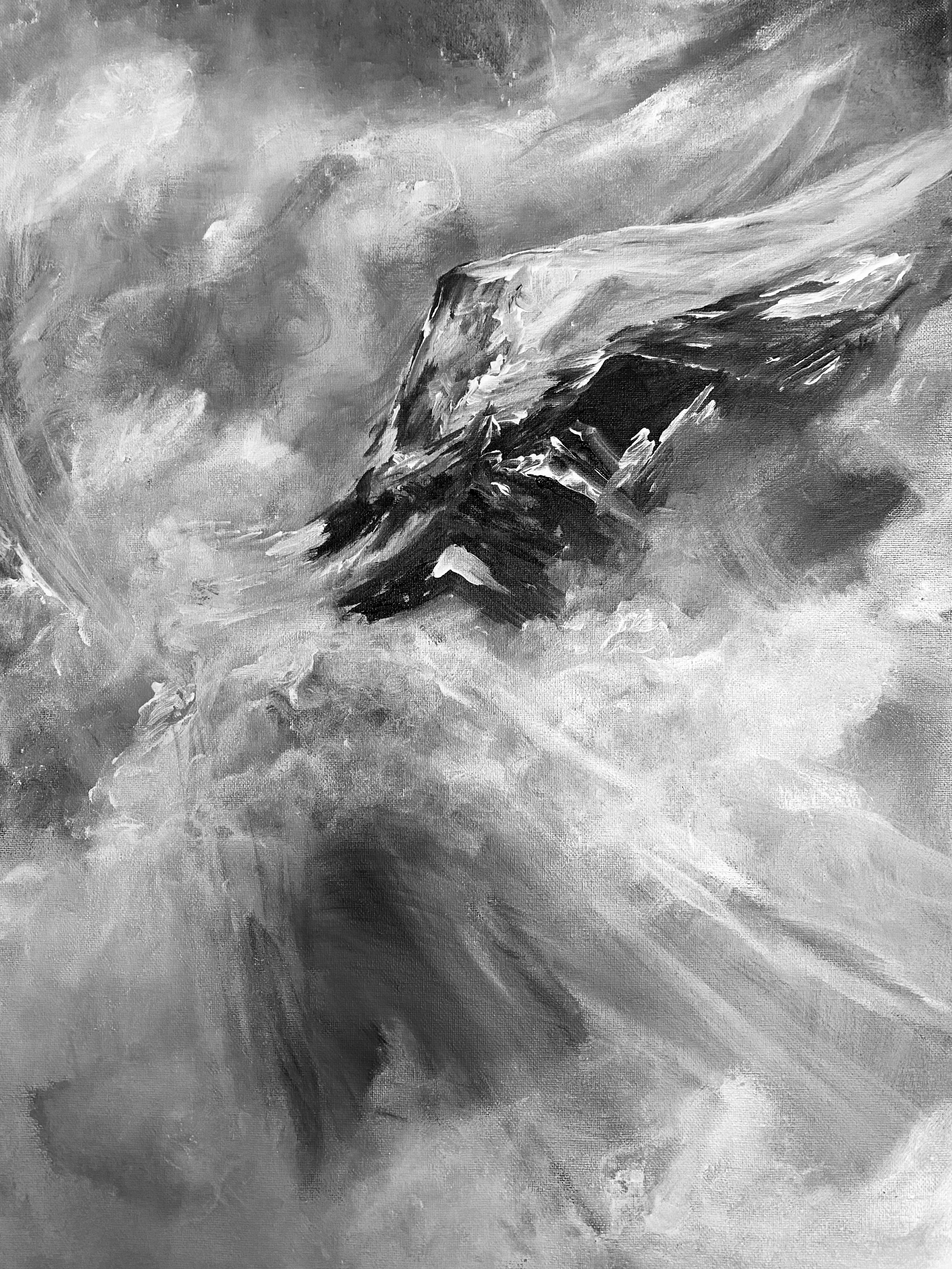
Horizons do not need to be depicted as straight lines across the canvas. Some artists have horizons that are shown via diagonal slopes. Here is an example painted by my sister, Elizabeth Rose. I like the sense of view that she is approaching the mountain from the sky rather than viewing it from the ground.
Elizabeth Rose, acrylics
My sister Elizabeth and I both paint and we enjoy sharing our paintings and styles with each other. She paints in her living room. I have an art studio in my basement. We both reach for new understandings through painting. We both have grandchildren who enjoy painting and sketching with us. It is a wonderful way of relating.
In Elizabeth’s case, she is painting a kind of revelation that reaches awesome thoughts of clouds and light trajectories across majestic mountains that seem to reach beyond our planet and out to the universe.
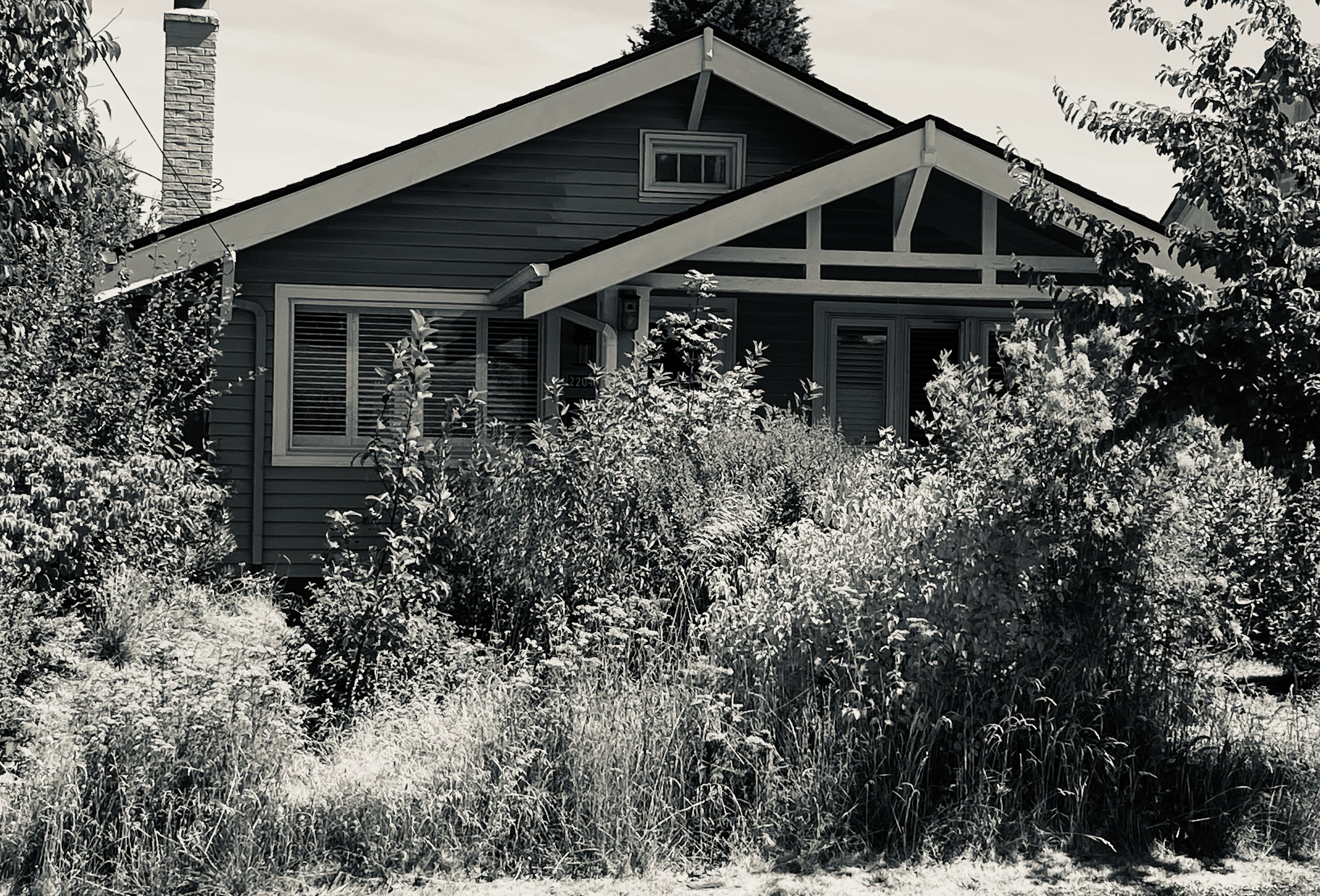
I show her painting in black and white to emphasize the point of motion and shifting light.
In my experimental painting, I am imagining an early morning sunrise out in the ocean on an island, where color, reflection and time are all blurred or merged into a single multi sensory, abrupt experience
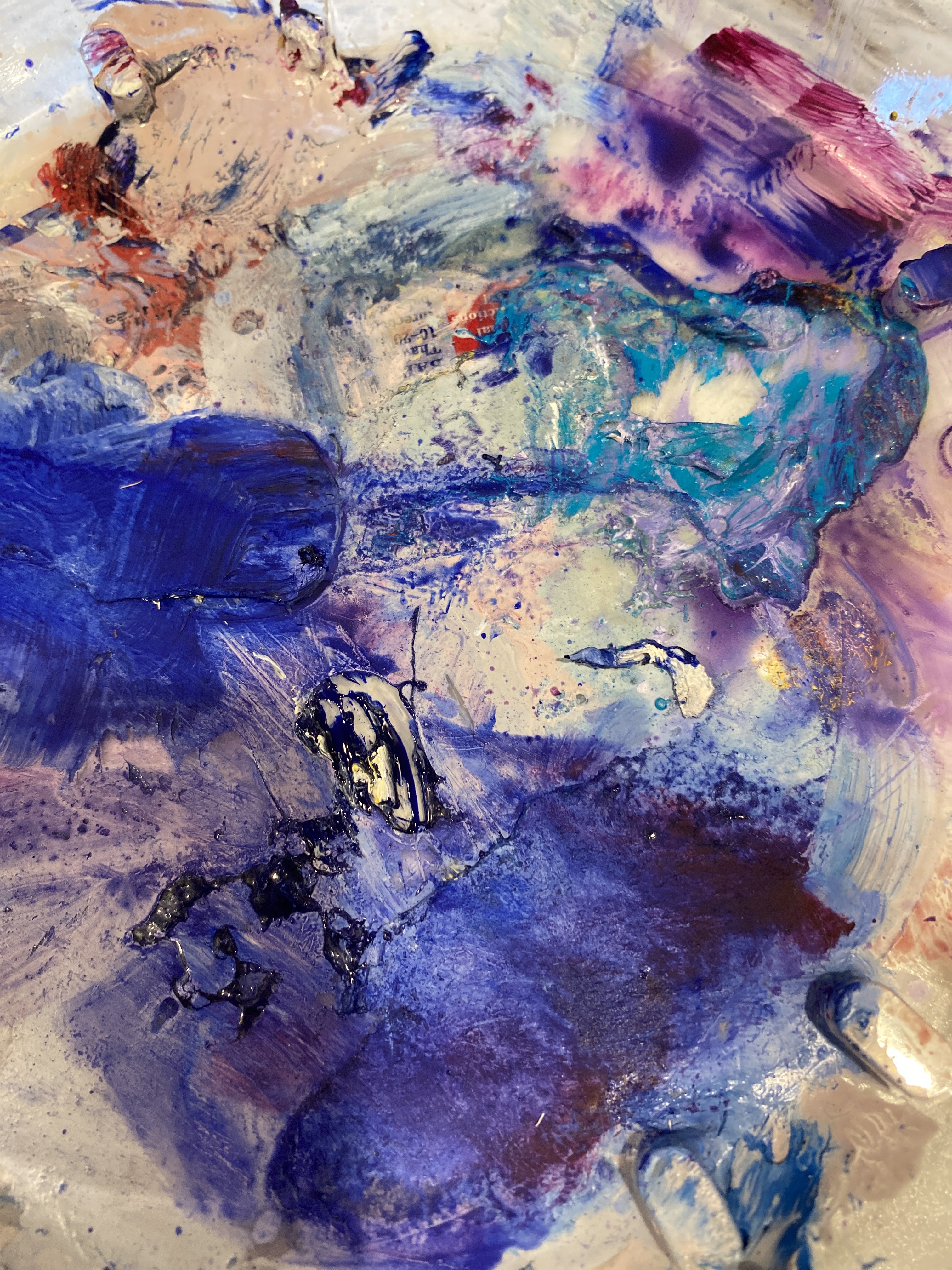
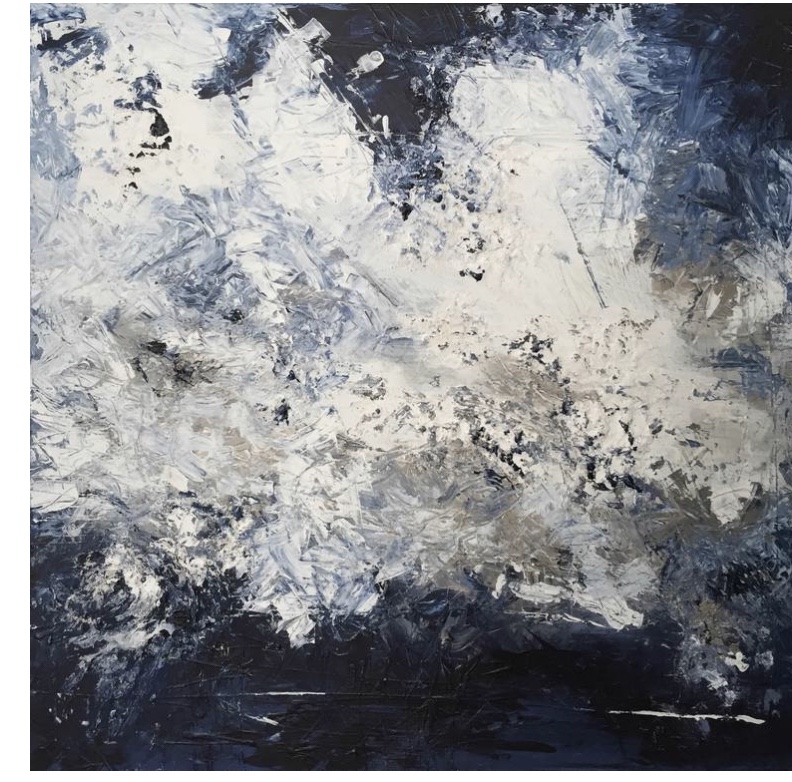
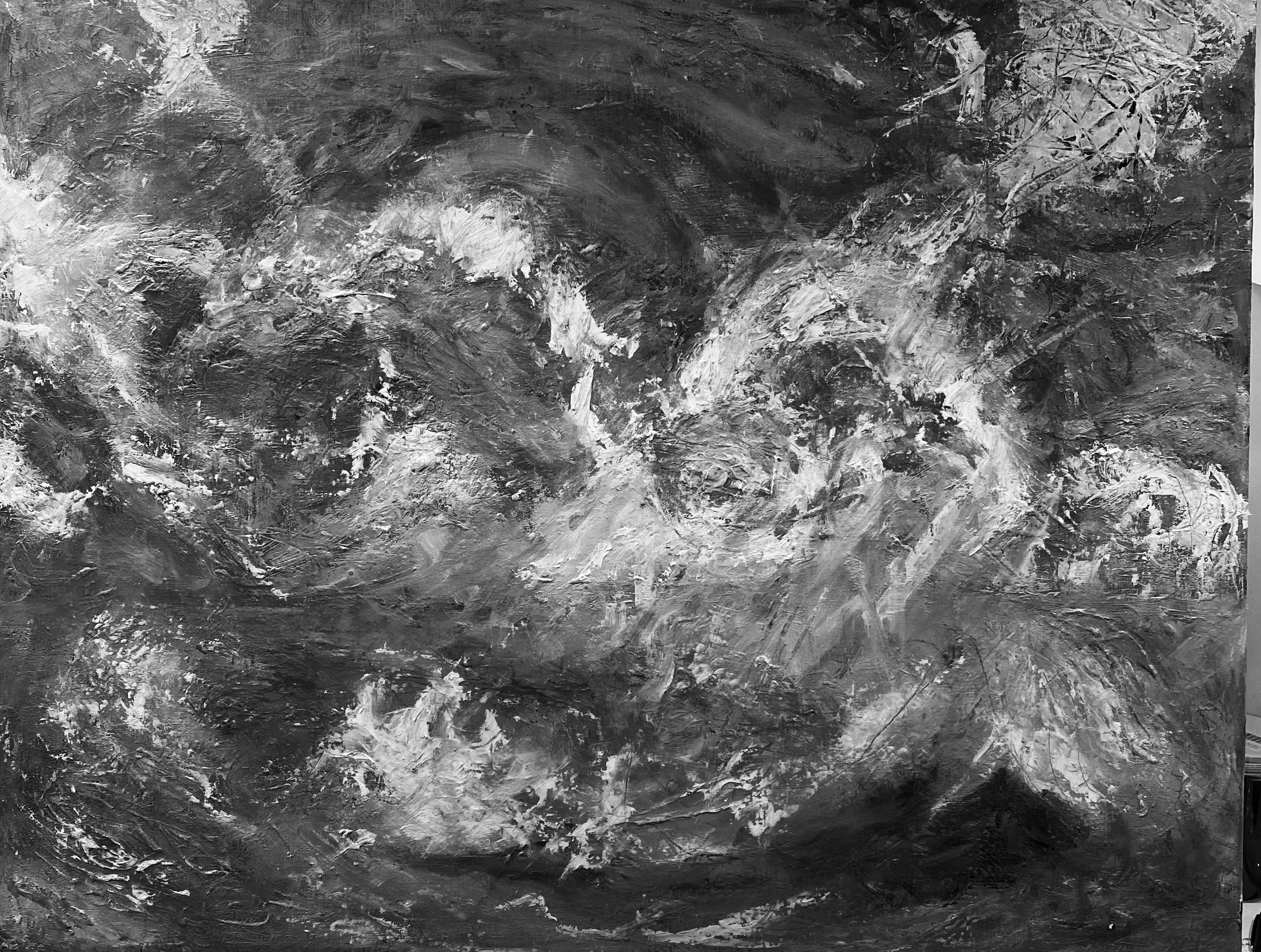
I started with this roughed up canvas using white and black for the emphasis of light and dark areas (Canvas A).
Canvas A
Then I prepared a kind of Notan design that suggests motion as well as balance of light and dark (Canvas B).
Canvas B
Then I shifted to the underlying pastels of sunrise ( Canvas C).
Canvas C
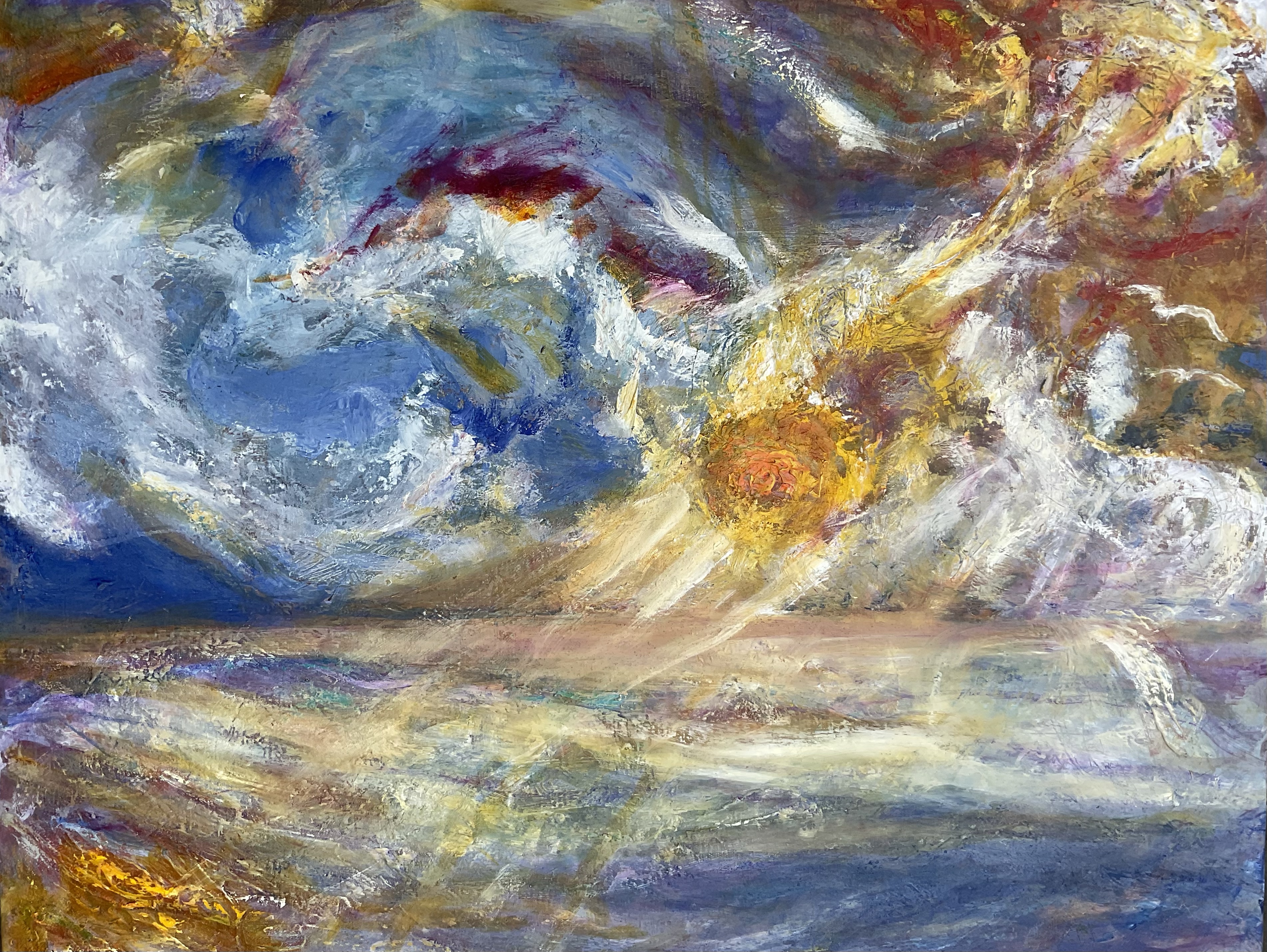
This was followed by the over-slap of bright colors put on by palette knife and softened by brushes to be reflective of the split-second deeply bright shooting sunrise itself (Canvas D)
And as it looks today, I have worked on grasping the abrupt brilliance of those few split seconds where sunlight takes over the morning skies and water reflections
Canvas D. Early Sunrise, Oils
In conclusion, much like life itself, all present paintings have pasts and futures to contemplate. Horizons are moving targets just like everything else and our sense of timing and judgement of their emphasis is an artist’s prerogative.
I have found that using a palette knife encourages the scraping and texturing of oil paint, allowing edgy, personal marks to be made on the canvas. The results may be almost calligraphic, or signature-like in their appearance jutting out in different directions over a baseline surface of color.
Or when I scrape or define flat surfaces using the long blade of the palette knife, it helps imagine the many possible reflections and castings of shadows seen on solid matter, such as those observed on a garden bench.
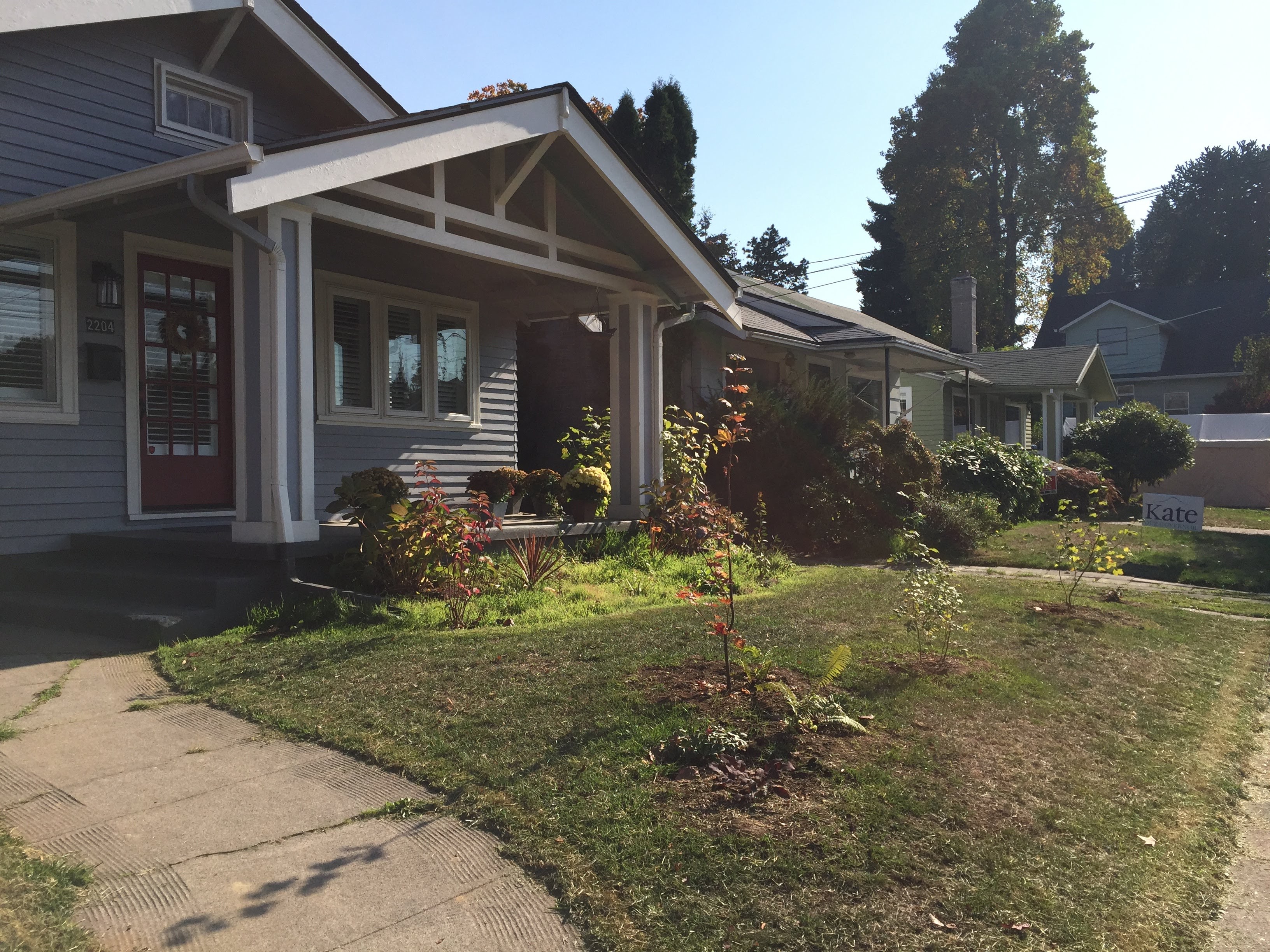
We started landscaping our Portland bungalow with native plants about five years ago. When we moved in, the small yard was almost 100% green grass. We began by planting a small area in front of our porch with low to the ground natives.
Summer, 2018
Soon after, we planted some native trees at various locations to provide some structure and differences of height. We have a very small yard and so our trees that we planted are not going to be more than 20 or 30 feet tall, fully grown.
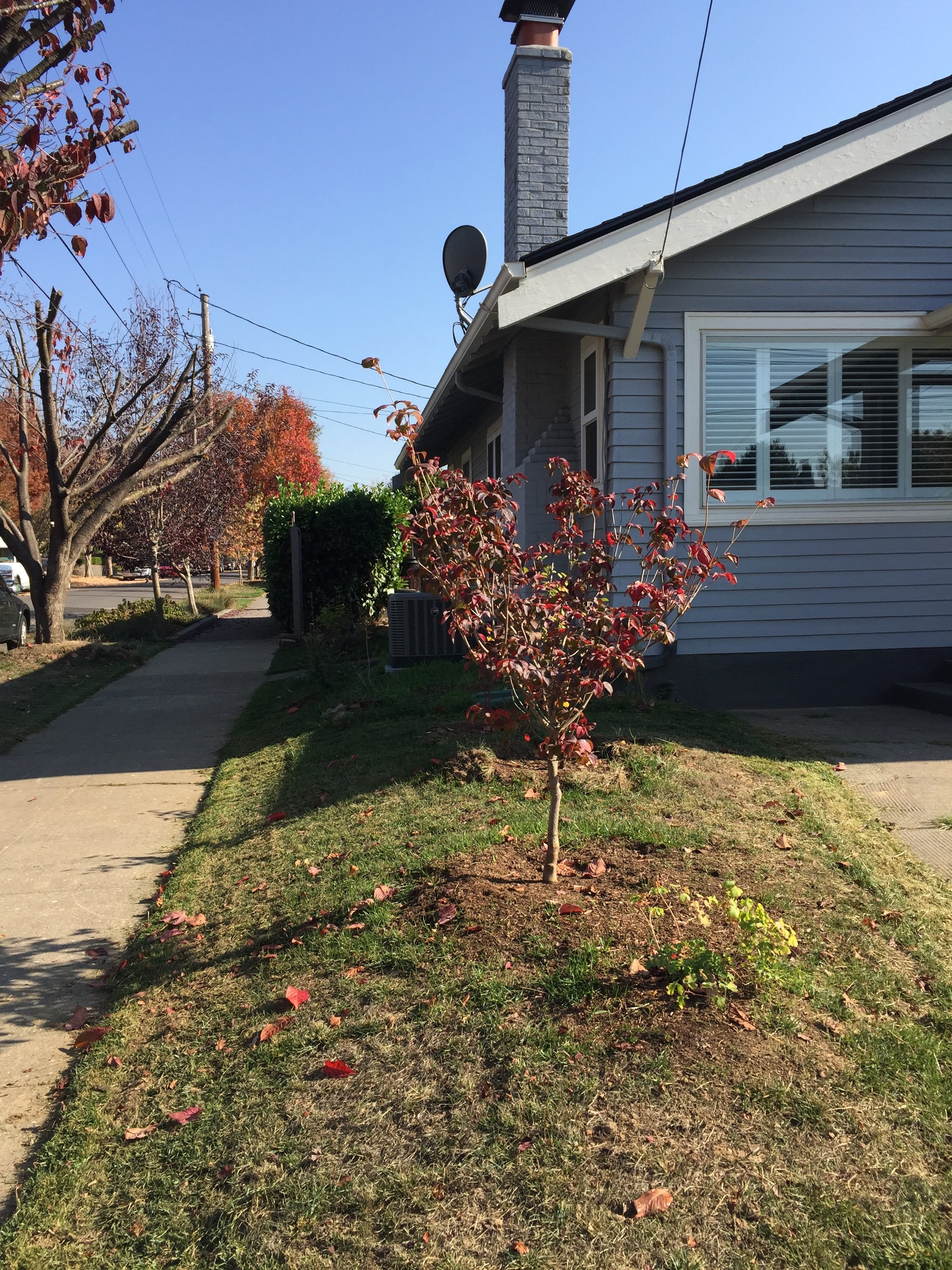
Dogwood tree planted
Front yard at starting point. Three native bushes, or small trees, planted.
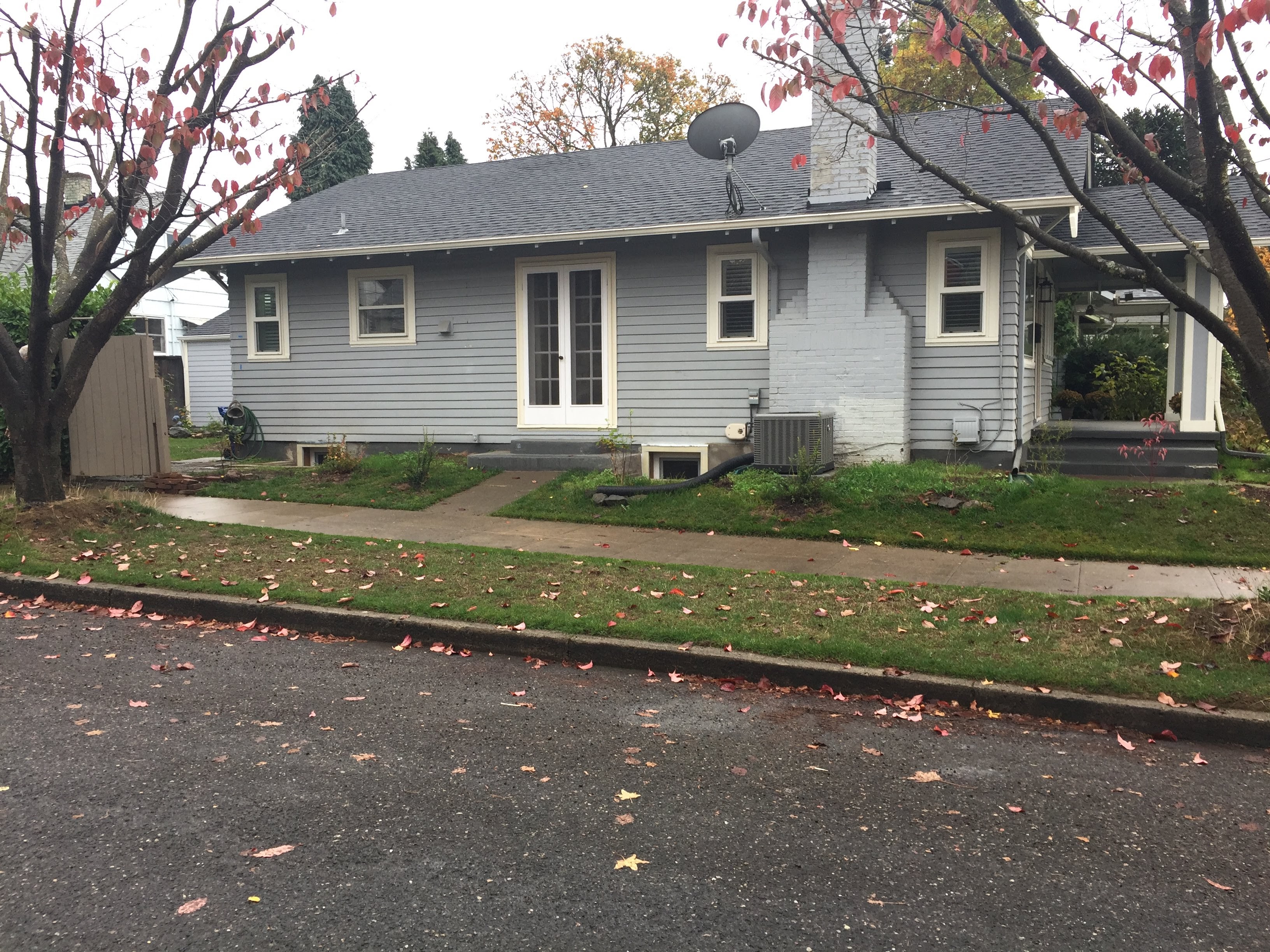
Side yard at starting point
in our side yard, we planted small groups of native bushes and grasses that we called “islands”. We mow the lawn between the islands to give the native areas the semblance of a landscape shape. Without these native plant islands, we would have nothing between our house and the street, but mowed grass.
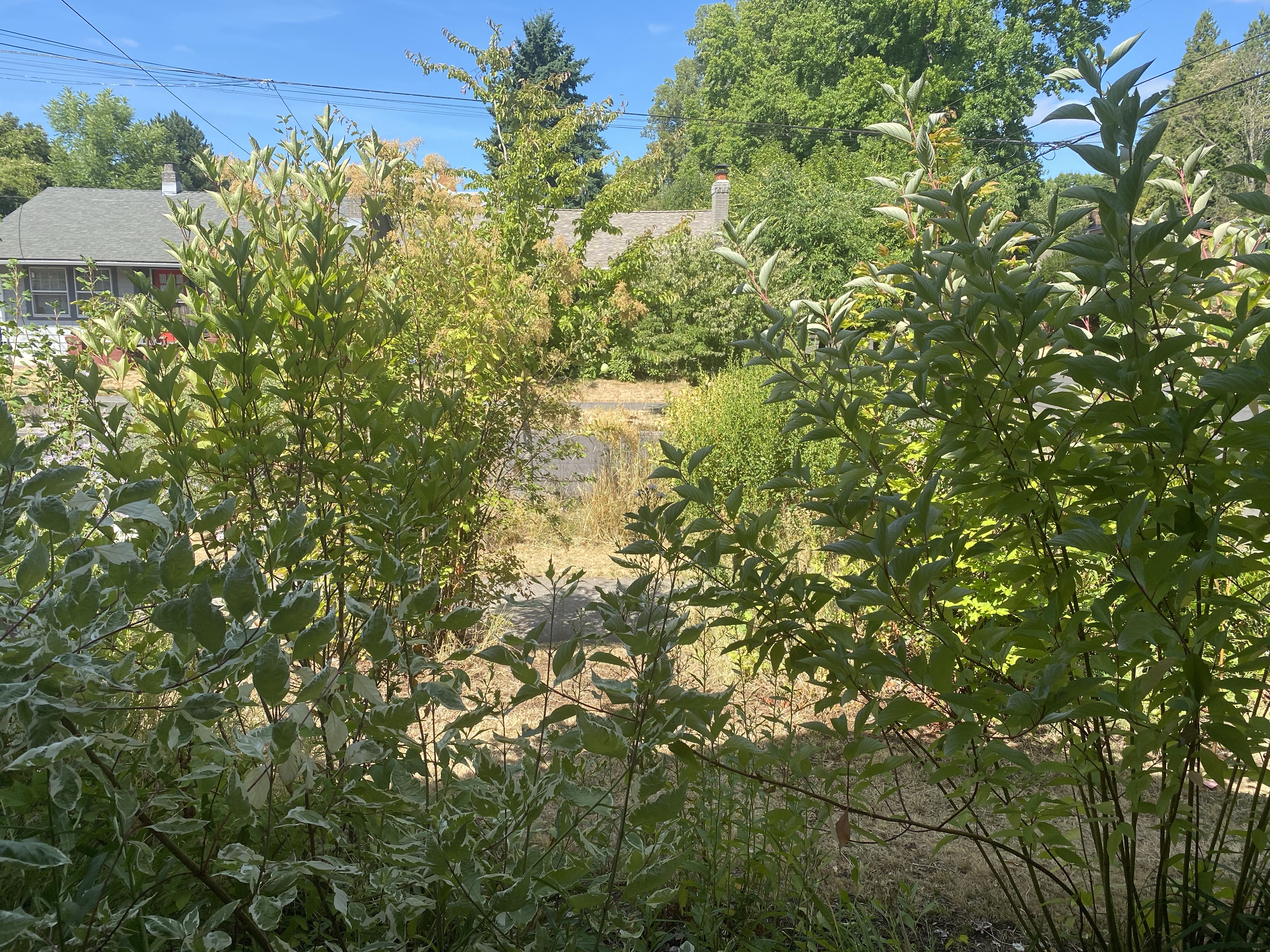
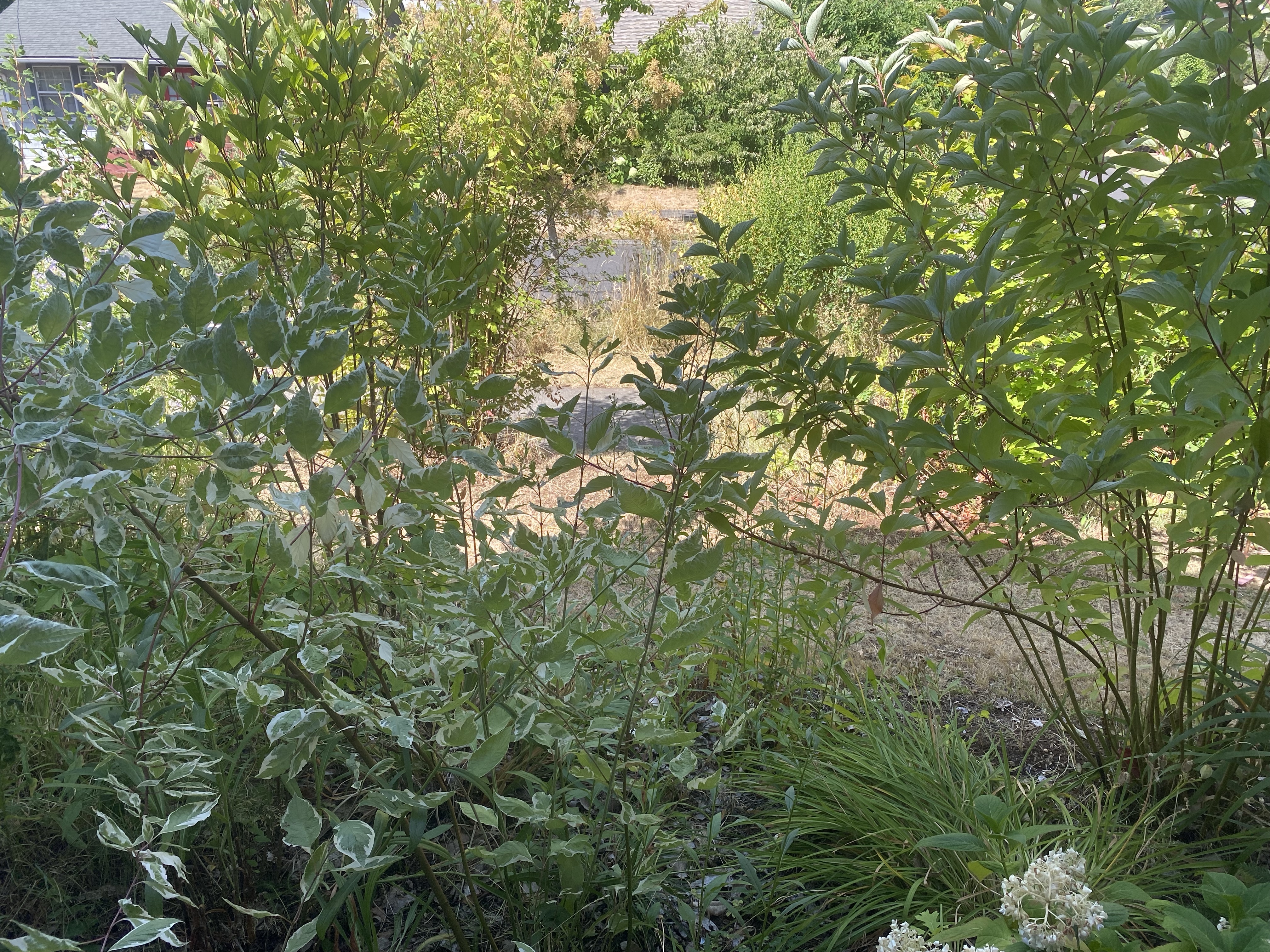
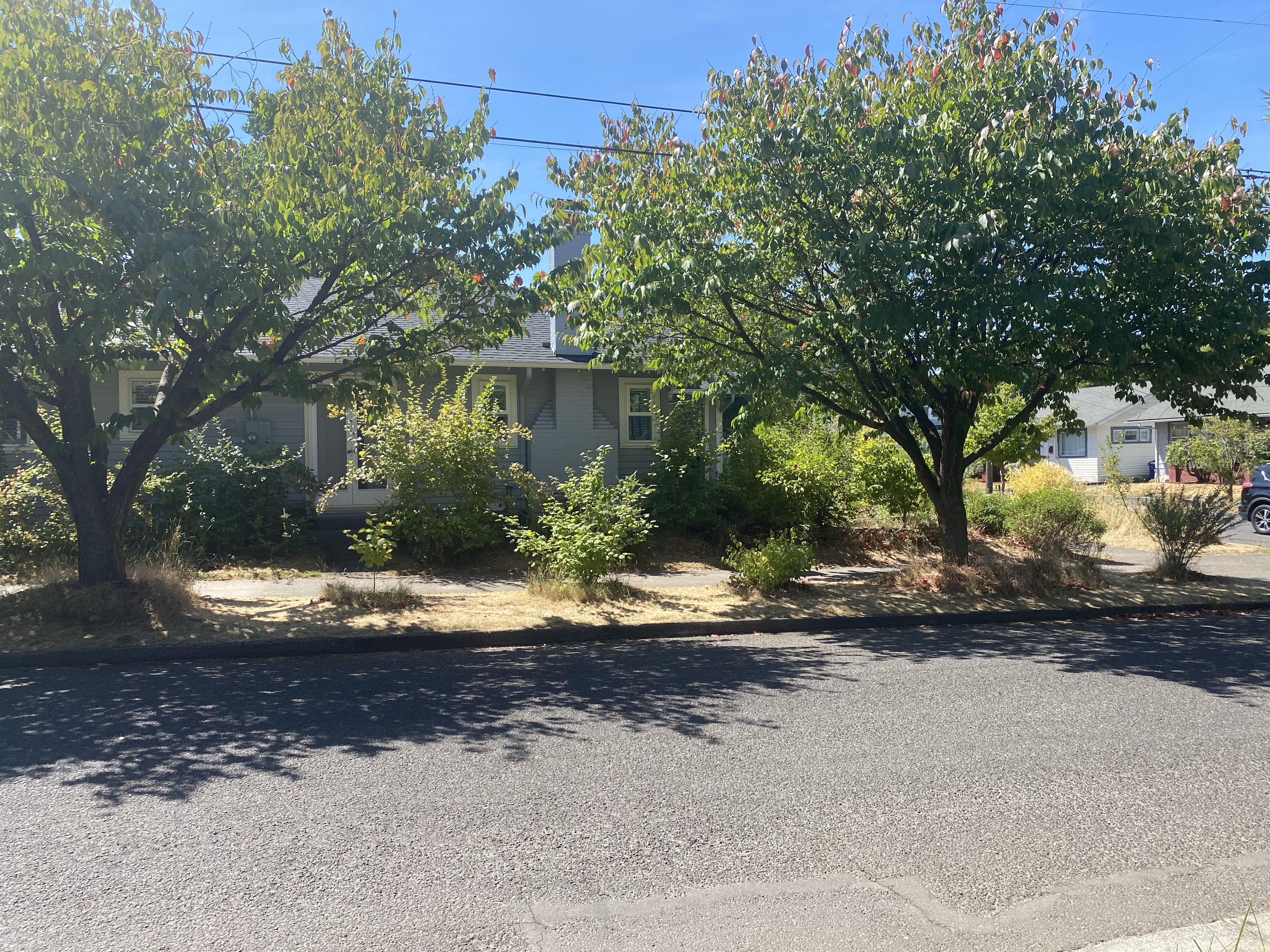
Five years later, in 2023, we are still working with this general concept of a native plant landscape for our yard. I recently photographed our front and side yard to show how it looks in August during a particularly severe dry period. We have had no rain for several months.
Our initial goal of our landscaping was to stand on the front porch and look out to see nature and not just the street. We did not want to go completely wild and ignore how our yard compared with our neighbors’ landscapes. After all, many of us are living on tiny quarter acre plots and we share common views.
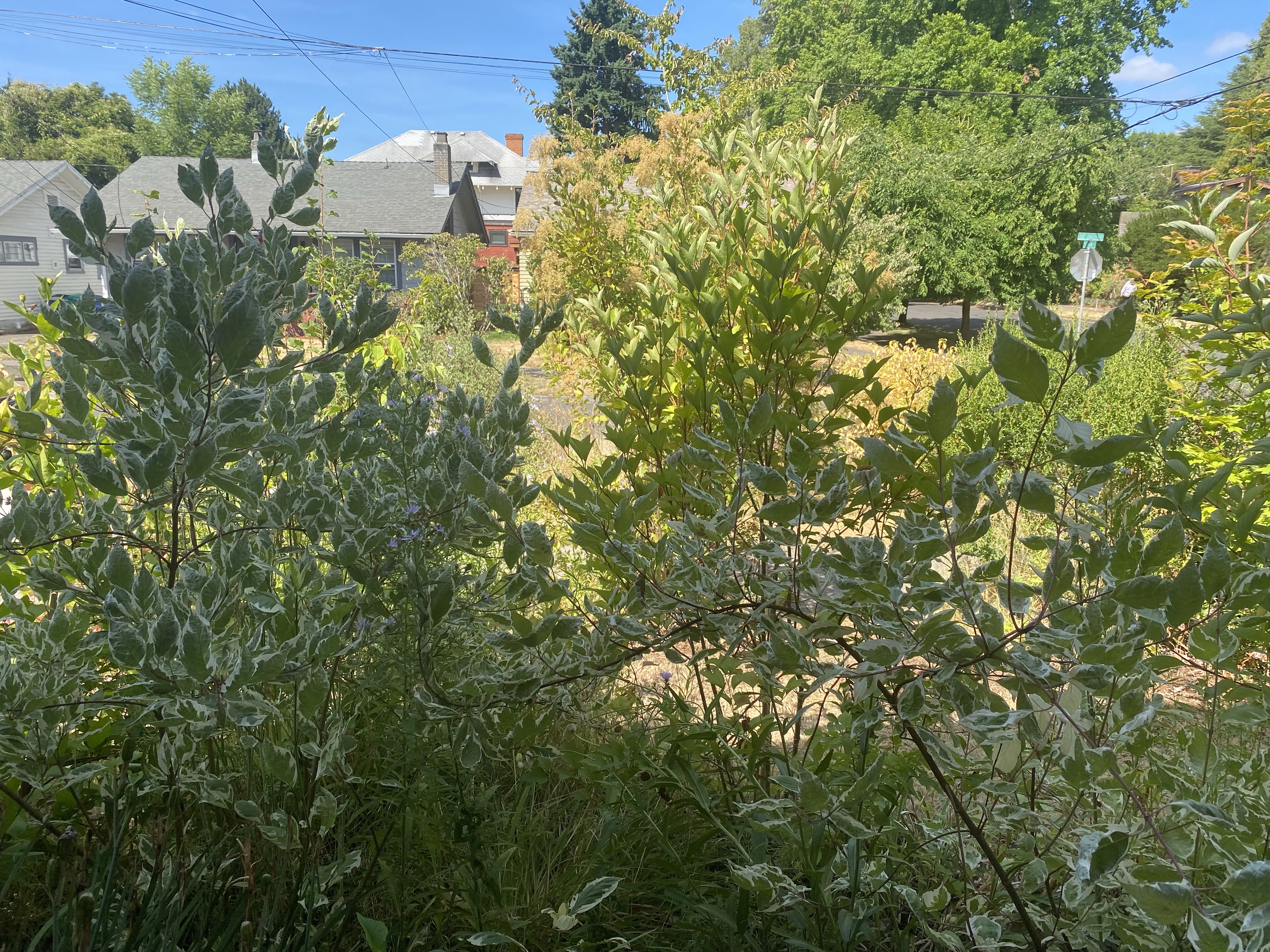
Standing on front porch looking out- High height
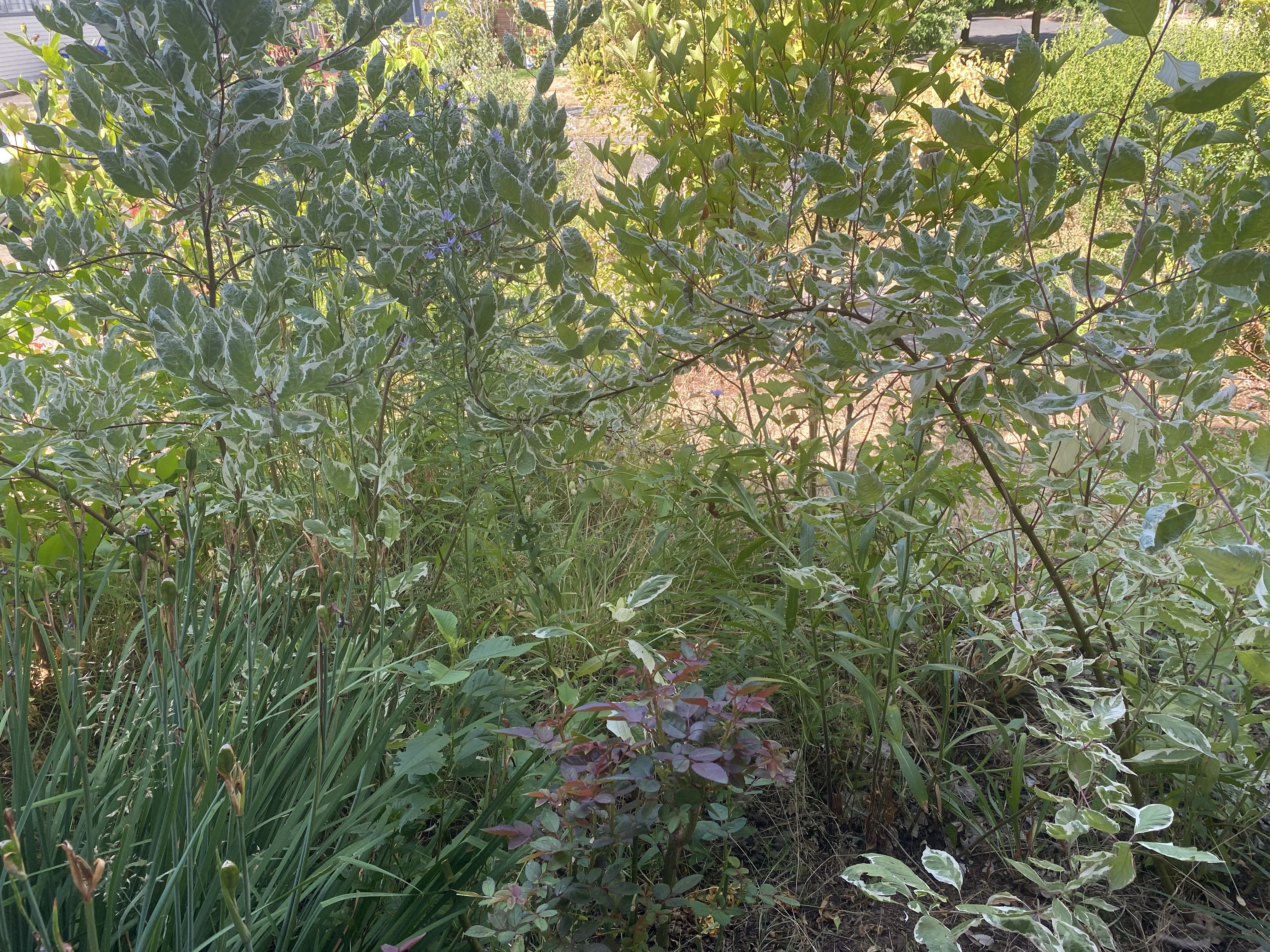
Medium height
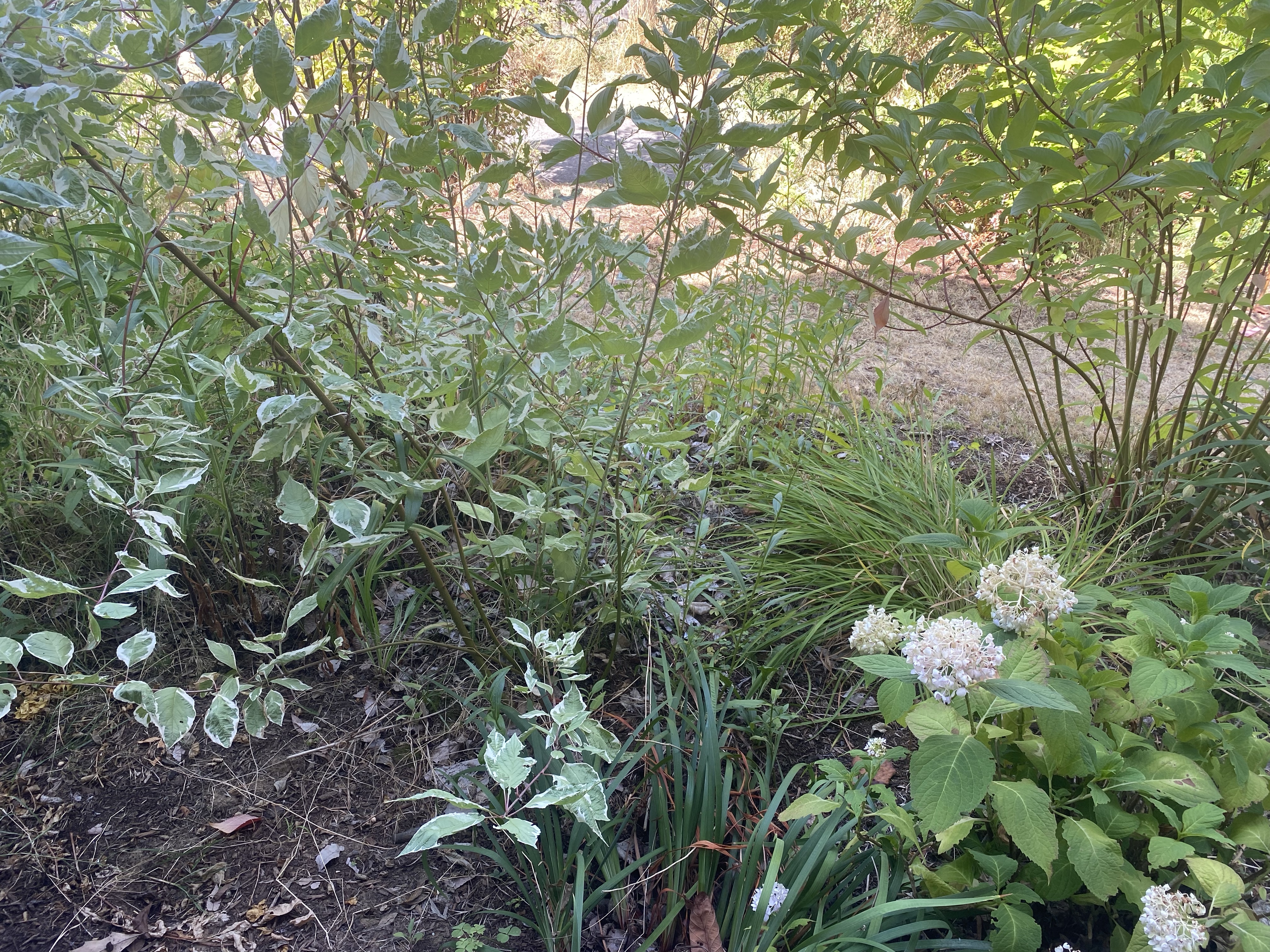
Low to the ground
Photographed from top to bottom, one sees that we can still look out and see the neighbors’ beautiful trees and bushes, with less emphasis on the road between us.
Here is another view of the level changes.
High View
Medium View
Low to the Ground View
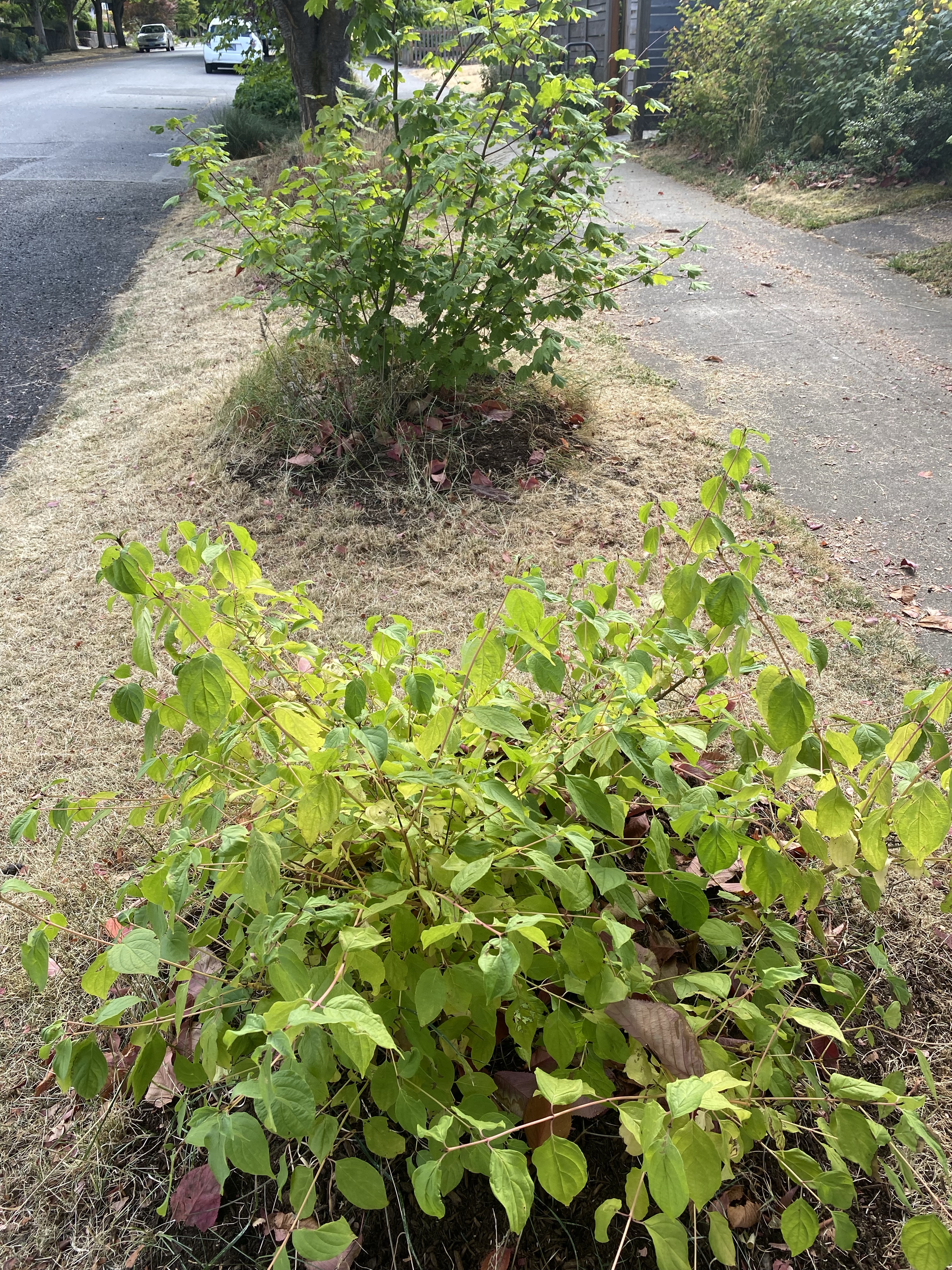
In our side yard, the heights of the native plant islands have also matured and offer much more shade, texture and color to the yard. The grass around these native plant islands continues to be mowed to allow pedestrians easy walkways to get to the street, as needed. This his also leaves space for the native bushes to grow into their full sizes.
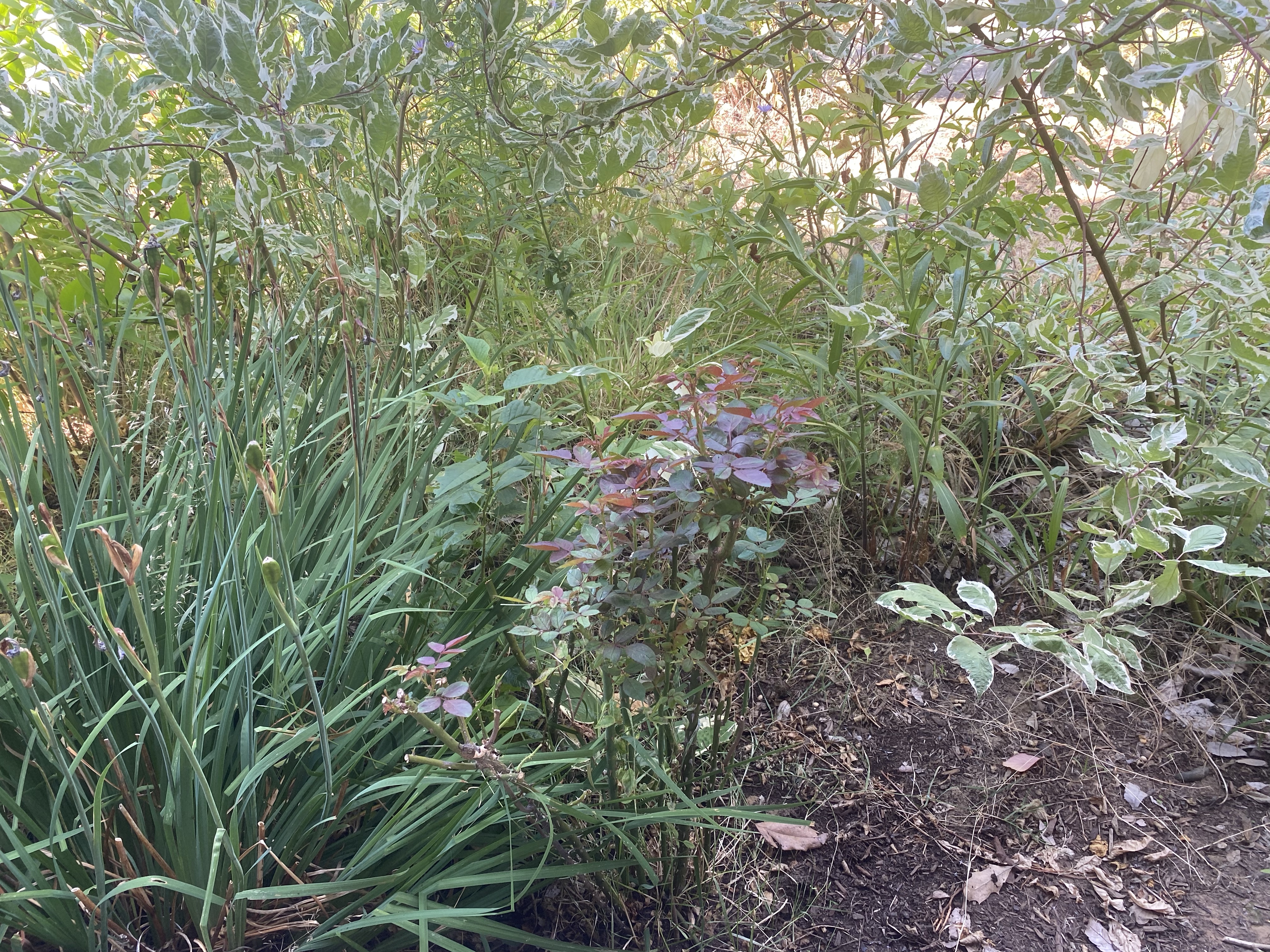
Islands of Native Plants – Bushes and Grasses
In this introductory post about our northwestern bungalow, I have not provided details of native plants used and their landscaping characteristics, both advantaged and disadvantaged. Details of this nature will follow in future posts. The purpose of this post is to introduce the idea of landscaping city homes with native plants and to consider how the landscaping might look.
What have we learned thus far from our experience planting natives in our yard?
First, native plants attract birds and butterflies and offer a delicious restaurant of berries, leaves, blossoms, nectar, and local grubs and insects for local birds and butterflies to consume. The leaves, small sticks, tall grasses and bushes also provide materials for birds’ nests and locations for cocoons. We have noticeably more birds and butterflies since we have added all these native plants.
Second, the native plants have shapes, sizes and colors of blossoms and leaves that are usefully and artistically built into our planned city landscaped design. We are pleased with the shapes, colors and textures emerging in the yard from these native plants.
Third, planning ahead and anticipating their adult size is necessary. For example, planting bushes that will grow to 15 feet high into areas that can accommodate them reduces the amount of time and effort needed to artificially shape bushes into particular contours or force them into unnatural heights or widths, cramping their style. This nature-sizing accommodation allows plants to emit a type of natural beauty.
Fourth, given our drought conditions, these native plants remain, robust and colorful without requiring much watering.
Fifth, not every plant in our yard is required to be native. While discouraging non-native invasive plants from growing in our yard, we have encouraged non-native roses and hydrangeas adding color and textures in places we desired.
Sixth, we have learned that many popular plant nurseries now offer native plants. We just needed to learn to ask where they are.
I am pleased to say that in our yard, which is now comprised of more than 80% native plants, we have more than sufficient shade, color and texture of plant life to meet our personal landscaping needs while also meeting the needs for food and shelter of some local birds and butterflies.
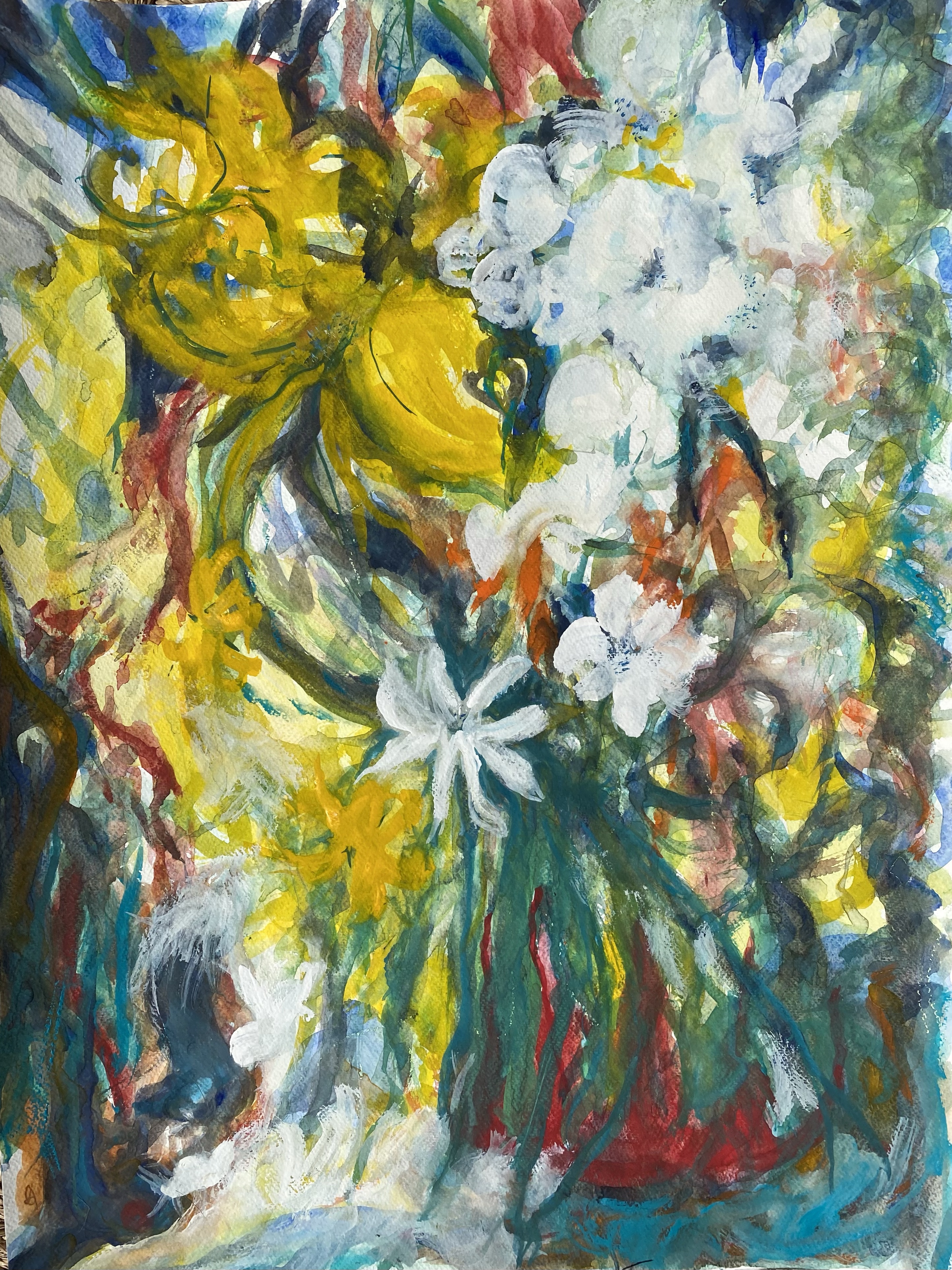
Watercolor, with one big brush on a large piece of paper while thinking about a garden image that plays repeatedly in my head. A small amount of detail was put in toward the end of the painting overlaid with a second, smaller brush with special attention to white flowers.
The idea behind this piece is loosely defined mostly by brush movement over multiple watercolor layers with drying times in between.
In the process of doing this larger painting, I also completed a smaller garden piece where I paid more attention to some fine detail, even using a single hair from the larger brush for some of the painted lines in the second piece.
Variation 2, Watercolor 6″ x 9″
I am not completely sure where I am going with these variations, but am mostly working colors with brush, while varying access to water, and holding an approximate structural thought.
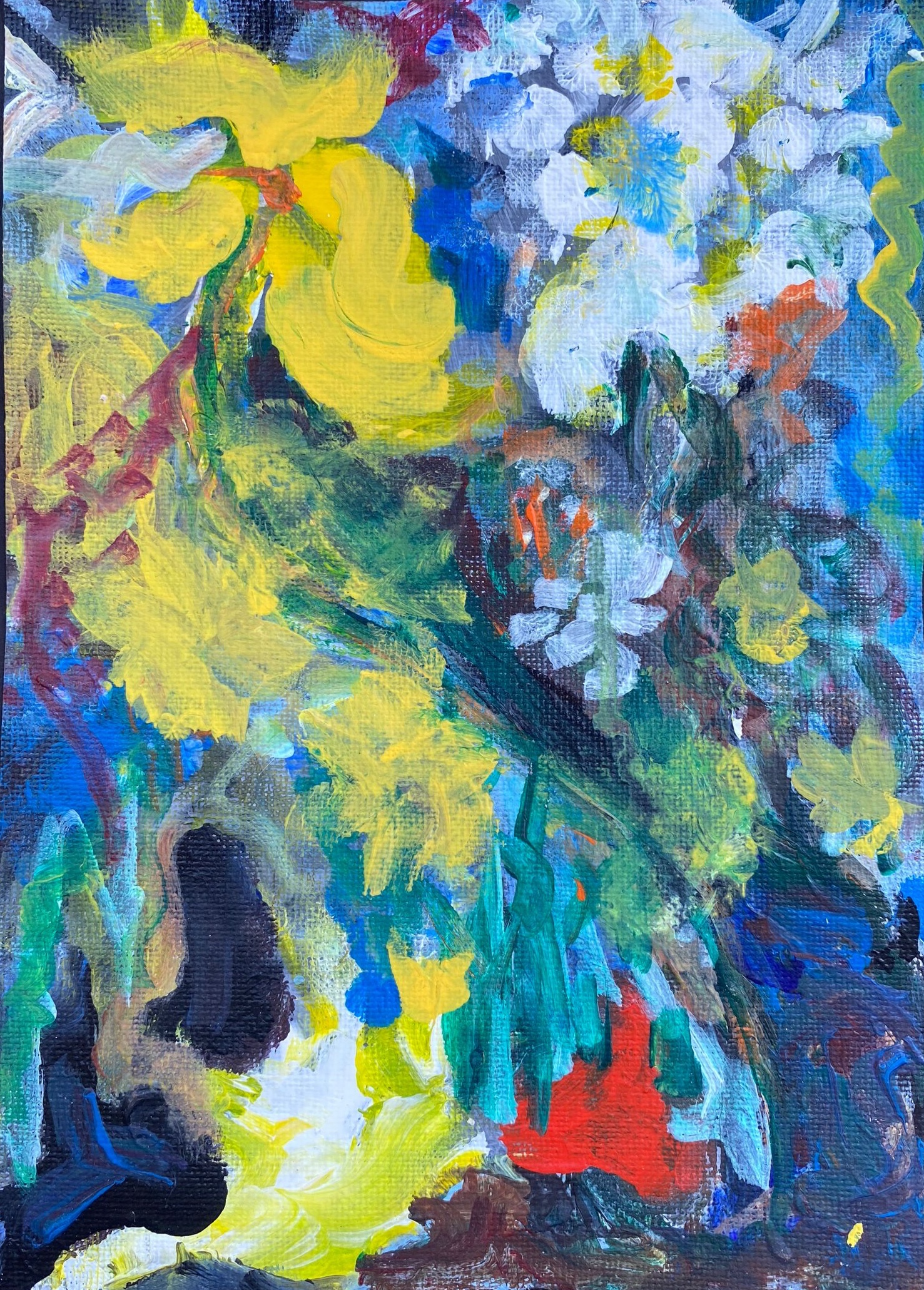
Below, is the first one that I completed in acrylic. It was done on a black background which does seem to highlight colors well.
Variation 3, acrylic, 6″ x “9
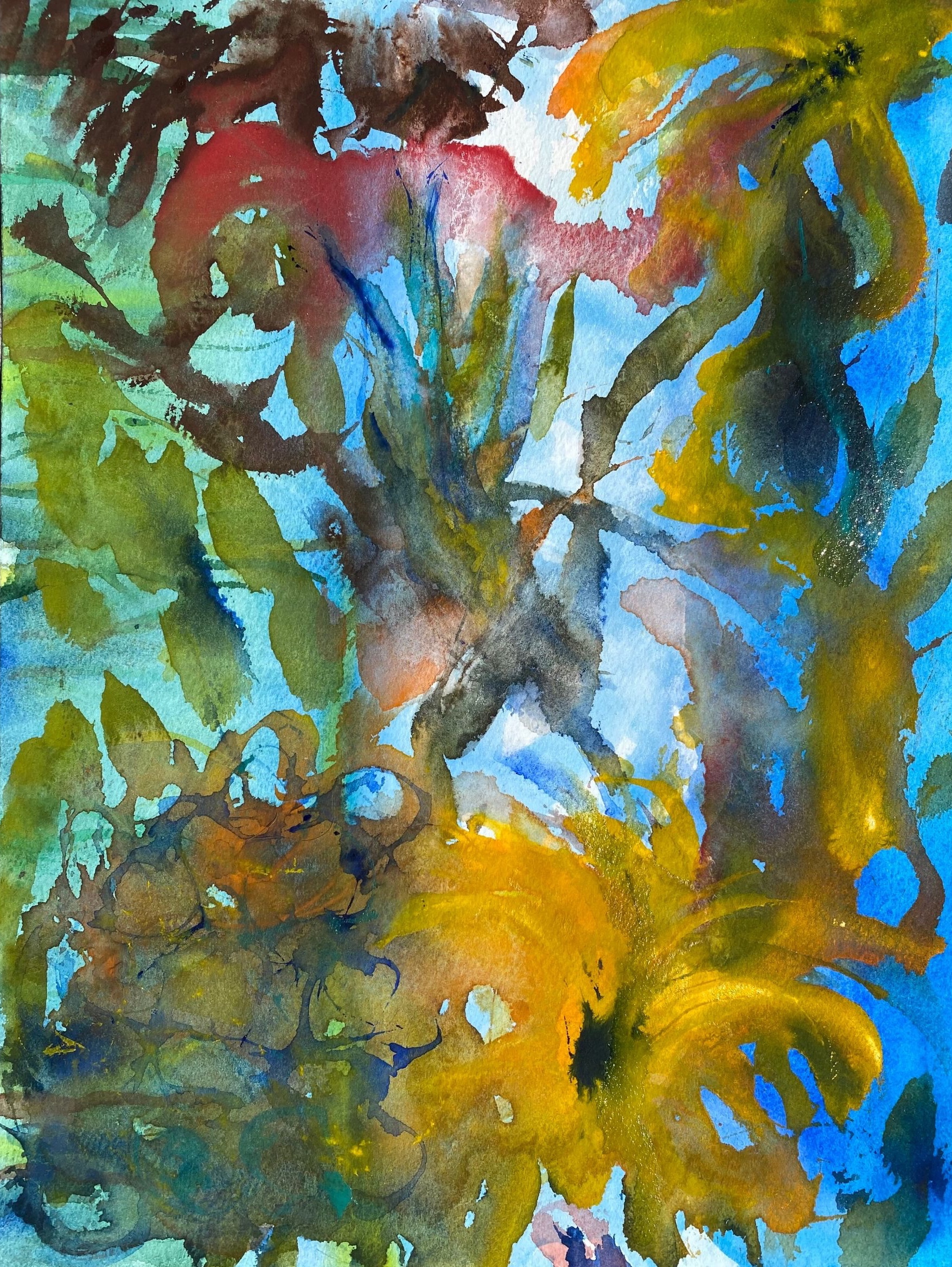
This project started because I wanted to learn what would happen if I were to try repainting this acrylic painting (Variation 3) that I had done earlier and liked, into a larger abstract watercolor (Variation 1).
What have I learned from the project? Paintings are moving targets. Each has its own character and wit. Even when I think that I am repeating myself, I am not. Variations of a painting are a wonderful way to experiment with technique, while holding a longer thought regarding the structure.
This is a layered, transparent watercolor prepared while applying the operable idea that instead of erasing or starting over when one wants change, one would add paint and brushstrokes to get the desired effect, leading to iterations of darker and lighter colors while allowing drying time in between each iteration.
In the process, the painting may shift moods several times.
For example,
I’m still wondering what I have learned from adding these layers.
Multilayering does encourage the idea that change is inevitable, that opportunities for reinventing the painting are plentiful and it certainly reduces one’s attention to feelings of regret, or focusing on flaws while feeling that nothing can be done about it.
I also see from this exercise how many opportunities crop up when you keep playing with a painting.
By adding layers, it may not always be a better painting, but it will at least be different. It may solve one problem while discovering another. It may also lead one to look into the painting by analyzing the many layers as they emerge, potentially leading to new techniques to be applied more consistently in the future. Or perhaps one might learn to be more exacting and touch the paper only once, much more deliberately.
One major goal we have in painting, is to set the mood.
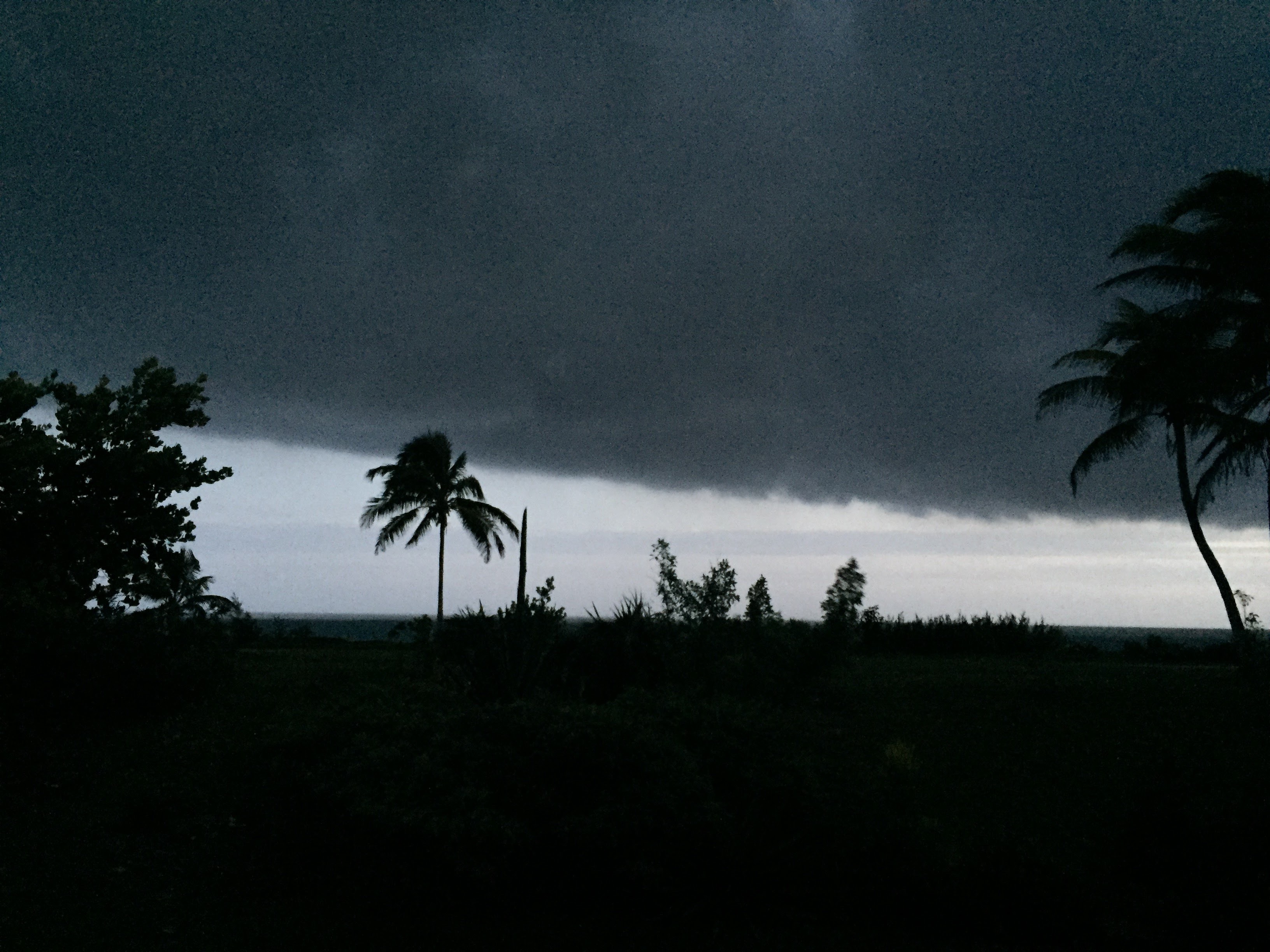
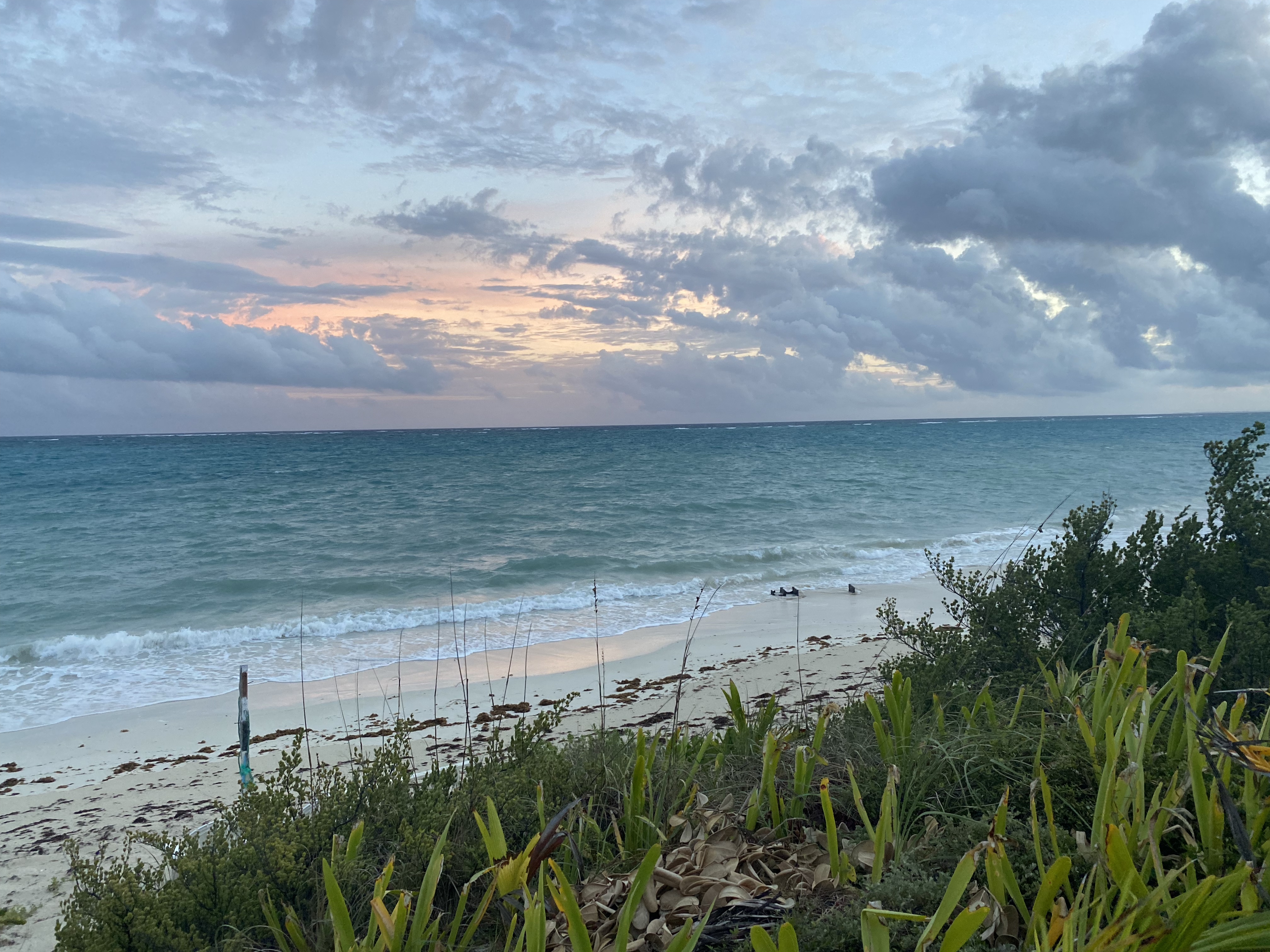
Personal photo, Mary Chamie, MJC
Trying to set the mood of a landscape painting en plain air is like chasing a road runner. Every second provides a new opportunity.
There is no permanent reality to paint from. The moment we touch our canvas, the perspective we choose has already moved through shifting light, colors, reflections, winds going through trees and grasses, birds flying by.
Part of our painting inevitably includes our personal understanding of where we are, what we see and how we feel about it. We are part of the reality that we paint.
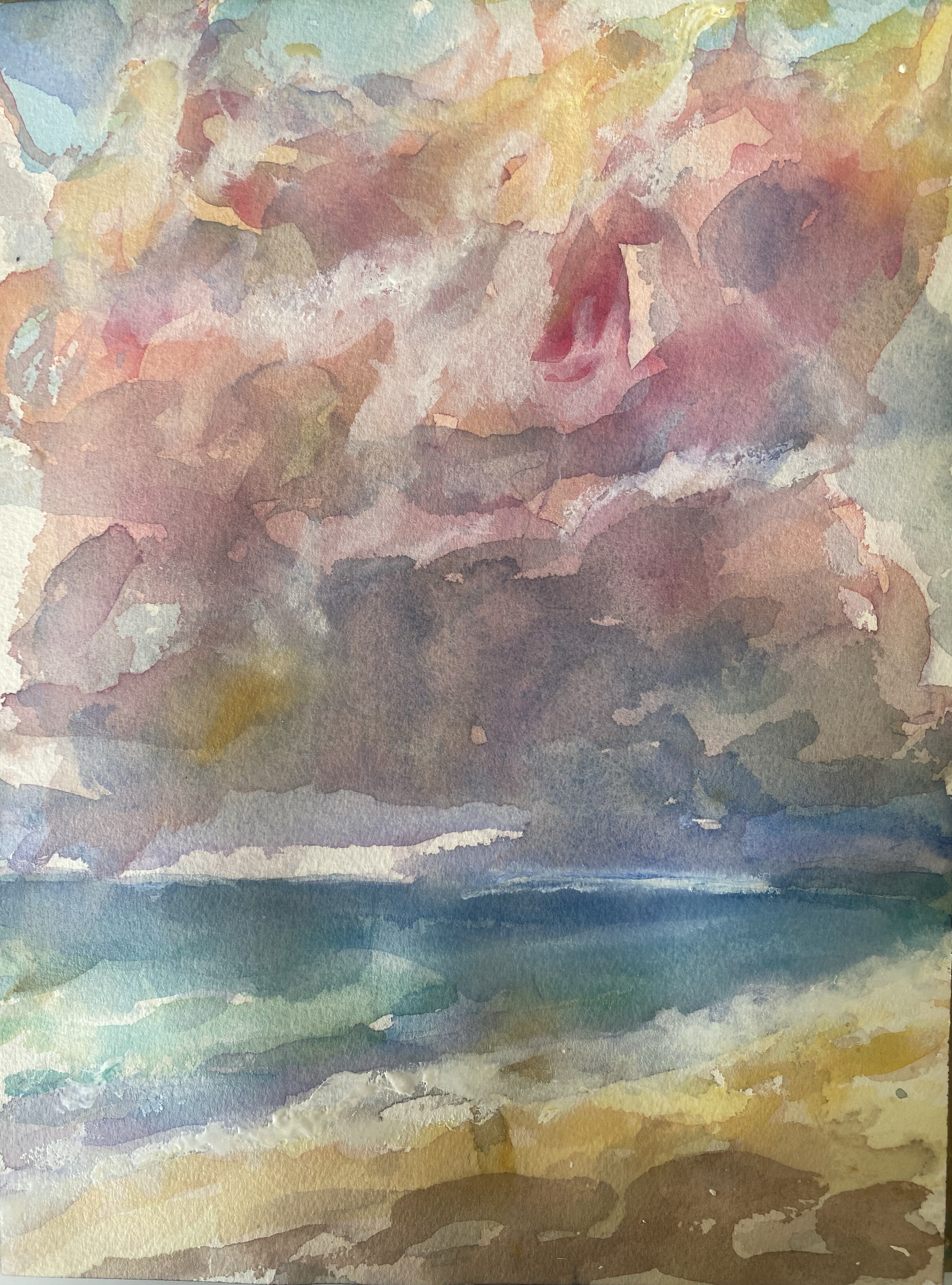
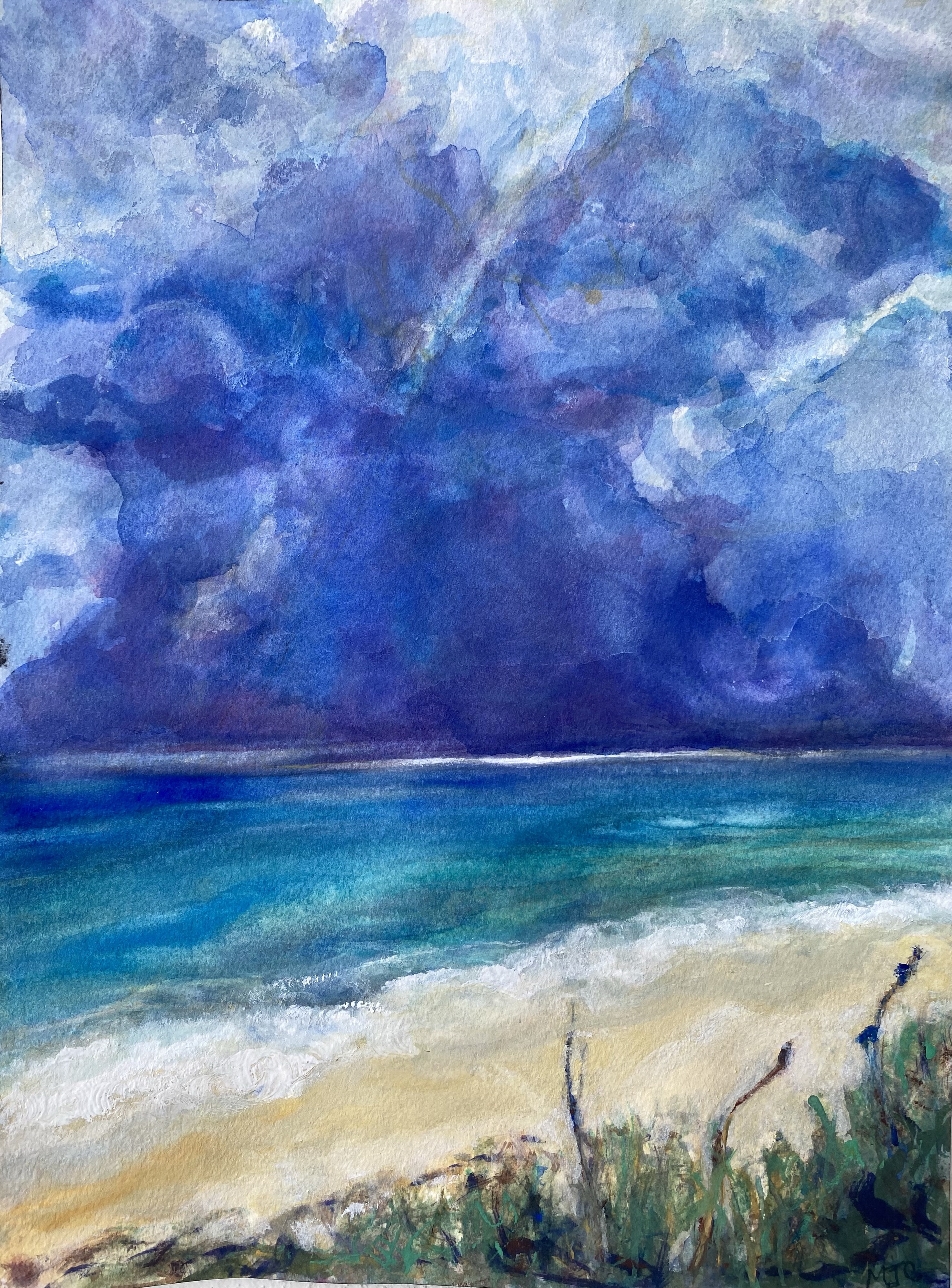
“Storm Coming” Watercolor, MJC
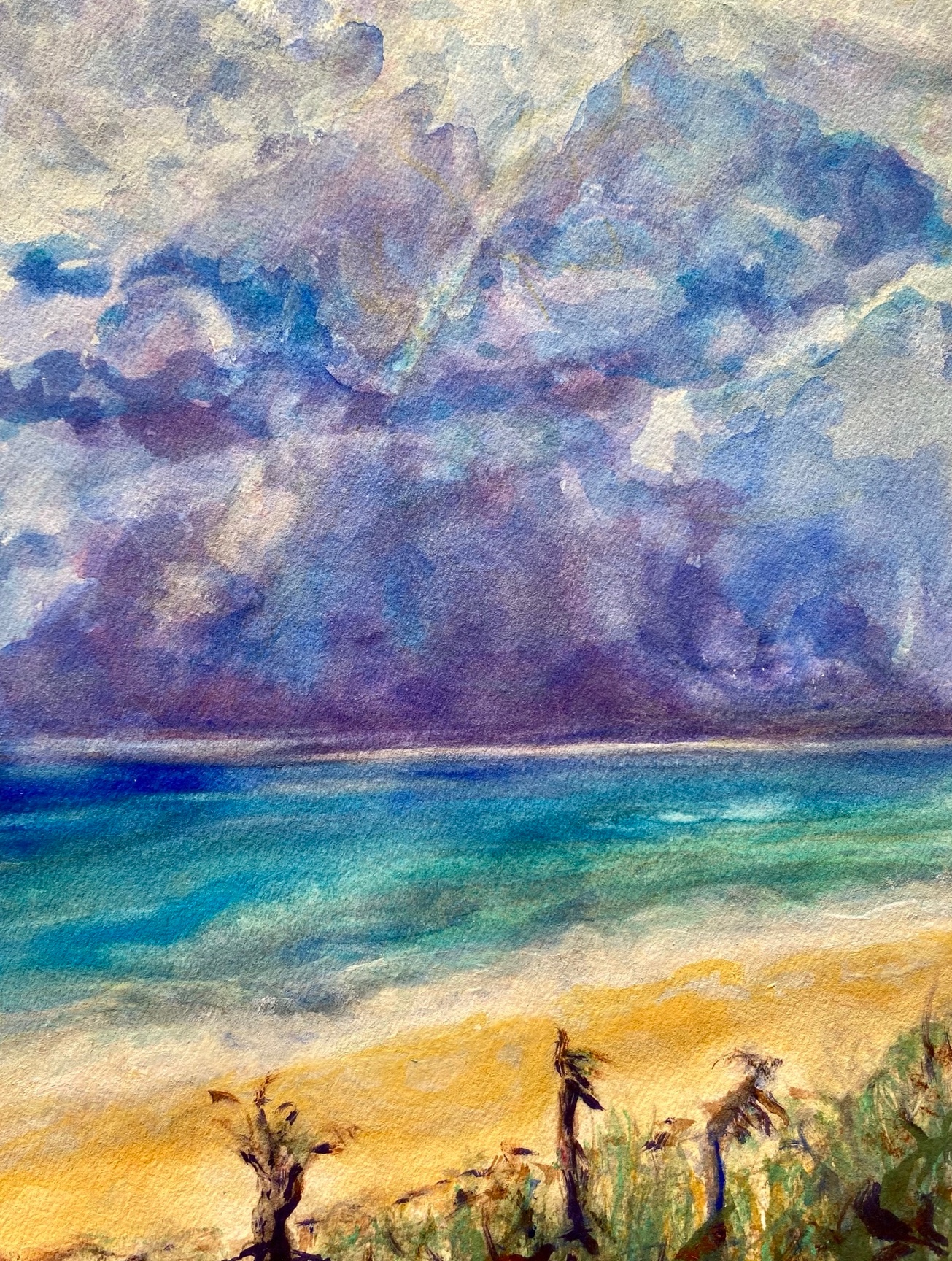
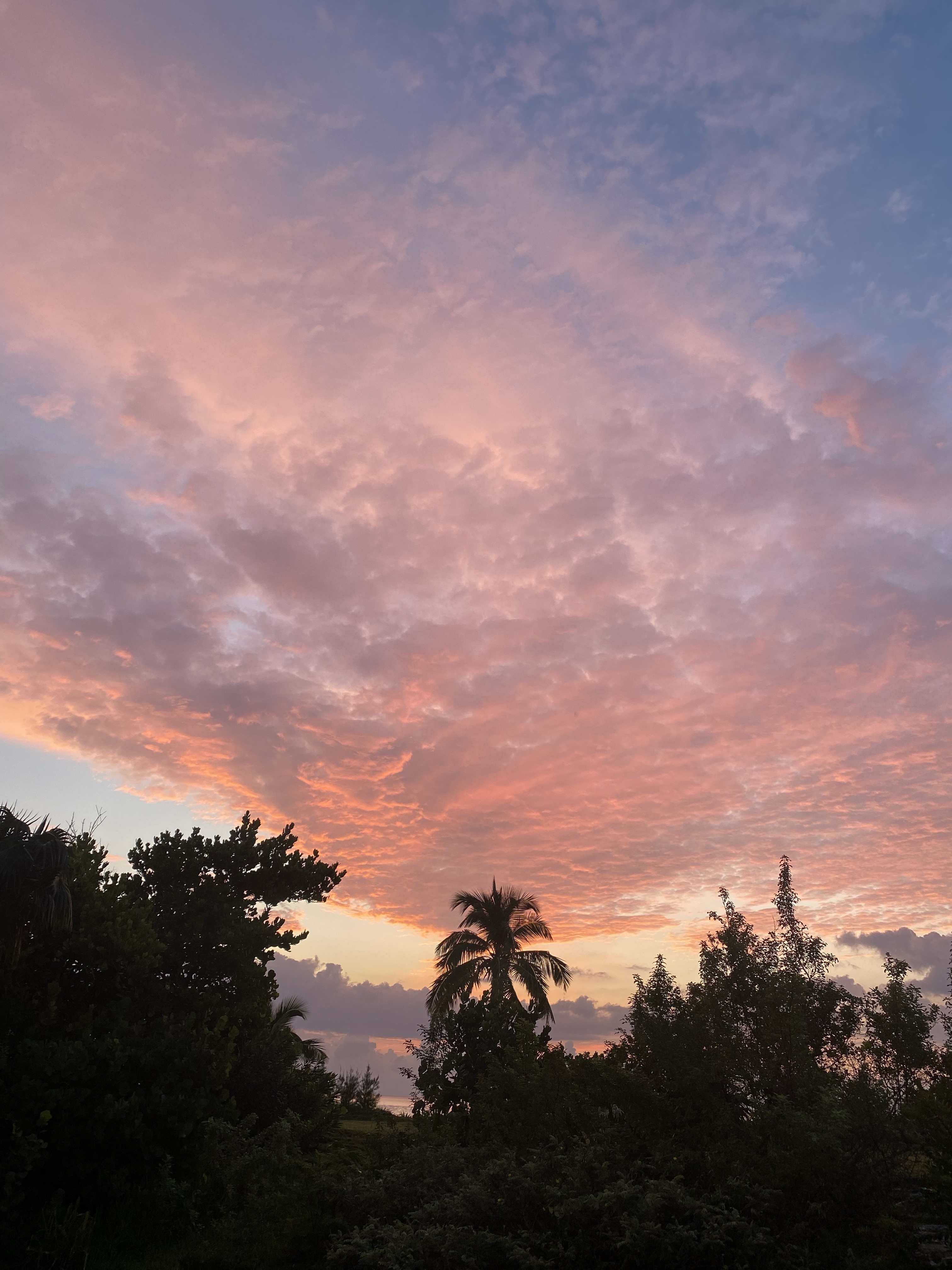
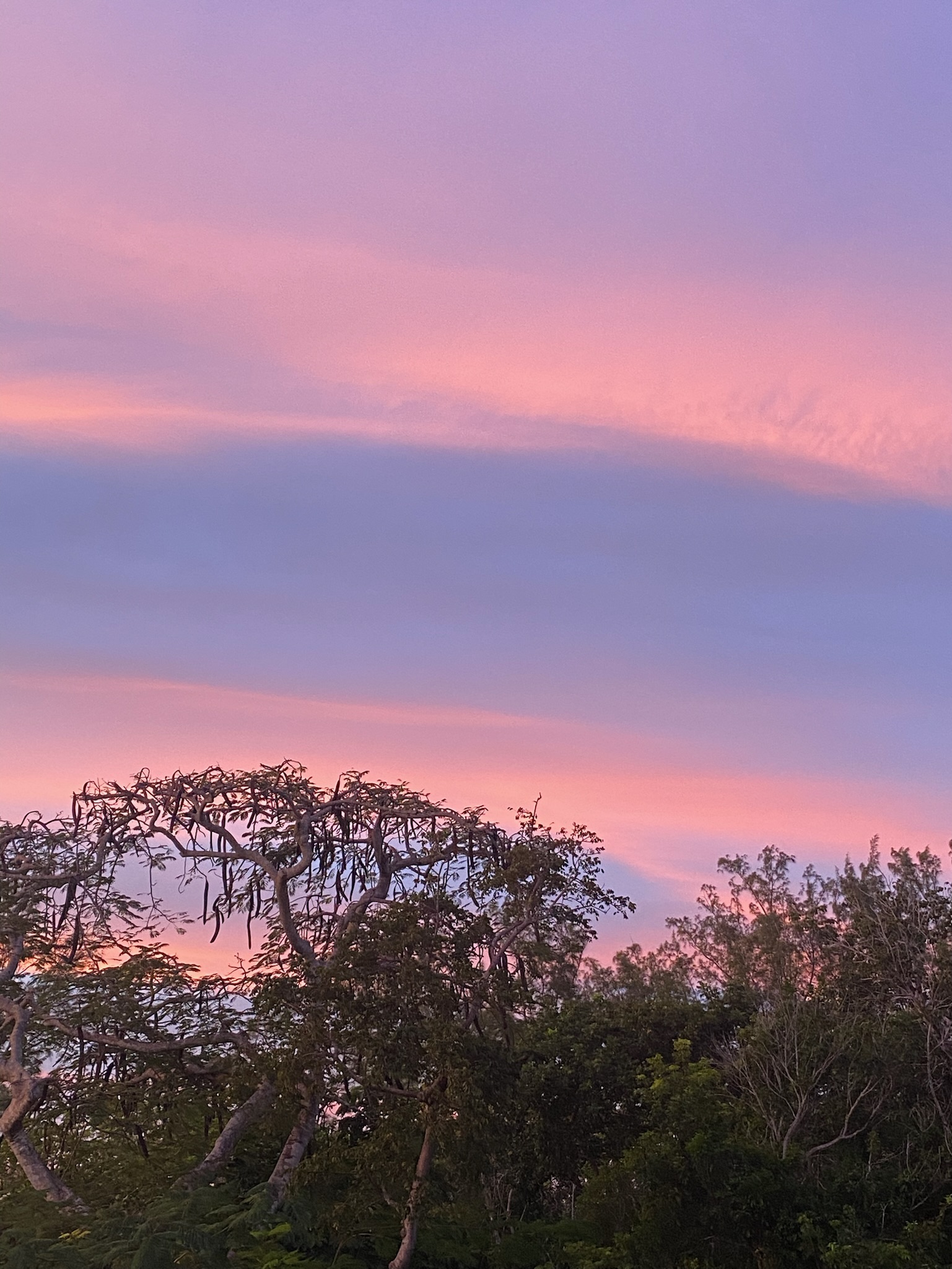
One photo, one location, there are many interpretations.
Even if we stay in one location, we continually confront new realities. There is no way to avoid it. We paint through all these movements and changes, while stabilizing our shifting realities through our our thoughts, interpretations and our moods.
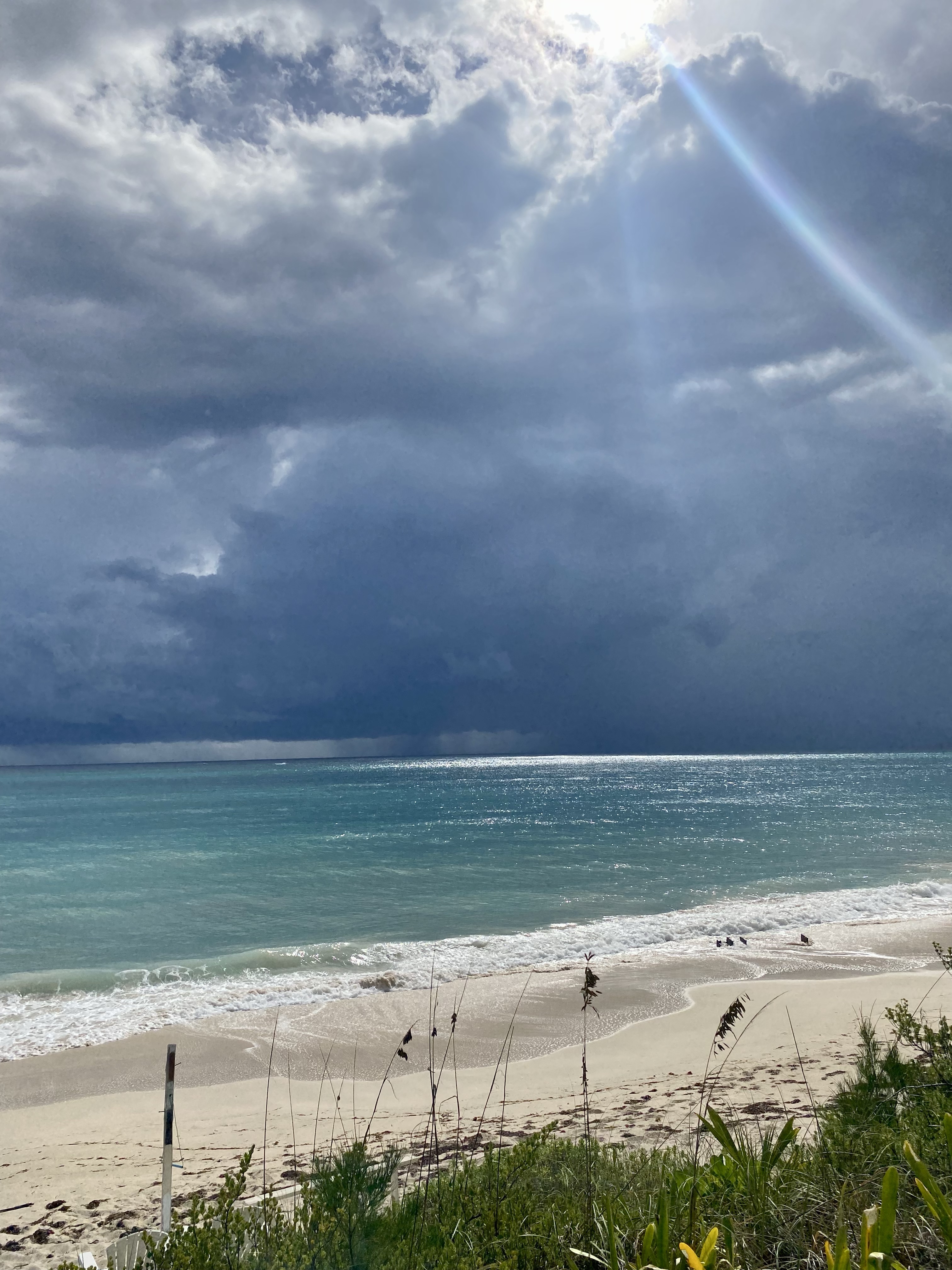
Personal photo, Mary Chamie (MJC)
One location offers multiple perspectives, many different paintings, endless opportunities for creativity, exploration and innovation.
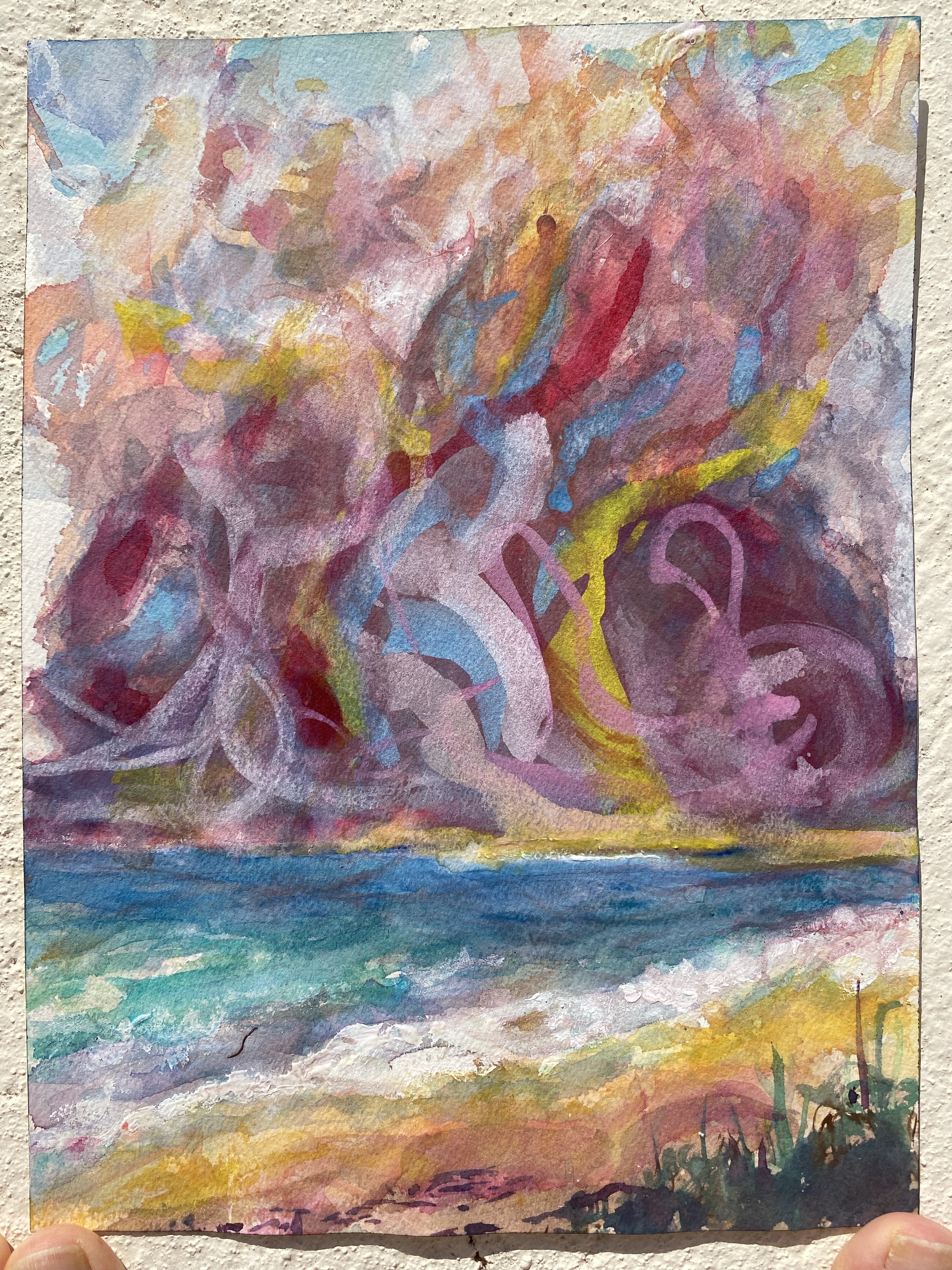
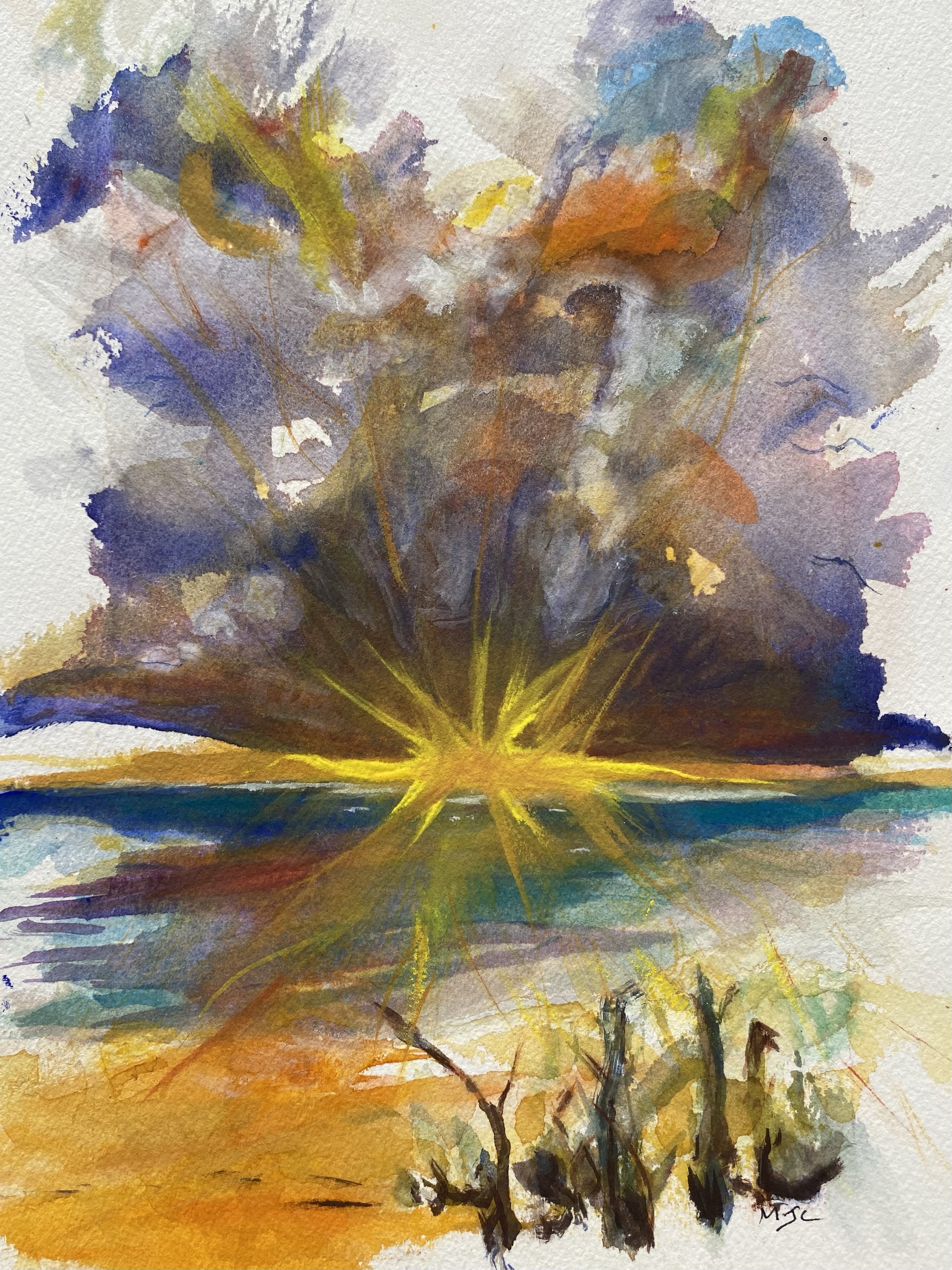
My choices in “Breakthrough” are bold yellows and reds crashing against the previous somber dark blue rain colors.
In my next painting of this storm, softer pinks and pastel yellows also deserve some space. I will have to go back and get them.
“Breakthrough”, Watercolor, MJC
I will return to my brushes with my soft pinks and blended colors for my next painting. I guess my mood has changed.
Until then, how does your nature’s landscape look today?






 marysgardens